Introduction
Blue Wall Art brings a natural sense of calm and balance into European homes. Inspired by elements like the sky and sea, blue shades create peaceful interiors while blending beautifully with neutral colors such as white, beige, grey, and natural wood.
Designers often choose blue artwork because it adds contrast without overwhelming the zone. Blue Wall Art However, selecting the right piece involves considering factors like artwork size, placement, lighting, frame style, and the overall color palette of the room.
In this guide, you’ll learn the psychology of blue in interior design, different art styles, room-by-room decorating ideas, professional placement tips, gallery wall strategies, and common mistakes to shun—helping you use blue wall art to create a balanced and stylish home..
What Is Blue Wall Art?
Artwork colored mainly in blue jewels shapes what people call blue wall art. Often found across many creative types, it stands out due to its range of feelings and methods. Its strength lies in adaptability – suiting different room moods without effort. From ocean shades to deep midnight mixes, the look shifts easily with surroundings.
Blue art shifts easily between styles, slipping into sleek Nordic setups just as well as it settles among rich, old-world European details. Though some ornaments feel stuck in one look, this kind of piece moves without effort across very different homes.
Art in blue tones shows up as paintings sometimes, yet also as prints or photos. Other times, it takes shape through layered materials, blending feelings into one piece. Sculptures might hold these hues too, standing as colored forms in a zone.
Common Types of Blue Wall Art
Some of the most frequently used forms include:
- Abstract canvas paintings
- Sea and coastal photography
- Watercolor landscape illustrations
- Botanical artwork and plant prints
- Geometrical modern designs
- Textile wall hangings
- Metal or sculptural wall installations
Each artistic category produces a slightly different emotional air inside a room.
For example:
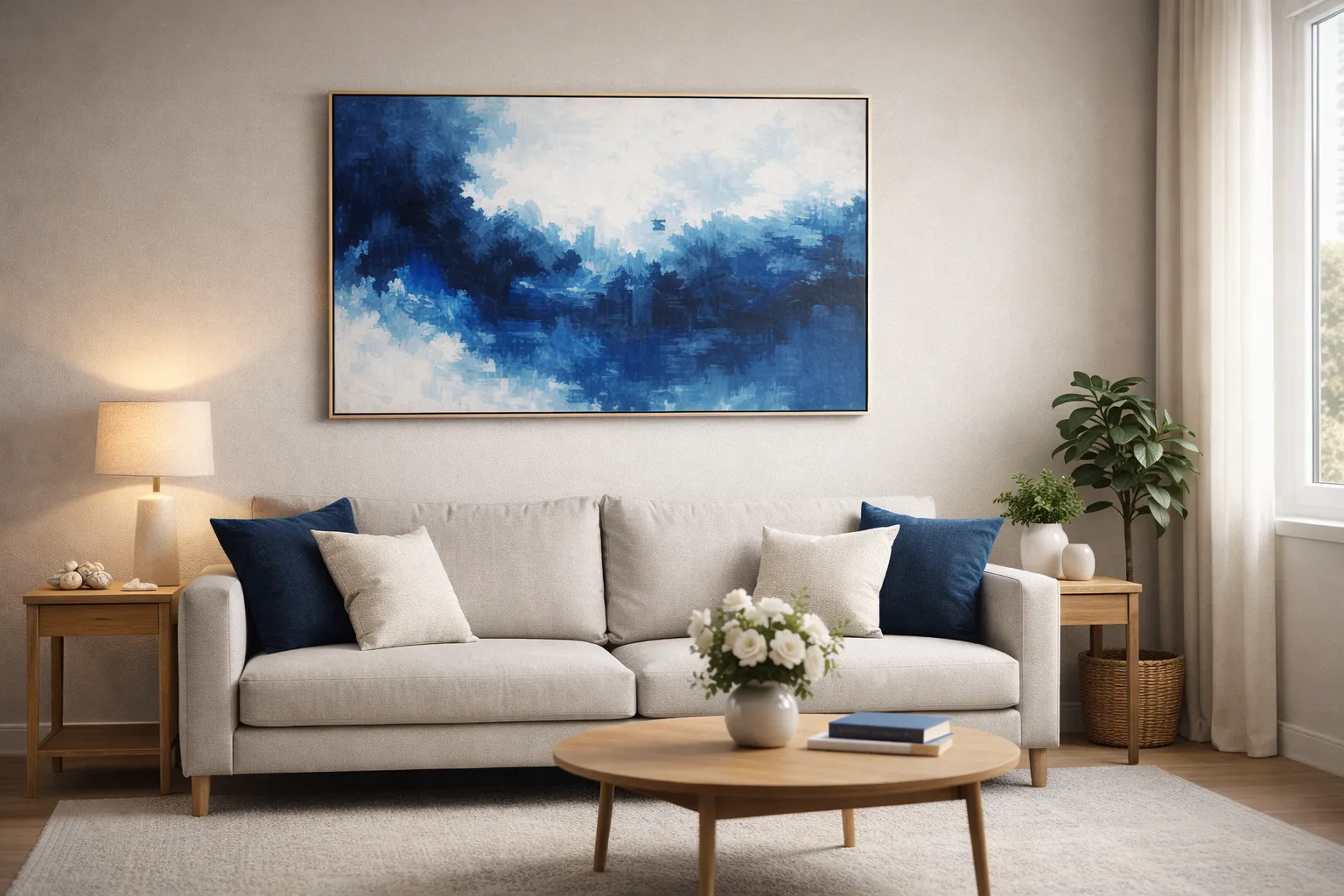
A dramatic navy abstract painting can serve as a bold optical centerpiece in a modern living room.
A set of pale sky-blue botanical illustrations can introduce softness and elegance to a bedroom.
Waves caught on camera tend to fit right into seaside-style rooms. Sometimes a splash of blue on the wall feels just natural near breezy linens and light wood tones.
Art fills space like walls do in much of Europe. Colors link not by chance but because someone saw how paint meets shadow at noon.
Fresh off the design bench, blue wall pieces often land early in modern room plans. A quiet favorite, they slip into place before much else gets picked.
Why Blue Wall Art Is So Popular in Interior Design
Starting with ancient times, blue shaped how artists painted and buildings looked. Throughout Europe today, those who arrange room spaces still pick blue images since they bring calm feelings along with visual grace that never fades.
Below are several important reasons why blue wall art remains a consistent design favorite.
Creates a Calm and Relaxing Atmosphere
Blue hits you quietly, slowing thoughts without asking. Oceans tie into it, also skies, both pulling minds toward calm. Feelings unwind around that hue, almost by accident.
When art brings the outdoors in, shades of blue tend to calm nerves, offering a quiet kind of relief. A space painted or decorated with these tones often ends up feeling like a slow breath.
Design professionals often place blue art in rooms where relief or concentration is important.
Examples include:
- Bedrooms
- Living rooms
- Reading areas
- Home offices
- Meditation or wellness zones
Soft blue tones are particularly effective for creating interiors that feel peaceful and emotionally balanced.
Works With Many Interior Styles
Another major reason for the popularity of blue wall art is its remarkable versatility. Blue artwork can complement a wide range of design aesthetics, from rustic traditional homes to ultra-modern flats.
For example:
Scandinavian Interiors
Light sky-blue prints combined with white walls and pale wood furniture create an airy, minimal environment.
Mediterranean Homes
Turquoise or ocean-inspired artwork reflects coastal landscapes typical of southern Europe.
Modern Minimalist Apartments
Large navy abstract paintings provide striking contrast within simple monochrome interiors.
Luxury European Interiors
Deep sapphire or indigo artwork paired with gold frames creates a refined and sophisticated air.
Because of this flexibility, blue artwork can seamlessly integrate into both classic and new design schemes.
Adds Depth and Visual Interest
Blue contains a wide spectrum of shades, ranging from pale icy jewels to dark midnight hues. Each variation produces a slightly different optical effect within interior zones.
| Blue Shade | Interior Impact |
| Navy Blue | dramatic and luxurious |
| Sky Blue | light and spacious |
| Turquoise | vibrant and coastal |
| Indigo | artistic and refined |
When used strategically, different shades allow designers to shape the emotional tone of a room.
For instance, navy artwork adds bold sophistication, while pale blue pieces can make a small room feel more open and airy.
Types of Blue Wall Art
Blue artwork appears in many creative styles. Understanding these categories can help owners choose pieces that match their design vision and interior style.
Abstract Blue Wall Art
Abstract art is among the most popular forms of blue wall art in modern homes.
Instead of depicting realistic scenes, abstract artwork focuses on colors, shapes, balances, and expressive compositions. These elements evoke emotions and optical interest without representing specific objects.
Common Characteristics
- Energetic brush strokes
- Layered paint feelings
- Geometrical forms
- Minimal compositions
Best Rooms for Abstract Blue Art
- Living rooms
- New flats
- Creative offices
- Scandinavian-inspired interiors
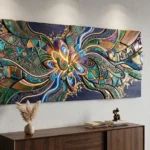
Large abstract paintings are often used as statement pieces positioned above sofas, beds, or console tables.
Coastal Blue Wall Art
Coastal artwork draws inspiration from seaside landscapes and marine environments.
Typical subjects include:
- Sea waves
- Sandy beaches
- Sailboats
- Seashells
- Wide sea horizons
This decorative style is extremely popular in Mediterranean countries such as Spain, Portugal, Italy, and Greece.
Coastal artwork helps interiors feel fresh, airy, and reminiscent of relaxing seaside vacations.
Modern Minimalist Blue Art
Minimalist art follows the principle that simplicity creates elegance.
These pieces often feature clean lines, balanced shapes, and subtle color gradients rather than complex imagery.
Key Design Features
- Simple geometric forms
- Gentle blue color transitions
- Neutral backgrounds
- Uncluttered compositions
Minimalist blue art fits perfectly in Nordic and Scandinavian interiors where design focuses on simplicity, function, and clarity.
Botanical Blue Wall Art
Botanical artwork portrays plants, flowers, and leaves in decorative illustrations.
When these botanical designs are rendered in shades of blue rather than green, they produce a unique and elegant optical style.
Ideal Rooms for Botanical Blue Art
- Bedrooms
- Dining rooms
- Hallways
- Entryways
Many European interiors use botanical artwork to introduce natural inspiration while maintaining a refined color palette.
Blue Metal or Sculptural Art
Three-dimensional wall art offers texture and bottom to flat surfaces.
Examples include:
- Sculptural wave patterns
- Metal leaf arrangements
- Abstract geometrical panels
These pieces are particularly popular in new luxury interiors where art interacts with architectural design.
Best Blue Wall Art Ideas for Every Room
Each room within a home serves a different purpose. Choosing the artwork ensures that the design feels cohesive and willful.
Living Room
The living room is usually the largest and most social area in a home, making it an ideal location for impactful artwork.
Interior designers often back placing large blue artwork above the sofa to establish a strong focal point.
Popular Living Room Artwork
- oversize abstract inspect
- Navy and gold luxury paintings
- Sea landscape photography
Large artwork helps optical anchor the seating area and gives the room a sense of format.
Bedroom
Bedrooms should promote relief and comfort. For this reason, gentle and calming blue artwork is often the best choice.
Ideal Bedroom Art
- watercolor landscapes
- minimalist line illustrations
- botanical blue prints
These artworks boost a peaceful air that supports rest and relief.
Home Office
Blue is often identical with focus, purity, and capacity.
Great Office Artwork
- geometric abstract prints
- architectural photography
- modern minimalist art
These styles provide creative vision while lasting a professional climate.
Dining Room
Dining areas benefit from balanced and elegant artwork that accompaniments the neighboring furniture.
Recommended Styles
- symmetrical botanical print sets
- Mediterranean-inspired paintings
- New abstract artwork
The artwork should adjust with the dining table, chairs, and lighting material.
Hallways and Entryways
They are often forgotten in interior design, yet they offer perfect events for creative gallery walls.
A blue-themed gallery display might include:
- small abstract prints
- ocean photography
- Typographic artwork
These arrangements add personality and visual interest to transitional zones
How to Choose the Perfect Blue Wall Art
Selecting the right artwork requires thoughtful planning. Designers usually consider three primary points: scale, color peace, and framing.

Size and Scale
Artwork should always relate proportionally to the furniture beneath it.
Interior designers commonly follow the 60–75% rule, meaning artwork should be about 60–75% of the width of the furniture below.
| Furniture Width | Recommended Art Width |
| 200 cm sofa | 120–150 cm artwork |
| 160 cm bed | 95–120 cm artwork |
Oversize artwork often creates stronger visual impact and improves room balance.
Color Harmony
Blue combines beautifully with many interior color palettes.
Popular Combinations
- blue and white
- blue and beige
- blue and natural wood
- blue and grey
- blue and gold accents
These combinations are widely used in European design.
Frame Styles
The Frames significantly influence how artwork integrates with the room.
Common Frame Options
Black Frames
Ideal for modern and minimalist interiors.
Gold Frames
Perfect for luxury or classical European homes.
Natural Wood Frames
Fine for Scandinavian or steep designs.
The correct frame helps artwork blend seamlessly with neighboring décor.
Popular Blue Color Shades in Wall Art
Different shades of blue produce distinct emotional drafts.
Navy Blue
The Navy is deep, powerful, and sophisticated.
It works notably well in:
- luxury living rooms
- modern flats
- professional offices
Sky Blue
Sky blue feels light, fresh, and uplifting.
Best used in:
- bedrooms
- nurseries
- Scandinavian interiors
Turquoise
Aquamarine introduces brightness and energy.
It is generally used in coastal and Mediterranean homes.
Indigo
Indigo is rich, artistic, and vivid.
It often surfaces in abstract paintings and luxury décor styles.
Blue Wall Art Placement Tips
Even beautiful artwork may appear awkward if placed incorrectly.
Professional designers follow simple placement principles to ensure optical balance.
The Eye-Level Rule
Most designers urge hanging artwork so the center of the piece sits almost 145–150 cm from the floor.
This height tally with natural human viewing level.
Align Artwork With Furniture
Artwork should optically connect with the furniture below it.
Examples include:
- sofa → artwork centered above sofa
- bed → artwork above the headboard
- console table → artwork above table
This adjustment creates a peaceful beauty.
Consider Lighting
Lighting badly climates how artwork comes.
Wall lights or fame can highlight:
- Balance
- Broom details
- color bottom
Proper lighting enhances the richness of blue jewels.
Gallery Wall Ideas With Blue Art
Gallery walls have become more popular in European interiors because they allow owners to mix different artworks into a single display.
Popular Blue Gallery Wall Themes
- Sea photography lot
- Navy botanical prints
- Abstract blue content
Gallery Wall Layout Examples
| Map Style | Description |
| Grid map | symmetrical plan |
| Salon Style | mixed sizes and frames |
| Linear Row | minimalist even adjustment |
Gallery walls work notably well in:
- hallways
- staircases
- living rooms
DIY Blue Wall Art Ideas
Creating your own artwork adds charm and vision to your home décor.
Ombre Blue Canvas
Blend several shades of blue from dark to light to produce a hill effect. This style accompaniments minimalist interiors beautifully.
Indigo Textile Wall Hanging
Use dyed fabrics or woven textiles to craft bohemian wall decorations that add passion and feeling.
Abstract Acrylic Painting
Probe with bold brush rare and covered paint art to create vivid abstract artwork.
DIY art projects allow owners to add unique personal character to their zones.
Common Mistakes to Avoid With Blue Wall Art
Many owners accidentally make design mistakes when decorating with artwork.
Common issues covers:
- Choosing artwork that is too small for the wall
- Jutting pieces too high
- Traffic jam walls with steep decorations
- ignoring lighting conditions
- mixing too many shades of blue
They Maintaining balance and bulk ensures that artwork enhances rather than crush the room.
Pros and Cons of Blue Wall Art
| Pros | Cons |
| Creates a calm climate | Steep blue may feel cold |
| Works with many interior styles | Incorrect shade may clash |
| Timeless decorative option | Large artwork can be costly |
| Strong focal point | Poor placing cut impact |
Kindly these gains and bars help owners make informed design decisions.
Frequently Asked Questions
Yes. Blue wall art creates a calm and neat focal point in living rooms, notably when placed above sofas or stove.
Blue pairs beautifully with:
white
beige
grey
gold
natural wood jewels
These combos are generally used in European interior design.
Designers urge artwork that is 60–75% of the sofa width to maintain optical balance.
Yes. Navy blue wall art is quite popular in new interiors because it creates strong disparity and a mature arrival.
Conclusion
Blue wall art goes on to be one of the most powerful decorative tools for transforming interior zones. Its calming mental impact, timeless charm, and amazing adaptability allow it to complement many architectural styles.
From bold navy abstract consult to delicate coastal watercolor prints, blue artwork can really clout the mood and air of a room.
European design trends always embrace blue because it pairs beautifully with:
- natural materials
- minimalist maps
- modern building
When owners consider range, color unity, placing guidelines, and lighting conditions, they can easily join blue artwork into their interiors.
Finally, the right piece of blue wall art does more than decorate a dry wall. It imparts personal style, enhances the character of a room, and transforms everyday zones into a stirring climate filled with beauty and calm