Introduction
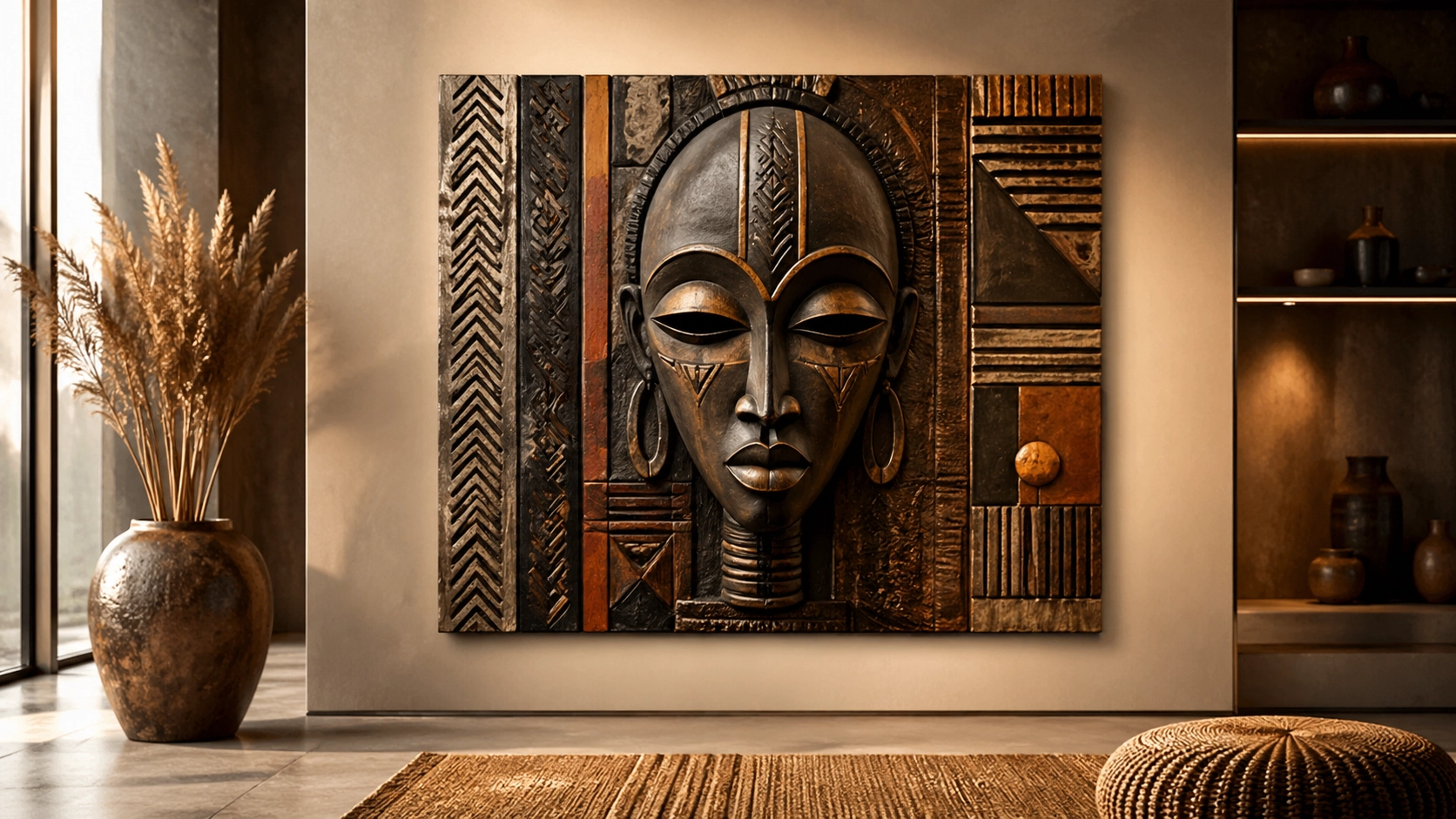
In 2026, African wall art has evolved far beyond its traditional role as simple decoration. It is now recognized as a powerful cultural design language shaping the direction of modern European interior aesthetics. Across Germany, France, Italy, the Netherlands, and Scandinavian countries, interior designers are increasingly incorporating African-inspired artwork into residential and commercial spaces.
The reason for this shift is not just visual appeal—it is emotional transformation.
Modern European interiors, especially minimalist ones, often suffer from visual silence. While clean lines, neutral colors, and functional layouts create order, they can also feel emotionally empty. People today are no longer satisfied with spaces that only look “clean.” They want environments that feel alive, expressive, and meaningful.
African wall art fills this gap.
It introduces narrative, symbolism, identity, and emotional warmth into spaces that might otherwise feel sterile. Every artwork carries cultural depth, whether through tribal patterns, handcrafted textures, or abstract interpretations of African heritage.
This is why African wall art is now being used in:
- Luxury apartments in Paris and Milan
- Scandinavian minimalist homes in Stockholm and Copenhagen
- Boutique hotels across Berlin and Zurich
- High-end modern villas in southern Europe
Instead of being treated as “decor,” African wall art is now treated as a design philosophy.
It represents a shift from:
Empty aesthetics → Meaningful interiors
Minimalism alone → Cultural fusion design
Decoration → Emotional storytelling
In this guide, you will learn everything about African wall art from a professional interior design perspective:
- Its cultural meaning and psychological depth
- Major styles and classifications
- Symbolism and emotional effects
- Room-by-room styling system
- European luxury integration techniques
- Common design mistakes to avoid
- Future interior trends (2026–2030)
Let’s explore this design language step by step.
What Is African Wall Art?
African wall art refers to a wide spectrum of visual expressions inspired by the diverse cultures, traditions, and histories of the African continent. It includes both traditional handcrafted works and modern reinterpretations used in contemporary design.
However, reducing to “objects on a wall” misses its deeper essence.
It is not simply visual—it is narrative-based design.
African Wall Art as Cultural Expression
At its core, African wall art functions as a storytelling system. Each piece communicates ideas that extend far beyond aesthetics:
- Tribal identity and lineage
- Spiritual beliefs and ancestral respect
- Social rituals and community life
- Natural harmony and environmental connection
- Symbolic communication through patterns and forms
Unlike mass-produced decorative prints, African art carries intentional meaning behind every line, shape, and color combination.
This is why it integrates so well into modern European interiors today. Designers are no longer focusing only on “how a room looks,” but also on “what a room communicates.”
African wall art brings identity into interior spaces.
Types of African Wall Art
Understanding the major categories of is essential for proper interior integration. Each type creates a different emotional and visual impact.
Tribal Mask Art
Tribal masks are among the most iconic forms of African wall art. Traditionally handcrafted from wood, these masks represent ancestral spirits, protection, ceremonies, and cultural identity.
Key Characteristics:
- Hand-carved wooden structures
- Bold facial expressions
- Symbolic and spiritual meaning
- Strong sculptural presence
Interior Application:
Best suited for:
- Living rooms
- Entryways
- Hallway focal walls
Design Effect:
Creates a dramatic visual anchor and immediate emotional impact upon entering a space.
North African Geometric Art
Inspired by Islamic art, desert architecture, and traditional mosaics, this style focuses heavily on geometry, rhythm, and symmetry.
Key Characteristics:
- Repeating geometric forms
- Architectural symmetry
- Neutral desert-inspired tones
- Structured visual rhythm
Interior Application:
Ideal for:
- Modern apartments
- Office environments
- Minimalist interiors
Design Effect:
Creates order, balance, and calm sophistication.
Wildlife & Nature-Inspired African Art
This category reflects Africa’s rich biodiversity and landscapes, including savannahs, deserts, and wildlife scenes.
Key Characteristics:
- Lions, elephants, giraffes, and wildlife imagery
- Earth-toned color palettes
- Cinematic compositions
- Nature-focused storytelling
Interior Application:
Best for:
- Large living spaces
- Luxury villas
- Hotel-style interiors
Design Effect:
Introduces energy, movement, and natural vitality into interiors.
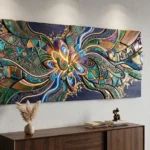
Modern Abstract African Art
This is currently one of the most dominant trends in European interior design.
Key Characteristics:
- Abstract reinterpretations of African themes
- Minimal yet expressive brushwork
- Contemporary European color blending
- Balanced composition
Interior Application:
Ideal for:
- Scandinavian homes
- Modern luxury apartments
- Bedrooms and lounges
Design Effect:
Offers cultural depth without overwhelming minimal spaces.
Textile & Pattern-Based African Art
Inspired by African fabrics such as Kente cloth and Mud cloth, this category emphasizes repetition, rhythm, and symbolic design.
Key Characteristics:
- Repetitive cultural patterns
- High contrast color usage
- Fabric-inspired textures
- Symbolic storytelling systems
Interior Application:
Best for:
- Dining rooms
- Creative studios
- Gallery walls
Design Effect:
Adds rhythm, texture, and cultural movement.
African Wall Art Meaning & Symbolism Psychology
One of the reasons is gaining global popularity is its psychological depth. It does not only decorate space—it influences emotional perception.
Symbolism Breakdown
| Symbol | Meaning | Interior Effect |
| Masks | Ancestral protection | Emotional depth |
| Animals | Strength & leadership | Energy & power |
| Patterns | Identity & communication | Cultural richness |
| Shapes | Balance & rhythm | Harmony |
Color Psychology in African Wall Art
| Color | Meaning | Emotional Impact |
| Gold | Royalty & luxury | Premium atmosphere |
| Red | Energy & vitality | Strong focal presence |
| Black | Mystery & strength | Depth and contrast |
| Earth tones | Nature & grounding | Calm stability |
| White | Balance & purity | Minimal harmony |
Works in European interiors because it introduces emotional intelligence into spatial design.
African Wall Art Interior Design System
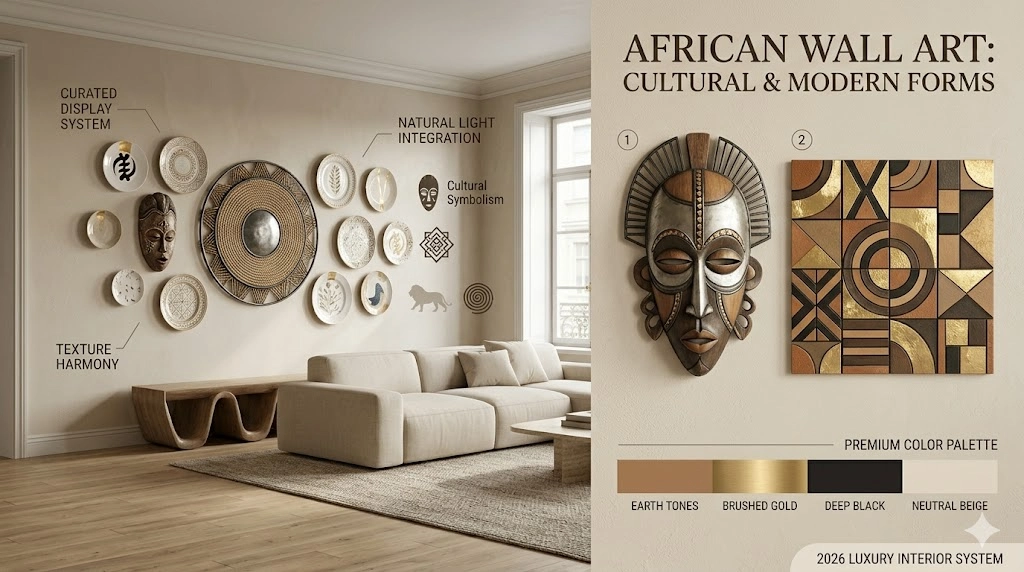
This section explains practical application—how should be used in real interiors.
Living Room
The living room serves as the visual identity of a home.
Design Approach:
- Use one large statement African artwork
- Place above sofa or central wall
- Keep surrounding walls neutral
- Use warm ambient lighting
Result:
Creates a luxury hotel-style focal point with strong emotional presence.
Bedroom
Bedrooms require calmness, softness, and relaxation.
Design Approach:
- Choose abstract African art
- Avoid aggressive or heavy mask designs
- Use soft earth tones
- Maintain visual minimalism
Result:
Enhances relaxation and emotional comfort.
Entryway
Entry spaces define the identity of a home.
Design Approach:
- Vertical tribal masks or narrow artworks
- Symmetrical placement
- Accent lighting for depth
Result:
Creates a strong cultural and emotional introduction.
Office
African wall art can improve cognitive focus when used correctly.
Design Approach:
- Geometric African patterns
- Monochrome or muted color palettes
- Structured framing
Result:
Improves clarity, discipline, and concentration.
African Wall Art vs European Minimalist Interiors
Modern design is increasingly moving toward hybrid aesthetics.
| Aspect | African Wall Art | European Minimalism |
| Style | Expressive | Simple |
| Emotion | Cultural depth | Calm neutrality |
| Texture | Rich & symbolic | Smooth & clean |
| Purpose | Storytelling | Function |
Why This Fusion Works:
- Adds warmth to minimal interiors
- Creates luxury contrast
- Balances emotion with structure
- Enhances modern European living spaces
Common Mistakes in Styling
Many interiors fail not because of poor art—but because of poor placement.
Common Errors:
- Overcrowding walls with multiple artworks
- Mixing unrelated African styles
- Ignoring scale and proportion
- Poor lighting conditions
- Using low-quality prints without texture
Result:
Visual chaos instead of harmony.
How to Choose
Choosing wall art should follow a structured design process.
Step-by-Step System:
- Define room function
- Identify emotional tone (calm, bold, luxury)
- Select appropriate size
- Match colors with interior palette
- Choose traditional or abstract style
Quick Guide:
| Room | Style | Emotion |
| Living Room | Tribal / Abstract | Bold |
| Bedroom | Soft Abstract | Calm |
| Office | Geometric | Focus |
| Hallway | Masks | Identity |
Pros & Cons
Pros:
- Strong cultural depth
- Works with modern European interiors
- Luxury aesthetic value
- Versatile applications
- Long-term design relevance
Cons:
- Can overwhelm small spaces
- Requires careful placement
- Needs cultural sensitivity
- Risk of mismatched styling
Future Trends of 2026–2030
African wall art is evolving into a global design movement.
Emerging Trends:
- AI-generated African-inspired patterns
- Digital wall installations
- Luxury hotel adoption
- Scandinavian-African fusion interiors
- Sustainable handcrafted décor
The future of interior design is moving toward global cultural integration.
FAQs
Yes. It integrates especially well into modern European and minimalist interiors when styled correctly.
Its uniqueness comes from cultural storytelling, symbolism, and emotional meaning embedded in design.
Best locations include living rooms, entryways, and offices for maximum visual and emotional impact.
Yes. Abstract African art is specifically designed for minimalist and modern interiors.
Conclusion
African wall art is no longer just a decorative trend—it is a cultural design language redefining modern European interiors.
It transforms empty walls into emotional storytelling surfaces and shifts interior design from visual aesthetics to meaningful experience.
In 2026 and beyond, the direction of luxury design is clear:
Luxury is no longer about emptiness
Luxury is about meaning, culture, and identity
African wall art stands at the center of this transformation, bridging tradition and modernity into a unified design system.