Introduction
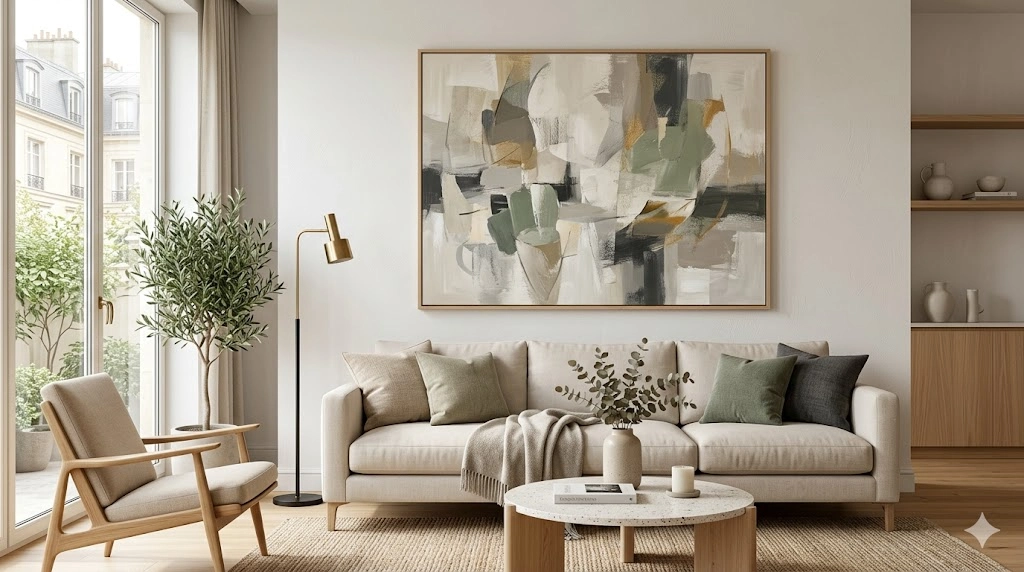
Abstract wall art for living room interiors is no longer merely about covering blank surfaces. In 2026, it has evolved into a strategic design element that defines atmosphere, character, and visual storytelling—especially across contemporary European homes.
Today’s living rooms are not just functional zones for sitting or entertaining. They are expressive environments that reflect individuality, lifestyle preferences, and emotional identity. This transformation has elevated the role of abstract wall art from simple decoration to a core design component.
Across Europe—from Scandinavian homes in Stockholm to modern apartments in Berlin and elegant villas in Spain—abstract artwork is used deliberately. Designers utilize it to establish mood, introduce harmony, and construct a cohesive visual narrative.
Unlike classical paintings that depict recognizable figures or landscapes, abstract art communicates through form, color, texture, and composition. This artistic freedom allows homeowners to craft a distinctive and personalized environment without rigid rules.
In this comprehensive 2026 guide, you will learn:
- How to select the ideal
- The most influential European styles and emerging trends
- Accurate sizing and placement techniques
- A simplified understanding of color psychology
- Professional insights to achieve a high-end aesthetic
Why Abstract Wall Art is Essential in Modern Living Rooms
More Than Decoration: It Shapes Emotion
Abstract wall art for living room spaces is not simply ornamental—it is functional design. It actively influences how your environment:
- Feels emotionally
- Appears visually
- Flows spatially
Modern European interiors emphasize intentionality over randomness. Every design element serves a purpose, and abstract art plays a central role in achieving that purpose.
Key Benefits of Abstract Wall Art
- Establishes a dominant focal point within the room
- Introduces personality and emotional depth
- Enhances spatial perception, making compact rooms feel more expansive
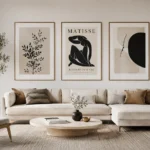
- Complements minimalist interiors by adding subtle complexity
- Improves visual cohesion and continuity
In simple terms:
Your walls are not empty—they are integral components of your overall design system.
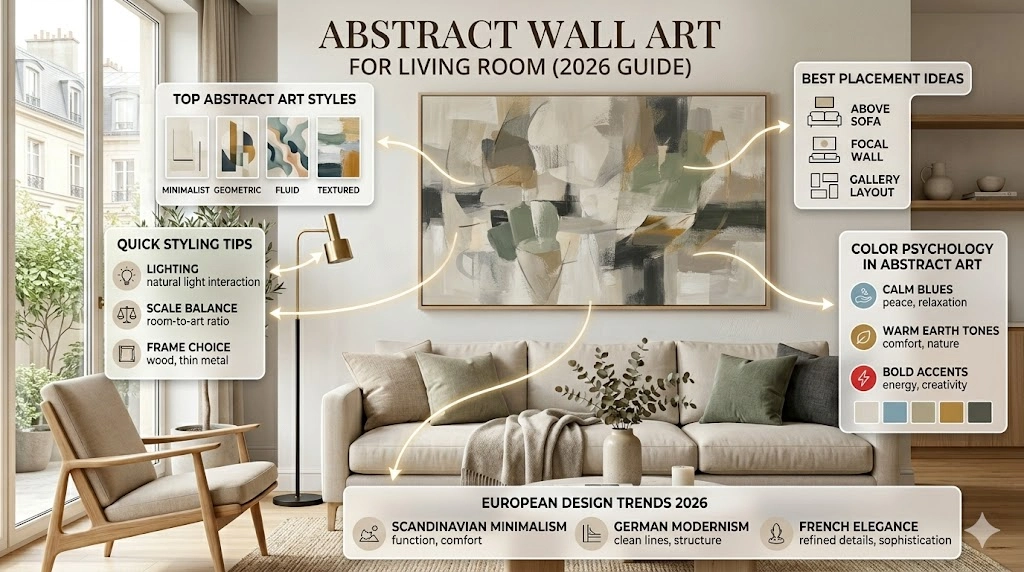
Top Abstract Wall Art Styles
Minimalist Abstract Art
This aesthetic originates from Nordic design philosophy, which prioritizes simplicity, clarity, and functionality.
Characteristics:
- Neutral tones such as white, grey, beige, and soft taupe
- Clean, uncomplicated forms
- Balanced compositions with ample negative space
Best suited for:
- Small apartments
- Calm, serene environments
- Minimalist interiors
This approach cultivates tranquility and mental clarity while maintaining visual elegance.
Bold Color Abstract Art
Inspired by Southern European regions such as Spain, Italy, and Greece, this style embraces vibrancy and warmth.
Characteristics:
- Rich hues like terracotta, deep blue, olive green, and burnt orange
- Strong contrast and dynamic color interplay
- Expressive and energetic compositions
Best suited for:
- Neutral or monochrome rooms
- White or light-colored walls
- Open-plan living spaces
This style injects vitality, warmth, and expressive energy into the room.
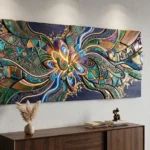
Textured & Mixed Media Art
Highly popular in upscale residences, this style emphasizes material richness and dimensional depth.
Characteristics:
- Three-dimensional textures
- Use of materials such as plaster, fabric, resin, or metal
- Layered surfaces creating tactile interest
Best suited for:
- Luxury interiors
- Statement walls
- High-end, sophisticated spaces
This technique enhances depth, richness, and a premium visual experience.
Geometric Abstract Art
Rooted in German and Swiss design principles, this style focuses on precision, structure, and order.
Characteristics:
- Defined lines and sharp angles
- Symmetry and repetition
- Organized patterns
Best suited for:
- Offices or workspaces
- Contemporary apartments
- Structured, organized interiors
This style delivers a refined, professional, and disciplined aesthetic.
Oversized Statement Art
One of the most dominant trends in 2026, emphasizing impact through simplicity.
Characteristics:
- Single large-scale artwork
- Covers a significant portion of the main wall
- Strong visual dominance
Best suited for:
- Placement above sofas
- Minimalist interiors
- Spacious living rooms
Trend Rule: Fewer pieces, stronger impact.
How to Choose Abstract Wall Art for Your Living Room
Selecting the right abstract wall art for living room design requires a systematic approach rather than random choice.
1: Define Your Interior Style
| Interior Style | Ideal Abstract Art |
| Minimalist | Simple, monochromatic |
| Luxury | Textured, metallic |
| Contemporary | Bold, vibrant |
| Rustic | Earthy, organic |
Always align artwork with your overall interior theme.
2: Match Your Color Palette
- Neutral room → Choose bold, contrasting artwork
- Colorful room → Choose subtle, understated art
Objective: Achieve balance and contrast simultaneously.
3: Focus on Emotional Impact
Ask yourself:
- Does this artwork evoke calmness or energy?
- Does it resonate with my lifestyle?
Abstract art should trigger a feeling, not just fill space.
4: Consider Wall Size
- Large wall → Large artwork
- Small wall → Smaller or minimal pieces
Avoid undersized art on expansive walls—it diminishes impact.
Size & Placement Guide
This is where most people make critical mistakes—but mastering this transforms your space.
Golden Placement Rules
- Artwork width = 60–75% of sofa width
- Center height = 145–155 cm from floor
- Gap above sofa = 5–15 cm
Placement Guidelines
| Element | Ideal Measurement |
| Art Width vs Sofa | 60–75% |
| Height from Floor | 145–155 cm |
| Gap Above Sofa | 5–15 cm |
| Gallery Spacing | 5–10 cm |
Pro Tip:
Always center artwork relative to furniture and maintain symmetrical spacing.
This ensures equilibrium and visual stability.
Color Psychology in Abstract Wall Art
Color significantly influences perception and mood.
Common Color Meanings
- Blue → Calmness, trust, serenity
- Green → Freshness, nature, balance
- Red → Energy, passion, intensity
- Beige → Warmth, simplicity
- Black & White → Modernity, clarity
European Color Trends 2026
- Earth-inspired tones (clay, sand, stone)
- Muted greens and sage shades
- Soft neutrals and warm minimal palettes
These trends reflect sustainability and connection to nature.
Best Abstract Wall Art Ideas for Different Living Room Styles
Scandinavian Living Room
- Monochrome artwork
- Minimal compositions
- Clean layouts
Creates a peaceful, uncluttered atmosphere
Modern Luxury Living Room
- Large textured pieces
- Metallic accents (gold, bronze)
- Centralized placement
Produces a refined and upscale ambiance
Bohemian Living Room
- Organic shapes
- Warm earthy tones
- Layered textures
Generates a cozy, relaxed environment
Minimalist Living Room
- One large artwork
- Neutral palette
- Generous negative space
Enhances focus and visual clarity
Gallery Wall vs Single Statement Art
Comparison Table
| Feature | Gallery Wall | Statement Art |
| Impact | Medium | High |
| Flexibility | High | Low |
| Style | Mixed | Minimal |
| Best For | Large walls | Clean spaces |
When to Choose Each
Gallery Wall:
- You want storytelling and variety
- You have a large wall to fill
Statement Art:
- You prefer simplicity
- You want a strong focal point
2026 Trend: Statement pieces dominate modern interiors.
Common Mistakes to Avoid
Avoid these frequent errors:
- Selecting artwork that is too small
- Hanging art too high
- Ignoring proportions
- Overcrowding walls with too many pieces
- Clashing color schemes
These mistakes disrupt harmony and visual balance.
Expert Tips to Elevate Your Living Room
- Use lighting to accentuate artwork
- Incorporate textured pieces for depth
- Align art with furniture proportions
- Maintain negative space
- Follow a consistent color scheme
Subtle refinements create significant impact.
Advanced Design Psychology
Visual Flow Principle
Your eyes should move smoothly across the room without interruption.
Abstract art acts as a visual guide.
Balance vs Contrast
- Too much balance → monotonous
- Too much contrast → chaotic
Ideal design = equilibrium + variation
Focal Point Strategy
Every living room requires a primary visual anchor.
Abstract art should serve as that anchor.
Future Trends: Abstract Wall Art in 2026 and Beyond
- Sustainable and eco-friendly materials
- Handmade and artisanal textures
- Hybrid digital and physical art forms
- Personalized abstract creations
Design is shifting toward authenticity and identity.
Pros & Cons
Pros
- Versatile across all interiors
- Highly adaptable
- Emotionally expressive
- Modern and timeless
Cons
- Can be challenging to select
- Requires correct placement
- May appear random if misused
FAQs
The ideal size is 60–75% of your sofa width.
Yes. Use light tones and minimal designs to create a sense of space.
No. It should complement rather than match exactly.
Yes. In modern European interiors, a single statement piece is often preferred.
Conclusion
Abstract wall art for living room design in 2026 is centered around emotion, balance, and intentionality. Modern European interiors are moving away from arbitrary decoration and embracing meaningful design decisions.
By applying:
- Correct sizing principles
- Strategic placement techniques
- Thoughtful color psychology
You can transform your living room into a refined, gallery-like environment that feels both stylish and personal.