Introduction
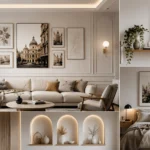
A well-planned Living Room Wall Design is the foundation of a visually balanced and emotionally engaging home. In modern interior design, walls are no longer passive backgrounds—they define mood, structure space, and reflect personal style.
Across Europe, from minimalist Nordic apartments to luxurious French interiors, wall design has evolved into a key design statement. Whether you live in a compact city apartment in Berlin or a spacious villa in Spain, your living room walls can dramatically influence how your space feels and functions.
In 2026, interior design trends focus on texture, lighting, and emotional comfort. Clean surfaces, natural materials, and layered aesthetics are replacing overly decorative walls. This guide explores everything—from minimalist Scandinavian styles to bold luxury feature walls—so you can design a living room that feels timeless, modern, and deeply personal.
The Evolution of Living Room Wall Design in Modern Interiors
Living room wall design has shifted from simple paint choices to a full architectural element of home styling. Today, walls integrate lighting, storage, texture, and even digital art.
Key Modern Shifts:
- From flat paint → textured surfaces
- From decoration → functional design
- From cluttered walls → minimal focal points
- From random art → curated wall storytelling
In countries like the Netherlands and Sweden, homeowners increasingly prefer calm, breathable wall aesthetics inspired by nature and daylight optimization.
Modern Living Room Wall Design Trends 2026
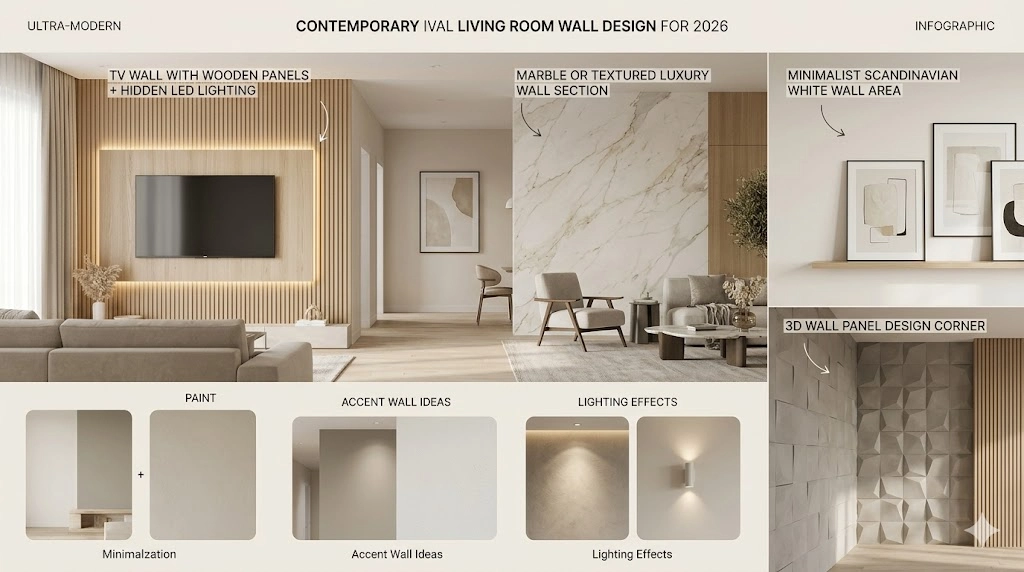
Modern design focuses on balance, simplicity, and usability.
Core Trends:
- Neutral color palettes (beige, ivory, warm grey)
- Integrated LED lighting systems
- Hidden storage walls
- Matte and soft-touch finishes
- Minimalist floating shelves
Why It Works:
Modern walls reduce visual noise, making rooms feel larger and more organized. This is especially important in compact European apartments in cities like Paris and London.
Luxury Living Room Wall Design Ideas
Luxury wall design is about depth, richness, and material storytelling.
Popular Luxury Elements:
- Marble slab feature walls
- Brass or gold trim panels
- Velvet-textured wall finishes
- Backlit stone installations
- High-end 3D geometric panels
Psychological Effect:
Luxury walls create a sense of prestige and comfort. They mimic high-end hotel interiors, making everyday living feel elevated.
Pros & Cons:
| Pros | Cons |
| Premium visual impact | Higher cost materials |
| Strong focal point | Requires maintenance |
| Adds property value | Not suitable for small rooms |
Luxury styles are widely seen in Italian-inspired interiors across Italy and Switzerland.
Minimalist Living Room Wall Design
Minimalism remains one of the strongest European design philosophies.
Core Features:
- Clean white or soft grey walls
- Single statement artwork
- Hidden lighting strips
- Balanced negative space
Design Psychology:
Minimalist walls create calmness by reducing sensory overload. They improve mental clarity and make spaces feel more open.
Best For:
- Small apartments
- Studio flats
- Urban homes
This style is especially popular in Denmark and Norway.
TV Wall Design for Living Room
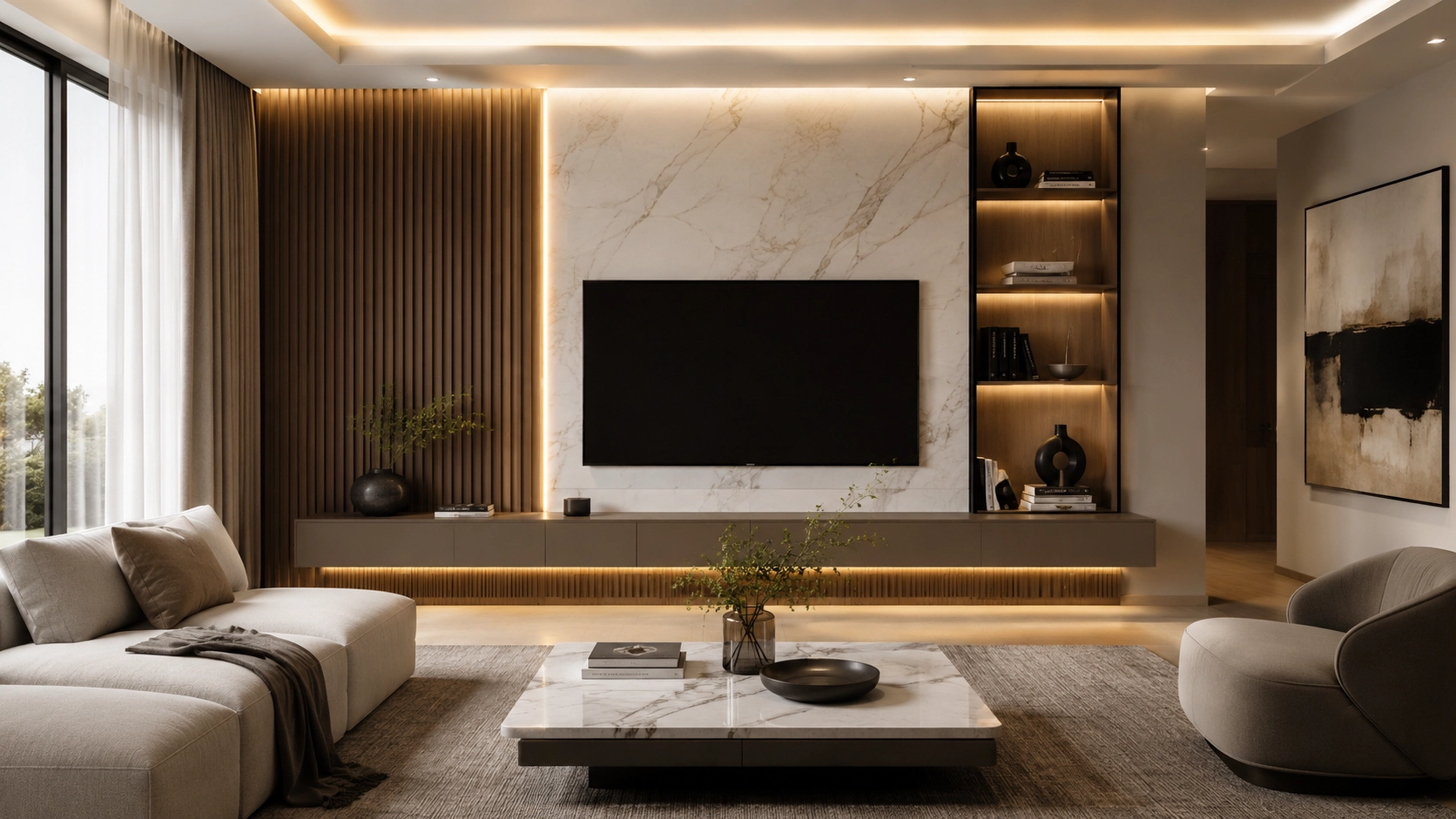
The TV wall is often the visual anchor of modern living rooms.
Trending Ideas:
- Wooden panel TV backdrop
- Floating entertainment units
- Stone-texture accent TV wall
- LED halo lighting behind TV
Expert Insight:
A well-designed TV wall hides cables, balances proportions, and prevents visual clutter.
European Living Room Wall Design Inspiration
European interiors are known for timeless elegance and material authenticity.
Regional Styles:
Scandinavian (Nordic Minimalism)
- Light wood textures
- White walls
- Natural daylight focus
French Elegance
- Molded wall panels
- Soft luxury tones
- Artistic symmetry
Italian Modern Luxury
- Bold textures
- Marble accents
- Warm lighting balance
German Minimal Design
- Functional layouts
- Clean geometry
- Industrial touches
European design prioritizes comfort, longevity, and subtle sophistication.
Living Room Accent Wall Ideas
Accent walls create contrast and personality in interiors.
Popular Options:
- Deep green or navy paint walls
- Wooden slat walls
- Brick or stone textures
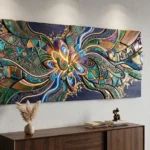
- Abstract wallpaper designs
Design Rule:
Only one accent wall should dominate the room to maintain balance.
3D Wall Panels Living Room Design
3D panels are a growing trend in modern architecture.
Benefits:
- Adds depth and shadow play
- Enhances lighting effects
- Creates futuristic appeal
Materials Used:
- Gypsum
- PVC
- Wood composites
Best Use:
Behind sofas or TV units for maximum visual impact.
Small Living Room Wall Design Ideas
Small spaces require smart visual expansion techniques.
Best Strategies:
- Light color palettes
- Vertical wall patterns
- Mirror installations
- Floating shelves
Mistakes to Avoid:
- Heavy textures
- Dark full-wall designs
- Overcrowded décor
Small apartments in cities like Paris and Amsterdam benefit greatly from these techniques.
Wall Color Psychology in Living Rooms
Colors directly influence mood and perception.
| Color | Effect | Best Use |
| White | Clean & spacious | Small rooms |
| Beige | Warm & cozy | Family spaces |
| Green | Natural & calm | Relaxation zones |
| Navy | Luxury & depth | Accent walls |
| Grey | Balanced & modern | Minimal interiors |
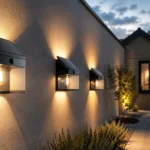
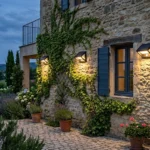
Wall Lighting Design Impact
Lighting transforms wall textures and shapes.
Effective Lighting Types:
- LED strip lighting
- Cove lighting
- Wall washers
- Warm ambient lamps
Expert Tip:
Lighting should highlight texture, not overpower it.
Common Living Room Wall Design Mistakes
- Over-decorating walls
- Ignoring lighting balance
- Mixing too many styles
- Poor proportion scaling
- Using wrong color contrast
Budget vs Luxury Wall Design
| Aspect | Budget Design | Luxury Design |
| Materials | Paint, wallpaper | Marble, wood panels |
| Lighting | Basic LEDs | Integrated systems |
| Cost | Low | High |
| Impact | Moderate | High-end aesthetic |
Maintenance & Durability Tips
- Clean textured walls gently
- Avoid moisture damage in wooden panels
- Use UV-protected finishes
- Repaint neutral walls every 3–5 years
Expert Living Room Wall Styling Tips
- Always create a focal point
- Balance textures with smooth surfaces
- Use natural materials where possible
- Match wall design with furniture tone
- Keep negative space intentional
Room-Based Wall Design Strategy
Living room walls should reflect function:
- Relaxation → soft tones
- Entertainment → TV wall focus
- Social space → accent walls
- Luxury zones → textured materials
People Also Ask
A:Light colors, mirrors, and vertical patterns work best. They make the room feel larger and more open without adding visual clutter.
A:The main focal wall facing seating areas is ideal. It should support cable management and allow balanced viewing height.
A:Yes, accent walls remain popular but are now more subtle—using textures, natural wood, or muted colors instead of bold contrasts.
A:Scandinavian minimalism is currently the most influential due to its clean, functional, and natural aesthetic approach.
A:Lighting highlights texture, creates depth, and enhances mood. Without proper lighting, even premium wall designs can look flat.
Conclusion
A powerful Living Room Wall Design is more than decoration—it is a combination of structure, emotion, and lifestyle expression. From minimalist Scandinavian simplicity to rich Italian luxury interiors, wall design defines how a space feels and functions.
In 2026, the most successful interiors focus on balance: texture with simplicity, lighting with warmth, and beauty with practicality. Whether you’re redesigning a compact apartment or a large living space, thoughtful wall design can completely transform your home atmosphere.
For more expert inspiration on modern interiors and European wall aesthetics, explore TheWallsArt.com and continue building spaces that reflect timeless design intelligence.