Introduction
Islamic wall art is really special because it combines feelings, cultural history and modern style. It is not something to look at, it shows how people have been doing things for centuries and it gives a sense of peace, loyalty and elegance. In the year 2026 Islamic wall art has become very popular in homes, offices and special places and people like it because of its complicated patterns, beautiful writing and geometric shapes.
People like wall art because it helps them to:
Add a spiritual feeling and be more aware of their thoughts and feelings
Celebrate the history and skills of people
Follow rules that say not to use pictures of people or animals
Make their homes look more balanced and nice
Islamic wall art is very flexible and eye-catching. It looks good in living rooms, bedrooms, hallways, prayer areas, offices and commercial spaces. It can be a touch or a big installation and it makes walls look calm and inspiring.
This guide talks about the history of wall art, the different styles that are popular now, tips for choosing the right one, ideas for where to put it, what materials to use, how to find it and things to think about when you are getting it. Whether you live in a city like Berlin, a Scandinavian city like Copenhagen or a classic city like Paris makes your home look nicer, more meaningful and more spiritual. It really makes a great choice, for your home and Islamic wall art is something that you will love.
What Is Islamic Wall Art? Meaning & Definition
Islamic wall art refers to artistic creations inspired by Islamic religious, historical, and cultural traditions, designed specifically for display on walls in residential, professional, or sacred environments. Unlike conventional art, Islamic wall art emphasizes abstraction, symbolism, and reverence, avoiding portrayals of humans or animals.
The True Meaning
Islamic wall art is more than decoration; it is a way to express spirituality and culture:
Spiritual Reflection. It shares messages from God, important verses and ideas.
Cultural Identity. It links homes with hundreds of years of history.
Abstract Beauty. It uses shapes and designs that bring calmness.
The main types of wall art are:
Calligraphy – Beautiful writing of verses from the Quran or special phrases.
Geometric Patterns – endless designs that show unity.
Arabesque Designs – Smooth, flower- patterns that represent harmony.
These designs are carefully made to be both beautiful and meaningful.
Why It Matters
Islamic wall art is important for reasons:
* Spiritual Symbolism
Artworks often have verses from the Quran names of Allah or phrases that make you think and feel calm.
Visual Harmony and Balance
Patterns that repeat, symmetry and balance create a sense of peace.
Cultural Heritage
Different styles come from places, like Arabia, Persia and the Ottoman Empire linking us with an artistic tradition.
Respectful Representation
By not using animal pictures respects Islamic values of simplicity and respect.
Core Meanings Behind Islamic Wall Art
| Element | Symbolic Significance |
| Calligraphy | Represents a connection with divine scripture and reflective meditation |
| Geometric Patterns | Embody unity, infinity, and cosmic order |
| Arabesque Motifs | Signify eternal life, natural rhythm, and interconnectedness |
Each element is purposefully chosen to contribute to the overall spiritual and visual impact of the piece.
The History of Islamic Wall Art
Islamic wall art has evolved over centuries, reflecting shifting aesthetic preferences, regional influences, and technological innovations.
Early Period
During Islam’s formative era, wall art primarily served religious and contemplative purposes:
Quranic calligraphy adorned mosques and sacred spaces
Simple geometric motifs symbolized divine order
Early designs emphasized subtlety and elegance to inspire spiritual focus
Middle Ages
The medieval period was a time when Islamic areas saw a lot of growth in art.
Persia, which is now called Iran, made beautiful tile mosaics and ceramics.
In Andalusia, which’s now part of Spain people began creating fancy decorations for palaces and mosques.
* The Ottoman Empire created wood carvings. Added decorative details to buildings.
This time period gave us famous Islamic art pieces that show how much care and attention to detail the artists put into them and these pieces have many layers of meaning.
The craft of making these artworks was very detailed. It required a lot of patience. The artworks had symbols that meant different things.
Islamic artworks from the period are still very much admired today.
The medieval period was really a time for Islamic art.
Modern Era
Contemporary has changed to fit in with styles:
Canvas prints work well in simple interiors
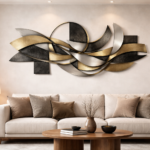
Metal designs cut with lasers look great in fancy spaces
* Art that mixes materials like wood, glass and textures is also popular
Modern designers are good at combining old Islamic symbols with new looks.
This makes Islamic art suitable for homes and offices in Europe and around the world.
They merge Islamic art with modern aesthetics.
Islamic art is now accessible and relevant, for global interiors.
Contemporary is adapted to modern sensibilities.
Core Elements of Islamic Wall Art
Arabic Calligraphy
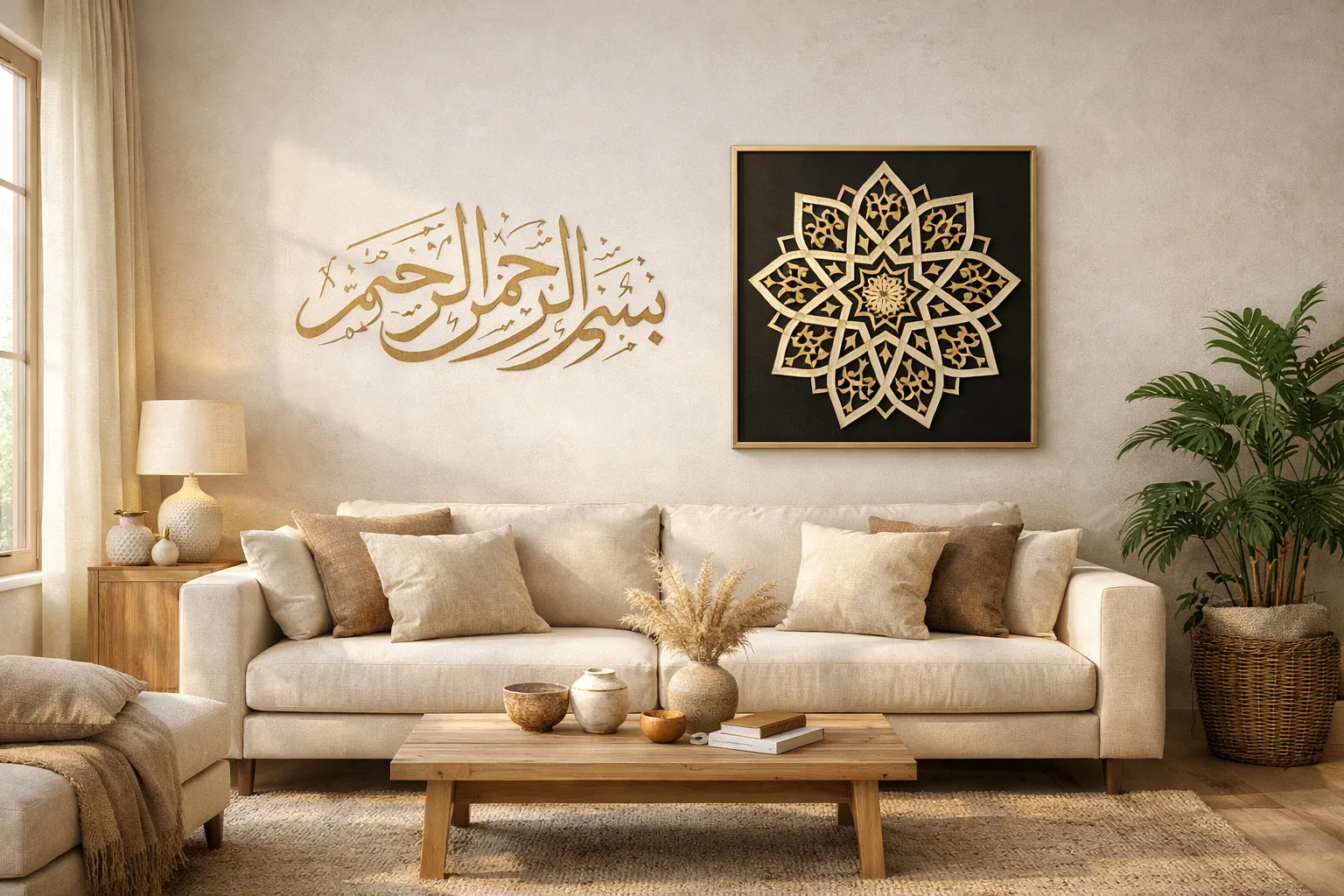
Arabic calligraphy is the cornerstone of Islamic wall art. Celebrated as the highest form of artistic expression in Islam, it conveys sacred texts while simultaneously showcasing aesthetic mastery.
Popular script styles:
- Thuluth – Elegant, flowing, and ceremonial
- Diwani – Decorative, ornate, and intricate
- Kufic – Angular, geometric, and bold
Common inscriptions include:
Quranic verses
Names of Allah
Devotional phrases such as “Alhamdulillah” or “Bismillah”
Geometric Patterns
Geometry is essential in Islamic art, representing order, logic, and the infinite nature of creation.
Key characteristics:
Repetition and symmetry
Interlaced shapes and interlocking polygons
Stars, circles, and tessellations that evoke visual balance
Arabesque Motifs
Arabesque designs are really pretty. Therefore have lots of curves and flowing lines. They have things like leaves and vines and spiral shapes in them.
They mean some cool things, such as:
* Continuity and renewal
Natural harmony
* Growth, rhythm and elegance
Arabesque designs are very calming to look at. They help connect shapes to things we see in nature. Arabesque patterns are great at doing this. That is why they are so nice to look at.
Why Use Islamic Wall Art in Interior Design?
Islamic wall art is really nice to look at. It has a lot of good things about it.
It brings a meaning to the rooms in your house and it is connected to the culture.
* It makes the rooms look more balanced and nice to look at.
Goes well with lots of styles like minimal, modern, Scandinavian and traditional.
* It also makes the colors and textures in the room look better.
When you use wall art in a thoughtful way it makes the space look really nice without being too much. Islamic wall art gives you a sense of calm. It looks very mature. Islamic wall art is a way to make your home look beautiful and peaceful.
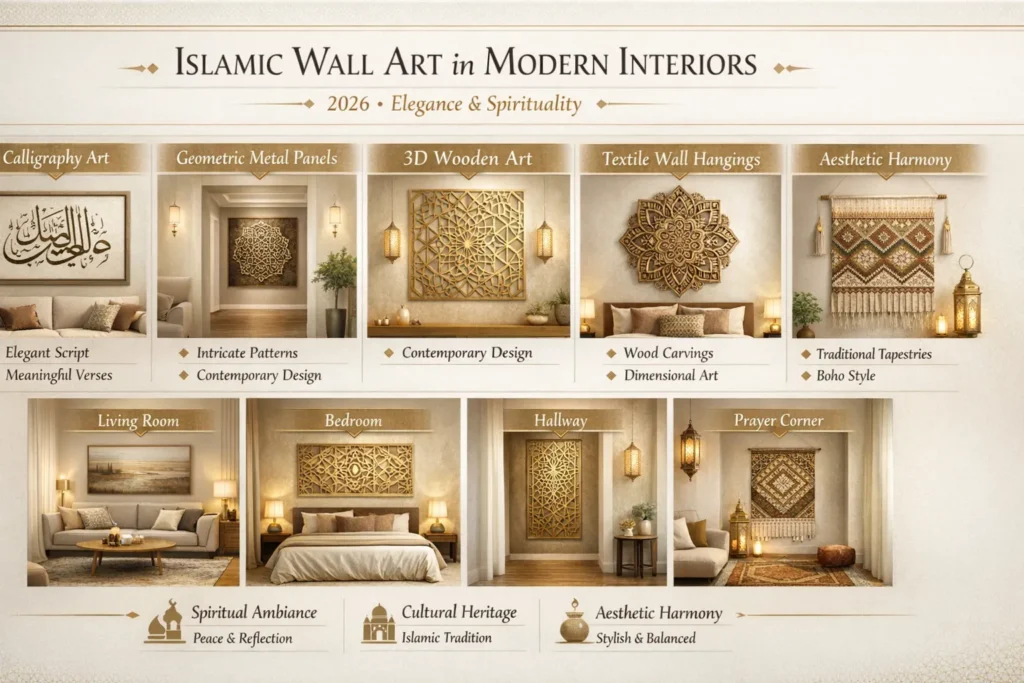
Top Islamic Wall Art Styles in 2026
1. Modern Arabic Calligraphy
Focus: Elegant scripts in soft, neutral tones
Best For: Living rooms, dining spaces
Modern calligraphy simplifies traditional scripts for contemporary aesthetics, blending seamlessly with muted interiors.
2. Minimalist Islamic Design
Focus: Clean lines and understated patterns
Best For: Scandinavian and modern minimalist homes
Minimalist Islamic art emphasizes negative space, tranquility, and understated elegance.
3. Geometric Canvas Prints
Focus: Bold, symmetrical shapes on canvas
Best For: Feature walls or focal points in living spaces
Geometric prints provide statement visuals while maintaining harmony with modern interiors.
4. Metal Laser-Cut Art
Focus: Intricate designs with depth and shadows
Best For: Luxury, contemporary, and high-end spaces
Metal artworks create tactile dimensions and interact with light, adding sophistication and texture.
2025–2026 Trends
| Trend | Description |
| Neutral Textures | Soft, calming tones that complement natural interiors |
| Abstract Geometry | Simplified shapes conveying minimalistic elegance |
| Nature-Inspired Motifs | Floral, leaf, and vine patterns for organic aesthetics |
| Mixed Media Pieces | Combinations of wood, metal, and canvas for layered bottom |
These trends are particularly popular in European homes, emphasizing understated beauty, cultural relevance, and new design principles.
How to Choose the Perfect Islamic Wall Art
Step-by-Step Selection Guide
- Assess Your Space
Measure walls, consider lighting, and note surrounding colors and textures. - Choose a Style
Decide between classic, ornate, or minimalist modern aesthetics. - Respectful Placement
Position sacred texts at eye level in clean, elevated areas. - Material Matters
Select canvas, metal, or wood depending on the room’s function and style. - Consider Meaning
Ensure signatures are apt, respectful, and dependent on nature.
Placement & Styling Tips
Living Room
Place above sofas or seating areas to create a visual anchor
Use neutral or complementary tones to enhance elegance
Entryway
Choose welcoming phrases such as Ayatul Kursi (with cultural sensitivity)
Maintain eye-level placement to convey respect and accessibility
Prayer Corner
Art should boost focus and serenity
Shun overly bright or distracting colors
Placement Rule: Shun placing sacred captions in low-traffic areas where they could be inadvertently disrespected.
Types of Islamic Wall Art Materials
| Material | Best For | Durability |
| Canvas Prints | Modern homes | Medium |
| Metal Art | Luxury interiors | High |
| Wood Panels | Warm, rustic spaces | High |
Material choice affects both aesthetic and longevity, making it essential to match the medium to your space.
Where to Buy & What to Look For
Seek authentic craftsmanship from artisans familiar with Islamic tradition
Verify correct spelling of inscriptions
Choose high-quality materials that last
Ensure the design respects cultural aesthetics
Supporting artists with knowledge of Islamic motifs ensures both authenticity and quality.
Pros & Cons
Pros
Conveys profound spiritual and cultural meaning
Integrates seamlessly with modern and traditional decor
Adds narrative depth and visual interest
Harmonizes with various color palettes
Cons
Requires mindful, respectful placement
May not suit all interior styles
Craft quality varies; careful selection is necessary
FAQs
A: Yes, provided the placement is respectful and the art is maintained clean and intact.
A: Yes, with appreciation and respect for the cultural and spiritual context.
A: Dust regularly, avoid direct sunlight, and clean gently with soft clothes.
Conclusion
Islamic wall art is timeless. It connects the past to today’s design. When picked and placed with care it turns rooms into meaningful and peaceful spaces.
You can find types of Islamic wall art.
* If you like designs, a minimalist calligraphy piece is great for a modern home.
* If you prefer something a geometric installation looks amazing in a luxurious living room.
Islamic wall art helps you show your faith, culture and style in ways.
To choose the Islamic wall art, think about the style, where you will put it, what it’s made of and what it means.
This way your walls will be more than surfaces.
They will tell a story. Show a rich history of art.
Islamic wall art also fits well in European homes.
It adds beauty. Makes the space special.