Introduction
Coastal Wall Art brings any optical or sculptural artwork inspired by the sea, beaches, maritime lifestyle, or coastal landscapes. It introduces a sense of tranquility, nature, and seaside grace into your home. Unlike generic wall décor, coastal art repeats marine motifs — spanning sandy shores, sleek waves, seashells, boats,radar, and even driftwood beauty.
This full guide is designed to flash:
- The essence and scope of coastal wall art
- Why it’s gaining unprecedented popularity in 2026
- Leading styles, forms, and materials
- How to select, place, and display coastal art
- DIY coastal projects for personalized spaces
- Commonly asked questions
By the conclusion of this article, you will have a thorough understanding of how to utilize coastal wall art to cultivate a soothing, sophisticated environment — particularly in European-style interiors.
Why Coastal Wall Art
In 2026, homeowners and interior designers are focusing on creating calm, natural, and serene living spaces. Coastal wall art is a perfect way to achieve this, blending stylish design with the soothing, restorative feeling of being close to nature.In 2026 people who own homes and interior designers are really into making their homes look calm and natural. Coastal wall art is a way to do this. It brings together design and the good feeling you get from being in nature like Coastal wall art.
Key drivers behind this Coastal wall art trend include:
The ocean and its colors—soft blues, sandy neutrals, and calming shades—instantly evoke a sense of peace when incorporated into coastal wall art. Adding to your home creates a serene, relaxing atmosphere, which is exactly what this style is all about.
Coastal wall art is incredibly versatile, seamlessly fitting into any space—from a minimalist Scandinavian apartment to a classic European townhouse or a sleek modern loft—without overpowering your existing décor.
* Eco-conscious Materials and Sustainability
People want to buy Coastal wall art decorations made from things or things that have been recycled like driftwood, seashells and woven fibers because often uses materials that’re good for the earth which makes look good and is also good for the environment and that is important for Coastal wall art.
* Wellness-Focused Homes
Because of the pandemic people are more aware of how important it’s to take care of their minds and homeowners want to make spaces that help them relax, be mindful and feel connected to nature with Coastal wall art. Inspired decorations, like are a way to do this they bring the calmness of nature into your home and that is what Coastal wall art does.
* Connection to Travel and Seaside Memories
Coastal wall art also helps people remember their vacations or times they lived by the sea. It adds a touch to the way they decorate their homes with Coastal wall art. That is a nice thing about Coastal wall art.
Common Themes in Coastal Wall Art
Coastal wall art typically includes:
- Seascapes and Ocean Horizons – expansive vistas of beaches and distant waters
- Wave Patterns & Abstract Oceanic Designs – fluid, artistic interpretations of the sea
- Nautical Symbols – ships, anchors, compasses, and steering wheels
- Natural Elements – seashells, coral forms, and driftwood arrangements
- Photography Prints – vivid images of European coasts, sunrises, and maritime scenes
These recurring themes cultivate an air of calm, natural beauty, and understated luxury in interior zones.
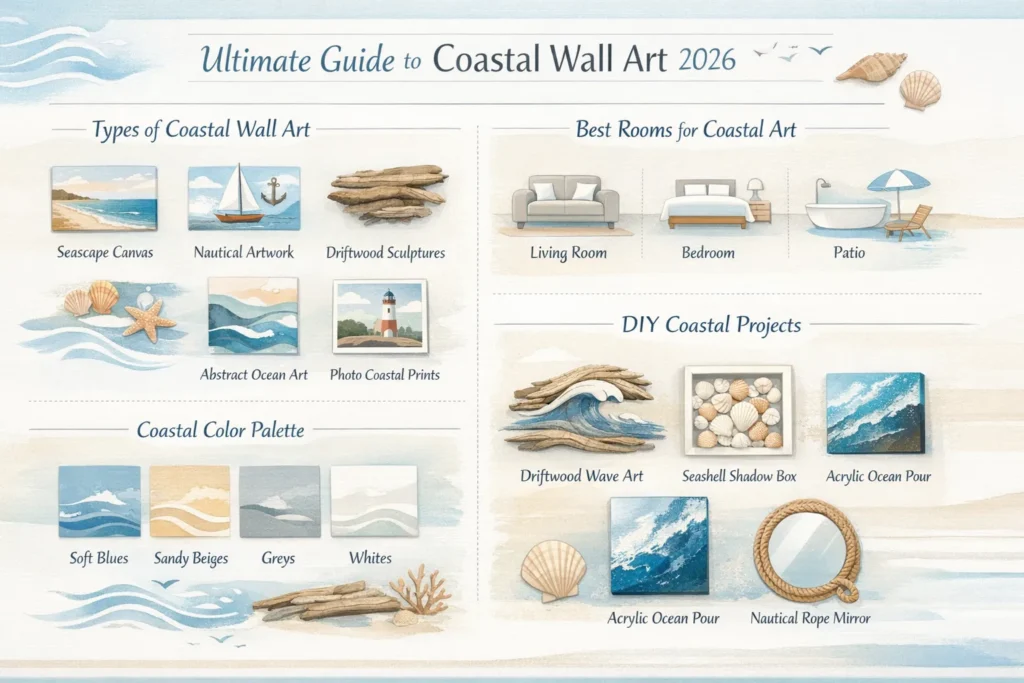
Types of Coastal Wall Art
Different kinds of serve distinct purposes depending on room type, size, and interior style. The table below offers a comparison of popular types:
| Type | Medium | Ideal Room | Advantages | Limitations |
| Seascape Canvas Prints | Canvas, Wood | Living Room, Bedroom | Lightweight, Classic appearance | Can fade in sunlight |
| Nautical & Boat Artwork | Canvas, Wood, Metal | Study, Kitchen | Detailed, Thematic | May appear formal or rigid |
| Shell & Driftwood Sculptures | Natural Wood, Shell | Hallway, Bathroom | Textured, Eco-friendly | Heavy; requires robust mounting |
| Abstract Ocean Art | Canvas, Acrylic | Modern Spaces | Minimalist, Stylish | Could feel too contemporary |
| Photographic Coastal Prints | Wood, Acrylic, Metal | Bedroom, Office | Realistic, Striking | May produce glare under glass |
By Understanding these types, you can strategically select pieces to complement your home’s function, scale, and style.
Best Styles by Room
Living Room
The living room serves as the social heart of the home, making it ideal for statement coastal art.
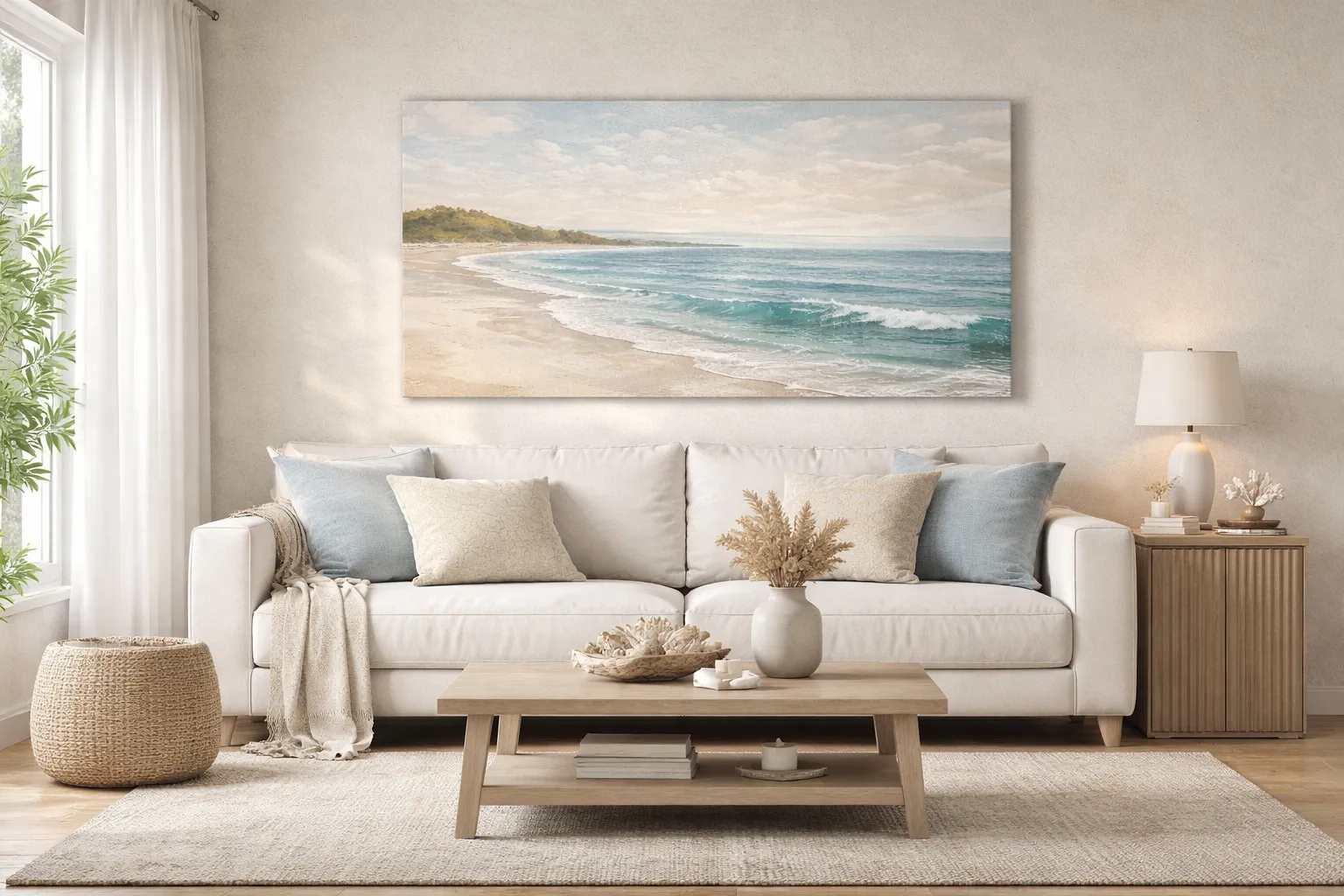
- Large Seascape Canvas Prints: Hang above the sofa to draw attention and anchor the room
- Driftwood Sculptures: Add tactile bottom and natural feeling
- Soft Coastal Palette: Muted blues, greys, sandy beige jewel harmonize with new gear
- Furniture Pairing: Minimalist seating and airy textiles enhance the coastal vibe
Example: A 120×180 cm marshy canvas print above a white linen sofa builds a serene focal point.
Bedroom
Bedrooms demand calming, restorative aesthetics.
- Pastel Ocean Prints: Subtle blue, grey, and sandy hues
- Small Shell Arrangements: Create optical interest without vast
- Layered Textures: Linen or cotton wall hangings accompaniment soft gear
- Placement Tip: Position art near your line of sight upon waking for a calming start to the day
Bathroom
High humidity areas require mist-resistant options:
- Nautical Framed Prints: Anchors, boats, and sea photography
- Resin Seashell Art: Durable and optically engaging
- Color Scheme: Blue-and-white combo evoke maritime charm
- Caution: Shun untreated canvas or paper prints; they fail quickly in beef
Outdoor & Patio Spaces
Transform patios or balconies into seaside retreats:
- Weatherproof Metal Art: Resistant to sun, rain, and cold changes
- Reclaimed Driftwood Displays: Adds natural simple charm
- Nautical Net Décor: Lightweight and thematic
- Tip: Always confirm the material’s durability against outdoor elements
How to Choose the Perfect Coastal Wall Art
Selecting coastal art can be daunting without an ordered way. Follow these five practical steps:
1 — Measure Your Wall Space
- Use a tape measure for accuracy
- Mark potential placements with painter’s tape or paper templates
- Ensure art fills roughly 60–75% of the wall; too small appears lost, too large feels cluttered
2 — Match the Color Palette
- Soft, European-inspired hues work best: blues, sandy neutrals, greys, and whites
- Shun colors that clash with existing table, curtains, or flooring
3 — Mix Textures
- Combine canvas for softness
- Include wood for warmth
- Integrate metal for a sleek, contemporary touch
- Layering materials creates depth and visual interest
4 — Avoid Common Clichés
- Cartoonish palm trees
- Overused starfish motifs
- Choose elegant pieces featuring realistic coastal photography or subtle abstract waves
5 — Consider Room Function
- Bathrooms and outdoor zones need mist-proof or weather-resistant art
- Bedrooms and living areas can employ soft canvas, framed prints, or mixed media
Best Materials
Different materials suit different zones and creative goals:
- Canvas:Slight, affordable, classic; avoid humid or sunlit shot
- Metal: Extremely durable, suitable for outdoor zones; may reflect light
- Wood: Natural, warm arrival; can warp with fog
- Acrylic: Telling color, easy to clean; heavier and more fancy
How to Hang Coastal Wall Art Properly
Proper hanging enhances visual appeal and prevents damage.
Ideal Placement:
- Eye level is optimal for most art
- Leave a 10–15 cm gap above furniture
- Align centers for gallery groupings
Tools Needed:
- Level
- Tape measure
- Pencil
- Stud finder
- Wall anchors for heavier pieces
Pro Tips:
- Use rail systems for large galleries
- Double hooks for wide, heavy art
DIY Projects
Creating your own art offers personalization and cost savings.
1. Driftwood Wave Wall Art
Materials: Driftwood pieces, wood plaster, backboard
Steps: Arrange in wave shapes,plaster, let dry, hang
Result: Natural feeling and movement
2. Seashell Shadow Boxes
Materials: Shadow box frame, shells,plaster, optional paint
Steps: Arrange shells,plaster, close, and display
Best Use: Hallways or bathrooms
3. Ocean Acrylic Pour Painting
Materials: Acrylic paints, pouring medium, canvas
Steps: Mix paints,flow, tilt canvas, dry
Result: Abstract wave effects with flowing motion
4. Nautical Rope Mirror
Materials: Mirror, thick nautical tape,plaster
Steps: Wrap rope around line, secure
Placement: Hall halls or bathrooms
European Buying Guide
| Platform | Type | Price Range (EUR) | Best For |
| Etsy | Handmade, Unique | 50–250 | Custom, artisanal pieces |
| Amazon | Prints, Canvas | 30–150 | Fast shipping, variety |
| Pixels | Photo art | 60–200 | High-quality beach photography |
| Local Boutiques | Curated luxury | 150–600 | Premium décor |
Tips for Online Shopping:
- Confirm dimensions
- Check product reviews and ratings
- Seek UV protection for sunlit areas
- Verify frame material and quality
- Prioritize EU shipping for faster delivery
Top Coastal Wall Art Trends for 2026
- Natural Ocean Feeling: Driftwood, sand jewel, netted fibers
- Minimalist Ocean Prints: Simple lines, soft blues, neutral shades
- Large Statement Pieces: Bold, oversize art for living rooms
- Sustainable & Eco-Friendly Art: Recycled frames, upcycled materials
- Mixed Media Galleries: Combining prints, sculptures, and natural materials
FAQs
Coastal art: Waves,stranded, natural marshy scenes
Nautical art: Boats, anchors, maps, and navel life tools
Use a level, hooks, and wall anchors for heavy art; adjust center points for unified frames.
Yes, provided the info is weatherproof, such as treated wood or metal.
Yes, canvas and paper may fade; UV-protected prints are recommended for sunlit areas.
Medium (60×90 cm) is ideal for bedrooms; large (120×180 cm) fits living rooms.
Conclusion
Coastal wall art is more than decoration — it transforms the mood of anyone, offering serenity,charm, and a connection to nature. To optimize results:
- Select appropriate size and materials for each room
- Coordinate colors and feeling
- Mix DIY and curated pieces for unity
- Grasp soft, natural coastal palettes
With this wisdom, you can create a curative, stylish, European-inspired marshy altar in your home that adjusts perfectly with 2026 interior trends.