Introduction
Welcome to your full, beginner-friendly, and professional guide to horizontal wall art — a very skillful décor tool that can well deepen the image of a zone, introduce optical calmness, and inject personality into any room.
Whether you are artistic, a compact flat in Paris, a classic condo in Berlin, or a sprawling loft in Milan, horizontal wall art has the innate ability to unify your interiors, creating fluidity and character without vast walls.
This guide provides an in-bottom, step-by-step travel of how to select, place, hold, and style horizontal wall art to achieve creative peace, functional beauty, and cutting-edge design, suitable for both new and traditional European interiors.
Why Choose Horizontal Wall Art for Your Interiors
Horizontal wall art is more than a decorative accent — it carries the unique skill to alter dimensional perception, harmonize furniture preparations, and enhance the overall ambiance of your climate.
Expands Perceived Width
Artwork that extends reclining draws the eyes to the side, creating a sense of span.
- Ideal for narrow corridors, compact living zones, or stretched walls
- Makes interiors appear more open and airy
- Provides a subtle illusion of additional room without structural alterations
Anchors Furniture Optically
Most home gear— sofas, beds, sideboards, and media soothe— naturally adjust horizontally. Horizontal art complements this adjustment, providing an optical anchor and creating united, balanced style.
Complements Various Interior Styles
Whether your home embodies:
- Scandinavian minimalism with clean lines and muted palettes
- French chic with refined elegance and feelings
- Italian luxury with opulent yet restrained detailing
- German modernity with geometric precision
Horizontal wall art seamlessly integrates, offering adaptability across divergent styles.
Benefits & Psychological Influence of Horizontal Wall Art
Before procuring or hanging artwork, kindly its cognitive and creative gain is vital.
Core Benefits
- Enhances lateral spatial perception, making rooms appear wider
- Harmonizes with horizontal furniture shapes for optical balance
- Suitable for both extensive open-plan zones and confined rooms
- Aids broad layering with other wall décor runes
- Available in diverse styles, textures, and materials for tailored expression
Potential Drawbacks
- Oversize pieces may optically crush smaller rooms
- Incorrect hanging height can rattle dimensional unity
- Clashing colors or unlike themes may lower creative cohesion
Pro Tip: Always consider scale, color grade, and furniture bulk when selecting even pieces.
Horizontal Wall Art Ideas by Room
Strategic placement is essential. Improper positioning may render art unobtrusive or discordant.
Living Room
Best Placement:
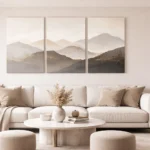
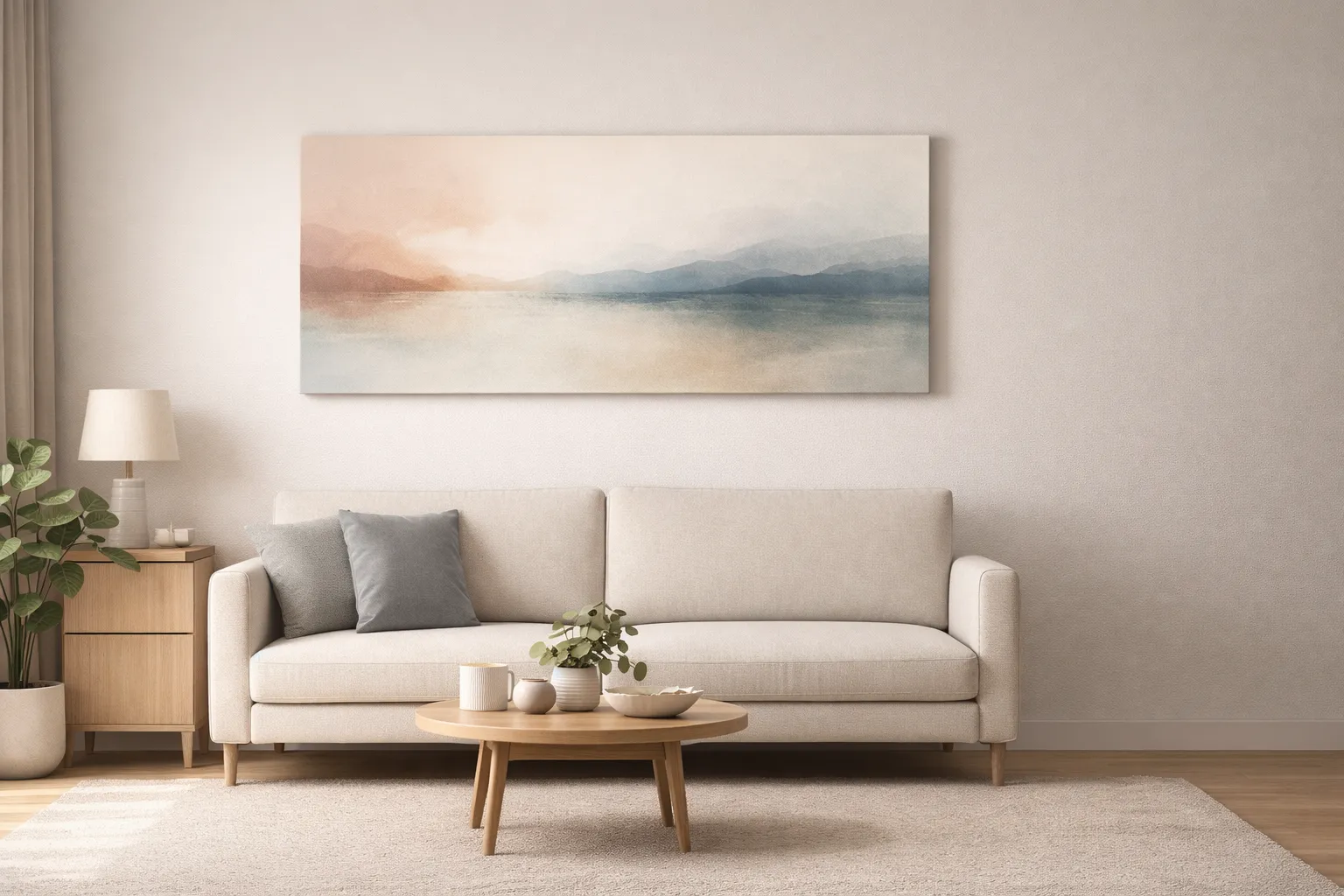
- Above sofas or lounge seating
- Over media consoles or cabinets
- Across fireplace mantels
Recommended Styles:
- Panoramic landscapes capturing natural vistas
- Urban skyline photography or illustrations
- Abstract compositions with horizontal flow
Design Insight:
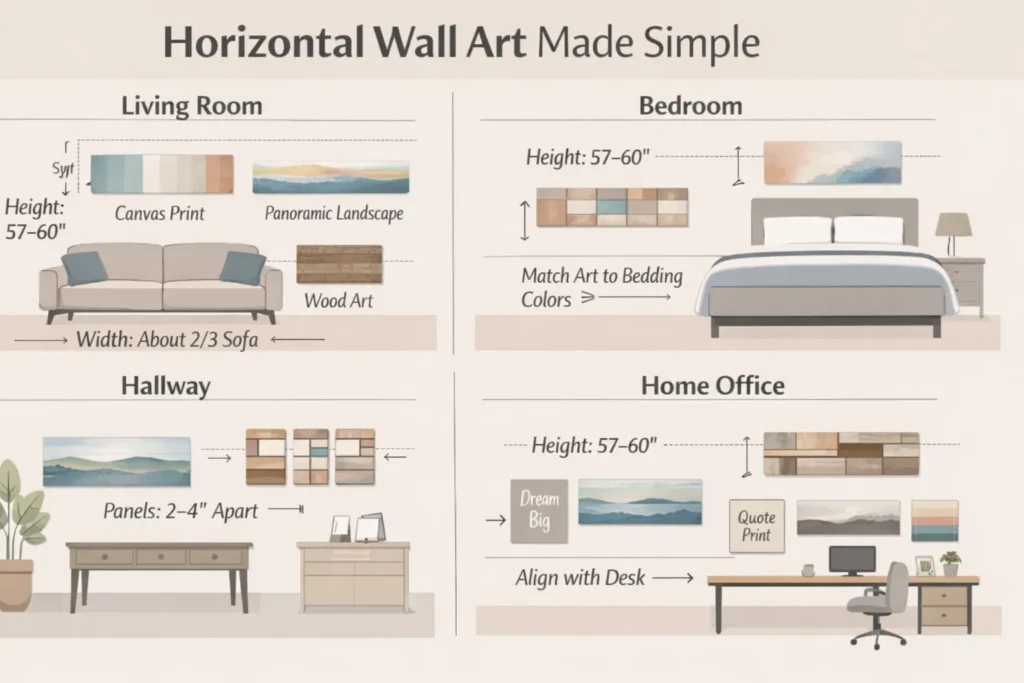
Aim for the artwork to term practically two-thirds of the width of furniture underneath, achieving composure without vast walls.
Bedroom
Best Placement:
- Above headboards for a serene focal point
- On dresser or side table walls
- Feature or accent walls to complement décor
Recommended Styles:
- Soft-toned landscapes for relaxation
- Minimalist abstractions for calm ambiance
- Horizontal patterns in muted shades
Design Insight:
Same artwork colors with bedding and soft gear to foster a mild, united climate.
Hallways & Entryways
Long and narrow corridors benefit immensely from horizontal compositions.
Recommended Styles:
- Multi-panel arrangements for dynamic optical interest
- Grand landscapes or cityscape range
Design Insight:
Maintain 2–4 inches of zones between multi-panel pieces for a polished, gallery-like creative.
Home Office & Workspaces
Recommended Styles:
- Motivational or inspirational quotes in wide formats
- Horizontal landscapes promoting calm and focus
- Minimalist lines with subtle color accents
Design Insight:
Select art colors that adjust with your office mood — calming blues and greens for focus, or active jewels for power and creativity.
Categories & Materials of Horizontal Wall Art
Horizontal artwork is available in a range of forms and materials, each suited to particular aesthetics and zones.
| Type | Texture & Appearance | Ideal Location | Style Compatibility |
| Canvas Prints | Soft, balanced finish | Living rooms, bedrooms | Minimalist, modern |
| Panoramic Landscapes | Wide, immersive view | Hallways, large rooms | Classic, simple |
| Wood & Mixed Media | Tactile, earthy | Offices, lounges | Nordic, bohemian |
| Multi‑Panel Sets | Flexible, modular | Entryways, galleries | Eclectic, new |
| Metal Sculptural Art | Glossy, industrial | Studios, lofts | Industrial, modern |
Canvas Prints
- Lightweight and easy to hang
- Ideal for minimal or new interiors
- Adds softness and subtlety to walls
Panoramic Landscapes
- Creates bottom and spatial delay
- Works in extensive or stretched rooms
- Enhances a classic or sober vibe
Wood & Mixed-Media
- Adds natural passion and tactile interest
- Complements rustic, Scandinavian, or eco-sure décor
- Suitable for offices or cozy living zones
Metal Wall Sculptures
- Offers modern, bold words
- Available in matte or bright finishes
- Works best in modern lofts or new studios
How to Select the Ideal Horizontal Artwork
Selecting the right piece involves more than personal preference — it requires thoughtful study of scale, color, style, and material.
Measure Your Wall
- Small rooms: opt for medium-sized pieces to maintain bulk
- Large walls: scenic vistas or multi-panel sets create vivid effect
Match Your Interior Style
- Minimalist: simple even lines or understated graphics
- Boho/Scandi: covered feelings, natural info
- Classic: framed grand or real landscapes
Color Coordination
- Cool jewels (blues, greens) optically expand zones
- Warm jewels (reds, oranges) create cozy, intimate environments
Material Selection
- Canvas for soft, inviting aesthetics
- Metal for bold, deliberate accents
- Wood for organic, balanced passion
Hanging & Placement Guide — Step-by-Step
Follow these precise steps for unbroken fitting:
Measure Wall & Furniture
- Determine wall width
- Artwork should cover ~2/3 of furniture width below
Mark the Center Height
- Aim for eye level: 57–60 inches from the floor
- Adjust kind of reliant on furniture height
Zone Multi-Panels Evenly
- Maintain 2–4 inches between each panel
- Symmetrical beauty enhances optical flow
Secure Properly
- Use anchors for also pieces
- Ensure the artwork is level before final placing
Step Back & Evaluate
- Mark from different angles and distances
- Make subtle adjustments for perfect adjustment
Trending Horizontal Wall Art Styles for 2026
European design trends in 2026 repeat balance, sustainability, and personal word.
Minimalist Panoramas
- Soft muted jewels and serene lines
- Perfect for creating calm, breezy zones
Abstract Horizontal Strips
- Color blocks and fluid horizontal patterns
- Adds action and change to interiors
Mixed-Media Art
- Combining canvas, wood, and metal
- Adds feelings, bottom, and eclectic charm
Personalized Photo Grids
- Custom sets effort family, travel, or city images
- Infuses personality and tale into interiors
Eco & Sustainable Designs
- Recycled info, FSC-certified wood, and sustainable fabrics
- Adjust with Environmentally sure European trends
Advantages & Disadvantages of Horizontal Wall Art
Advantages
- Expands perceived wall width and room dimensions
- Harmonizes naturally with horizontal furniture
- Works with diverse interior styles
- Easily combined with other decorative elements
Disadvantages
- Oversize pieces may crush compact zones
- Correct hanging height is vital for creative balance
- Specialized info may be difficult to source locally
FAQs
I think it is an idea to cover about two thirds of the width of the furniture that is beneath it. This will make everything look balanced.
Yes it can. The lines in the art go from side to side and this makes your eyes move sideways. It makes the room look wider than it really is.
You should hang it above things like sofas and beds and dressers and consoles. Try to put the middle of the art at fifty seven to sixty inches from the floor.
You can combine your art with frames that go up and down or with small things that you like. Just make sure that the colors all look good together.
Yes it is. Pictures of landscapes or motivational words and simple lines can help people focus and work well.
Final Thoughts
Horizontal wall art is really good for a room. It does a lot more than look nice. Horizontal wall art makes a room feel bigger. It helps the furniture look like it is, in the place. It also makes the whole room feel calm and nice.
You can choose a wall art that is a quiet picture of the countryside or a bold abstract design or even a special picture of your family. These horizontal wall art pieces are a way to make your room feel special. They make your room feel like you thought about how it should look. Your room will feel balanced and really nice to look at. Horizontal wall art is a choice to make your room feel this way.