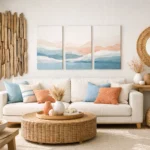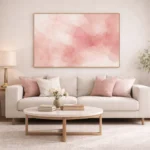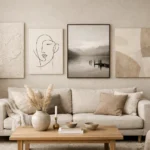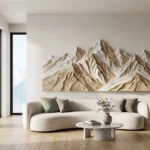
Introduction
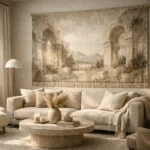
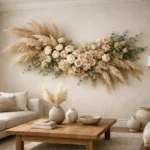
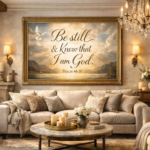
Your Living Room wall art is not merely decoration.
It is spatial storytelling.
In contemporary European interiors — whether in Scandinavian flats, Parisian heritage homes, or modern Berlin lofts — walls are treated as narrative surfaces that communicate mood, identity, and intention.
Furniture occupies a space.
But art defines its atmosphere.
The correct visual piece can:
Expand perceived space
Transform simplicity into sophistication
Introduce serenity, inspiration, or vibrancy
Express individuality without words
Yet most homeowners select wall décor impulsively.
They follow trends instead of applying intentional design logic.
This Ultimate 2026 Guide will help you understand:
- How to select wall art analytically
- What dimensions actually work
- Where to position it correctly
- Which aesthetics influence mood
- How European interiors apply art strategically
Instead of guessing — you will learn to decide like a professional interior stylist.
Why Living Room Wall Art Matters More Than Furniture
Modern interior theory separates room elements into two roles:
Furniture supports the function
Walls define the experience
Wall art influences:
- Visual structure
- Emotional ambiance
- Perceived room proportions
- Light interaction
- Aesthetic cohesion
Across Europe, oversized living room wall art is dominating interiors because it:
Minimizes clutter
Establishes a focal anchor
Creates architectural symmetry
In Nordic homes, a single large artwork often replaces:
Multiple shelves
Decorative noise
Small fragmented accessories
The outcome?
Calm, elevated luxury.
Types of Living Room Wall Art
Modern
Modern art emphasizes:
- Structured geometry
- Muted palettes
- Controlled contrast
Common across:
- Germany
- Netherlands
- Switzerland
Ideal for:
Open layouts
Contemporary homes
Scandinavian design schemes
Abstract
Abstract art is resurging in 2026 because it introduces:
Motion
Personality
Visual energy
Highly favored in:
- Italian interiors
- Spanish modern residences
Best suited for:
Neutral rooms needing vibrancy.
Nature-Inspired Wall Art
Biophilic aesthetics dominate Nordic environments.
Nature art helps:
Reduce psychological stress
Add warmth
Balance minimalism
- Compact apartments
- Calm interiors
- Soft-toned palettes
Minimalist
Minimalist art remains a dominant European preference.
Popular in:
- Denmark
- Sweden
- France
Best for:
Light-filled interiors
Neutral color schemes
Clean visual environments
The Psychology of Wall Art
Wall art is emotional engineering.
Different artistic formats produce different psychological responses.
| Art Style | Emotional Effect | Best Use Case |
| Abstract | Energy | Creative homes |
| Landscape | Calm | Relaxing spaces |
| Monochrome | Luxury | Elegant interiors |
| Bold Color | Creativity | Modern apartments |
| Textured | Warmth | Cozy environments |
Psychological Design Insights
Light-toned art enlarges perceived space
Dark-toned art enhances intimacy
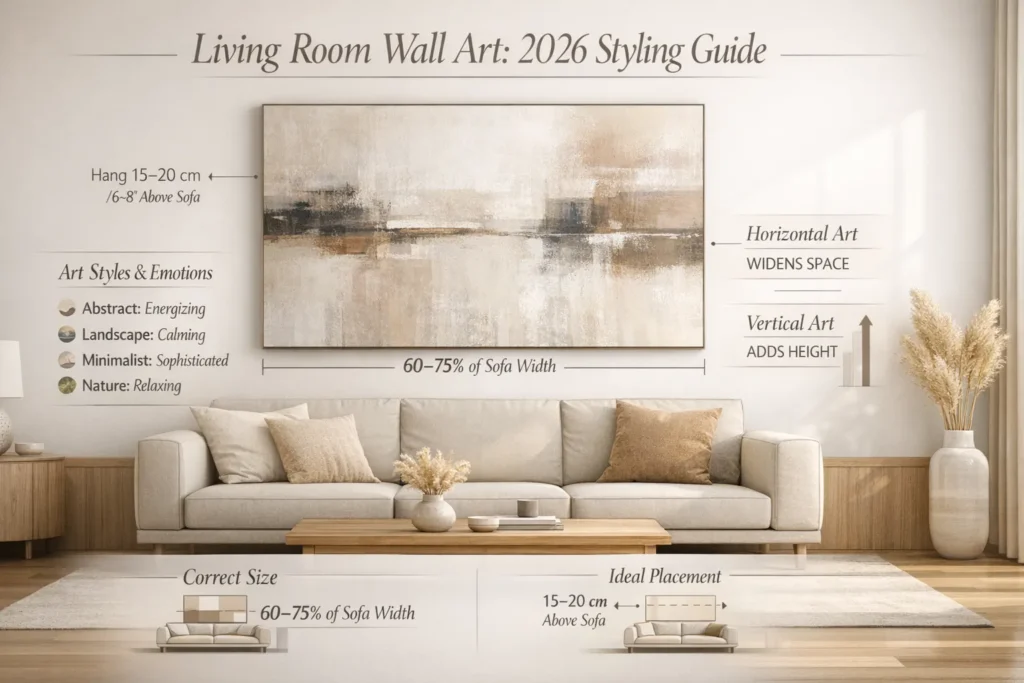
Horizontal formats widen rooms
Vertical compositions increase perceived height
Interior designers use art to alter perception — not merely decorate.
How to Choose the Right Size
The most common mistake?
Selecting artwork that is undersized.
The 60–75% Principle
Your artwork should measure:
60–75% of sofa width
| Sofa Width | Ideal Art Width |
| 180 cm | 108–135 cm |
| 220 cm | 132–165 cm |
| 260 cm | 156–195 cm |
This explains why oversized pieces create a refined, balanced look.
They harmonize with architecture.
Wall Art Placement Strategies
Wall Art Above Sofa
Key guidelines:
Hang 15–20 cm above furniture
Align with sofa center — not wall
Gallery Wall Living Room
Ideal for:
Story-driven interiors
Transitional homes
Vintage styling
Maintain spacing:
5–7 cm between frames
High Ceiling Placement
Use:
Vertical compositions
Triptych formats
Tall abstract panels
Common in:
Parisian-style interiors
Living Room Wall Art by Room Type
| Room Type | Recommended Art |
| Small Living Room | Light minimalist |
| Large Living Room | Oversized abstract |
| Open Plan | Modern geometric |
| Luxury Interior | Monochrome textured |
| Rustic Space | Nature-inspired |
Trending in 2026
Across Europe, emerging trends include:
Textured canvases
Sustainable materials
Personalized artwork
Vintage revival styles
Mixed-media compositions
Homes are shifting toward:
Identity-focused environments
Common Wall Art Mistakes to Avoid
Selecting undersized artwork
Hanging pieces too high
Matching furniture exactly
Overcrowding walls
Ignoring lighting dynamics
Budget vs Luxury Wall Art Strategy
Luxury is not defined by cost.
Luxury is defined by:
Scale
Placement
Intent
European designers often prefer:
One impactful piece instead of many small ones
This creates:
- Visual clarity
- Strong focal hierarchy
- Architectural harmony
Future of Living Room Wall Art
Future interiors will emphasize:
Personalized narrative art
Eco-conscious materials
Hybrid digital + traditional forms
Homes are becoming:
Emotion-led environments
Pros & Cons of Large Living Room Wall Art
Pros
Establishes focal dominance
Expands perceived space
Minimizes clutter
Elevates sophistication
Cons
Requires precise sizing
Needs intentional placement
FAQs
Use 60–75% of sofa width.
No — contrast works better.
Yes — it makes space feel bigger.
Yes — bold statement pieces are growing.
Conclusion
Living room wall art is no longer superficial ornamentation.
It is:
Spatial strategy
Emotional architecture
Identity storytelling
When selected with intention, it transforms interiors visually and psychologically.
Choose deliberately.
And your walls will communicate meaning.