Introduction
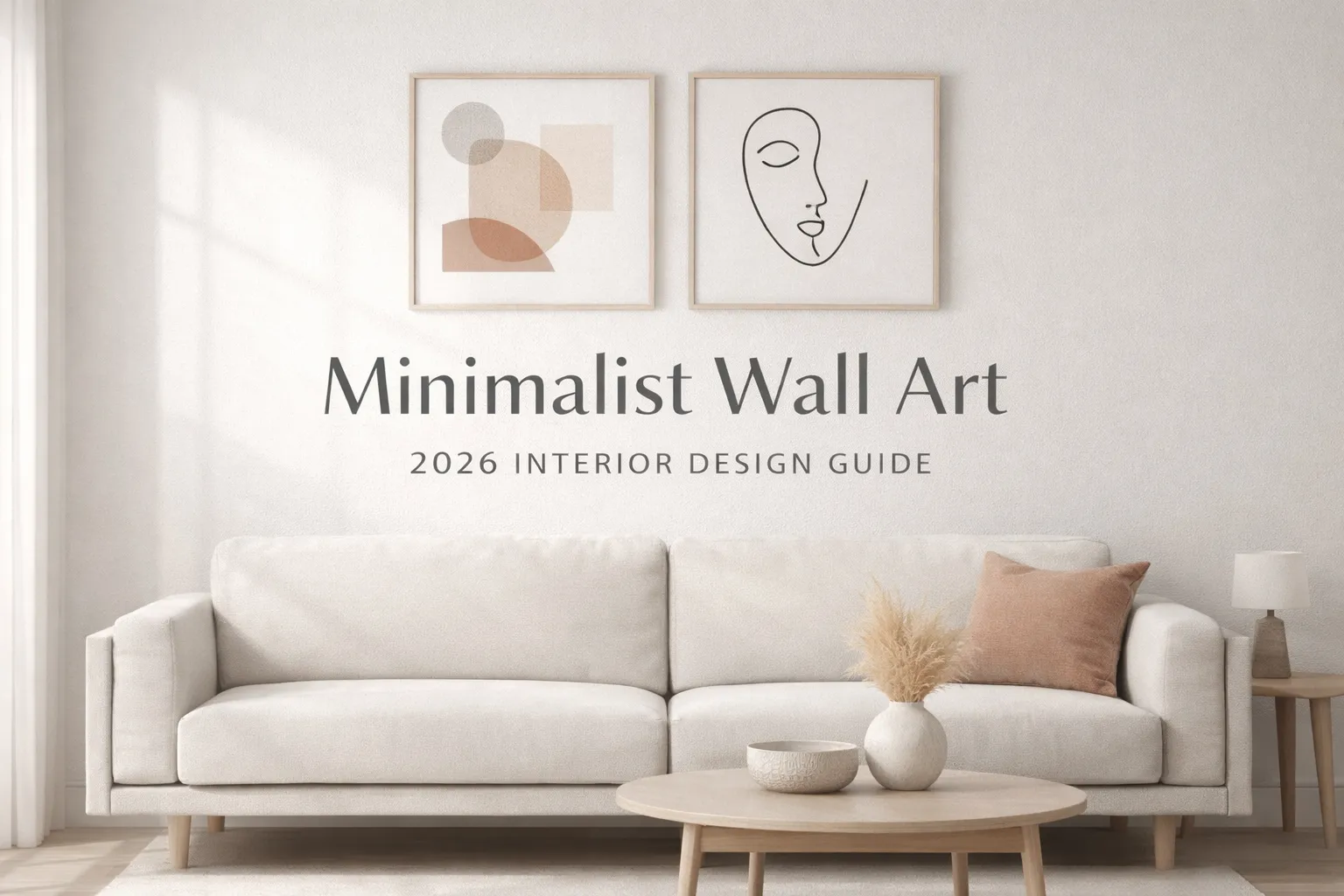
Minimalist Wall Art is more than something nice to look at. It is a way to make a room feel calm and peaceful. People in Europe really like this kind of art. You can see it in homes in Stockholm, Paris and Milan. They use shapes, colors that are not too bright and empty space to make the room feel nice. This makes the walls look nice and calm. It is a way to make a room look modern and fancy.
This guide will tell you everything you need to know about wall art. You will learn where it came from, how it can affect the way you feel and the different styles you can use. You will also learn how to use it in rooms and what is popular in Europe this year.If you want your home to look nice or if you design rooms for a living or if you like European art this guide will help you make good choices for your walls.
What Is Minimalist Wall Art?
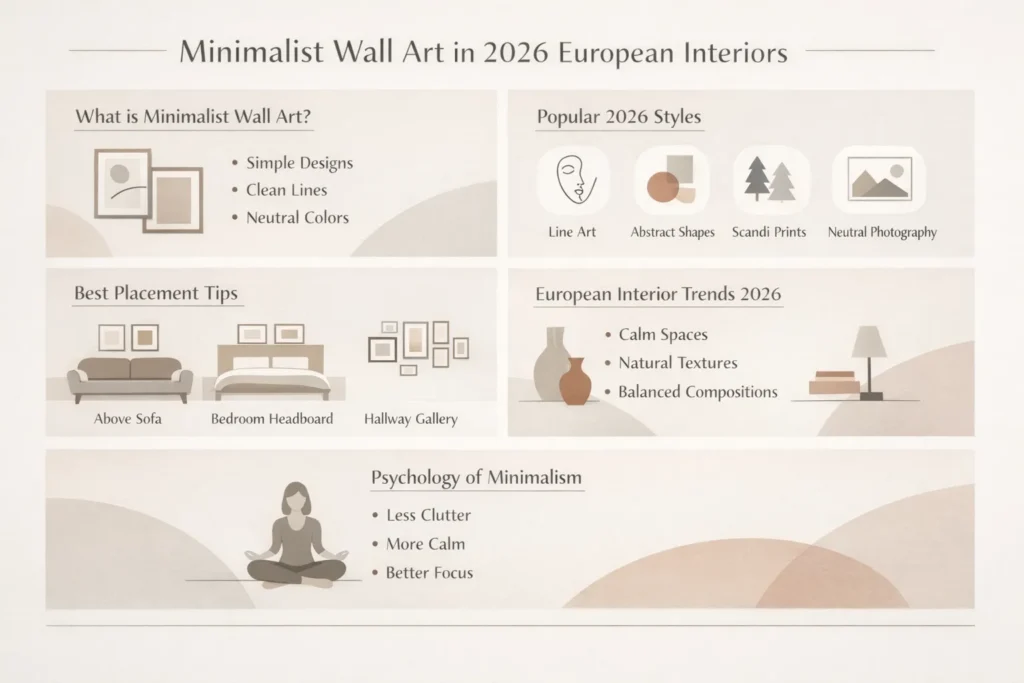
Minimalist wall art is about keeping things simple. It is based on the idea that less is more. This type of art does not like to have a lot of decorations. It likes to be plain and easy to look at.
Minimalist wall art is calm and peaceful to look at. Each thing in the art has a reason for being. It is trying to tell you something. It is not too much to handle.
Minimalist wall art is really about being simple and quiet. It likes to have some space, which makes it easy to understand.
Core Principles of Minimalist Wall Art
- Clean and simple lines are what you see in these designs. They are made with thought and have geometric shapes. The lines are clear and easy to see.
- The colors used are often neutral. You will see colors, pale pastels, earthy tones and shades of beige, grey or off-white.
- There is also a lot of space in these designs. This empty space is important because it gives your eyes a place to rest. It also helps you notice each part of the design.
- Each part of the design is important. The people who make these designs only include things that’re necessary. They do not add things that are not needed. Minimalist designs, like these have elements but they still make a big impact.
Why Minimalist Wall Art Matters
- It makes small rooms look bigger. Minimalist art can help you feel like you have a zone.
- It helps you relax. With stuff to look at your home can feel calm and peaceful. This is something people in Europe really like.
- It looks good, with everything. When you pick the minimalist art it goes well with your furniture, lights and decorations.
The History & Evolution of Minimalist Wall Art
Minimalist wall art emerged during the mid-20th century, primarily between the 1950s and 1960s, influenced by modernist buil, abstract expressionism, and post-war European design movements.
European Movements Shaping Minimalism
| Movement | Country | Influence on Minimalist Art |
| Bauhaus | Germany | Precision, geometrical forms, functional simplicity |
| Scandinavian Design | Sweden & Denmark | Light palettes, natural materials, calm and airy aesthetics |
| Modernism | France & Italy | Streamlined lines, understated elegance, and integration of form and function |
Over decades, minimalist wall art evolved to include:
- Abstract Geometrical Shapes – focusing on proportion, harmony, and unity.
- Line Art – minimalistic, continuous lines forming human figures, objects, or abstract beauty.
- Typography – concise, artistic phrases rendered superbly.
- Nature-Inspired Motifs – soft botanical elements or landscapes distilled into simple forms.
By 2026, minimalism integrates eco-conscious materials, tactile 3D feelings, and slightly customized words, maintaining unity while embracing modernization.
The Psychology Behind Minimalist Wall Art
Why does minimalist wall art evoke such calm, intentional energy? The answer lies in the brain’s response to unity, order, and mild aesthetics.
Psychological Benefits
- Reduces Visual Noise: Fewer elements reduce cognitive overload, helping the mind relax.
- Enhances Mental Focus: Clean, uncluttered designs improve purity and boost creative thinking.
- Promotes Serenity: Soft neutrals and deliberate negative zones elicit tranquility and emotional balance.
- Versatile & Adaptive: Minimalist art seamlessly complements luxury, new, and classic interiors without optical war.
Quick Tip: For bedrooms, choose soft greys, muted greens, or botanical motifs to enhance relief. For living rooms, energizing geometrical abstracts can prompt chat and action.
Most Popular Minimalist Wall Art Styles in Europe
| Style | Description | Best Rooms |
| Abstract Minimalism | Simple shapes, restrained colors | Living Room, Office |
| Line Art | Continuous or singular lines forming figures | Bedroom, Studio |
| Monochrome Prints | Black, white, grey, and earthy jewels | Living Room, Hallways |
| Typography Art | Minimal quotes in elegant fonts | Home Office, Studio |
| Botanical Minimalism | Simplified plant or floral motifs | Bedroom, Bathroom |
These styles are enduring, compliant, and ideal for European interiors where elegance, lightness, and optical serenity are prioritized.
How to Choose the Perfect Minimalist Wall Art
Selecting the right piece requires careful study of zone, palette, and bulk.
Room & Purpose
- Living Room: Prefer for a large word piece or a trio of new prints to create an optical anchor.
- Bedroom: Select calming, low-contrast symbolism to sell relief.
- Home Office: Choose ordered, moving pieces that enhance combination and yield.
Matching Palette & Tone
- Stick to neutral shades: beige, soft grey, off-white, or rare delicate.
- Adjust with furniture, flooring, and cotton for a mature European look.
Scale Matters
- Large Art: Should near two-thirds the width of bordering furniture.
- Small Sets: Arrange in grids with 5–10 cm beauty to shun clutter.
- Avoid Disruption: Oversize or small artwork can unbalance the room optically.
Minimalist Wall Art Ideas for Every Room
Living Room
- Oversize abstract inspection with slight soft jewels.
- Geometrical line prints above the sofa or fireplace.
- Softly balanced 3D wall panels to add dimension.
Bedroom
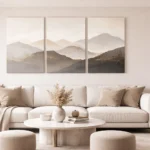
- Monochrome landscapes to enhance calmness.
- Minimal botanical artwork in delicate jewels.
- Shape art with soft lighting to sell peace of mind.
Office or Studio
- Single-line artistic composition pieces.
- Neutral geometrical prints with matte finishes.
- Minimal metallic accents to impart elegance without vast the zone.
Tip: Ensure art accompaniments existing furniture and décor—avoid optical race that detracts from room unity.
Trending Minimalist Wall Art Styles for 2026
Minimalism in 2026 evolves with stress on palpable experiences, sustainability, and slight personalization.
Key Trends
- Eco-Friendly & Sustainable Materials: Recycled wood, bamboo frames, and reborn solicit are more preferred by environmentally sure people.
- Feelings & 3D Elements: Low-relief layering or embossed effects create bottom without clutter.
- Nature-Inspired Minimalism: Simplified mountains, trees, and botanical logo interiors with natural calm.
- Personalized Typography: Family names, motivational quotes, or abstract words in clean fonts enhance friendship.
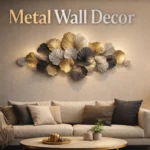
- Metallic Accents: Gold, silver, and rust details add cleaning without vast minimalism.
These trends combine timeless stillness with new flair, reflecting new European interiors that value both elegance and regard.
How to Style Minimalist Wall Art
Placement & Arrangement
- Single Focal Piece: Position above sofas, beds, or soothe tables for a commanding optical word.
- Gallery Walls: Use 3–5 prints with uniform frames and true beauty(5–10 cm) for harmony.
- Balance & Symmetry: Adjust pieces with table side or room architectural features.
Choosing Frames
- Prefer for thin, slight frames in black, white, or natural wood.
- Shun fancy or heavy frames that distract from the artwork’s minimalist root.
Layering & Feelings
- Combine inspect, metallic prints, and 3D art for a powerful bottom.
- Mix matte and slick finishes for slight contrast while careful minimalism.
Minimalist Wall Art & Interior Design Harmony
| Interior Style | How Minimalist Art Fits |
| Scandinavian/Nordic | Complements light wood, neutral jewels, bright airy zones |
| Modern European | Accentuates glass, metal, and streamlined lines |
| Luxury Minimalist | Adds subtle elegance to marble, velvet, and metallic feelings |
| Industrial Minimalist | Softens raw brick, concrete, and metal surfaces |
| French/Italian new | Highlights refined furniture and architectural details |
Buying & Selection Tips
- Materials: Canvas, wood panels, glass, metal, or recycled composites.
- Sustainability: Eco-keen Europeans prefer recycled or natural info.
- Climate Considerations: Lightweight frames suit humid areas; UV-protected prints preserve endurance under sunlight.
- Cost vs Luxury: Affordable prints suit casual zones, while sewn canvases uplift luxury interiors.
Common Mistakes to Avoid
- Overcrowding walls — minimalism thrives on spaciousness.
- Ignoring scale — too small or overly large art disrupts balance.
- Clashing colors — break visual harmony and reduce serenity.
- Ornate frames — detract from the minimalist aesthetic.
Pros & Cons of Minimalist Wall Art
Pros
- Timeless and gifted
- Urge calm, focus, and mental purity
- Easily coordinates with diverse décor
- Encourages sustainable choices
Cons
- Can feel rigid or cold if not styled thoughtfully
- Narrow color palettes may feel restrictive
- Requires careful study for placing and scale
FAQs
A1: Minimalist wall art has lines, simple colors, empty space and not too many things on it.
A2: Yes you can mix art with other styles. It works well with luxury, Scandinavian or industrial designs.
A3: For big art it should cover about two thirds of your furniture width. For sets leave about 5 to 10 centimeters between them.
A4: Minimalist wall art prices vary. You can find prints or do it yourself. There are also custom-made canvases.
A5: To keep your minimalist art looking good, dust it often. Do not put it in sunlight. Change your pieces sometimes. Update your frames or textures every now and then.
Conclusion
Minimalist wall art is a choice because it is calm and simple. It looks nice and elegant. To make your room look good you need to pick the pieces of minimalist wall art that go well with what you use the room for the colors you like, the furniture you have and what is popular in Europe. This way you can make your room look nice without making it look too busy or sloppy.
Minimalist wall art can be things like abstract pictures, lines that go on and on, black and white prints and designs that have texture and are three dimensional. Minimalist wall art says a lot without being big. In 2026 people like wall art because it is good for the earth, it lets people show who they are and it has nice feelings. This makes minimalist wall art a choice for homes in Europe because it is flexible and inspiring.
If you follow some rules and tips your walls can look really nice and calm. They can show that you like modern things and that you like the calm feeling of minimalist wall art. Your walls can be like a stylish picture that shows how sophisticated and calm you are, like your home with nice minimalist wall art.