Introduction
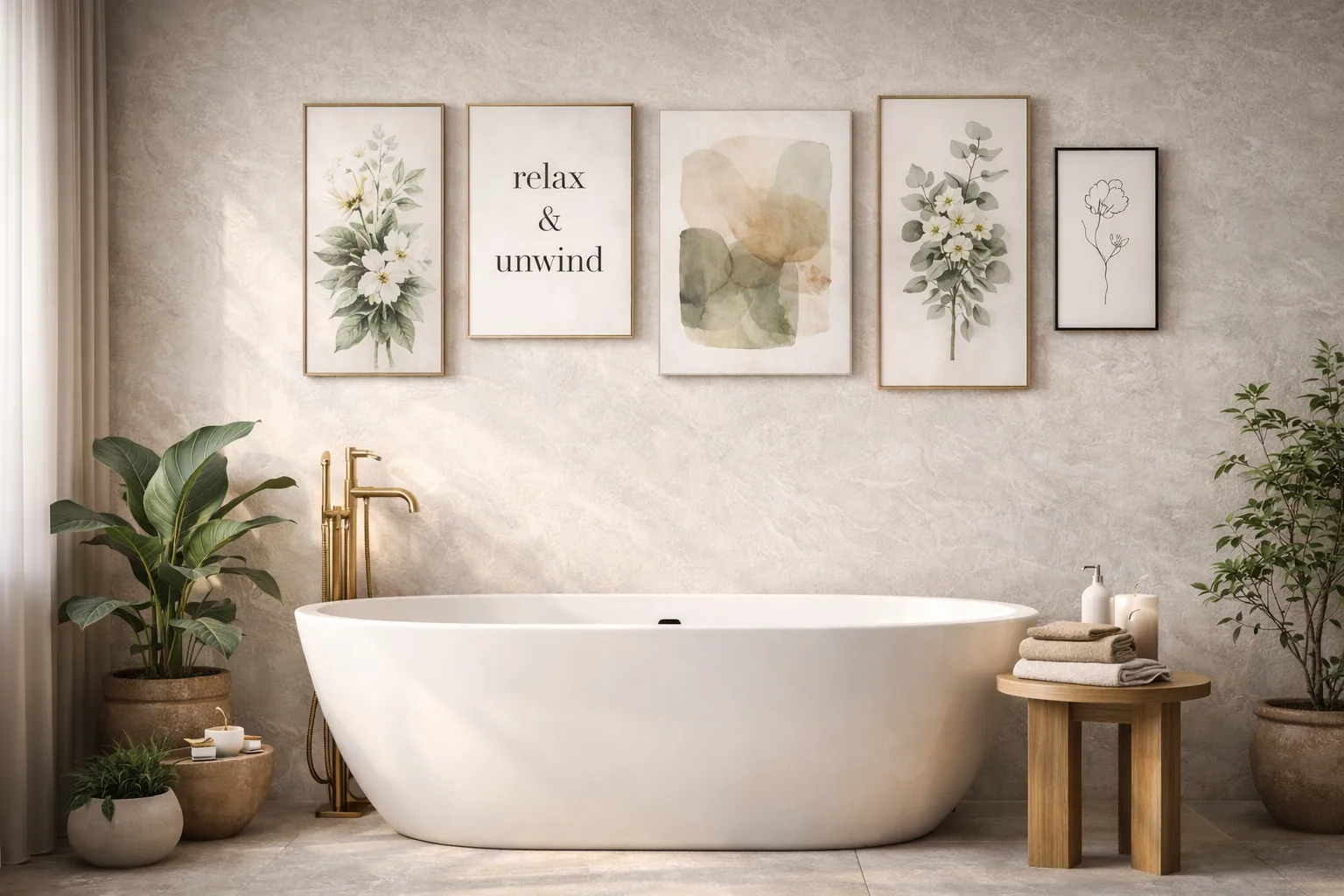
Suddenly, bathrooms care about how they feel, not only function. One thoughtful artwork on the wall changes everything quickly, adding warmth mixed with hints of vintage elegance. It might be a tightly sealed canvas ignoring moisture, or perhaps a narrow frame filled with strong lines or rough surfaces – every pick alters the air of the space. Wall Art for Bathroom these small touches do more than fit in; they pull walls outward, lift overhead spaces, turn cramped areas into something lighter.
Walls lead the way in 2026 bathroom thinking – European calm returns through touchable finishes instead of bold paint. Focusing on endurance, more people pick fixtures made from rugged stone or tiles finished by hand. Since steam travels upward, art appears above eye level here, yet elsewhere hides behind reflective glass for a quiet reveal. Soft shades gain favor alongside daylight’s flow, giving materials space to speak without noise. Items such as tight-sealed pottery and hardware that resists corrosion become common, simply staying put across seasons.
Why Wall Art Transforms a Bathroom
Most people skip decorating bathrooms, seeing them just as functional spots. Still, a well-placed piece of art shifts everything – quietly lifting the atmosphere, adding warmth, giving character where none seemed needed.
Enhance Mood and Air
A lone object, picked just right, brings quiet elegance fast – sudden stillness without effort:
- Peaceful green shapes fill a room when ferns curl beside eucalyptus stems. Warm light touches leaf edges, softening hard walls. Nature slips inside through quiet patterns on paper.
- Faint gems glide through quiet sweeps of line, subtle shapes forming calm rhythm. Soft bends meet thin strokes, creating balance without noise. Hints of color appear gently, never loud. Simple marks hold space with ease, resting in quiet design.
- Light tones like cream or pale grey help areas feel open. These shades bounce brightness around a room. Quiet hues invite calm without drawing attention. Whites that aren’t stark keep spaces feeling gentle. Shadows move smoothly across such surfaces.
A quiet calm grows when these symbols are placed close, especially where space feels tight. Their presence shapes an atmosphere that breathes slowly, like warmth rising off stone. Each mark holds its ground without shouting – instead they lean into one another, building stillness. Not by force, but through alignment. The air changes, takes on texture. Light moves differently here. Small rooms become containers for pause.
Express Your Personality
A splash of color here, maybe a bold tile choice – this space speaks before you do. Walls take on mood through texture instead of words. Fixtures twist function into quiet statements. Light bounces differently when it hits surfaces chosen with care. Even silence feels styled after stepping inside:
- Who knew words could wink? Clever lines bounce around, turning simple letters into something that grins back. Puns sneak in like inside jokes. A little smirk stitched into each headline. Letters dance instead of sit. Joy hides between the glyphs, waiting to be noticed.
- Swaying fields under soft light – these views from Provence whisper calm. A villa near Siena sits among cypress trees, holding quiet charm across centuries.
- A sharp look takes form through clean lines, where steel meets strong angles. Fresh styles find balance in geometric forms, their presence felt without effort. Metal catches light differently now, shaped by today’s hand. Angular designs stand out, not loud but sure. These pieces fit how people see space these days – clear, deliberate, alive.
Bold choices often work best when they match who you are, yet still echo a European feel. Style finds its footing where self-expression meets subtle influence.
Blend with European Décor Styles
From Scandinavian minimalism to French sophistication, wall art can unify the entire design:
- Scandinavian Bathrooms: White and grey jewel paired with subtle abstract prints enhance natural light and serenity.
- French-Style Bathrooms: Framed vintage posters or pastel mime art create a soft, elegant touch.
- Italian Modern Interiors: Textured, metallic, or sculptural art adds bottom and tactile sophistication.
Choosing the Right Materials for Bathroom Wall Art
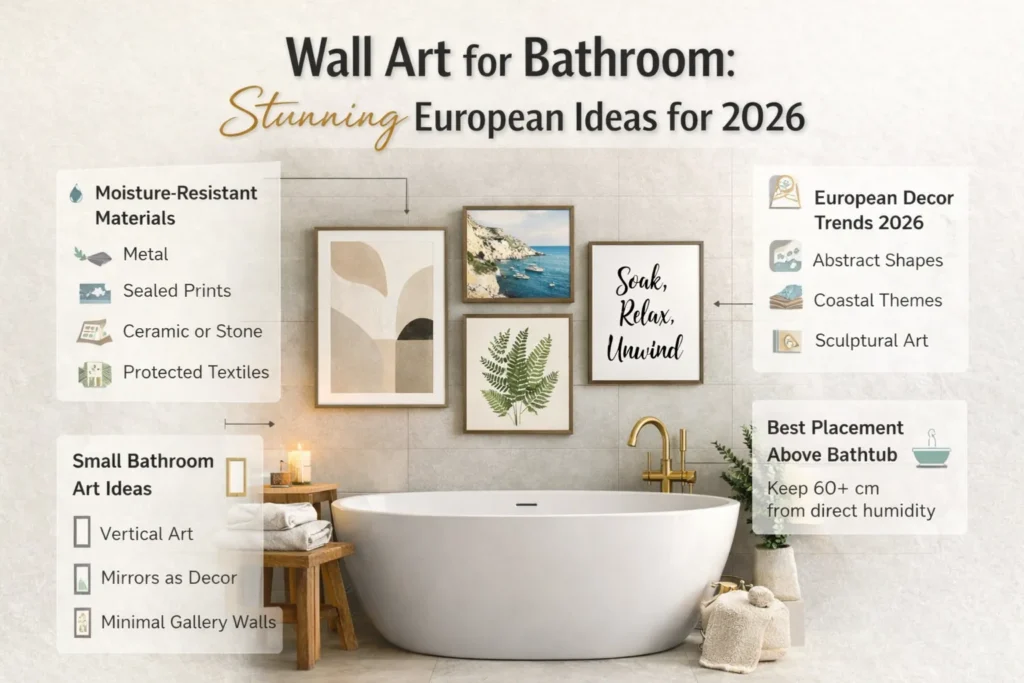
Bathrooms are prone to humidity and fluctuating climate, making material selection crucial. European interiors often favor fog-resistant and aesthetically skillful materials.
| Material | Benefits | European Examples | Tips for Longevity |
| Metal (Rust-Proof) | Sturdy, modern, easy to clean | Stainless steel geometric panels | Choose powder-coated or anodized finishes |
| Sealed Prints & Framed Art | Protects paper or photographs | French vintage posters behind glass | Seal edges with silicone or waterproof caulk |
| Ceramic / Stone Art | Durable, humidity-proof, tactile | Italian mosaic tiles | Use waterproof adhesive and secure mounting |
| Textile Art with Protective Layer | Adds warmth and texture | Scandinavian woven hangings | Apply anti-mold treatment or laminate backing |
Pro Tip: Avoid placing unprotected paper prints near showers. Laminated, framed, or metal-backed artwork is safer and long-lasting.
European-Inspired Bathroom Wall Art Ideas
Botanical and Nature-Inspired Prints
Bringing greenery indoors creates a calming, rallying air:
- A splash of jungle green catches the eye first. Fern shapes unwind like slow breaths across the page. Herb outlines appear, sketched as if caught mid-thought. Simpler leaf forms follow, quiet and steady. Each mark pulls from nature but stays light on its feet.
- Besides ink that resists water, try sealing prints under laminate. Frames with glass shielding help when mist shows up. Protection kicks in before fog leaves marks.
Abstract Art for Contemporary Bathrooms
Abstract designs offer movement, personality, and minimalism:
- Serenity settles where space is tight – soft tones open up compact baths. Airiness lingers, quietly shaping rooms that breathe without strain.
- Deep tones work well on one wall to draw the eye. They bring a quiet intensity into view.
Above a standalone bathtub in a Berlin loft, monochrome paintings hang. These bold shapes catch the eye without losing grace. Instead of blending in, they stand out quietly. Sharp lines meet soft light. The space feels open yet focused. Neutral tones hold everything together. Art does not shout here. It speaks through stillness.
Gallery Walls
Curating a group of smaller pieces creates dynamic optical interest:
- Layout Tip: Stick to a central theme—botanical, geometrical, or typography.
- Spacing: Keep 10–15 cm between frames to maintain unity.
- Example: Clustered monochrome prints above a vanity can become the room’s focal point.
Humorous or Typography Art
Adding playful phrases or bathroom puns introduces charm:
- Durability: Always prefer for covered or glass-protected frames.
- Styling: Pair witty quotes with rare history for a chic, light-hearted effect.
Hanging Bathroom Wall Art Like a Professional
Correct placement ensures aesthetics and material endurance.
Guidelines
- Eye Level: Center artworks about 150 cm from the floor (European average).
- Steam Distance: Keep at least 60–80 cm away from showers and angle.
- Above Fixtures: Positioning art above towel racks, grooming, or crater highlights the wall without cluttering.
- Alignment: Use laser or spirit levels to achieve precise similarity.
Step-by-Step Hanging Guide
| Step | Action | Tip |
| 1 | Measure wall width | Ensure symmetry and proportion |
| 2 | Mark centerline | Use pencil or painter’s tape |
| 3 | Install hooks or anchors | Choose rust-resistant options |
| 4 | Hang and adjust | Verify spacing with a level |
| 5 | Step back and review | Confirm balance visually |
Color Coordination with Tiles and Accessories
European bathrooms repeat optical harmony.
- Neutral Base: Whites, creams, and soft greys highlight artwork.
- Complementary Colors: Match towels, crater, or wares for cohesion.
- Lighting: LED or natural light enhances feelings, metallics, and glass.
Tip: Avoid clashing with patterned tiles. Choose art that accompaniments or finely contrasts for optical interest.
Small Bathroom Wall Art Solutions
Even compact zones can have impactful art:
- Vertical Panels: Slim designs create the illusion of height.
- Mirrors and Art Combo: Studious top expand the zone optically.
- Statement Piece: A single bold artwork can replace multiple smaller prints for a clean look.
Example: In Parisian flats, an elongated botanical print above the toilet can badly elevate the zone.
Trending European Bathroom Wall Art Styles (2026)
- Abstract Organic Shapes: Flowing, soft designs in muted or metallic shades.
- Coastal & Ocean Themes: Popular in Scandinavian interiors.
- Metallic Geometric Panels: Seen in modern German and Dutch lofts.
- Textured & Sculptural Pieces: Italian and Spanish homes grasp 3D panels or carved woodwork.
Tip: Introduce trends gently, ensuring texture with existing décor.
Common Mistakes to Avoid
- Hanging artwork in direct shower zones.
- Using materials unfit for a dank setting.
- Ignoring scale and proportion, which can overwhelm or underwhelm the zone.
- Poor lighting that razes feelings and lower colors.
Gallery Wall Layout Example
[Frame 1] [Frame 2]
[Frame 3] [Frame 4]
- Center pieces at ~150 cm height.
- Keep 10–15 cm spacing.
- Mix frame sizes for interest.
- Stick to a cohesive theme (botanical, geometric, typography).
FAQs
A: Metal, laminated prints, ceramic, or stone works best.
A: Yes, if moisture-resistant and placed away from direct steam.
A: Vertical, slim panels or one bold piece. Avoid clutter.
A: Laminated surfaces, sealed frames, and adequate distance from showers/taps help.
A: Complement tile colors with artwork. Neutral tones are versatile and elegant.
Pros & Cons of Materials
| Material | Pros | Cons |
| Metal | Durable, modern, moisture-resistant | Can feel cold if overused |
| Ceramic | Waterproof, tactile | Heavy, needs secure mounting |
| Framed Prints | Versatile, easy to change | Needs protection from humidity |
| Textile | Warm, rich texture | Requires anti-mold treatment |
Expert Tips for Long-Lasting Art
- Quality over Quantity: One exceptional piece trumps clutter.
- Humidity-Resistant Materials: Essential for damp European climates.
- Consistency: Harmonize color, texture, and style.
- Maintenance: Clean metal and glass surfaces regularly.
- Lighting: Proper illumination enhances colors and textures.
Conclusion
Walls in the bathroom hold more than paint. Personality peeks out through choices, mixed with whispers of old-world charm. Moisture-resistant surfaces work best when water floats near. Placement matters – thoughtful spacing gives room to breathe. By 2026, smaller bathrooms lean into stillness, shaped by subtler tastes. Elegance slips in without announcement.
Remember:
- Use European-inspired palettes and feelings.
- Maintain texture across tiles, materials, and art.
- Moisture can dull the effect – keep it dry. Bright lights make details stand out instead.
A fresh look can stay sharp when function meets durability. Style sticks around if choices make sense every day. Good materials keep up without trying too hard.