Introduction
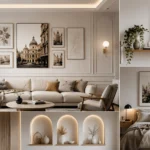
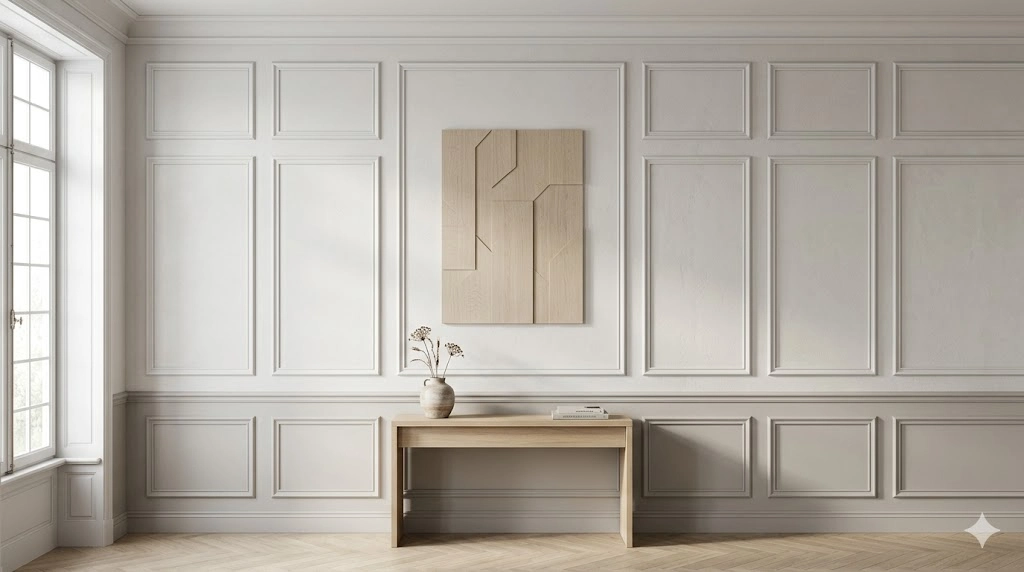
Decorating walls with moulding has become one of the most influential interior design techniques in modern European homes. From Parisian apartments to Scandinavian minimalist spaces, wall moulding is redefining how people perceive plain walls—turning them into architectural statements.
In 2026 interior design trends, homeowners are no longer satisfied with flat, empty walls. They want depth, structure, and subtle luxury that feels built-in rather than added on. This is exactly where moulding excels.
Whether it is picture frame moulding, vertical board-and-batten designs, or full-wall geometric panels, this technique adds proportion, rhythm, and elegance to interiors. It works equally well in small apartments in London as it does in luxury villas in Italy or modern homes in Sweden.
This guide explores everything you need to know about decorating walls with moulding—from design psychology and European influences to step-by-step installation and room-specific strategies. By the end, you will understand how to create walls that feel expensive, intentional, and architecturally refined.
What Is Wall Moulding?
Wall moulding refers to decorative trim applied to interior walls to create structure, patterns, and visual depth. Traditionally used in classical European architecture, it is now a key feature in modern minimalist homes.
It is typically made from wood, MDF, polyurethane, or plaster and can be painted to blend with or contrast the wall.
Core purposes of wall moulding:
- Creating architectural depth on flat walls
- Framing sections for visual balance
- Adding elegance and symmetry
- Protecting lower wall areas (wainscoting)
- Enhancing luxury perception without renovation
In modern design, moulding is not just decoration—it is an architectural language that defines the character of a room.
Why Decorating Walls with Moulding Looks Expensive
Wall moulding creates a high-end visual effect because it changes how light interacts with surfaces.
Shadow & Depth Creation
Even subtle trims create micro-shadows that make walls appear layered and dimensional.
Architectural Structure
Flat walls feel “unfinished,” while moulding introduces intentional geometry and structure.
Luxury Association
Historically used in French palaces, Italian villas, and British heritage homes, moulding carries a strong luxury perception.
Visual Balance
It naturally guides the eye, creating harmony between furniture, walls, and ceilings.
This is why even simple interiors look premium after adding moulding.
European Influence in Wall Moulding Design
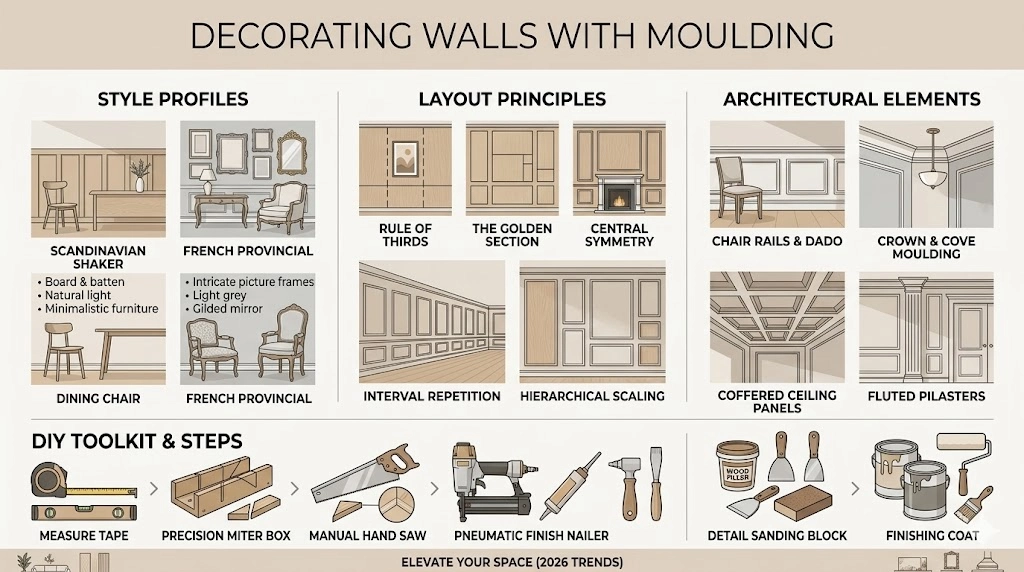
European interiors heavily influence modern moulding trends.
French Elegance
- Picture frame moulding
- Soft pastel tones
- Symmetrical wall layouts
- Parisian apartment aesthetic
Scandinavian Minimalism
- Thin vertical lines
- White or neutral tones
- Functional simplicity
- Focus on light and space
Italian Luxury Interiors
- Bold geometric wall panels
- Rich textures and contrast
- Hotel-style elegance
German Minimal Design
- Clean lines
- Precision-based layout
- Functional wall structure
UK Apartment Style
- Compact moulding for small spaces
- Neutral layered walls
- Practical elegance
Across Europe, moulding is used not as decoration—but as architectural storytelling.
Types of Wall Moulding Designs
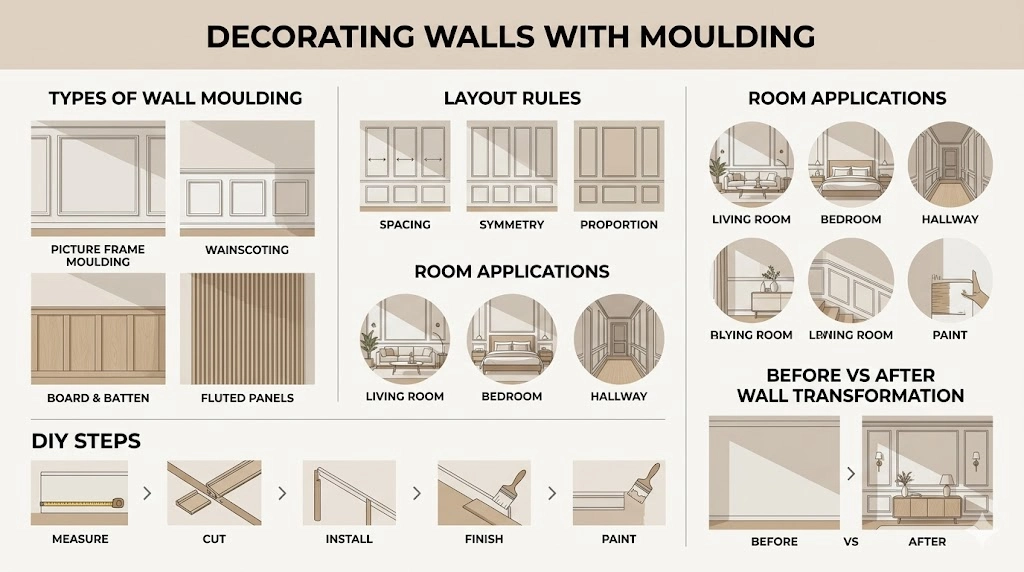
Picture Frame Moulding
Rectangular or square frames applied to walls.
Best for: bedrooms, living rooms
Style: elegant, Parisian-inspired
Wainscoting
Half-wall paneling, often paired with paint contrast.
Best for: dining rooms, hallways
Style: classic European heritage
Board and Batten
Vertical strips spaced evenly across the wall.
Best for: modern interiors
Effect: makes ceilings look taller
Full Wall Grid Panels
Geometric grid covering the entire wall.
Best for: luxury feature walls
Style: hotel-inspired interiors
Fluted Panels
Vertical ribbed textures for modern aesthetics.
Best for: TV walls, headboards
Trend: strong 2026 design direction
Materials Used in Wall Moulding
| Material | Durability | Cost Level | Best Use | Finish Quality |
| MDF | Medium | Low | DIY projects | Smooth paint finish |
| Wood | High | Medium-High | Premium homes | Natural texture |
| Polyurethane | High | Medium | Decorative walls | Lightweight luxury look |
| Plaster | Very High | High | Classical interiors | Architectural authenticity |
MDF and polyurethane dominate modern European apartments due to affordability and clean finishing.
Wall Moulding Layout Rules
Correct spacing and proportion are what separate luxury design from amateur DIY.
| Rule | Description | Why It Matters |
| Equal spacing | Keep gaps identical | Ensures symmetry |
| Wall proportioning | Match design to room size | Prevents overcrowding |
| Eye-level alignment | Center designs at 140–160 cm | Natural visual balance |
| Ceiling consideration | Taller walls need larger panels | Avoids visual compression |
| Minimal complexity | Less is more | Prevents cluttered appearance |
Poor spacing is the #1 reason moulding looks “cheap.”
Room-by-Room Wall Moulding Guide
Living Room
- Large geometric panels
- TV feature wall framing
- Neutral tones (beige, white, grey)
Bedroom
- Headboard framing
- Soft rectangular panels
- Warm, calming colors
Dining Room
- Wainscoting design
- Dual-tone walls
- Classic European elegance
Hallways
- Repetitive slim frames
- Linear rhythm design
- Creates visual flow
Wall Color Psychology with Moulding
Color plays a major role in moulding impact.
- White: clean, Scandinavian minimalism
- Beige: warm luxury feel
- Grey: modern sophistication
- Dark green/navy: dramatic European elegance
- Same color moulding + wall: “color drenching” luxury trend
European designers often prefer tonal harmony over contrast.
Step-by-Step DIY Installation Guide
1: Wall Measurement
Measure width, height, and mark symmetry points.
2: Design Layout Planning
Sketch your moulding pattern before installation.
3: Cutting Materials
Use mitre cuts for sharp corner joints.
4: Wall Fixing
Attach moulding using adhesive or nails.
5: Filling & Sanding
Smooth joints for seamless finish.
6: Painting
Apply primer and final coat for uniform look.
Precision matters more than tools in DIY moulding.
Common Mistakes to Avoid
- Uneven spacing between panels
- Overly complex patterns
- Wrong scale for room size
- Ignoring lighting direction
- Poor corner alignment
Even small errors break visual harmony.
Budget vs Luxury Wall Moulding
| Factor | Budget Approach | Luxury Approach |
| Material | MDF, peel-and-stick | Solid wood, plaster |
| Design | Simple rectangles | Complex geometric panels |
| Installation | DIY | Professional fitting |
| Finish | Basic paint | Premium matte/lacquer |
| Look | Minimal upgrade | Architectural transformation |
2026 Wall Moulding Trends
- Minimal geometric frames
- Vertical height-enhancing designs
- Seamless color drenching
- Soft neutral European palettes
- Hybrid wall + lighting integration
- Invisible moulding joints for clean finish
The future is minimal but architectural.
Expert Interior Design Tips
- Always design based on wall proportions, not trends
- Combine moulding with indirect lighting for depth
- Keep furniture alignment in sync with wall geometry
- Use fewer but larger panels in small rooms
- Prioritize symmetry over complexity
People Also Ask
Yes, but it should be minimal. Thin vertical or simple rectangular frames make small rooms feel taller and more structured without overwhelming the space.
MDF strips with adhesive backing are the most budget-friendly option. They are lightweight, easy to install, and can be painted for a premium finish.
Not if designed correctly. Poor spacing can reduce visual space, but proper symmetry actually enhances openness and structure.
Neutral tones like white, beige, and grey are most popular in European interiors. They create a soft luxury aesthetic and improve lighting effects.
Yes. DIY installation is possible for simple designs using MDF or polyurethane strips. However, professional help ensures perfect alignment and finishing.
Conclusion
Decorating walls with moulding is one of the most powerful and timeless ways to elevate interior spaces. It transforms flat, uninspiring walls into structured architectural features that feel intentional and luxurious.
From Scandinavian simplicity to French elegance and Italian luxury design, moulding adapts beautifully across European aesthetics. Its strength lies in its versatility—whether you want a minimal modern look or a bold feature wall.
The key to success is balance: correct proportions, clean symmetry, and thoughtful color choices. When executed properly, moulding does not just decorate a wall—it defines the entire character of a room.
For more expert interior design insights and wall styling inspiration, explore more guides on TheWallsArt.com and continue building spaces that feel refined, modern, and timeless.