Introduction
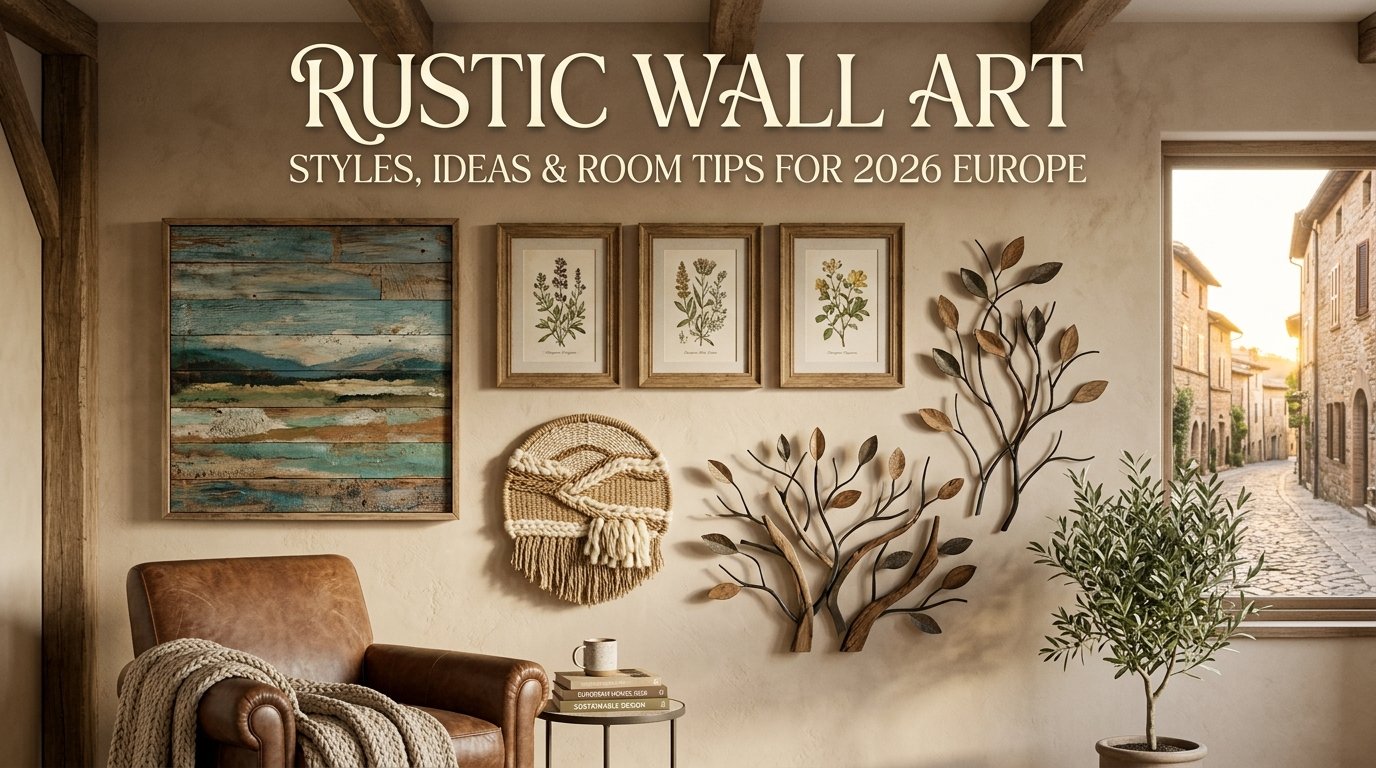
Rustic Wall Art is one of the most emotionally powerful interior design styles used in modern homes across Europe and beyond. It brings together natural textures, warm tones, and handcrafted imperfections that create a sense of comfort and authenticity in any space.
In today’s fast-paced digital world, homeowners are increasingly drawn toward interiors that feel grounded and organic. This is exactly where stands out. Whether it is reclaimed wood panels in a German apartment, farmhouse-inspired décor in France, or minimalist rustic styling in Scandinavian homes, this design approach blends tradition with modern living.
Unlike purely decorative pieces, rustic wall art carries emotional depth. It tells a story of nature, craftsmanship, and time-worn beauty. In this guide, you will explore everything from materials and styles to room-by-room ideas and expert placement strategies—helping you create interiors that feel both timeless and deeply personal.
What Is Rustic Wall Art?
Rustic wall art refers to decorative wall pieces inspired by natural, raw, and aged materials. These often include wood, metal, canvas, stone textures, and handcrafted finishes.
But rustic design is not just visual—it is emotional.
Psychological Impact of Rustic Wall Art
Rustic interiors influence the human mind in subtle but powerful ways:
- Warmth & Comfort: Earthy tones reduce visual stress
- Stability: Natural materials create subconscious grounding
- Nostalgia: Vintage textures evoke memories and emotional connection
- Relaxation: Organic imperfections feel more “human” and less artificial
This is why rustic wall art is widely used in European homes, especially in regions with colder climates such as Sweden, Denmark, Germany, and Switzerland—where interiors are designed to feel warm and inviting.
Why Rustic Style Works in Modern Homes
Even in ultra-modern apartments in cities like Paris or Amsterdam, rustic wall art is becoming popular because it:
- Softens minimalist interiors
- Balances modern furniture with natural warmth
- Adds depth to flat white walls
- Creates a timeless aesthetic that doesn’t age quickly
Key Materials Used in Rustic Wall Art
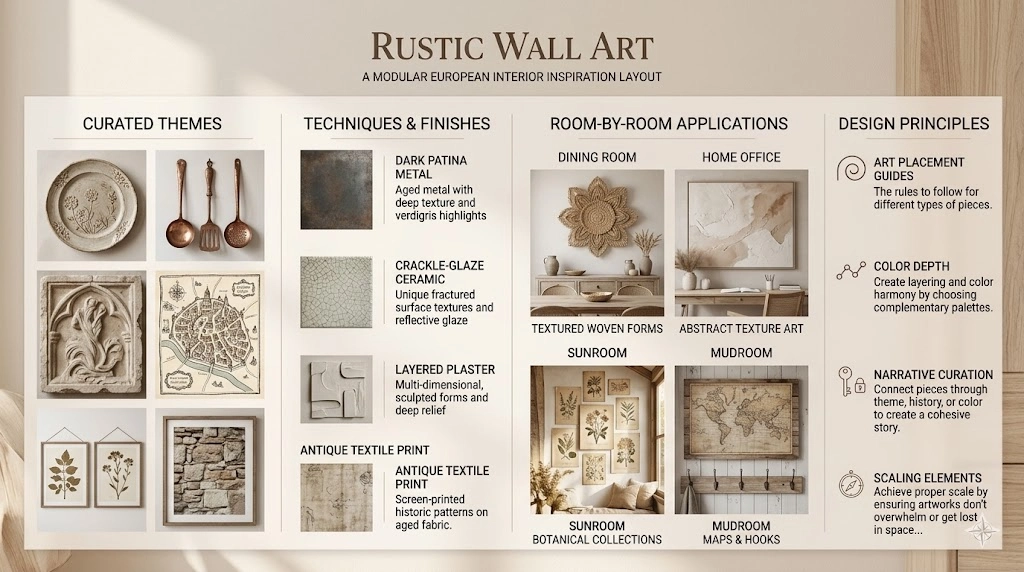
Rustic wall art is defined by its materials more than anything else. Each material brings a unique emotional and visual effect.
Reclaimed Wood
Reclaimed wood is the heart of rustic design.
- Barn wood panels
- Distressed wooden frames
- Hand-carved textures
Effect: Warmth, authenticity, historical depth
Metal Elements
Metal introduces contrast into rustic spaces.
- Wrought iron designs
- Rust-finish industrial panels
- Cut-out silhouettes
Effect: Strength, structure, industrial balance
Canvas & Nature Prints
Softens the ruggedness of wood and metal.
- Mountain landscapes
- Botanical illustrations
- Vintage countryside art
Effect: Calmness, visual softness
Mixed Material Art
Modern Rustic interiors often combine materials.
- Wood + rope textures
- Metal + canvas layering
- 3D wall compositions
Effect: Depth, premium aesthetic, modern rustic fusion
Styles
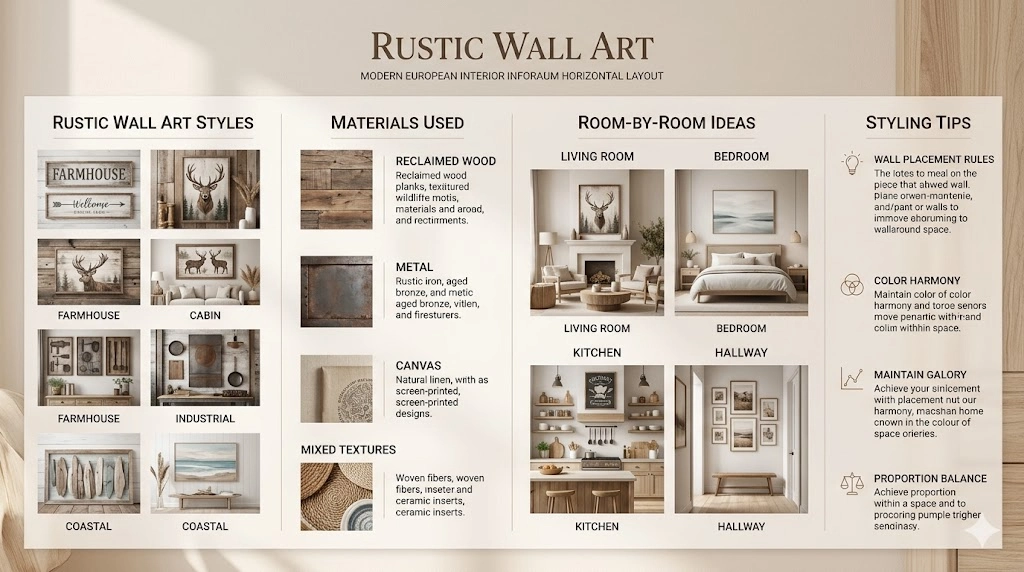
Rustic wall art is not one single style—it is a family of design directions.
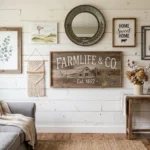
Farmhouse Rustic
Popular in rural France, UK countryside homes, and modern European villas.
- Whitewashed wood
- Inspirational typography
- Soft neutral tones
Cabin Rustic
Inspired by Alpine and Nordic cabins.
- Dark wood textures
- Wildlife themes
- Mountain landscapes
Industrial Rustic
Common in urban lofts in Germany and the Netherlands.
- Metal frames
- Brick-inspired textures
- Raw unfinished surfaces
Coastal Rustic
Seen in Spain, Greece, and Mediterranean homes.
- Driftwood art
- Light blue tones
- Airy textures
Ideas for Every Room
Living Room
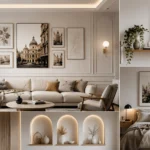
The living room is the centerpiece of rustic design.
Best Ideas:
- Oversized wooden wall panels
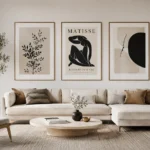
- Nature-inspired gallery walls
- Mountain landscape canvases
Goal: Create a strong focal point
Bedroom
Rustic bedrooms should feel calm and restorative.
Best Ideas:
- Soft botanical prints
- Neutral wood frames
- Minimal canvas sets
Goal: Relaxation and emotional comfort
Dining Room
Rustic dining spaces enhance warmth and appetite psychology.
Best Ideas:
- Vintage food illustrations
- Wooden quote panels
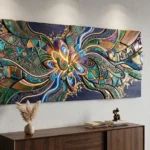
- Warm-toned abstract art
Goal: Social warmth and comfort
Kitchen
Rustic kitchens focus on charm and practicality.
Best Ideas:
- Herb illustrations
- Small wooden signs
- Metal rustic accents
Goal: Functional beauty
Hallway / Entryway
First impressions matter.
Best Ideas:
- Vertical wood panels
- Narrow rustic frames
- Mirror + wood combinations
Goal: Welcoming atmosphere
Wall Size, Placement & Proportion Guide
| Wall Type | Best Rustic Art Style | Recommended Size |
| Large living room wall | Oversized wood panels | 120–200 cm |
| Medium wall | Dual-frame sets | 60–120 cm |
| Small wall | Vertical narrow art | 30–60 cm |
| Entryway | Minimal rustic piece | 40–80 cm |
Expert Placement Rules
- Keep art 6–10 inches above furniture
- Center at eye level (57–60 inches rule)
- Avoid overcrowding walls
- Use asymmetry in modern rustic interiors
Wall Color Psychology in Rustic Interiors
Rustic wall art performs differently depending on wall colors:
- White walls: Highlight wood textures
- Beige walls: Create soft harmony
- Dark walls: Enhance contrast and drama
- Earth-tone walls: Build full immersion
European homes often prefer neutral palettes because they allow rustic textures to stand out naturally.
Budget vs Luxury
| Category | Materials | Visual Result |
| Budget Rustic | Printed wood-effect canvas | Light rustic feel |
| Mid-range | Real wood + prints | Balanced authenticity |
| Luxury Rustic | Reclaimed wood + metal art | Premium, handcrafted feel |
Common Interior Design Mistakes
Even great rustic designs fail when misused:
- Overusing dark wood in small rooms
- Mixing too many rustic sub-styles
- Ignoring lighting balance
- Hanging art too high or too low
- Using low-quality fake textures
Expert Styling Tips
- Scandinavian homes use light rustic minimalism
- French interiors prefer soft rustic elegance
- German design focuses on precision + raw materials
- Mediterranean homes embrace warm rustic colors
Lighting also plays a huge role:
- Warm white lighting enhances wood tones
- Natural daylight highlights texture depth
- Soft lamps create cozy rustic ambiance
Modern Trends 2026
- Japandi rustic fusion (Japan + Nordic simplicity)
- Oversized reclaimed wood panels
- Eco-friendly sustainable materials
- Minimal rustic geometric art
- 3D layered wall textures
Pros & Cons
Pros
- Timeless aesthetic
- Highly versatile
- Emotionally warm
- Works in modern + traditional homes
Cons
- Can feel heavy if overused
- Requires balance with modern elements
- Quality materials can be expensive
People Also Ask
Rustic wall art focuses on natural textures like wood and stone, while modern art is often smooth, minimal, and abstract. Rustic design feels warmer and more organic.
Yes, especially in European city apartments. The key is using lighter wood tones and minimal designs to avoid visual clutter.
Earth tones like beige, brown, olive green, and warm white work best. These colors enhance the natural feel of rustic materials.
Absolutely. In fact, it is evolving into modern rustic and Japandi fusion styles, making it more relevant than ever.
Combine rustic wall art with clean furniture, neutral walls, and minimal accessories. This creates balance between warmth and simplicity.
Conclusion
Rustic wall art remains one of the most emotionally powerful and visually timeless design choices for modern interiors. Its strength lies in its connection to nature, craftsmanship, and imperfection—elements that bring warmth into even the most minimal spaces.
Across Europe, from Scandinavian apartments to Mediterranean homes, rustic design continues to evolve while maintaining its core identity: authenticity and comfort.
Whether you are designing a cozy bedroom, a bold living room, or a welcoming hallway, rustic wall art offers endless flexibility. By understanding materials, proportions, and placement strategies, you can transform any wall into a meaningful visual experience.
At TheWallsArt.com, exploring styles like rustic wall art is just the beginning of building interiors that feel personal, balanced, and timeless.