Introduction
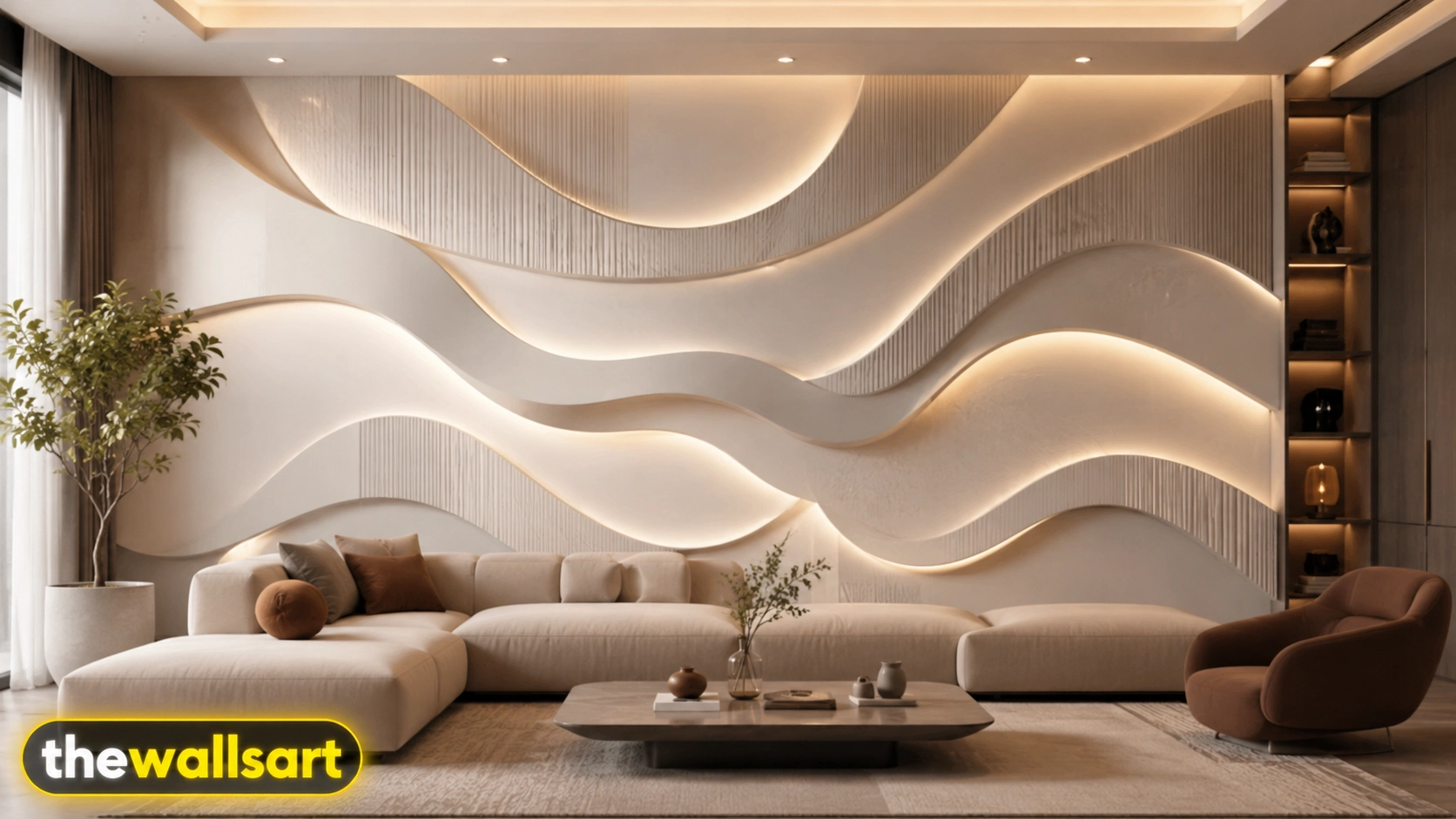
3D Wall Art Designs have become one of the most influential elements in modern interior design across Europe. From minimalist Scandinavian apartments in Stockholm to luxury villas in Italy and contemporary flats in Berlin, textured wall art is redefining how people experience space.
Unlike flat wall decoration, 3D wall art introduces depth, movement, and architectural emotion into interiors. It plays with light and shadow, turning ordinary walls into living design statements. In 2026, this trend is no longer optional—it is a core feature of premium home aesthetics.
What makes 3D wall art especially powerful is its versatility. Whether you prefer natural wooden textures, bold geometric panels, or futuristic LED-integrated designs, there is a style that fits every European lifestyle and architectural space.
In this complete guide, we will explore everything about 3D wall art designs—from materials and styles to room-by-room ideas and European design trends—so you can confidently transform any space into a modern masterpiece.
What Are 3D Wall Art Designs?
3D wall art designs refer to decorative wall installations that create depth and dimensional effects using layered materials, sculptural patterns, or raised textures. Unlike traditional wallpaper or flat paintings, these designs physically extend from the wall surface.
They are widely used in:
- Modern apartments
- Luxury homes
- Hotels and restaurants
- Office interiors
- European minimalist spaces
Why 3D Wall Art Feels Different
The magic lies in perception. When light hits a textured wall, shadows naturally form, creating a dynamic visual experience that changes throughout the day. This makes interiors feel more alive, premium, and architectural.
Types of 3D Wall Art Designs
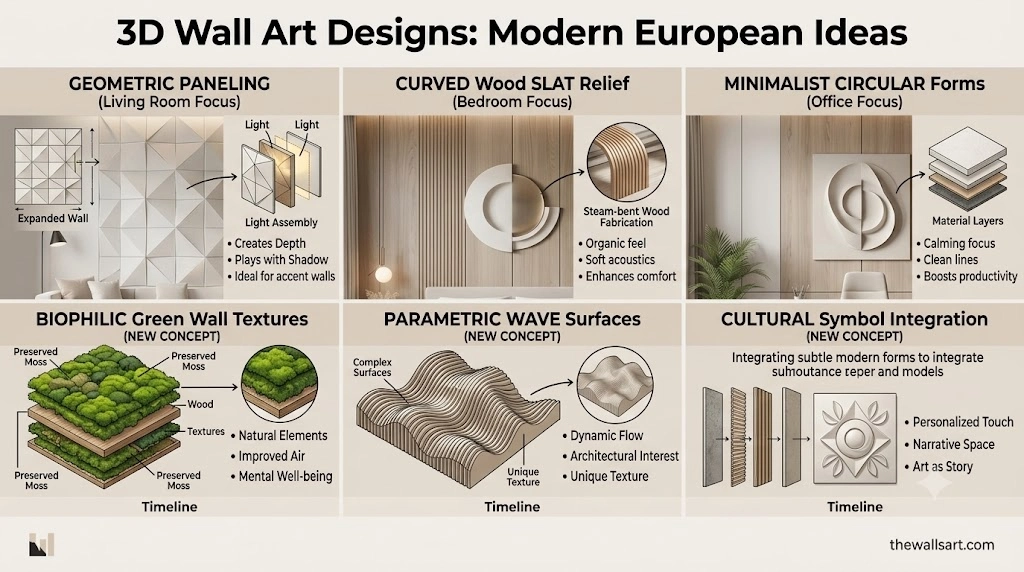
Geometric 3D Wall Art
Geometric patterns are extremely popular in German and Nordic interiors. These designs include cubes, hexagons, triangles, and repetitive linear structures.
Key Features:
- Clean symmetry
- Structured patterns
- Minimal visual chaos
Best For:
Modern living rooms, offices, and Scandinavian apartments
Abstract 3D Wall Panels
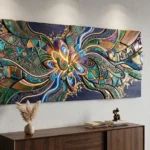
Abstract designs focus on fluid shapes and artistic freedom. These are often seen in luxury French and Italian interiors.
Key Features:
- Free-flowing curves
- Artistic expression
- Bold visual identity
Best For:
Feature walls and luxury interiors
Wooden Textured Wall Art
Wood remains a dominant material in European home design, especially in Denmark, Sweden, and Austria.
Key Features:
- Natural warmth
- Eco-friendly feel
- Scandinavian aesthetics
Best For:
Bedrooms, living rooms, cozy interiors
Metal 3D Wall Art
Metal wall art represents luxury and industrial elegance. It is widely used in modern UK loft apartments and high-end offices.
Key Features:
- Reflective surfaces
- Industrial-modern look
- Strong visual impact
Best For:
Corporate spaces and luxury homes
Minimalist 3D Panels
Minimalist designs are subtle but powerful. They are perfect for European apartments where simplicity is key.
Key Features:
- Soft textures
- Neutral tones
- Low visual weight
Best For:
Small apartments and modern interiors
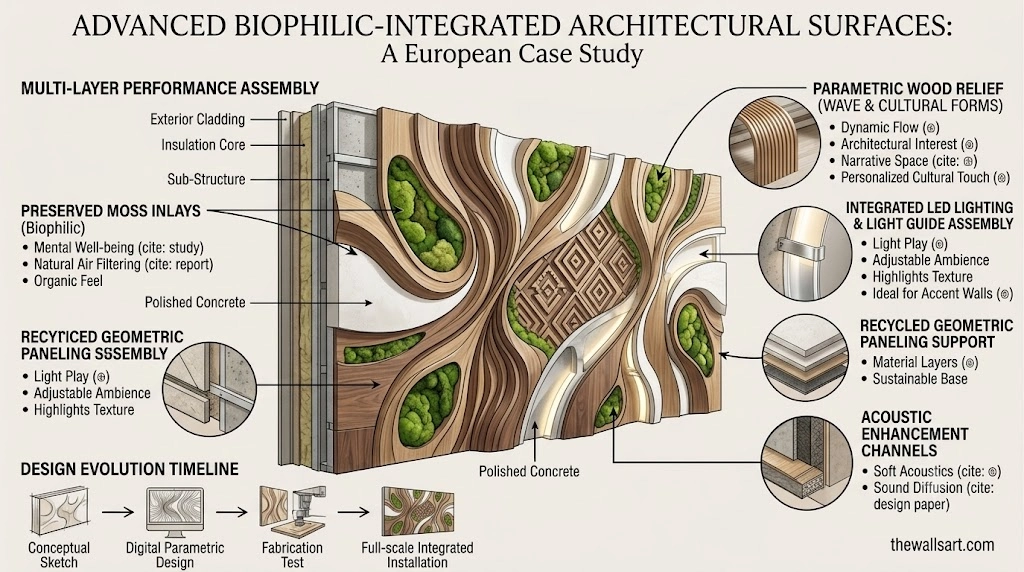
Nature-Inspired Wall Art
Inspired by leaves, waves, stones, and organic textures, this style is growing in popularity across Spain and Portugal.
Key Features:
- Organic shapes
- Calm atmosphere
- Biophilic design influence
Best For:
Bedrooms and relaxation spaces
Room-Wise 3D Wall Art Ideas
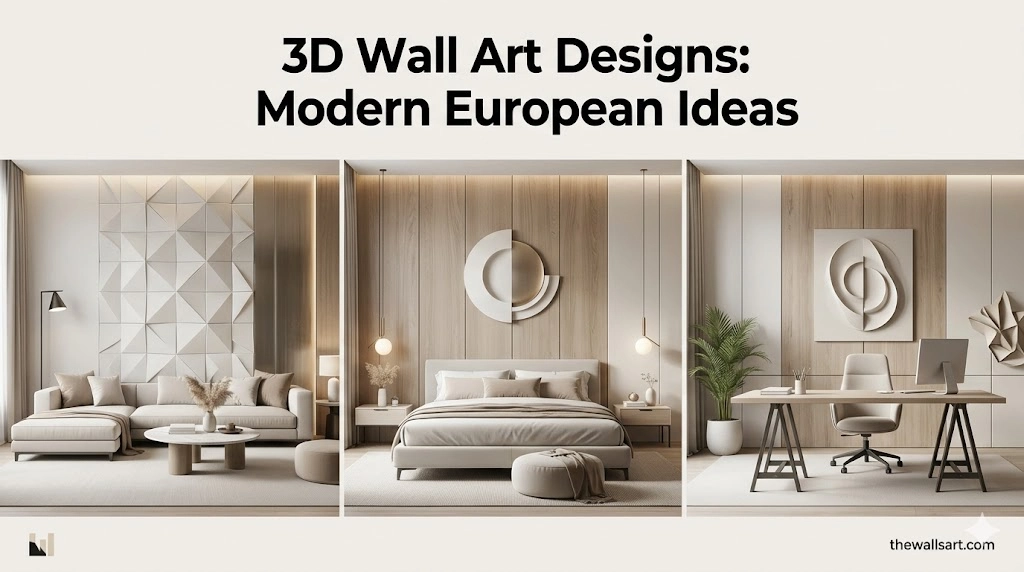
Living Room
The living room is the most important space for showcasing 3D wall art designs.
Best Ideas:
- Large geometric feature wall
- LED-backlit textured panels
- Abstract luxury installations
European Tip:
Neutral tones like beige, grey, and ivory work best for a premium Scandinavian look.
Bedroom
Bedrooms require calm and softness.
Best Ideas:
- Wooden headboard wall
- Soft wave textures
- Minimalist 3D panels
Tip:
Avoid overly bold patterns—focus on relaxation and harmony.
Office
European office design emphasizes productivity and clarity.
Best Ideas:
- Linear metal panels
- Grid-based geometric designs
- Dark textured accent walls
Hallways
Hallways often get ignored but are ideal for visual storytelling.
Best Ideas:
- Repetitive vertical patterns
- Slim textured panels
- Light-shadow interplay designs
Materials Used in 3D Wall Art Designs
| Material | Look & Feel | Durability | Best Usage |
| Wood (MDF/solid) | Warm, natural | High | Bedrooms, living rooms |
| Gypsum | Smooth, sculptural | Medium | Luxury interiors |
| PVC Panels | Lightweight, modern | Medium | Budget projects |
| Metal Sheets | Industrial, premium | Very high | Offices, luxury homes |
| Resin Composites | Artistic, custom | High | Statement walls |
Benefits of 3D Wall Art Designs
- Adds architectural depth to flat walls
- Enhances lighting effects naturally
- Improves room aesthetics instantly
- Covers imperfections on old walls
- Increases perceived property value
- Works in both small and large European apartments
Pros and Cons
Pros
- Highly aesthetic and modern
- Flexible design options
- Works with lighting effects
- Long-lasting materials available
- Fits multiple interior styles
Cons
- Can be expensive for custom designs
- Requires careful installation
- Not easy to change frequently
- Some designs may overwhelm small spaces
European Interior Design Trends 2026
Europe continues to lead global interior design innovation. Here’s what’s trending:
Scandinavia (Sweden, Norway, Denmark)
- Minimalism + natural wood
- Soft textures
- Light color palettes
Germany
- Functional minimalism
- Geometric precision
- Industrial touches
France
- Artistic expression
- Luxury textured walls
- Elegant abstract designs
Italy
- Bold luxury interiors
- Sculptural wall installations
- Premium materials
Spain & Portugal
- Warm textures
- Organic shapes
- Mediterranean softness
Wall Placement Rules
Proper placement is key to maximizing visual impact.
- Feature walls should face the main seating area
- Avoid cluttered furniture in front of textured walls
- Use lighting to enhance depth
- Keep balance between décor and negative space
Wall Color Psychology in 3D Design
- White & Beige: Clean, Scandinavian, spacious feel
- Grey: Modern, industrial elegance
- Earth tones: Warm, natural comfort
- Black accents: Luxury and drama
Color and texture must work together—not compete.
Budget vs Luxury 3D Wall Design
Budget Options
- PVC panels
- Simple MDF textures
- DIY wall grids
Luxury Options
- Custom metal installations
- Backlit 3D systems
- Hand-sculpted wall panels
Common Interior Design Mistakes
- Overusing 3D textures in small rooms
- Poor lighting setup
- Mixing too many patterns
- Ignoring room proportions
- Using low-quality materials
Maintenance & Durability Tips
- Dust textured walls regularly
- Avoid excessive moisture exposure
- Use soft cleaning tools only
- Check LED systems periodically (if installed)
Expert Styling Tips
- Combine wood + neutral paint for Scandinavian harmony
- Use metal accents in modern loft apartments
- Keep luxury minimal—not excessive
- Always design around natural light direction
- Choose texture based on room function, not trend
People Also Ask
Yes, but minimal designs work best. In small European apartments, subtle textures and light colors help avoid visual overcrowding while still adding depth.
Wood and MDF are the most balanced options, offering durability, warmth, and affordability. For luxury interiors, metal or resin panels are preferred.
Not necessarily. When designed correctly with light colors and proper lighting, 3D walls can actually create the illusion of depth and make spaces feel larger.
Living rooms are ideal because they allow feature walls to shine. Bedrooms and offices also work well with softer or structured designs.
Yes, they are evolving rather than fading. Modern trends focus on minimalist textures, LED integration, and eco-friendly materials.
Conclusion
3D Wall Art Designs have become a defining feature of modern European interiors, blending creativity, architecture, and emotional depth into everyday living spaces. From Scandinavian minimalism to Italian luxury styling, textured walls are shaping how homes feel and function in 2026.
The key to mastering this design trend lies in balance—choosing the right materials, respecting room proportions, and aligning with natural lighting. Whether you prefer subtle wooden textures or bold geometric panels, 3D wall art can completely transform your environment into something elegant and expressive.
At TheWallsArt.com, the future of interior design is about more than decoration—it’s about storytelling through walls. Explore more design insights and elevate your space with timeless European aesthetics.