Introduction
Solar Wall Lights Outdoors have become one of the fastest-growing lighting solutions for modern homes, gardens, and commercial spaces. People prefer them because they are energy-efficient, eco-friendly, and require zero electricity wiring.
But choosing the right solar wall light is not as simple as it looks. Many buyers struggle with issues like low brightness, short battery life, or lights that stop working after a few months.
This guide solves all those problems.
You will learn how solar wall lights outdoor work, how to choose the best model, where to install them for maximum brightness, and how to fix common issues. Whether you want security lighting, decorative garden lighting, or motion sensor protection, this guide gives you everything in one place.
What Does Solar Wall Lights Outdoor Mean?
Solar wall lights outdoors are outdoor lighting devices powered by solar energy. They absorb sunlight through built-in solar panels, store energy in rechargeable batteries, and automatically light up at night.
Simple Definition:
They are wall-mounted LED lights powered by sunlight instead of electricity.
Quick Meaning Summary
| Feature | Description |
| Power Source | Solar energy |
| Lighting Type | LED |
| Operation | Automatic (dusk to dawn) |
| Installation | Wall-mounted, no wiring |
| Usage | Security, garden, decoration |
How Do Solar Wall Lights Outdoor Work?
- Solar panel absorbs sunlight during the day
- Energy is stored in rechargeable batteries
- Light sensor detects darkness
- LED lights turn on automatically at night
This cycle repeats daily with no electricity cost.
Important Features to Consider Before Buying
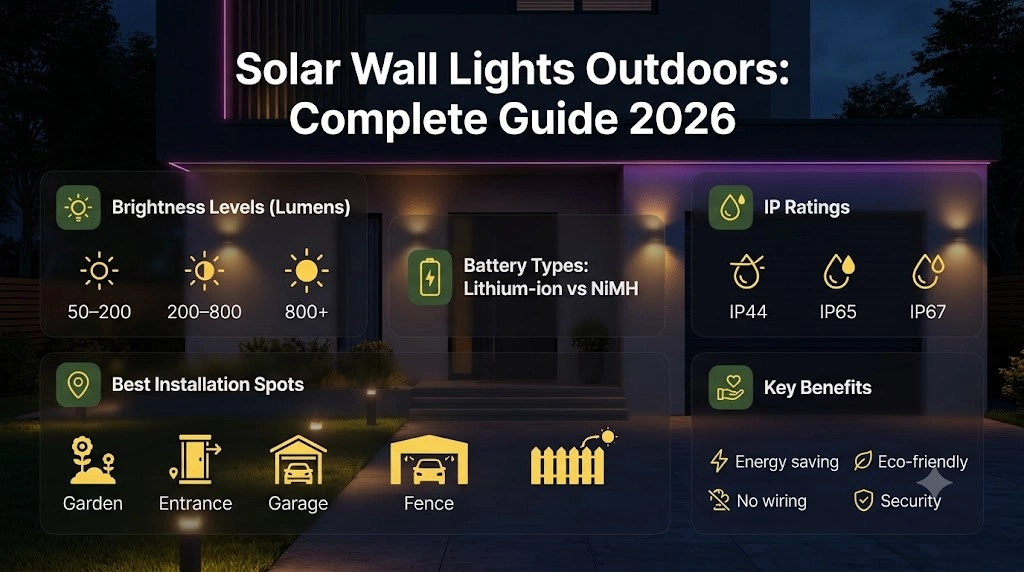
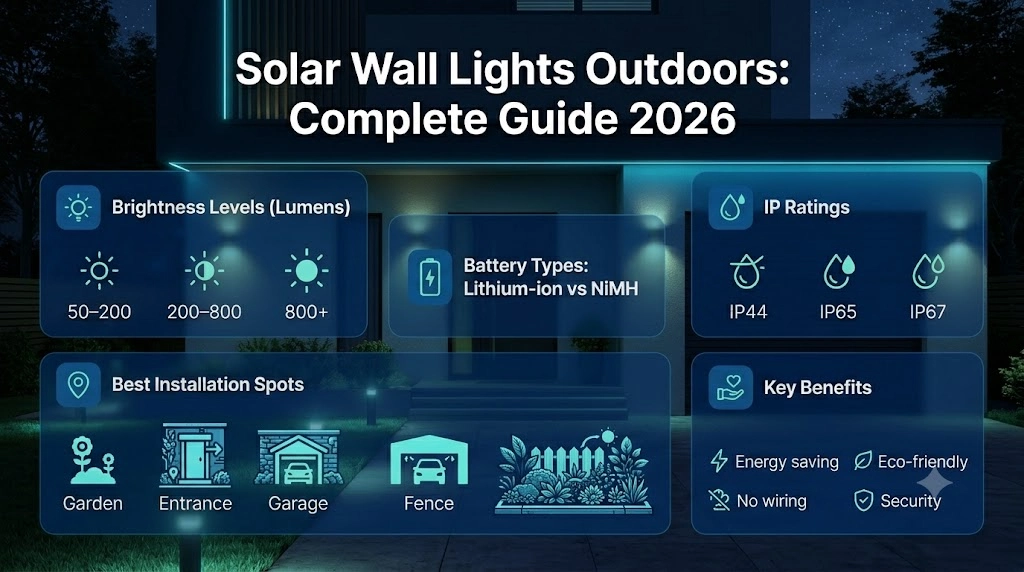
1. Brightness (Lumens)
- 50–200 lumens → decorative lighting
- 200–800 lumens → general outdoor lighting
- 800+ lumens → security lighting
2. Battery Type
- Lithium-ion batteries → long lifespan, fast charging
- NiMH batteries → cheaper but shorter life
3. Waterproof Rating (IP Rating)
- IP44 → light protection
- IP65 → rainproof (recommended)
- IP67 → heavy weather resistance
4. Motion Sensor Technology
Motion sensors help:
- Save energy
- Improve security
- Extend battery life
Best Places to Install Solar Wall Lights Outdoor
- Front entrance doors
- Garden walls
- Garage areas
- Backyard fences
- Balcony railings
Pro Tip: Install where sunlight exposure is at least 6–8 hours daily.
Benefits of Solar Wall Lights Outdoor
- Zero electricity cost
- Easy DIY installation
- Eco-friendly energy source
- Improves home security
- Low maintenance
- Works during power outages
Common Problems & Solutions
1. Lights are too dim
Clean solar panel regularly
Ensure direct sunlight exposure
2. Lights stop working
Replace battery
Check power switch settings
3. Short lighting time
Upgrade battery capacity
Improve sunlight exposure
4. Lights not charging
Check panel angle
Remove dust or blockage
Types of Solar Wall Lights Outdoor
1. Motion Sensor Lights
Best for security and automatic activation
2. Decorative Wall Lights
Used for gardens and ambiance
3. Flood Style Solar Lights
High brightness coverage for large areas
4. Vintage Solar Lanterns
Stylish aesthetic lighting for exterior design
Expert Buying Guide
Lighting experts recommend:
- Always choose IP65 or higher rating
- Prefer lithium-ion battery models
- Avoid fake lumen claims (check real brightness)
- Install at optimal height (6–10 feet)
- Ensure direct sun exposure for charging efficiency
Step-by-Step Installation Guide
- Select a sunny wall location
- Mark drilling points
- Fix screws and mounting bracket
- Attach the solar light
- Test automatic night mode
Are Solar Wall Lights Outdoor Worth It?
Yes — they are highly worth it because:
- They reduce electricity bills
- They require zero wiring
- They offer long-term outdoor lighting
- They improve security and visibility
- They are environmentally sustainable
Common Misunderstandings
“They don’t work in winter”
They still work, but performance depends on sunlight hours
“All solar lights are the same”
Quality varies based on battery, panel, and LED efficiency
“Higher price means brighter light”
Not always — check real lumen output
Related Terms and Similar Meanings
- Solar Powered wall lamps
- Outdoor LED security lights
- Motion detection solar lights
- Dusk-to-dawn solar lighting
- Energy-efficient outdoor lighting
People Also Ask
A:Most solar wall lights last 2–5 years depending on battery quality and maintenance. Lithium-ion models last longer than cheaper alternatives.
A:Yes, but performance may decrease due to shorter daylight hours and cloudy weather. Proper placement improves results.
A:This usually happens due to dust on the panel, weak battery, or insufficient sunlight exposure during the day.
A:Install them in areas that receive 6–8 hours of direct sunlight, such as open walls, gardens, and entrances.
A:Yes, they are cost-effective, eco-friendly, and require no electricity or wiring, making them ideal for outdoor use.
Conclusion
Solar Wall Lights Outdoor are one of the most practical and energy-efficient lighting solutions for modern homes. They combine sustainability, safety, and convenience in one system.
By choosing the right brightness, battery type, and waterproof rating, you can significantly improve performance and durability. Proper installation and sunlight exposure are key to maximizing efficiency.
If used correctly, solar wall lights are not just a lighting upgrade—they are a long-term investment in energy savings and home security.