Introduction
Welcome to the ultimate European guide to 3D Wall Art—a curated source of inspiring ideas, contemporary designs, materials, DIY projects, and room-by-room styling tips to help you transform ordinary walls into extraordinary focal points.
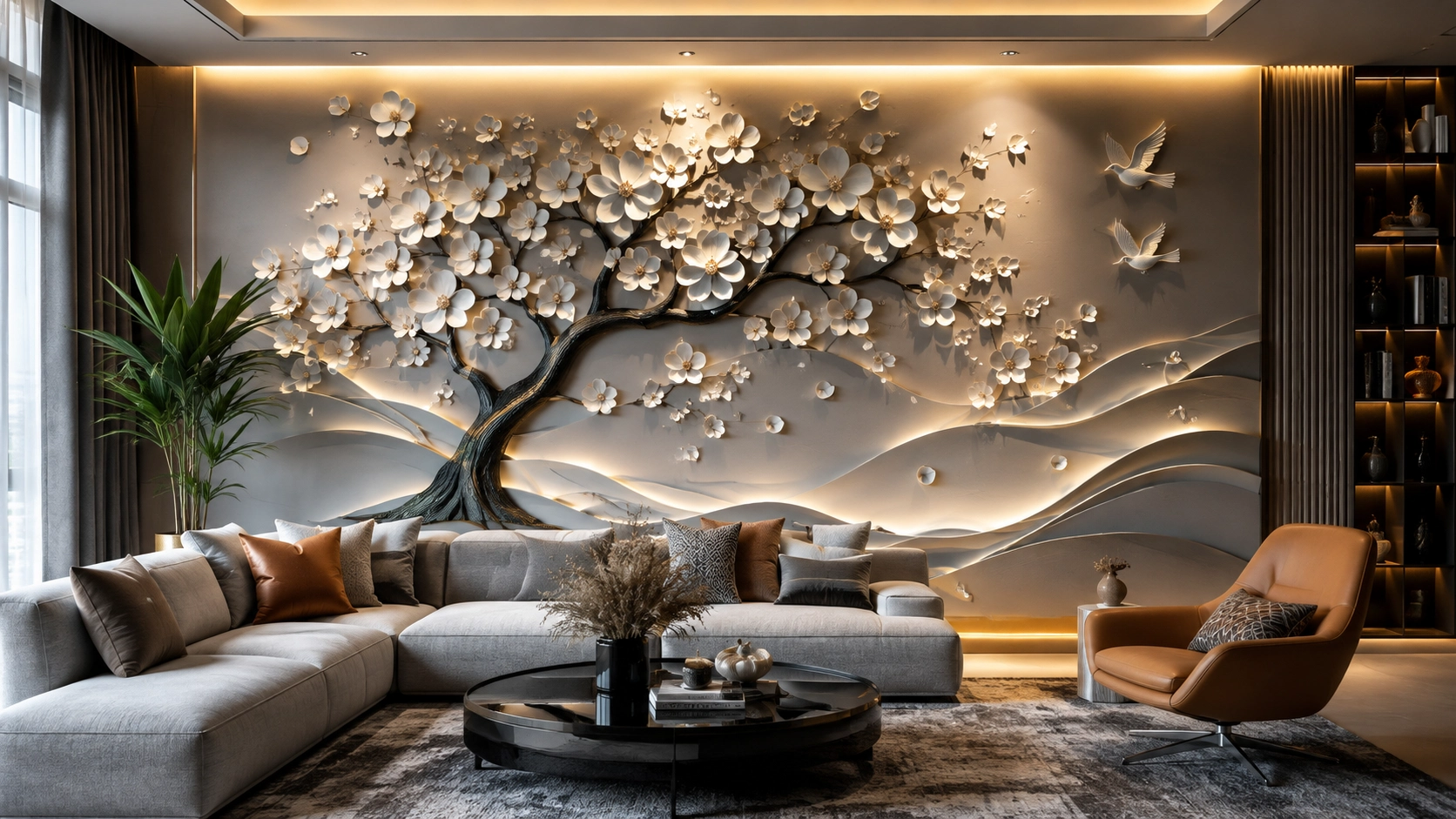
Across Europe, interiors are moving beyond traditional flat artwork, posters, and canvas prints. Today, three-dimensional wall décor is bringing texture, depth, movement, and character into homes, creating walls that feel more immersive and visually engaging.
In 2026, 3D wall art continues to make a powerful statement in European interior design. From the clean, understated apartments of Stockholm to the sun-washed Mediterranean homes of Barcelona, homeowners are embracing sculptural panels, layered compositions, textured surfaces, and artistic installations that add personality without making a room feel crowded.
Inside This Guide, You’ll Discover:
- What 3D wall art is and why it is gaining popularity
- How to choose the best materials for different rooms
- Creative and stylish 3D wall art ideas for 2026
- Room-specific decorating and placement strategies
- DIY techniques for creating personalised 3D artwork
- Installation, cleaning, maintenance, and practical tips
- Professional styling ideas for achieving a polished European look
Whether you are a beginner exploring home décor or an experienced interior stylist searching for fresh inspiration, this guide will help you turn blank walls into beautiful, dimensional statements filled with texture, character, and personality.gripping statements.
What Is 3D Wall Art?
At its foundation, 3D wall art cites decorative elements that boost outward from a flat wall facial, introducing bottom, shadow, and sculptural appeal. Unlike traditional flat paintings, posters, or prints, 3D pieces create a multi-sensory experience that relate with light and zone, elevating the environs of any room.
Examples of 3D Wall Art Include:
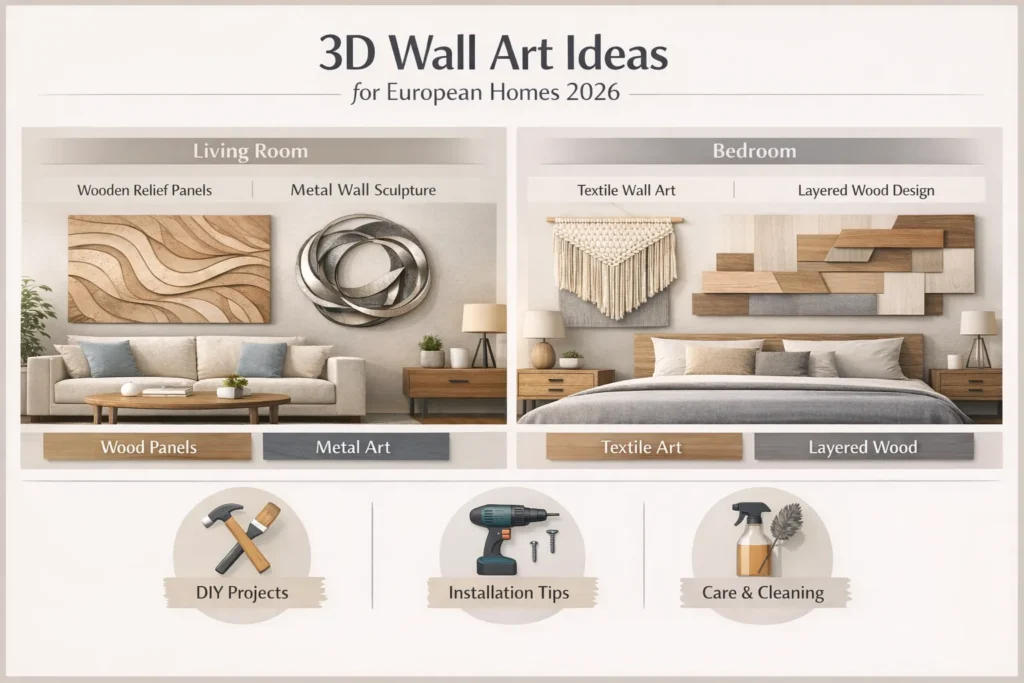
- Carved wooden relief panels
- Metal wall sculptures
- Acrylic or resin compositions
- Textile or fiber-based installations
- Foam or composite panels
Difference Between Flat & 3D Wall Decor
| Feature | Flat Wall Art | 3D Wall Art |
| Depth | Flat | Layered & dimensional |
| Lighting effect | Minimal | Creates shadows & dynamic highlights |
| Style impact | Decorative | Statement-making & sculptural |
| Installation | Simple | May require mounts or brackets |
| Best For | Prints, posters | Modern interiors, focal walls |
With 3D wall art, you don’t merely decorate walls — you enhance spatial perception and transform them into immersive visual experiences.
Why 3D Wall Art Is Trending in European Interiors
Across Europe, interior design is embracing multi-dimensional décor. Here’s why 3D wall art is dominating modern European homes:
Modern and Minimalist Styles
Many European cities prefer:
- Scandinavian minimalism: clean, functional, and smooth
- Contemporary European chic: sleek,select, and mature
- Hot modern interiors: balanced, inviting, and texturally rich
3D wall art integrates effortlessly into these designs, adding an aesthetic bottom without optical clutter.
2. Texture & Shadow Play
Unlike flat art, 3D installations interact with light, producing shadows, gradients, and tactile layers that enrich a room’s mood and dimensionality.
Functional Benefits
Beyond aesthetics, sure 3D wall art pieces can also:
- Consume sound, improving room acoustics
- Conceal wall failing or rough level
- Provide a sense of completeness to otherwise blank walls
Personal Expression
From bold geometrical metal coiled to soft, layered fabric panels, 3D art allows homeowners to effort their personality. In European interiors, art is not simply showy— it’s an image of style and self-expression.
Pro Tip: In European design, walls are an extension of personality, and 3D art ensures your home tells a story.
Types of 3D Wall Art
Understanding the material type is essential when selecting pieces that align with style, budget, and room functionality.
Wooden Relief Panels
Why they’re popular:Passion, natural beauty, and timeless appeal make them ideal for living rooms and dining areas.
Pros
Organic texture
Compatible with multiple décor styles
Can be finished naturally or painted
Cons
Heavy and may require sturdy mounts
Prone to warping in humid conditions
Best For: Living rooms, bedrooms, offices
Metal Sculptures
Why they’re popular: Sleek,new, and eye-catching — perfect for modern European interiors.
Pros
Reflective, interacts with light
Highly durable
Complements minimalist décor
Cons
Costly compared to other materials
Requires careful lighting to avoid glare
Best For: Living rooms, hallways, offices
Acrylic & Resin Art
Dye and resin bring vivid colors, sharp lines, and a modern flair.
Pros
Lightweight for easy installation
Wide color palette for creative expression
Works well for bold, statement-making pieces
Cons
Susceptible to scratches
Can appear overly glossy if overused
Best For: Modern apartments, kids’ rooms, studios
Foam & Composite Panels
Cost-friendly and perfect for DIY buffs.
Pros
Economical
Simple to install
Beginner-friendly
Cons
Limited longevity
Not suitable for high-end luxury interiors
Best For: Bedrooms, playrooms, short-term lease zones
Textile & Fiber Art
Soft,palpable, and acoustically functional.
Pros
Adds warmth and comfort
Reduces echo in living areas
Versatile for layering textures
Cons
Prone to dust pile
Requires rare cleaning
Best For: Bedrooms, lounges, gallery
Materials & What to Choose
Material selection turns to roomtype, lighting, budget, and design objectives.
| Material | Best For | Cost | Durability | Style |
| Wood | Living rooms/bedrooms | $$ | High | Natural, classic |
| Metal | Contemporary spaces | $$$ | Very high | Modern, industrial |
| Acrylic | Creative rooms | $$ | Medium | Bold, colorful |
| Foam | DIY beginners | $ | Low | Casual, fun |
| Textile | Cozy interiors | $$ | Medium | Soft, inviting |
Tips:
- Bathrooms/high-humidity areas → metal or resin
- Sound-sensitive rooms → textile or foam
- Luxury living rooms → wood or metal
How to Choose the Right 3D Wall Art for Your Space
- Part Your Wall – Exact size is crucial to insure a comparable focal point.
- Select Matching Style – Minimalist rooms benefit from simple metal or wax, while simple interiors pair well with wooden panels.
- Consider Lighting – Shadows and climax ensure 3D depth; consider wall-mounted fame or LED robe.
- Weight & Mounting – Heavy designs need studs and anchors. Always verify the wall’s load capacity.
- Material Suitability – Check for wall unity, rain sensitivity, and care requirements.
Tip: Sample small pieces before loan in large installations.
Top 20 Creative 3D Wall Art Ideas
- Abstract Geometric Panels – dynamic shapes and layered composition
- Layered Floral Sculptures – delicate, organic motifs
- Metal Spiral Installations – reflective, modern designs
- LED Backlit Panels – combining light and texture
- Origami-Inspired Wall Pieces – intricate folded-paper effect
- Rustic Wood Slat Waves – natural undulating patterns
- Layered Resin Artwork – bold depth and color
- Textile Bohemian Tiles – tactile, cultural elements
- Modular Wall Grids – mix and match flexible panels
- Floating Cube Arrangements – minimalistic dimensional forms
- Metal Tree Branch Sculptures – nature-inspired décor
- Soft Fabric Panel Mosaic – cozy, sound-absorbing
- Concrete Relief Installations – urban, rugged aesthetics
- 3D Map of Europe – geographic and personalized
- Mixed Material Wall Sets – wood + metal + acrylic combinations
- Architectural Relief Strips – structured linear designs
- Layered Foam Shapes – playful and tactile
- Vintage-Modern Fusion – retro-inspired with contemporary twist
- Illusion Panels – create motion and perspective
- Personal Word Art in 3D – bold textual statements
Room-by-Room Styling Tips
Living Room
- Best: Large focal piece above sofa
- Material: Metal or wood
- Tip: Use flexible lighting to repeat nature
Bedroom
- Best: Calming, soft wall art
- Material: Textile, foam, layered wood
- Tip: Shun overly bold patterns for relief
Office
- Best: Minimalistic, professional backdrop
- Material: Acrylic, metal
- Tip: Place behind desk for visual impact
Hallway
- Best: Smaller, modular panels
- Material: Foam or acrylic
- Tip: Keep lightweight for narrow corridors
| Room | Material | Suggestion |
| Living Room | Wood | Large statement piece |
| Bedroom | Textile | Soft textures, calming |
| Office | Metal | Sleek, minimal lines |
| Hallway | Acrylic | Bright, lightweight |
DIY 3D Wall Art Projects
Creating customized 3D art is cost-friendly and rewarding.
Top DIY Projects:
- Modular Relief Panels
- Tools: Wood sheets, glue, saw
- Steps: Cut shapes → Arrange → Glue → Prime & paint
- Layered Wood Shapes
- Tools: Laser cutter or handsaw
- Steps: Draw → Cut → Stack → Glue → Finish
- Sculpted Plaster Ribs
- Tools: Plaster, trowel
- Steps: Apply → Sculpt → Dry → Paint
- Textile Acoustic Tiles
- Tools: Foam, fabric, pins
- Steps: Cover foam → Attach → Arrange in patterns
| Project | Skill | Cost | Time |
| Relief Panels | Medium | $$ | 4–6 hrs |
| Layered Wood | Hard | $$ | 6–8 hrs |
| Plaster Ribs | Easy | $ | 3 hrs |
| Textile Tiles | Easy | $ | 2–4 hrs |
Pro Tip: Test designs on cardboard before committing.
Installation & Placement Guide
Steps for Proper Installation:
- Locate Studs & Anchors – Essential for heavy pieces
- Center at Eye Level – ~145–155 cm from floor
- Allow Clearance – Ensure protrusions don’t obstruct traffic
- Use a Level – Keep panels aligned and balanced
| Wall Type | Best Mount | Notes |
| Drywall | Anchors | Medium weight |
| Brick | Masonry screws | Heavy pieces |
| Plaster | Hooks + anchors | Fragile walls |
Maintenance & Care Tips
- Dust & Clean by Material:
- Wood: Soft cloth
- Metal: Microfiber
- Acrylic: Gentle cleanser
- Textile: Vacuum/lint brush
- Check Mounts – Ensure screws/hooks remain secure
- Prevent Moisture Damage – Avoid damp locations unless waterproof
Pros & Cons of 3D Wall Art
Pros:
Adds depth, texture, and dimension
Generates visual interest
Wide design versatility
DIY customization possible
Cons:
Requires proper mounting
Can be expensive depending on material
Needs planning for optimal placement
FAQs
Cover ~50–70% of a feature wall above sofas or beds. Taller pieces suit vertical walls; longer pieces suit wide walls.
Yes. Use gummy hooks or petty panels to protect walls.
DIY:customised, cost-active.Store-bought: Polished, precise finish.
Textile or foam helps absorb sound while maintaining style.
Conclusion
3D wall art can completely transform a European interior, turning an ordinary wall into a striking focal point. From sleek modern flats in Berlin to warm, character-filled homes in Lisbon, the right combination of texture, materials, placement, and lighting can create a space that feels deeper, more expressive, and uniquely yours.
Key Takeaways:
- Balance style and space: Choose 3D artwork that complements your room without overwhelming it.
- Select the right materials: Consider the room’s humidity, temperature, and overall environment.
- Use lighting creatively: Strategic lighting can emphasise shadows, textures, and depth.
- Add a personal touch: Experiment with DIY elements or custom designs to create something truly individual.
Start with one statement piece and let your wall become more than a backdrop—it can become a captivating expression of depth, character, and personality.