Introduction
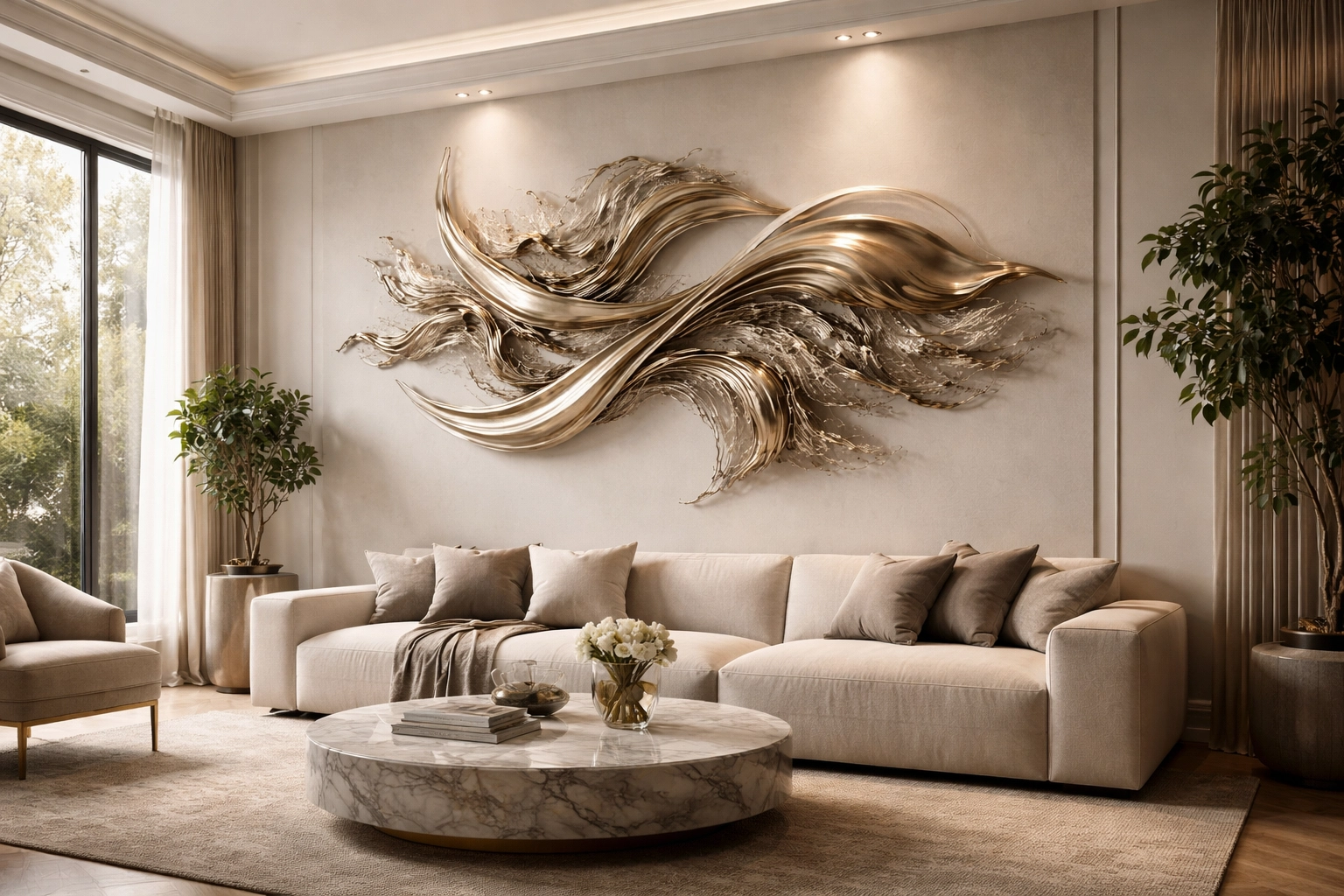
Wall sculpture art has emerged as one of the most influential interior design innovations of the modern era. In 2026, it is no longer viewed as a simple decorative accessory but as a high-impact spatial design element that enhances emotional bottom, optical storytelling, and architectural identity within a room.
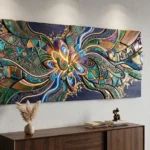
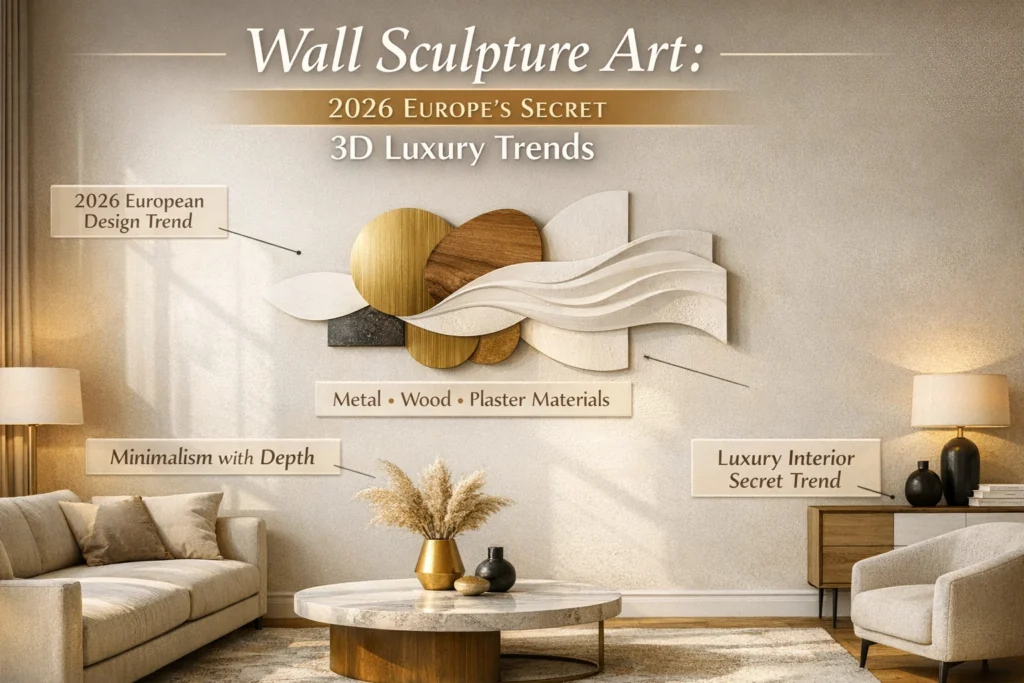
Unlike traditional flat artwork such as paintings, prints, or posters, wall sculpture art introduces a three-dimensional (3D) optical experience. It interacts dynamically with ambient light, shadows, and spatial perception, resulting in a living, evolving aesthetic that changes throughout the day.
Across Europe—ranging from the minimalist Scandinavian homes of Denmark and Sweden to the luxurious classical flats of France and the new villas of Italy—interior designers are increasingly integrating sculptural wall installations to elevate spatial elegance.
Modern owners are now shifting away from cluttered decor patterns and embracing intentional minimalism with artistic bottom. Instead of filling walls with multiple objects, they now prefer one bold sculptural word that reflects identity, taste, and sophistication.
This comprehensive guide explores everything about wall sculpture art, including:
- Definition and conceptual understanding
- Material classifications and design variations
- European interior design influences
- Strategic placement frameworks
- Expert-level buying guidelines
- Installation and maintenance methodologies
- Future predictions and design evolution
This article is crafted in simple, structured, and NLP-optimized English, making it accessible for beginners while still valuable for professionals.
What Is Wall Sculpture Art?
Wall sculpture art refers to a category of three-dimensional decorative art forms that are mounted, embedded, or affixed onto vertical surfaces such as interior walls.
In semantic terms, it is a hybrid between artistic expression and architectural enhancement, where physical depth is introduced to create a tactile and optical extension beyond flat surfaces.
Unlike traditional two-dimensional artwork, wall sculpture art occupies real spatial volume and interacts with environmental lighting conditions.
Core Characteristics of Wall Sculpture Art
- Three-dimensional structural bottom (physical projection from wall surface)
- Interaction with natural and artificial lighting
- Shadow formation and dynamic optical transformation
- Crafted from materials such as metal, wood, resin, plaster, or composite blends
- Used in residential, commercial, hospitality, and luxury architectural environments
- Functions as both aesthetic enhancement and spatial identity marker
In simple interpretive language, wall sculpture art is artwork that physically extends outward from the wall, creating bottom, emotion, and architectural character.
Why Wall Sculpture Art Is Trending in 2026
The increasing popularity of wall sculpture art can be attributed to several interconnected cultural, technological, and psychological design trends.
Minimalism with Spatial Depth
Modern interior design is moving toward refined minimalism, where fewer objects are used but each carries stronger optical significance.
Instead of multiple decorative pieces, owners prefer a single sculptural installation that delivers:
- Strong focal presence
- Clean optical structure
- Emotional resonance
This approach reduces clutter while enhancing sophistication.
Influence of European Interior Design Philosophy
European design traditions strongly influence global interior aesthetics. Key styles include:
- Scandinavian minimalism
- Nordic functional design
- Japandi fusion aesthetics
- French luxury interiors
All these styles emphasize:
- Balance
- Feeling contrast
- Natural peace
- Emotional subtlety
Wall sculpture art integrates seamlessly into these principles due to its textural and dimensional nature.
Digital Aesthetic Culture
Social media platforms have transformed optical expectations in interior design. High-engagement content often features:
- 3D balanced walls
- Luxury living room setups
- Minimalist modern interiors
This digital exposure has significantly increased demand for sculptural wall decor.
Sustainability-Driven Design Choices
Eco-conscious design is now a major global priority. People are actively choosing:
- Recycled metals
- Natural wood materials
- Non-toxic resin compositions
Wall sculpture art aligns with sustainable living due to its long lifecycle and durable material composition.
Luxury Interior Design Movement
Luxury design today focuses on word pieces instead of quantity.
Rather than multiple decorative elements, owners invest in:
One large, optically dominant sculptural artwork
This creates exclusivity and premium optical identity.
Types of Wall Sculpture Art
Wall Sculpture Art can be categorized based on material composition, artistic style, and structural behavior.
Metal
Metal-based sculptures are among the most dominant styles in 2026.
Key Attributes:
- High durability and structural strength
- Reflective surface interaction with lighting
- New and luxury aesthetic appeal
- Long-term resilience against wear
Ideal Usage:
- Living rooms
- Office interiors
- Hallways and corridors
Metal sculptures represent modern industrial elegance combined with artistic precision.
Wooden
Wood introduces organic passion and natural emotional balance.
Key Attributes:
- Eco-friendly composition
- Natural feeling and grain variation
- Soft optical presence
Ideal Usage:
- Bedrooms
- Relaxation zones
- Scandinavian interiors
Wooden sculptures enhance biophilic design principles.
Resin & Abstract 3D Wall Art
Resin-based sculptures offer creative freedom and artistic abstraction.
Key Attributes:
- Lightweight structure
- Highly customizable shapes
- Modern artistic expression
Ideal Usage:
- Studios
- Creative offices
- New flats
Plaster & Architectural Wall Reliefs
This category represents the most architectural form of wall sculpture art.
Key Attributes:
- Built directly into wall structures
- Soft shadow layering
- Premium hotel-style aesthetic
Ideal Usage:
- Luxury villas
- High-end hotels
- Architectural interiors
Material Comparison Table
| Material | Durability | Style Identity | Maintenance | Ideal Application |
| Metal | Very High | Modern / Luxury | Low | Living rooms, offices |
| Wood | Medium | Natural / Warm | Medium | Bedrooms |
| Resin | Medium | Artistic / Creative | Low | Studios |
| Plaster | High (fixed) | Architectural | Low | Luxury interiors |
Industry insight: Metal and plaster dominate high-end European interior installations in 2026.
How to Choose
Selecting the appropriate sculpture requires analytical design thinking.
Evaluate Wall Dimensions
- Large walls → oversize sculptural installations
- Small walls → minimal or vertical compositions
Match Interior Design Language
- Scandinavian → natural wood feelings
- Modern → geometric metal forms
- Luxury → gold or plaster finishes
Lighting Optimization
Lighting significantly influences perception:
- Directional lighting enhances shadows
- Warm lighting increases emotional passion
- Accent lighting improves focus
Color Harmony Principle
Ensure optical coherence with:
- Furniture tones
- Wall paint shades
- Fabric feelings
Single Statement Principle
One dominant sculpture creates stronger optical authority than multiple small elements.
Wall Sculpture Placement Guide
Placement determines optical impact and spatial balance.
Living Room
- Above sofa area
- Central alignment
- Large-scale artwork
Bedroom
- Above headboard
- Soft, calming compositions
Office
- Behind workspace
- Geometrical and structured designs
Entryway
- First optical impression zone
- Bold sculptural identity
European Interior Design Trends
Europe continues to define global interior aesthetics.
Scandinavian Design
- Minimal lines
- Neutral jewels
- Organic materials
French Luxury Design
- Ornamental metalwork
- Gold accents
- Elegant curvature
Italian Contemporary Design
- Bold artistic expression
- Abstract compositions
German Functional Design
- Structured geometry
- Clean spatial organization
Current macro-trend: warm minimalism with covered feelings
Wall Sculpture Art by Room Functionality
Each room requires a different emotional jewel.
Living Room
- Word metal sculptures
- Abstract modern forms
Bedroom
- Soft wooden feelings
- Organic flow patterns
Office
- Structured geometric design
- Cognitive focus enhancement
Entryway
- Bold identity-driven sculptures
Installation & Maintenance Framework
Installation Guidelines
- Use industrial-grade anchors
- Verify wall material strength
- Pre-align before drilling
- Use leveling instruments
Maintenance Guidelines
- Dry cloth cleaning for metal
- Avoid moisture exposure for wood
- Regular dust removal
- Proper lighting upkeep
Advantages and Limitations
Advantages
- Enhances spatial bottom perception
- Strong optical identity creation
- Long-term durability
- Premium aesthetic value
Limitations
- Requires careful installation
- Higher cost range
- Lighting dependency
- Not suitable for cluttered environments
Future Trends of Wall Sculpture Art
The evolution of sculptural wall design is accelerating rapidly.
Emerging Innovations
- AI-generated sculptural design systems
- Sustainable recycled material usage
- Modular 3D wall systems
- Interactive smart wall art
- Fully personalized luxury installations
Future direction: technology + sustainability + personalization convergence
Buying Guide
Before purchasing, evaluate:
- Material authenticity
- Structural compatibility
- Wall load capacity
- Lighting integration
- Long-term aesthetic value
Always prioritize timeless design over temporary trends.
Frequently Asked Questions
It is a 3D wall decoration that adds bottom, feeling, and artistic expression to interiors.
Metal and plaster are the most popular due to durability and luxury appearance.
Yes, but choose simple and minimal designs.
Use dry cleaning methods and shun moisture for wood designs.
Minimalist balanced designs using natural and sustainable info.
Final Summary
Wall sculpture art represents the future of interior aesthetics. It merges:
- Artistic creativity
- Architectural structure
- Emotional storytelling
- Luxury spatial design
In 2026, it stands as a defining element of modern homes across Europe and beyond, transforming ordinary walls into meaningful optical experiences.