Introduction:
Dining Rooms have cognates far beyond their original purpose. Dining Room Wall Art Once considered purely functional spaces reserved for meals, modern Dining Room Wall Art in European homes now serve as emotional centers — places where chat unfolds, relationships expand, celebrations happen, and moments slow down.
Across Europe — from compact Parisian flats and Berlin lofts to Scandinavian open-plan interiors and Mediterranean manor— the Dining Room Wall Art plays a vital role in daily life. It is a shared climate where Dining Room Wall Art must support comfort, warmth, and connection.
Yet regardless of its value, one design view is still overlooked: dining room wall art.
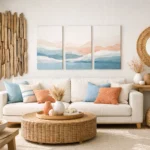
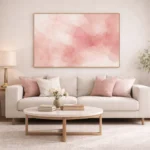
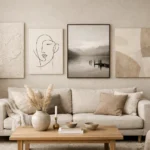
Wall art is not simply fancy. It quietly climates mood, defines character, and visually anchors the dining background. The right artwork can transform a cold dining field into a welcoming zone, uplift quiet desks, and give the room moving bottoms. On the other hand, poorly chosen or badly placed art can make even the most fancy dining room feel muddled or incomplete.
Many owners work with questions such as:
- What size artwork is correct for a dining table?
- How high should art be hung?
- Should dining room art be bold or faint?
- Is one large piece better than a gallery wall?
This European dining room wall art guide for 2026 goes far beyond vision lists. It offers an ordered design system based on real interior design logic, professional placing rules, bulk theory, and immature European trends.
Whether your dining room is modern, minimalist, classic,simple, Scandinavian, or eclectic, this guide will help you make confident, timeless decisions — without a hunch.
What Is Dining Room Wall Art?
Dining room wall art refers to any optical part intentionally placed on dining room walls to enhance air, balance, identity, and nervous tone.
This includes, but is not limited to:
- Framed paintings and prints
- Canvas artwork
- Wall murals
- Sculptural planning
- Decorative panels
- Textile and fabric art
- Mixed-media compositions
- Digital or moving art displays
The Design Role of Wall Art in Dining Spaces
In European interior design philosophy, wall art is never random. It performs specific visual and mental roles within the dining environment:
- Put a focal point near or above the dining table
- Defines the personality of the zone(formal, relaxed, artistic, minimal)
- Creates balance between goods, walls, and planning
- Boost talk without visual confusion
- Controls scale,rate, and optical weight
Unlike living rooms — which often allow expressive layering — dining rooms benefit from select control. Art should feel willful, calm, and unified rather than big or lawless.
Latest Dining Room Wall Art Trends in Europe (2026)
European wall art trends in 2026 prioritize sustainability, emotional comfort, adaptability, craftsmanship, and longevity. Instead of short-lived trends, designers focus on flexible aesthetics that evolve with time.
Digital & Rotating Wall Art Displays
Smart frames and digital art systems are becoming increasingly popular in urban European homes.
Why designers love them:
- Artwork can spin always or weekly
- Perfect for compact flat with limited wall space
- Infer lifelong art procuring costs
- Allows personalization without stable need
These displays work especially well in modern dining rooms with clean lines and neutral palettes.
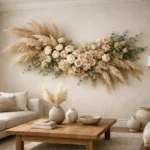
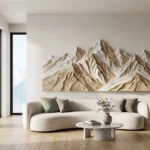
Textured & 3D Wall Art
In 2026, texture replaces excessive color. European interiors are embracing tactile depth.
Popular textured materials include:
- Hand-sculpted plaster reliefs
- Linen and woven fabric panels
- Carved or burned wood
- Natural stone-inspired surfaces
Textured art adds richness without visual overload, making it ideal for dining spaces where calmness matters.
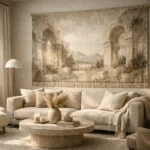
Vintage Revival with Modern Framing
Classic art styles are returning — reinterpreted through minimalist framing.
Examples include:
- Antique floral visuals
- Architectural sketches
- Old geology and maps
- Prime still-life artwork
Paired with slim black, brass, or natural wood frames, old art feels new rather than wistful.
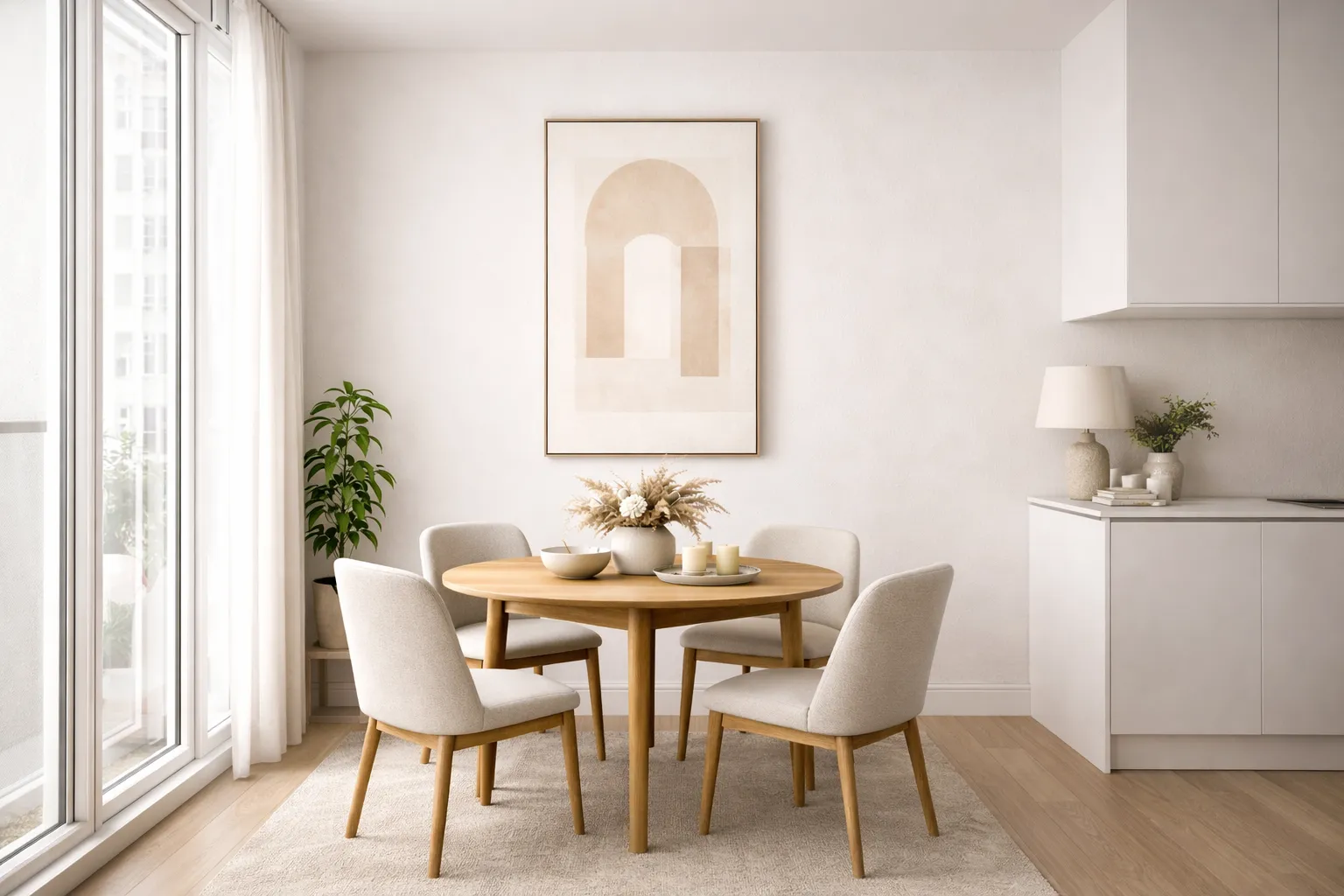
Minimalist Monochrome Art
Muted tones run European dining rooms in 2026:
- Warm tan
- Soft stone
- Unlit and black
- Pale grey
- Earth-inspired unbiased
Stable art supports a serene dining profile and pairs well with natural materials like wood and stone.
Seasonal Rotational Art
Rather than act to a single flat piece, many European owners rotate artwork throughout the year:
- Light and airy themes for spring and summer
- Warm jewel and feeling for fall
- Deeper, moodier art in winter
This approach keeps the dining space emotionally fresh without basic remake.
How to Choose Dining Room Wall Art
Selecting dining room wall art is not about personal taste alone. European designers rely on measurable principles that ensure balance and durability.
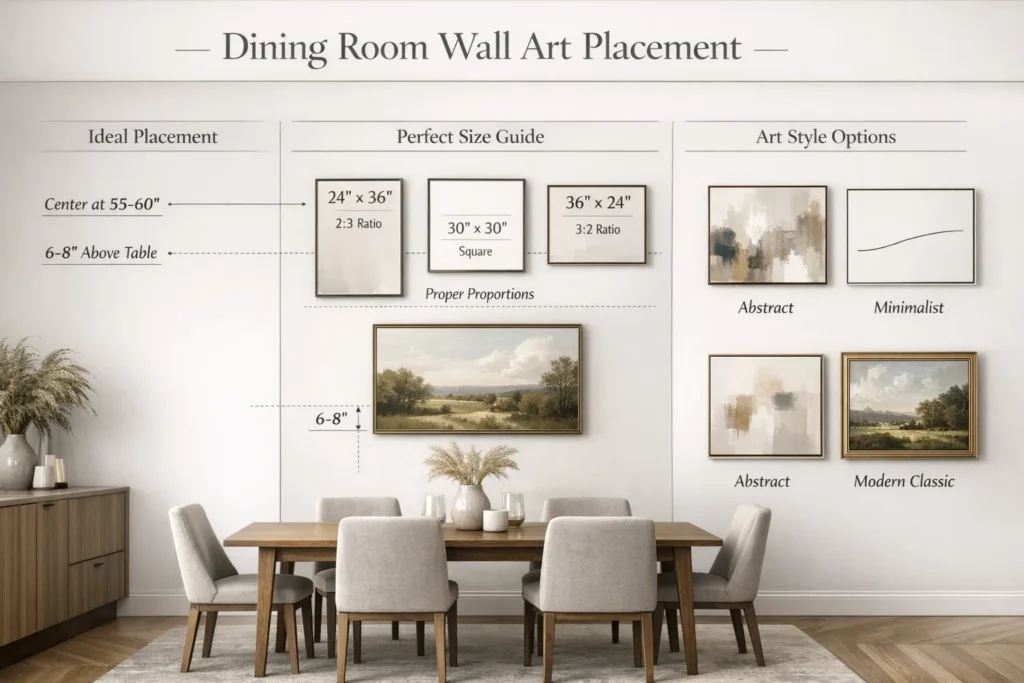
Size & Proportion (Most Important Rule)
One of the most demanding rules in European interior design:
Wall art should cover approximately two-thirds to three-quarters of the width of the dining table or sideboard beneath it.
Size Reference Table
| Furniture Width | Ideal Art Width |
| 150 cm table | 100–115 cm art |
| 180 cm table | 120–135 cm art |
| 200+ cm table | 140–160 cm art |
- Too small → weak visual presence
- Too large → overwhelms the space
Placement Height
Incorrect height is one of the most common mistakes.
European placement standards:
- Center of artwork at 145–155 cm from the floor
- OR 20–25 cm above furniture
Never hang dining room art near the ceiling. It breaks visual connection with the table.
Color Harmony
Dining room art should either:
- Echo one existing color already present
- OR introduce controlled, intentional contrast
Shun introduces random shades that clash with goods, flooring, or lighting.
Style Alignment
| Dining Room Style | Best Art Type |
| Modern | Abstract, large canvas |
| Scandinavian | Nature, line art |
| Rustic | Landscapes, wood textures |
| Classic | Symmetry, framed art |
| Industrial | Graphic, monochrome |
Best Dining Room Wall Art Ideas by Style
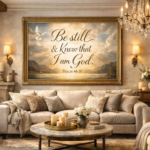
Statement Wall Art for Dining Rooms
Large-scale art instantly anchors the space.
Popular options include:
- Oversized abstract paintings
- Bold color-field compositions
- Single dramatic canvases
Best suited for:
- Open-plan layouts
- Contemporary European interiors
- Dining rooms with minimal furniture
Nature-Inspired Wall Art
Nature-based art brings calm and warmth to dining spaces.
Examples:
- Floral prints
- View photography
- Organic forms and feeling
Common in:
- Scandinavian homes
- Alpine interiors
- Mediterranean dining rooms
Minimalist & Monochrome Art
Ideal for small dining rooms or compact flats.
Key features:
- Line drawings
- Limited color dress
- Strong negative zone
This style optically grows the room and maintains purity.
Gallery Wall Ideas for Dining Rooms
Gallery walls create storytelling through multiple pieces.
European spacing rule:
Keep gaps between frames 5–7 cm.
Gallery Layout Guide
| Layout Type | Best For |
| Grid | Modern & classic |
| Organic | Artistic spaces |
| Linear | Narrow dining rooms |
Rustic, Vintage & Boho Art
These styles feel warm, personal, and layered.
Examples:
- Textile wall hangings
- Antique photographs
- Handcrafted or distressed frames
Perfect for:
- Farmhouse dining rooms
- Countryside homes
- Heritage interiors
Where & How to Hang Wall Art in the Dining Room
Placement Rules Designers Follow
- Align artwork parallel to the dining table
- Avoid glare from pendant lights or chandeliers
- Center art on the wall, not just the furniture
- Use symmetry in formal dining rooms
- Use asymmetry in relaxed or casual spaces
Common Mistakes to Avoid
- Hanging art too high
- Choosing undersized artwork
- Overcrowding walls with multiple styles
- Mixing unrelated themes
DIY Dining Room Wall Art Ideas (European-Inspired)
DIY does not mean low quality. European DIY focuses on refinement.
Elegant DIY ideas include:
- Black-and-white photography series
- Minimalist typography prints
- Fabric or linen wall panels
- Curated printable art collections
Especially popular in:
- Nordic homes
- Rental apartments
- Small urban dining rooms
Dining Room Wall Art Materials & Frames Guide
Material Comparison Table
| Material | Best Use | European Preference |
| Canvas | Modern art | High |
| Wood | Rustic warmth | Medium |
| Metal | Industrial | Medium |
| Glass | Luxury interiors | Selective |
| Paper | Minimal & vintage | High |
Frame Selection Tips
- Thin frames → modern and light
- Natural wood → warmth and softness
- Black or brass → elegance and contrast
Pros & Cons of Dining Room Wall Art
Pros
- Enhances atmosphere
- Defines identity
- Balances proportions
- Personalizes dining experience
Cons
- Wrong size disrupts balance
- Poor placement weakens impact
- Overdecorating causes clutter
FAQs
Gracefully , wall art should be ⅔ to ¾ the width of the dining table for optical balance.
Large pieces suit modern dining rooms, while arcade walls work well in offhand or eclectic zones.
Mostly 20–25 cm above the sofa or centered at eye level.
Yes. Choose soft colors and classic rims for unity.
Conclusion
Dining room wall art is not about filling an empty zone. It is about intentional storytelling.
The most successful European dining rooms use wall art to:
- Backing architectural lines
- Boost moving accent
- Guide visual focus
- Create lifelong balance
By following professional sizing rules, placing logic, stylistic unity, and 2026 European trends, you can design a dining room that feels careful,endless, and sadly human.