Introduction
Metal Wall Art changes a space completely – more than just decoration, it shapes how rooms feel outside too. Shapes born of steel, aluminum, iron, brass, or copper bring depth you can sense, not only see. Most flat images never reach that presence.
Metal wall art shows up everywhere across Europe, loved for lasting long while still looking good. Not just one look fits all – designers like how it slips into sleek spaces, old-fashioned rooms, even raw brick settings without trying too hard. Step by step, this guide walks through what matters most: picking a design that clicks, where to hang it so it works, how to fix it on walls safely, plus keeping it clean over time. Wall Art Metal Wall Art each detail helps match the right artwork to your house, workspace, or backyard spot.
When this guide ends, you’ll understand how to choose, set up, and care for metal wall pieces that bring quiet elegance to your space.Wall Art Metal Wall Art a steady hand helps. So does knowing what fits where. Each decision shapes the feel of a room just slightly – yet clearly. Details matter without shouting. Placement shifts mood more than expected. Over time, dust finds every corner; cleaning stays simple if planned.Wall Art Metal Wall Art some prefer bold forms against pale walls. Others match curves with softer furnishings nearby. Light changes everything – morning versus night alters appearance sharply. Thought grows clearer once one piece is hung and studied from different spots in the day.
Why Metal Wall Art Is So Coveted in Europe
Out of nowhere, metal wall art popped up in homes across Europe – looks aren’t the only reason it stuck around. Peek under the surface and you’ll find solid perks that keep it on walls:
Durability and Longevity
What makes metal wall art stand out? It lasts. Canvas fades. Paper tears. But steel, aluminum, copper – they hold up. Time doesn’t wear them down like it does with older materials. These pieces simply stay put, looking much as they did years before.
When coated or finished with powder, metal art resists nature’s wear much better. Thanks to these layers, pieces outside face Europe’s shifting weather – damp air, heat, cold – and stay striking over time.
Example: A striking metal artwork on a balcony in Berlin can keep its shine for years when looked after properly – proof that lasting appeal meets strength without trying too hard..
Unmatched Style and Design Flexibility
Folded, twisted, shaped – metal follows where imagination leads. Not limited by grain or surface tension, it takes form through stamping, slicing, draping, pressing. Some pieces stand clean and quiet, others burst with tangled leaf patterns or rough mechanical skin. Instead of brushstrokes or carvings, artists push its limits with heat, pressure, alignment. What emerges stretches beyond what wood could hold, what paint might suggest, what plastic imitates.
This changes things: Picture a calm Nordic living space, yet also think of a grand Mediterranean estate – either way, metallic wall pieces fit right in. Different styles find their match here. A sleek finish might echo minimalism, while ornate curves lean into luxury. Whatever the room, these artworks adjust without effort.
Dynamic Visual Impact
Shiny surfaces on metals dance with light, shifting as you move. Instead of still pictures, pieces made from metal add depth, energy, a feel that pulls you in..
- When sunlight moves, soft dark shapes glide across surfaces. These quiet contrasts change slowly throughout the day. As angles alter, so do their forms. Light does not stay still – neither do they
- Enhances depth and room dynamics
- Something catches your eye where the wall used to fade into the background
A shift like this turns plain walls into standout spaces full of character, thanks to the way metal art reshapes a room’s feel. The result? A quiet boldness that speaks without shouting.
Adaptable Across Spaces
Fitting snug into small nooks or stretching across wide corridors, metal wall pieces shift with room dimensions. Choices show up in styles for nearly every spot:
- Compact, lightweight pieces in small rooms
- Oversized statement panels in spacious living areas
- Rust-resistant outdoor sculptures for terraces, gardens, or patios
Fresh air flows around metal art when it stands in homes, yet shifts tone amid office hallways. It lingers near hotel entrances where guests pause, then reappears along sidewalks under streetlight glow. Space changes shape depending on where the piece settles. Quiet corners embrace its weight just as busy plazas do.
Popular Metal Wall Art Styles Across Europe
Metal art across Europe takes many forms, shaped by distinct local tastes. A closer look reveals what’s appearing most often inside homes this year:
Modern & Minimalist
Sleek lines fit right into city living spaces. Think minimalist vibes in modern homes across Nordic regions. A natural match for clean designs found in today’s apartment life up north
Characteristics:
- Streamlined, geometric forms
- Muted color palettes
- Elegant, unobtrusive finishes
A single line of steel bends quietly against beige walls, its shape sharp but still. This kind of piece fits without shouting, holding space like breath held too long. Silence between objects speaks clearer than symmetry ever could. Light slips along edges, not because it must, rather because there’s nowhere else to go.
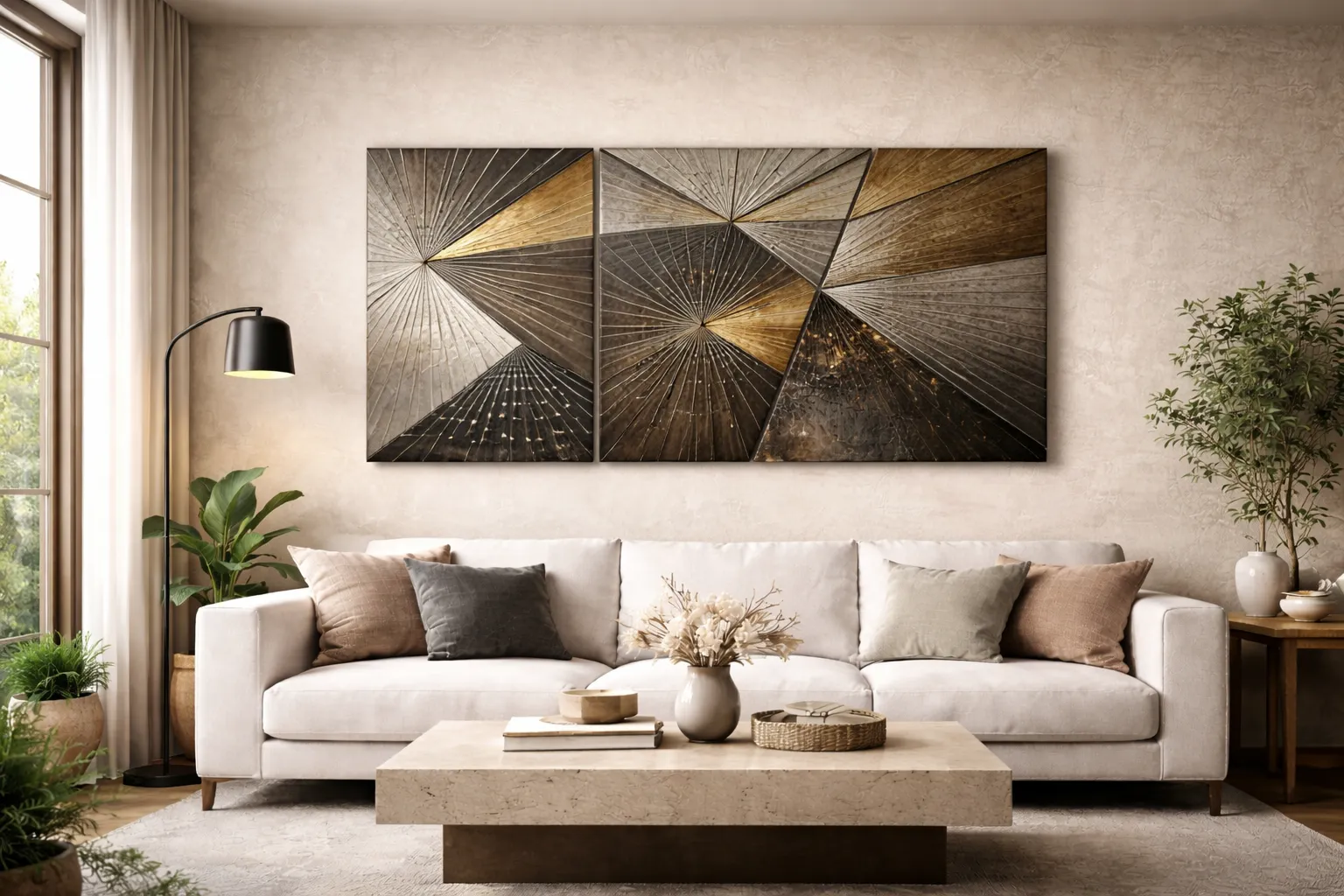
A shape in cool gray sits high on the wall behind a pale modern couch, bringing quiet interest without flash. The clean lines of the frame echo the room’s calm order, linking space through subtle repetition. Above the seating area, the metallic surface catches light differently as day shifts. Its presence feels planned but never loud, fitting neatly into the background until noticed. Simple forms dominate, letting the piece speak only when looked at directly.
Abstract & Artistic
Best for: Creative studios, modern homes, or avant-garde zone
Characteristics:
- Asymmetrical or freeform designs
- Layered textures and shapes
- Multi-panel contour
Abstract metal art invites meaning, igniting fancy while touching a modern flair into any room.
Example: A triptych of colorful abstract metal panels animates a loft studio with visual complexity.
Nature-Inspired Motifs
Best for: Bedrooms, meditation corners, or wellness areas
Characteristics:
- Trees, leaves, and floral shapes
- Landscape or botanical themes
- Organic, flowing lines
Bringing the rune of nature indoors, these pieces evoke calm and passion.
Example: A metallic tree sculpture above a bed creates a peaceful altar in the master bedroom.
Industrial & Rustic
Best for: Urban lofts, rightroperties, and industrial interiors
Characteristics:
- Distressed or raw metal finishes
- Rough textures and aged appearances
- Reclaimed steel or iron aesthetics
Industrial metal art accompaniment exposed brick, wood beams, and concrete side, imparting character and famous charm.
Example: Rusted gear sculptures on a loft wall create a compelling industrial accent.
Large & Statement Panels
Best for: Expansive living areas, joint art, and reaction halls
Characteristics:
- Oversize dimensions
- Multi-panel arrangements
- Eye-catching, bold designs
Grand metal panels serve as focal points that command the mind, mold walls into optical picture.
Example: A bronze-finished, oversize wall panel in a hotel lobby leaves a lasting reaction on visitors.
Selecting the Perfect Metal Wall Art for Your Environment
When selecting metal wall art, several factors must be considered to ensure that the piece accompaniments both the room and your personal style.
Assess Your Zone
Room Size:
- Compact rooms: Opt for small pieces or clustered mini-panels
- Expansive zones: Select larger panels or multi-part artwork
Wall Height: Measure your wall height to deposit quota with the artwork.
Furniture Coordination: Ensure that the artwork optically interacts with neighboring furniture, elusive a “floating” debut.
Align With Your Interior Aesthetic
The finish and color of your metal wall art should complement your interior palette:
| Interior Style | Recommended Finish | Rationale |
| Modern | Black, silver | Sleek, contemporary vibe |
| Industrial | Rust, raw steel | Complements exposed structures |
| Luxury | Gold, brass | Enhances elegance and opulence |
| Rustic | Aged iron | Harmonizes with wood and stone |
| Scandinavian | White, light metal | Brightens minimal interiors |
Prioritize Practical Considerations
Inside, thinner metal works fine. Out there, though, a shield against rain and sun becomes necessary. Weather waits for no artwork.
When things weigh more, the fixings need to be strong enough. Wall anchors must hold firm, never rely on weak nails. Sturdy mounting gear keeps everything in place. A loose hook risks damage, so solid support matters most.
Installation and Scale Guidance
- Measure wall dimensions and sketch placement
- Ensure the art fill roughly 60–75% of the wall area above primary furniture
- Maintain breathing zones around the piece to prevent optical clutter
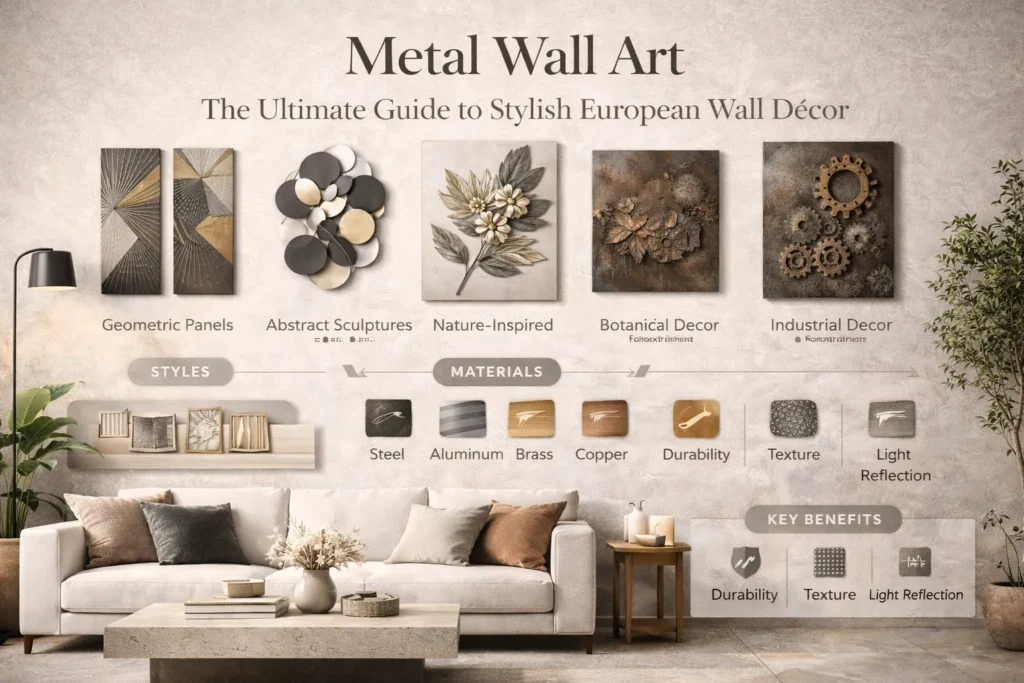
Metal Wall Art by Room
Different zones call for unique metal art ways. Here’s a room-by-room guide:
Living Room
Ideal Pieces: Statement panels, abstract or geometric sculptures
Placement:
- Above sofas or central walls
- Flanking TV units
- Between windows or architectural features
Tip: Hang artwork at standing eye level to maximize impact.
Bedroom
Ideal Pieces: Nature-inspired designs or serene abstracts
Placement:
- Above the bed headboard
- Opposite small furniture or empty wall spaces
Example: Twin leaf panels flanking the bed evoke calmness and balance.
Office
Ideal Pieces: Geometrical or motivational art
Placement:
- Above desks or talk tables
- Large accent walls for focus and inspiration
Tip: Opt for subtle metallic hues to foster combination without distraction.
Hallway
Ideal Pieces: Linear preparations, small sculptural pieces
Placement:
- Eye-level alignment
- Symmetrical or left pairings along the corridor
Kitchen
Ideal Pieces: Minimalist or culinary-themed metal art
Placement:
- Above breakfast bars or open shelving
- Integrating utensil motifs for charm and purpose
Outdoor Spaces
Ideal Pieces: Weather-resistant large panels, nature-inspired sculptures
Placement:
- Garden or patio walls
- Terrace and exterior house facades
Tip: Ensure protective coatings for longevity against rain, humidity, and sun.
Metals and Their Characteristics
Selecting the right material is vital for aesthetics and durability.
| Metal | Key Attributes | Ideal Uses |
| Steel | Strong, heavy, may rust | Statement pieces, outdoor art |
| Aluminum | Lightweight, rust-resistant | Multi-panel indoor/outdoor art |
| Iron | Rustic, heavy, may oxidize | Industrial or heritage decor |
| Brass | Reflective, luxurious | High-end interiors |
| Copper | Warm, develops patina | Nature-inspired and traditional rooms |
Steel
- Strength: Supports large-scale panels
- Durability: Long-lasting when coated
- Outdoor Tip: Apply anti-rust cure
Aluminum
- Light and versatile
- Corrosion-resistant
- Ideal for modular indoor/outdoor displays
Iron
- Classic, vintage appeal
- Enhances rustic and industrial environments
- Outdoor usage requires protective sealants
Brass
- Shiny golden finish
- Perfect for luxurious, minimalist interiors
- Adds warm sophistication
Copper
- Develops a natural patina over time
- Infuses warmth and elegance
- Excellent for organic, nature-inspired themes
Installation & Care
Proper installation and upkeep ensure endurance and safety.
Installation Essentials
Tools & Hardware:
- Wall anchors, screws, or studs
- Measuring tape and level
- Optional assistant for heavy installations
Steps:
- Measure wall and artwork
- Mark anchor points
- Drill into studs when possible
- Secure artwork with anchors for stability
- Balance and check level
Safety Tip: Never rely on feeble nails for heavy metal art.
Maintenance
Dusting: Weekly with a microfiber cloth
Cleaning: Mild soap solutions; shun harsh chemicals
Outdoor Care: Inspect protective sheet annually; touch up any signs of corrosion
Advantages and Considerations
| Pros | Cons |
| Long-Lasting, Robust | Heavier than canvas art |
| Stylish, versatile | Requires secure installation |
| Indoor and outdoor flexilibility | Can be costlier than traditional art |
| Reflective, adds feeling | Some metals may patina or rust |
| Easy to clean |
European Metal Wall Art Trends 2026
Scandinavian Minimalist
- Muted tones, geometrical lines
- Optimal for small flats
French Contemporary
- Elegant abstracts, mid-century influences
- Popular in Parisian homes
Italian Luxury
- Polished metals, gold or copper finishes
- Ideal for luxury villas
German Industrial
- Raw, distressed metals
- Functional sculptural elements in lofts
Nature-Integrated European Gardens
- Art blended with greenery
- Patios and terraces enhanced by botanical panels
Frequently Asked Questions
Metals such as steel, aluminum, iron, brass, or copper are commonly used.
Yes, provided it has corrosion-resistant coatings or powder finishes.
Combine with wood, fabric, or canvas for balance and passion.
They can be heavy; secure anchors and a second person are recommended.
Dust regularly, avoid harsh chemicals, and inspect outdoor pieces annually.
Conclusion
Art on walls made of metal does more than just decorate. Texture shows up, along with a quiet kind of grace, and a sense of personality settles in. When you favor clean Nordic lines, bold Southern European shine, or rugged Central European edge, this kind of artwork holds its ground. Lasting presence comes through, no matter the taste.
Start with a solid choice, then fit it just right. Over time, small attention turns bare surfaces into pieces people pause for. These stay interesting long after they go up.