Introduction
The Living Room is the moving and useful centre of the home. Wall Art For Living Room it is where families unwind after long days, where guests are honored, and where daily life quietly unfolds.Wall Art For Living Room in European homes, the living room carries an even deeper sense. It reflects cultural heritage, aesthetic values, and personal expression shaped by centuries of design evolution.
Wall art for living room interiors is not simply a decoration in European design philosophy. It is a careful and thoughtful element that defines air, proportion, and identity. Whether in a minimalist Scandinavian apartment, Wall Art For Living Room a refined Parisian flat, a rustic countryside home, or a sleek Italian villa, wall art is chosen with intention — never randomly.
Yet many owners still feel moved by vital questions:
- What wall art for the living room really works?
- What is the correct wall art size?
- How high should wall art be placed?
- Can wall art optically swell a small living room?
- Which wall art trends will remain proper beyond 2026?
This ultimate European guide to wall art for living room design answers every one of these questions in detail. Using time-tested European interior principles, modern spatial psychology, and future-ready trends, this guide helps you make confident and lasting decisions.
This is not generic decorating advice. It is a complete pillar resource designed to help homeowners, designers, and buyers elevate their living spaces — whether you live in a compact city apartment or a spacious family home.
What Is Wall Art & Why It Matters in a Living Room
What Is Wall Art?
Wall art refers to any visual or fancy element intentionally displayed on a wall to boost aesthetic appeal and spatial balance. It includes, but is not limited to:
- Canvas prints
- Framed artwork
- Abstract paintings
- Fine art photography
- Wall murals
- Textured or three-dimensional art
- Decorative mirrors
In a living room, wall art functions far beyond surface decoration. It actively shapes image, mood, and how the space is wise by holders and callers alike.
Why Wall Art Is Essential in Living Rooms
A living room without wall art often appears incomplete, sterile, or emotionally flat. European interior designers treat wall art as a foundational design component, not an optional finishing touch.
Wall art for living room design helps to:
- Establish a visual anchor
- Balance chair and open wall space
- Inform personality and lifestyle
- Harmonise colours,feeling, and materials
- Enhance emotional comfort and warmth
Without wall art, even expensive furniture can feel disconnected.
Creating a Visual Focal Point
Every precise living room needs a clear focal point — a place where the eye naturally settles. This may be:
- A fireplace
- A large window
- Or most commonly, a remark wall art piece
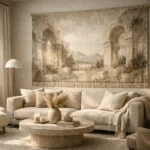
Large wall art for living room spaces often becomes the central visual mainstay that brings coherence to the entire room.
A strong focal point:
- Directs visual flow
- Simplifies furniture arrangement
- Prevents walls from appearing empty or unfinished
Oversize canvas art, wall murals, or bold abstract pieces are notably effective in new European interiors.
How Wall Art Changes Space Perception
Wall art has the power to visually vary a room.
It can:
- Make small living rooms appear larger
- Add recognized height to low ceilings
- Create depth in narrow spaces
This effect is especially valuable in European urban homes, where space efficiency is essential.
Emotional Impact of Wall Art
Wall art element emotional wellbeing more than most people realise.
- Soft, muted colours encourage relaxation
- Abstract beauty add movement and energy
- Befall art promotes calm and balance
European design preference moving comfort and durability over fleeting trends.
How to Choose the Right Wall Art for Your Living Room
Choosing the right wall art is not about copying Pinterest boards. It starts with understanding your space.
Understand Your Living Room Size & Light
Before selecting wall art, carefully observe your living room.
Ask yourself:
- How wide is the wall?
- How high are the roofs?
- How much common light enters the room?
- Is the space open-plan or compact?
Wall Art for Small Living Rooms
Best choices include:
- Light-toned wall art
- Minimalist compositions
- Mirrors or reflective finishes
- Vertical artwork
These elements visually expand the room and enhance brightness.
Wall Art for Large Living Rooms
Best options include:
- Oversize wall art
- Plant canvas sets
- Gallery walls
- Bold colours or disparity designs
Large rooms lack visual weight to shun feeling empty.
Mastering Art Scale & Proportion
Incorrect scale is one of the most common wall art mistakes.
European Wall Art Size Rule
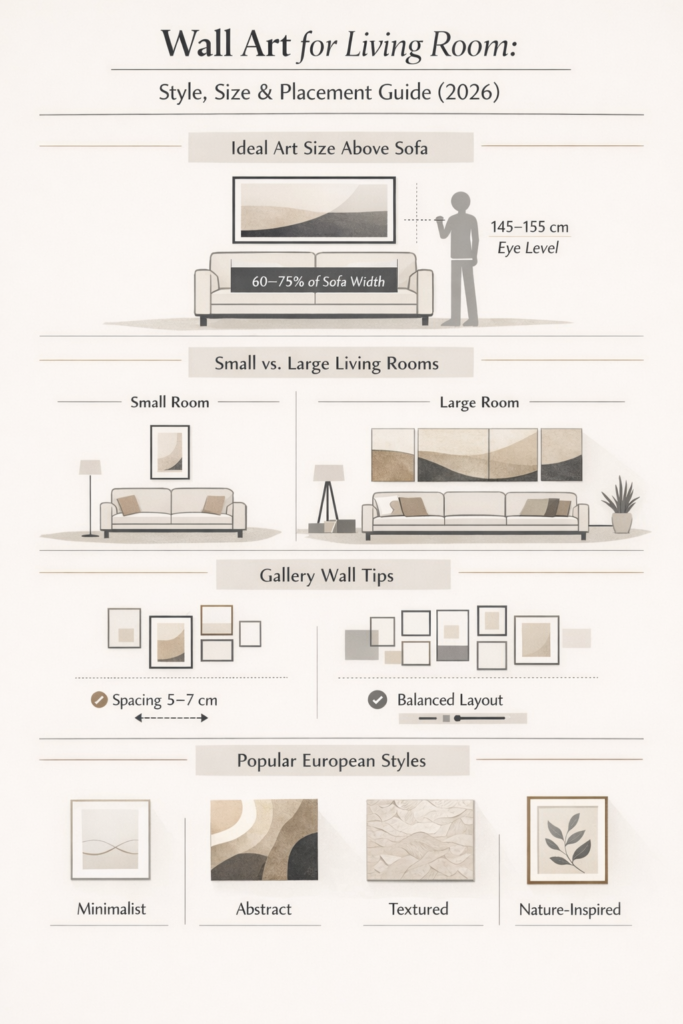
- Wall art above furniture should cover 60–75% of the furniture width beneath it
- Artwork should sit 15–25 cm above sofas or cabinets
These proportions create balance and harmony.
Wall Art Size Guide (Table)
| Wall Width | Recommended Art Size |
| Under 120 cm | Small to medium single piece |
| 120–240 cm | Large artwork or 2–3 panel set |
| Over 240 cm | Oversized art or gallery wall |
Choosing Colours That Work
Wall art should optically connect with:
- Wall colour
- Sofa filling
- Mat and rugs
- Lighting temperature
Pro tip: Select one main colour from your living room and subtly repeat it in your wall art.
Wall Art Placement Rules That Always Work
Above the Sofa
The most popular placement.
Rules to follow:
- Centre artwork horizontally
- Maintain equal spacing
- Avoid hanging too high
Eye-Level Rule (European Standard)
European interiors follow a precise rule:
The centre of the artwork should be 145–155 cm from the floor.
This aligns with natural eye level and ensures comfort.
Gallery Wall Placement Rules
Gallery walls require planning.
Best practices:
Inspiring Wall Art Ideas for Living Rooms
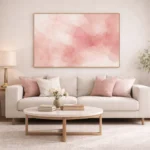
Oversized Statement Wall Art
Oversized wall art remains a dominant European trend.
Benefits:
- Glean optical clutter
- Creates urgent impact
- Adds luxury and plan
Ideal for modern and minimalist souls.
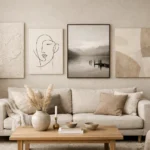
Gallery Wall Ideas
Gallery walls tell stories.
European arcade walls often detail:
- Black-and-white photography
- Architectural copy
- Neutral or black frames
- Guarded colour kilt
Minimalist & Monochrome Wall Art
Common in Scandinavian homes.
Key characteristics:
- Soft greys,cream, and milky tones
- Abstract line art
- Calm, open compositions
Perfect for smooth living rooms.
Abstract & Colourful Modern Art
Popular in Italian and metropolitan interiors.
Tips:
- Keep furniture neutral
- Feature one strong artwork
- Avoid excessive colours
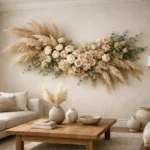
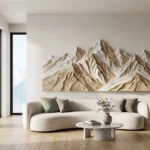
Textured & 3D Wall Art
Texture adds depth without visual noise.
Popular materials include:
- Plaster relief art
- Wooden panels
- Fabric wall hangings
Mirrors as Functional Wall Art
Mirrors give both fancy and sane purposes.
Benefits:
- Mirror natural light
- Increase recognized space
- Add grace
Excellent for small living rooms.
Digital & AI-Inspired Wall Art
Digital wall art is rapidly growing.
Features include:
- Clean geometry
- Futuristic themes
- Customisable visuals
Popular in modern European apartments.
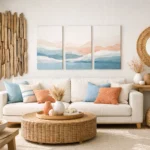
Nature-Inspired & Botanical Wall Art
Nature art connects interiors with the outdoors.
Best suited for:
- Nordic homes
- Eco-conscious interiors
- Relaxed living rooms
Wall Art for Different Living Room Styles
Modern & Minimalist Living Rooms
Use:
- One or two large artworks
- Neutral palettes
- Simple frames
Boho & Eclectic Living Rooms
Combine:
- Textile wall hangings
- Ethnic patterns
- Mixed materials
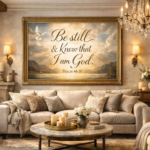
Classic & Traditional European Interiors
Choose:
- Framed paintings
- Symmetrical arrangements
- Muted, elegant tones
Rustic & Farmhouse Living Rooms
Best options:
- Wooden frames
- Landscape art
- Earthy, warm colours
Industrial Living Rooms
Industrial European spaces favour:
- Black metal frames
- Abstract photography
- Raw textures
How to Hang Wall Art Like a Professional
Step-by-Step Hanging Guide
- Measure wall and furniture width
- Mark centre alignment
- Test layouts on the floor
- Use a spirit level
- Secure using proper anchors
Tools Checklist
| Tool | Purpose |
| Measuring tape | Accurate spacing |
| Spirit level | Straight alignment |
| Wall anchors | Secure hanging |
| Pencil | Temporary Markings |
Common Wall Art Mistakes to Avoid
Choosing art that is too small
Hanging artwork too high
Overcrowding walls
Ignoring colour coordination
Mixing unrelated styles
Pros & Cons
Pros
- Enhances visual appeal
- Expresses individuality
- Improves spatial balance
- Adds warmth and depth
Cons
- Poor placement looks cluttered
- Oversized art may overwhelm small rooms
- Excessive styles create chaos
FAQs
What size wall art should I choose for a living room?
Choose art that has a roof 60–75% of the chair span below it.
Can wall art make a small living room look bigger?
Yes. Light colours, steep pieces, and reflector visibly grow zones.
How do I make an arcade wall look united?
Use one colour palette, like rims, and true spacing.
What wall art trends are popular in 2026?
Oversize art,nature minimalism, digital art, and befall designs..
Explore select European wall art collections
Discover precise,hit designs
Create a living room that feels complete
Conclusion Wall Art For Living Room
Wall Art is not simply decoration — it is an optical language.
In European interiors, wall art follows careful living, cultural depth, and touching skill. When rate,placing, colour, and style are well-known, wall art becomes a powerful design tool rather than a hunch game.
This guide brings you to move beyond blunt trends and make sure, lasting decisions. Whether your style is minimalist or vivid,usual or new, the right wall art moulds a living room into a zone that feels balanced, welcoming, and timeless.