Introduction
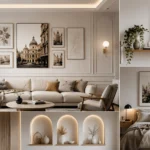
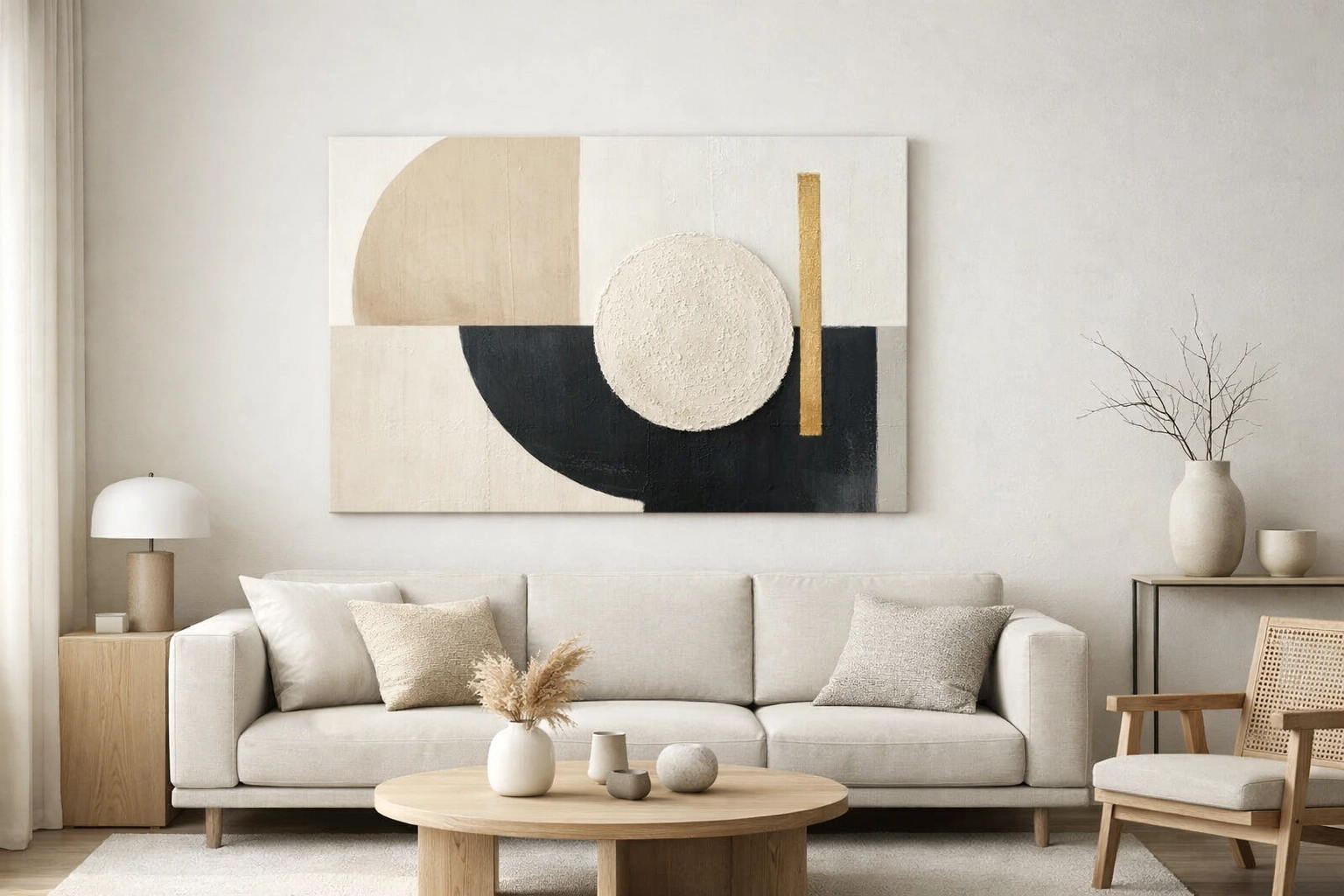
Contemporary wall art has evolved into one of the most influential design components in modern European interiors. From minimal Scandinavian flats to sophisticated Italian residences, helps define character, establish focal points, and instantly elevate interior aesthetics.
Unlike traditional artwork that often focuses on classical themes, contemporary wall art emphasizes simplicity, peace, feeling, and modern optical appeal. Whether you prefer abstract canvas prints, sculptural wall installations, minimalist line art, or textured panels, allows homeowners to transform spaces without expensive renovations or structural changes.
In today’s European homes, walls are no longer passive backgrounds — they function as visual storytelling surfaces that reflect personality, lifestyle preferences, and cultural inspiration. Contemporary wall art has become essential for creating layered, curated, and thoughtfully designed interiors.
This comprehensive guide will help you understand everything about , including:
- What contemporary wall art is
- Types of contemporary wall art
- Size and placement rules
- Room-by-room styling ideas
- European design trends
- Expert designer secrets
- Common mistakes to avoid
This ultimate pillar guide will help you choose, style, and position like a professional interior designer.
What Is Contemporary Wall Art?
Contemporary wall art refers to modern artwork created using current design movements, materials, and artistic expressions. It emphasizes minimalism, creativity, and clean optical composition.
Unlike traditional art styles, often includes:
- Abstract art
- Minimalist artwork
- Typography prints
- Photography
- Mixed media art
- Textured wall art
- Oversize canvas art
Contemporary wall art is particularly popular in European homes because it blends effortlessly with:
- Modern architecture
- Minimalist interiors
- Neutral color palettes
- Contemporary furniture
- Open-plan living zones
This adaptability makes one of the most versatile and flexible design elements in modern homes.
Why Contemporary Wall Art Is Popular in European Homes
Contemporary wall art perfectly aligns with European interior design philosophy, which emphasizes functionality, balance, and simplicity. European homeowners often prioritize refined aesthetics, practical maps, and uncluttered zones.
Key Reasons for Popularity
- Clean and minimal design
- Works in small apartments
- Matches modern furniture
- Creates luxury feel
- Easy to update
- Budget-friendly transformation
- Works with neutral palettes
European countries widely adopting include Sweden, Germany, France, Italy, Denmark, and the Netherlands.
Contemporary wall art allows homeowners to introduce personality without overwhelming interiors. It creates optical interest while maintaining a calm and sophisticated air.
Types
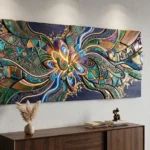
Abstract
Abstract art is one of the most widely used styles in Europe.
Features
- Bold shapes
- Expressive colors
- Modern aesthetic
- Minimal structure
Best For
- Living rooms
- Offices
- Entryways
- Dining rooms
Why It Works
Abstract art creates optical intrigue without overwhelming the space. It adds personality and complements modern interiors.
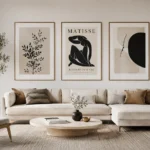
Minimalist
Minimalist focuses on simplicity and clean composition.
Features
- Neutral colors
- Simple lines
- Clean composition
- Modern style
Best For
- Scandinavian interiors
- Nordic homes
- Modern flats
- Bedrooms
Minimalist art enhances calm environments and supports balanced interiors.
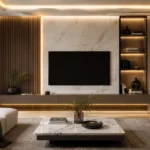
Textured
Textured wall art adds bottom, dimension, and luxury.
Popular Materials
- Plaster
- Fabric
- Wood
- Clay
- Mixed materials
Best For
- Luxury interiors
- Modern villas
- Minimalist homes
Textured creates tactile optical interest and enhances covered design.
Contemporary Canvas Wall Art
Canvas art is widely used in modern European interiors.
Features
- Large sizes
- Minimal frames
- Clean aesthetic
Best For
- Living rooms
- Dining rooms
- Bedrooms
Canvas artwork is versatile and suits both modern and minimalist interiors.
Contemporary Metal Wall Art
Metal wall art adds modern industrial character and bold structure.
Best For
- Industrial interiors
- Modern homes
- Offices
Metal art introduces feeling and architectural interest.
Size Guide
Choosing the right size is essential for balanced interiors.
Above Sofa Size Rule
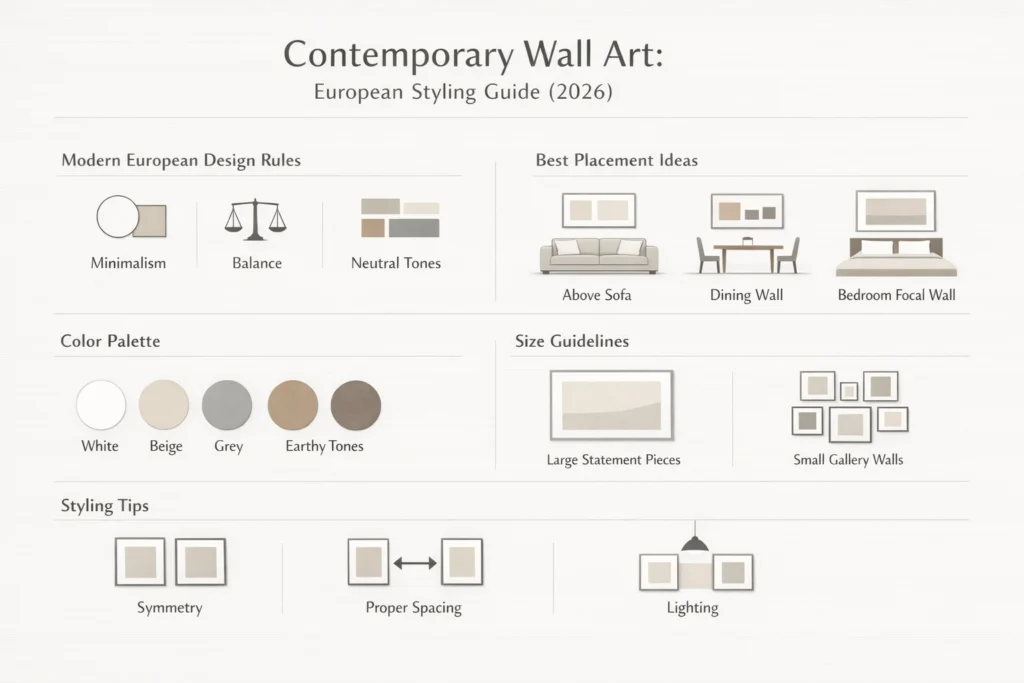
Artwork should cover 60–75% of sofa width.
Center alignment is recommended.
This rule is widely used by interior designers to create optical peace and proportional maps.
Above Bed Size Rule
Artwork should cover 50–70% of bed width.
Gallery Wall Size Rule
- 2–3 inch spacing
- Balanced map
Designers recommend 2–3 inches spacing between frames to maintain cohesion.
Layout Rules
1: Statement Piece
Use one large artwork for:
- Minimal interiors
- Luxury homes
- Scandinavian zones
2: Gallery Wall Layout
Use:
- 3–5 pieces
- Consistent spacing
- Same color palette
3: Triptych Layout
Use:
- Three panels
- Equal spacing
- Horizontal alignment
Room-by-Room Guide
Living Room
Best Styles
- Large abstract art
- Minimalist canvas
- Gallery wall
Designer Tip
Choose oversize to create a focal point.
Bedroom
Best Styles
- Neutral art
- Minimal feelings
- Soft colors
Designer Tip
Use calming artwork for relaxing zones.
Dining Room
Best Styles
- Bold art
- Modern prints
- Abstract canvas
Office
Best Styles
- Typography art
- Minimal art
- Abstract prints
Color Rules
Neutral Colors
- White
- Beige
- Gray
- Black
Bold Colors
- Terracotta
- Olive green
- Navy blue
- Mustard
Trends 2026
Top Trends:
- Balanced wall art
- Glass wall art
- Oversized canvas
- Neutral palettes
- Mixed media art
- Minimalist artwork
Recent interior design movements show warmer neutrals replacing cool tones in modern homes.
Comparison Table
| Type | Best For | Style | Popularity |
| Abstract | Living Room | Modern | High |
| Minimalist | Bedroom | Clean | High |
| Textured | Luxury Homes | Premium | Medium |
| Canvas | All Rooms | Modern | High |
| Metal | Industrial | Modern | Medium |
Pros and Cons
Pros
- Modern appearance
- Easy to style
- Works in all rooms
- Flexible design
- Budget-friendly
Cons
- Wrong size looks unbalanced
- Too many styles cause clutter
Common Mistakes to Avoid
- Too small artwork
- Wrong placement
- Too many styles
- Poor spacing
- Wrong height
European Styles
Scandinavian Style
- Neutral jewels
- Minimalist art
- Soft textures
Italian Modern Style
- Bold artwork
- Luxury textures
French Contemporary Style
- Soft colors
- Elegant art
How to Choose
Step‑by‑Step Guide
1: Measure Wall Space
Measure available zones before selecting artwork.
2: Choose Color Palette
Match artwork with room colors.
3: Select Style
Choose:
- Abstract
- Minimalist
- Balanced
4: Choose Size
Follow the 60–75% rule.
5: Place Correctly
Center artwork properly.
Placement Table
| Location | Recommended Size | Layout |
| Above Sofa | Large | Center |
| Bedroom | Medium | Center |
| Entryway | Medium | Single |
| Office | Small | Gallery |
Examples
Example 1
Living Room
- Large abstract canvas
- Neutral palette
Example 2
Bedroom
- Minimalist line art
- Soft colors
Example 3
Office
- Typography art
- Minimal design
FAQs
Contemporary wall art refers to modern artwork based on current design trends.
Choose artwork covering 60–75% of furniture width.
Above sofas, beds, and entryways are popular placements.
Final Thoughts
Contemporary wall art is one of the most effective ways to transform interiors. By following European styling rules, size guides, and map principles, homeowners can create elegant and modern zones.
Whether you prefer minimalist designs, abstract art, or balanced pieces, c offers endless possibilities for modern homes.
TheWallsArt.com aims to provide the most comprehensive wall art guides to help homeowners design beautiful interiors with confidence.