Introduction
A decorative wall shelf is no longer just a simple storage platform or utility fixture. In the evolving landscape of modern European interior design, it has transformed into a multi-functional aesthetic architecture element that defines air, emotional tone, and spatial peace within a room.
Across design-forward regions such as Scandinavia, Germany, France, Italy, and the United Kingdom, interior architects and home stylists increasingly use wall shelving systems to combine:
- Functional efficiency (utility optimization)
- Minimalist visual language
- Narrative-driven décor composition
- Intelligent zone utilization
Instead of acting merely as a surface for placing books or objects, today’s decorative wall shelf functions as “architectural optical storytelling infrastructure.”
In 2026 interior design paradigms, the dominant philosophy emphasizes:
Reduction of clutter, increase of intentional placement, and enhancement of spatial intelligence.
This comprehensive guide will help you fully understand decorative wall shelf systems through design psychology, NLP-based spatial structuring, material science, styling frameworks, and European aesthetic principles.
What Is a Decorative Wall Shelf?
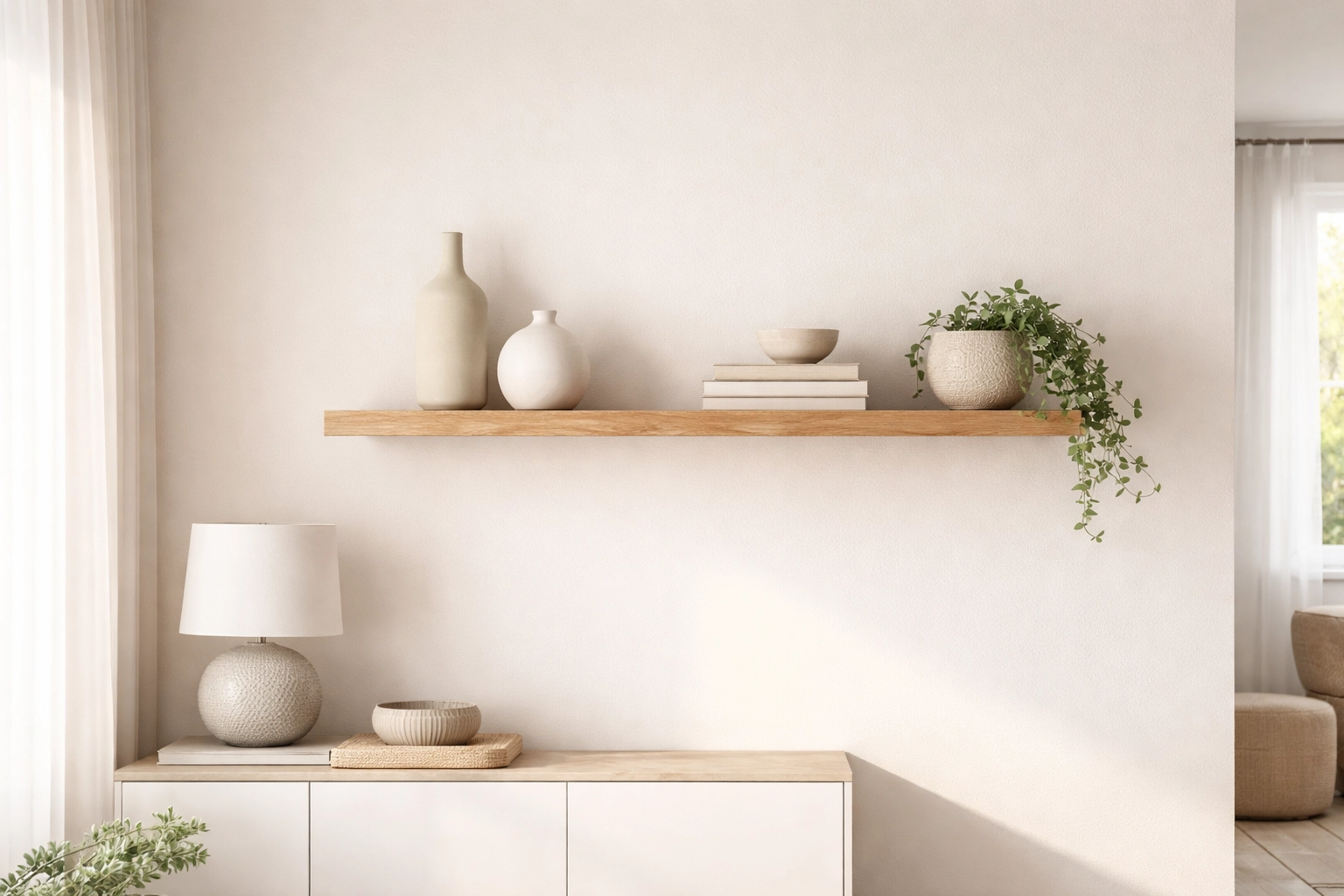
A decorative wall shelf is a wall-mounted horizontal or modular structure designed for both functional storage and aesthetic presentation.
However, within modern European design theory, it is not simply furniture—it is considered a:
- Spatial composition module
- Visual hierarchy controller
- Interior storytelling device
- Architectural balance enhancer
Core Functional Objectives:
- Exhibit decorative objects (vases, frames, sculptures)
- Optimize vertical spatial usage
- Improve wall-based optical equilibrium
- Introduce personality-driven design elements
- Enhance interior bottom perception
European Design Interpretation
In Scandinavian and Northern European homes, wall shelving is treated as:
An integrated extension of architecture rather than detachable furniture.
This means every element—spacing, proportion, symmetry, and material—must follow strict design logic systems instead of random placement.
Types of Decorative Wall Shelf
Understanding shelf typologies is essential for building structured interior environments.
Floating Wall Shelves
Floating shelves represent the most widely adopted system in minimalist homes.
Characteristics:
- Concealed mounting structure
- Seamless optical floating illusion
- Clean linear geometry
- Minimal material disruption
Ideal Usage:
- Scandinavian interiors
- Bedrooms
- Living rooms
- Minimalist flats
Keywords: clean, subtle, elegant, lightweight visual impact
Bracket Wall Shelves
Bracket-based shelving introduces structural visibility.
Characteristics:
- Exposed metal or wooden support brackets
- Industrial or simple aesthetic language
- Strong load-bearing capability
Ideal Usage:
- Kitchens
- Workspaces
- Industrial-themed interiors
Keywords: structural, durable, functional expression
Corner Wall Shelves
Corner shelving maximizes underutilized spatial zones.
Characteristics:
- Angular installation
- Space-efficient geometry
- Compact footprint utilization
Ideal Usage:
- Small flats
- Urban European housing
- Compact interiors
Keywords: optimization, efficiency, spatial intelligence
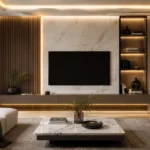
Modular Wall Shelf Systems
Highly advanced configurable systems used in premium interiors.
Characteristics:
- Expandable configurations
- Adaptive structure
- Custom layout flexibility
Ideal Usage:
- Luxury living rooms
- High-end architectural zones
Keywords: adaptive, scalable, architectural flexibility
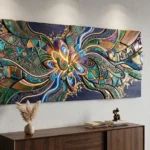
Sculptural Wall Shelves
These shelves function as artistic installations.
Characteristics:
- Non-linear geometry
- Concept-driven design
- Statement-making presence
Ideal Usage:
- Feature walls
- Luxury interiors
- Design-focused homes
Keywords: artistic, expressive, conceptual design identity
Shelf System Comparison Overview
| Shelf Type | Design Language | Space Efficiency | Ideal Environment |
| Floating | Minimalist | High | Bedrooms, living rooms |
| Bracket | Industrial | Medium | Kitchens, offices |
| Corner | Compact | Very High | Small apartments |
| Modular | Luxury modern | High | Large homes |
| Sculptural | Artistic | Medium | Feature walls |
Modern European Wall Shelf Design Rules
European interior designers follow structured cognitive and optical frameworks to ensure balance.
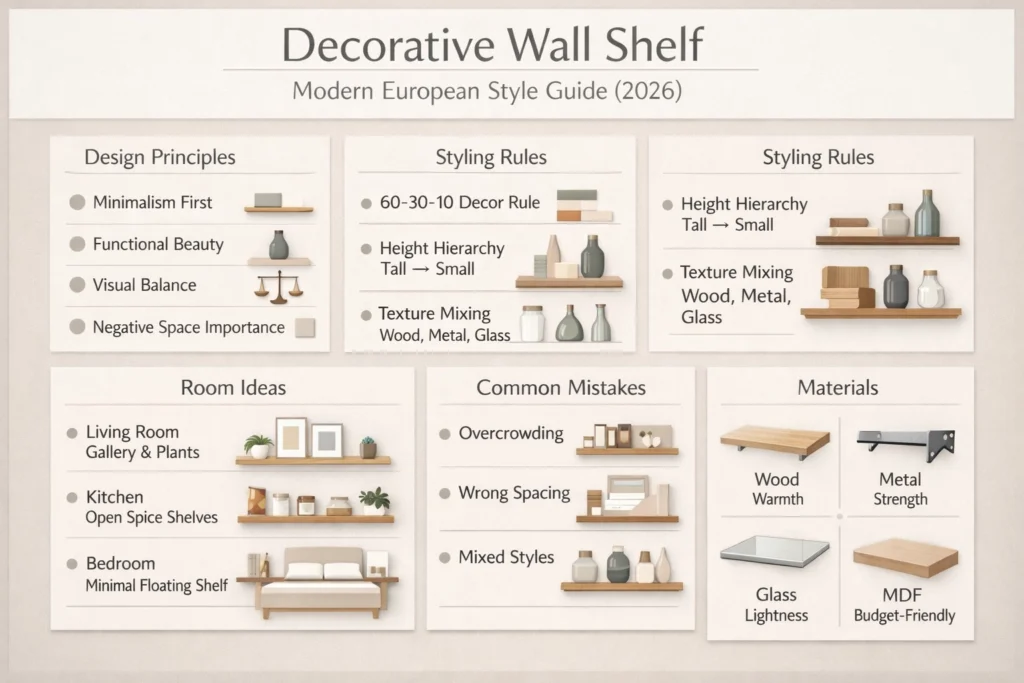
1: Visual Weight Distribution
This system controls perceptual hierarchy:
- 60% functional objects (books, storage items)
- 30% decorative elements (plants, frames)
- 10% accent pieces (sculptures, artistic items)
This prevents overload and maintains optical clarity.
2: Negative Space Optimization Principle
An empty zone is considered a design asset, not absence.
Benefits include:
- Improved spatial breathing
- Enhanced luxury perception
- Reduced cognitive overload
Minimalist Nordic design heavily relies on this principle.
3: Vertical Hierarchy Structuring
Objects are arranged based on size scaling:
- Large objects → medium objects → small objects
This creates:
- Natural optical flow
- Cognitive ease of scanning
- Structured aesthetic rhythm
4: Material Texture Layering System
Combine contrasting materials:
- Wood = passion and natural jewel
- Metal = structure and precision
- Glass = transparency and lightness
- Ceramic = softness and organic feel
Professional Styling Formula
Interior stylists use a three-part system:
Layering + Balance + Contrast Optimization
1: Layering Construction
Depth is achieved through spatial layering:
- Horizontal book stacking
- Vertical object placement
- Front-back object arrangement
2: Composition Balancing
Ensure symmetrical or intentional asymmetrical equilibrium.
Avoid:
- One-sided weight imbalance
- Optical density clustering
3: Contrast Engineering
Introduce opposing elements:
- Light vs dark
- Soft vs rigid
- Organic vs geometrical
Room-by-Room Decorative Wall Shelf Strategies
Living Room Applications
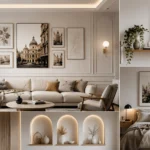
The living room serves as the primary optical narrative zone.
Recommended setups:
- Floating shelves above seating areas
- Gallery-style wall integration
- Mixed books + plants + artifacts composition
Outcome: storytelling-rich environment
Kitchen Applications
In European kitchens, shelving merges utility and design.
Ideas:
- Spice display shelving
- Wooden simple open racks
- Coffee station shelf units
Outcome: functional elegance
Bedroom Applications
Bedrooms require emotional calmness and minimal stimulation.
Ideas:
- Bedside floating shelves
- Soft ambient lighting integration
- Minimal object placement
Outcome: psychological relaxation
Home Office Applications
Workspaces require cognitive clarity.
Ideas:
- Organized book shelving
- Minimal decorative elements
- Clean optical background
Outcome: improved focus and productivity
Common Decorative Wall Shelf Mistakes
Avoid these critical errors:
- Overcrowding surfaces
- Ignoring proportional alignment
- Mixing unrelated design styles
- Poor spacing logic
- Lack of optical hierarchy
These mistakes break aesthetic coherence instantly.
Best Materials for Decorative Wall Shelves
Wood
- Natural passion generator
- Strong Scandinavian association
- Timeless optical appeal
Best for: living zones, bedrooms
Metal
- Industrial precision look
- Extremely durable structure
Best for: kitchens, offices
Glass
- Light reflection enhancement
- Minimal optical weight
Best for: modern luxury interiors
MDF / Engineered Wood
- Budget-efficient solution
- High customization flexibility
Best for: cost-sensitive projects
Material Performance Comparison
| Material | Aesthetic Style | Durability | Ideal Use |
| Wood | Natural | High | Living room |
| Metal | Industrial | Very High | Kitchen, office |
| Glass | Minimalist | Medium | Luxury homes |
| MDF | Flexible | Medium | Budget interiors |
Space Optimization in Small European Homes
Compact flats require intelligent design solutions.
Best strategies:
- Vertical expansion shelving
- Corner optimization systems
- Slim floating shelf units
- Modular grid systems
- Hidden bracket systems
Result: maximum utility with minimal clutter
Pros and Cons of Decorative Wall Shelves
Advantages:
- Enhances interior aesthetics
- Saves valuable floor zone
- Affordable design upgrade
- Universally adaptable
Limitations:
- Can appear cluttered if misused
- Requires periodic maintenance
- Weight capacity limitations
- Installation sensitivity
Psychological Impact of Wall Shelf Design
Interior design significantly affects cognitive behavior.
Effects include:
- Eye-level arrangement improves focus
- Reduced clutter lowers stress levels
- Balanced layouts increase calmness perception
- Asymmetry introduces modern dynamism
Proper shelving design increases perceived room size and emotional comfort.
Quick Styling Recap System
To achieve professional-level design:
Apply layering techniques
Maintain compositional balance
Introduce controlled contrast
Preserve negative space
Follow 60-30-10 structure
Frequently Asked Questions
The ideal placement is between 145–160 cm eye level, ensuring ergonomic visibility and aesthetic peace.
Yes, provided they are installed using proper wall anchoring systems and load-rated brackets.
Minimalist wooden floating shelves dominate Scandinavian and Northern European interiors due to their simplicity and adaptability.
Use the 60-30-10 composition rule and maintain intentional empty zone distribution.
Yes, they are among the most effective zone-saving interior optimization systems.
Conclusion
A decorative wall shelf is far more than a storage surface—it is a multi-dimensional interior architecture component that shapes optical identity, spatial perception, and emotional air.
When designed correctly, it becomes:
- An optical anchor point
- A functional art installation
- A spatial optimization tool
In 2026 European design thinking, true luxury is defined by:
Minimalism, spatial intelligence, and intentional design clarity.
And within this framework, the decorative wall shelf stands as one of the most powerful yet understated elements of modern interior architecture.