Introduction
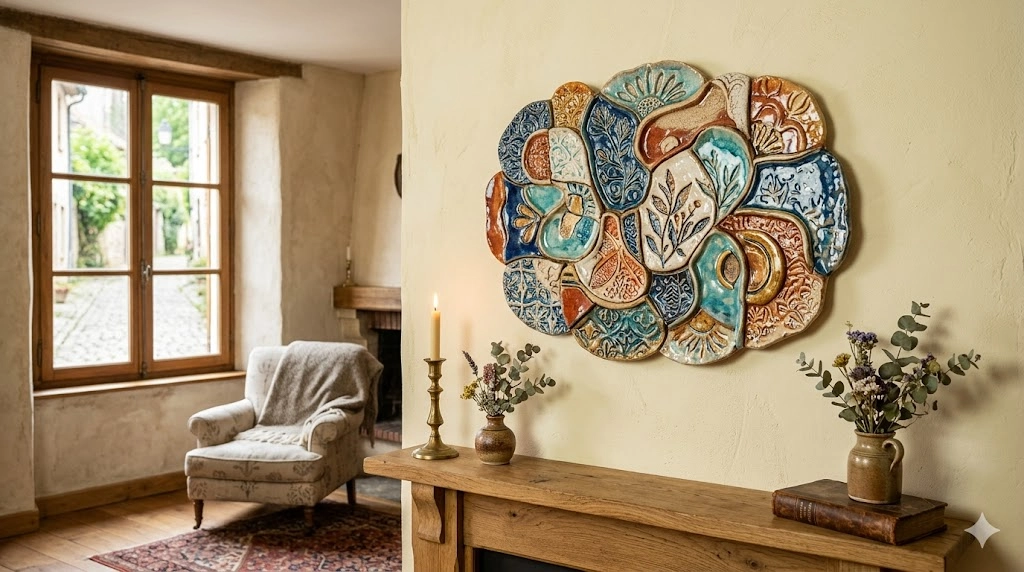
Ceramic wall art has evolved far beyond simple decoration. In 2026, it stands as a core architectural design element within modern European interiors, reshaping how designers perceive and construct wall aesthetics.
Traditionally, walls were treated as passive backgrounds—flat surfaces meant to support paint, wallpaper, or framed artwork. However, New European design philosophy has shifted dramatically. Walls are now considered active optical environments, capable of expressing feeling, emotion, bottom, and material intelligence.
Among all decorative mediums, ceramic has emerged as a leading material due to its organic composition, tactile richness, and sculptural flexibility.
Unlike printed or digital art forms, ceramic introduces:
- Authentic physical feeling
- Natural surface irregularities
- Light and shadow interplay
- Handmade artistic identity
- Long-lasting structural durability
This combination transforms interiors from flat compositions into multi-dimensional sensory experiences.
Across Scandinavian apartments, French minimalist homes, and Italian modern villas, ceramic wall installations are now used as:
- Luxury statement walls
- Architectural focal points in living rooms
- Minimalist Japandi-inspired backdrops
- Boutique hotel-style interiors
- Artistic hallway galleries
This guide provides a complete systemized understanding of ceramic wall art, including:
- Categories and classifications
- Professional European layout frameworks
- Styling methodologies
- Material and buying intelligence
- Spatial composition rules
- Common design errors
- Future innovations
By the end, you will understand not as decoration—but as a structured interior design language system.
What is Ceramic Wall Art?
Ceramic wall art refers to decorative or sculptural wall-mounted compositions crafted from fired clay-based materials, often glazed or balanced to enhance durability and visual appeal.
Ceramic is not a single form of artwork. Instead, it is a broad category that includes multiple artistic expressions and structural formats.
Main Forms of Ceramic Wall Art
- Handmade ceramic plate arrangements
- 3D sculptural ceramic installations
- Ceramic tile-based murals
- Balanced clay wall panels
- Abstract ceramic wall compositions
Each type carries its own design identity, spatial behavior, and optical impact.
Ceramic Wall Art vs Traditional Wall Art
To understand its rising popularity, it is important to compare ceramic with traditional canvas or printed wall art.
| Feature | Ceramic Wall Art | Canvas / Print Art |
| Texture | Strong 3D tactile presence | Flat surface |
| Depth | High spatial depth | Minimal or none |
| Light Interaction | Dynamic shadow play | Static lighting response |
| Durability | Extremely high | Moderate |
| Luxury Perception | Premium architectural feel | Standard decorative feel |
| 2026 Trend Strength | Very high growth | Stable but slower growth |
Key Insight
Ceramic wall art is preferred because it introduces real material bottom instead of optical illusion.
Why Ceramic Wall Art Is Trending in 2026
Several global design movements are driving ceramic wall art into mainstream European interiors.
1. Rise of Tactile Interior Design
Modern design no longer focuses only on optical appeal. Instead, it emphasizes touch-inspired optical perception, where materials must feel alive even when viewed.
Ceramic provides:
- Natural uneven surfaces
- Organic feeling variation
- Light absorption and reflection balance
- Handmade imperfection aesthetics
This creates emotional engagement with the zone.
2. Growth of European Minimal Luxury Style
Countries such as Denmark, Sweden, and France are leading a movement toward:
- Neutral color palettes
- Functional simplicity
- Natural materials
- Soft luxury environments
Ceramic integrates perfectly into this philosophy due to its earth-based origin and refined finish options.
3. Expansion of “Tile-as-Art” Concept
Tiles are no longer restricted to kitchens or bathrooms. Designers now use ceramic as:
- Living room focal art installations
- Bedroom headboard feature walls
- Luxury hotel lobby surfaces
- Gallery-style interior compositions
This transformation elevates ceramic from utility to fine art architecture.
4. Sustainability-Driven Design Choices
Sustainability is a dominant force in 2026 interior trends. Ceramic is:
- Made from natural clay materials
- Long-lasting and reusable
- Environmentally stable
- Low-waste in production cycles
It aligns with eco-conscious European living standards.
5. Evolution Toward 3D Interior Architecture
Modern interiors are increasingly dimensional. Flat walls are being replaced by layered architectural surfaces.
Ceramic contributes by adding:
- Physical bottom
- Structural rhythm
- Optical movement
- Shadow geometry
Types of Ceramic Wall Art
Understanding categories helps in selecting the correct design for specific interior goals.
1. Handmade Ceramic Plate Wall Art
This style consists of multiple ceramic plates arranged in artistic compositions.
Best suited for:
- Bohemian interiors
- Scandinavian cozy zones
- Artistic residential rooms
Design value:
Creates a storytelling wall that feels personal and handcrafted.
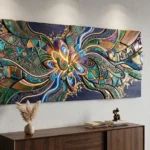
2. 3D Ceramic Sculptural Installations
This is the most luxurious and high-end ceramic category.
Characteristics:
- Abstract sculptural forms
- Strong shadow projection
- Gallery-style presentation
Best suited for:
- Luxury flats
- Boutique hotels
- Minimalist modern homes
3. Ceramic Tile Murals
Large-scale artistic compositions built using ceramic tiles.
Best suited for:
- Dining areas
- Cultural themed interiors
- Feature accent walls
Impact:
Creates narrative-driven optical storytelling surfaces.
4. Textured Clay Wall Panels
These are subtle yet deeply tactile wall surfaces.
Influenced by:
- Japandi design philosophy
- Nordic minimalism
Best suited for:
- Calm bedrooms
- Office interiors
- Meditation zones
5. Abstract Ceramic Art Pieces
Freeform ceramic expressions focusing on creativity.
Best suited for:
- Artistic homes
- Gallery-moved zones
- Experimental interiors
Ceramic Wall Art Layout Rules
Interior designers follow structured composition rules instead of random placement.
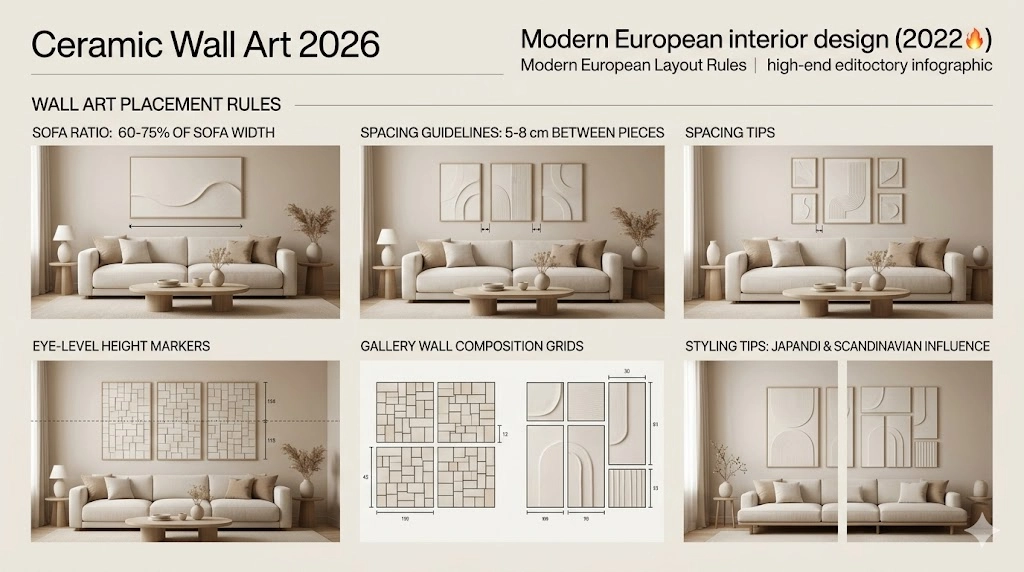
Rule 1: Sofa Wall Proportional Balance Rule
Ceramic wall art should ideally cover:
60% to 75% of sofa width
This ensures optical peace between furniture and wall zone.
Rule 2: Spacing Precision Rule
Correct spacing between ceramic pieces is essential:
5 to 8 cm spacing recommended
- Too tight = optical chaos
- Too wide = disconnected composition
Rule 3: Eye-Level Alignment Rule
Ideal installation height:
145–150 cm center alignment
This Corresponds with average human eye level for balanced viewing.
Rule 4: Odd Number Grouping Principle
Designers prefer:
- 3 pieces
- 5 pieces
- 7 pieces
Reason: Odd-number grouping creates natural asymmetry and visual flow.
European Styling Methods
Different design philosophies influence ceramic placement.
Minimal Luxury Style
- Neutral beige or white backgrounds
- Single large ceramic centerpiece
- Soft ambient lighting
Result: Sophisticated and clean luxury appearance
Bohemian Organic Style
- Mixed ceramic shapes
- Earth-tone palette (clay, sand, olive)
- Wooden furniture integration
Result: Warm, natural, expressive environment
Modern Gallery Style
- Grid-based arrangements
- Equal spacing alignment
- Symmetrical composition
Result: Museum-quality interior aesthetic
Best Placement Areas
Strategic placement significantly increases visual impact.
Ideal locations include:
- Living room focal wall
- Bedroom headboard wall
- Dining room feature wall
- Hallway gallery sections
- Staircase vertical surfaces
Buying Guide: How to Choose Ceramic Wall Art
1. Material Quality Assessment
- Prefer natural clay compositions
- Check kiln-firing strength
- Avoid low-quality synthetic blends
2. Surface Finish Types
- Matte finish → modern luxury feel
- Gloss finish → bold optical shine
- Textured finish → artistic bottom
3. Correct Size Selection
- Small rooms → compact compositions
- Large walls → oversize installations
4. Installation Safety
- Use strong anchors
- Distribute weight evenly
- Ensure professional mounting
5. Color Harmony Matching
Coordinate with:
- Furniture upholstery
- Curtains
- Flooring jewel
Pros and Cons
Advantages
- High-end luxury appearance
- Strong dimensional feeling
- Long-lasting durability
- Eco-friendly material options
- Fits modern design trends
Disadvantages
- Heavy installation requirements
- Higher cost for handmade pieces
- Fragility if mishandled
- Requires precise mounting
Common Design Mistakes to Avoid
Many homeowners unintentionally reduce optical impact due to:
- Overcrowded wall compositions
- Incorrect spacing alignment
- Poor lighting direction
- Mixing conflicting styles
- Ignoring wall-to-furniture ratio
Avoiding these ensures a premium European aesthetic.
Future Trends
1. 3D Printed Ceramic Design
- Digital sculpting integration
- Custom geometrical patterns
- Rapid manufacturing evolution
2. Smart Ceramic Walls
- Embedded lighting systems
- Interactive surface technology
- Smart home integration
3. Eco-Clay Revolution
- Fully sustainable materials
- Carbon-reduced production
- Natural recycling systems
4. Architectural Ceramic Surfaces
Entire walls becoming art structures instead of decoration
FAQs
Yes, it is widely used in modern European interiors due to its clean and luxurious look.
Yes, but use small or single-piece designs to avoid overcrowding.
Yes, it is very durable when properly installed.
Scandinavian, Japandi, minimalist, and modern luxury styles.
Use a soft dry cloth or slightly damp microfiber cloth.
Conclusion
Ceramic wall art is no longer simple decoration—it is a design architecture system shaping modern European interiors.
It combines:
- Material feeling
- Emotional bottom
- Craftsmanship identity
- Architectural presence
When applied with correct spacing, proportion, lighting, and composition rules, ceramic wall art transforms any interior into a luxury-grade optical experience.
It is not just filling walls anymore—it is redefining them as artistic structures of modern living.