Introduction
Art Deco Wall Art has undergone a powerful transformation in 2026. What once represented early 20th-century luxury with bold geometry, metallic richness, and strict symmetry has now evolved into a more refined, livable, and emotionally intelligent design system known as Neo Deco.
Across Europe—especially in design-forward cities like Paris, Milan, Berlin, Amsterdam, Vienna, and Stockholm—interior designers are reinterpreting Art Deco not as a historical style, but as a modern luxury language of structured elegance.
Traditional Art Deco was defined by:
- Strong geometrical structure
- High-contrast symmetry
- Luxurious materials like gold, marble, and glass
- Monumental visual presence
- Decorative richness and bold identity
However, modern European interiors have changed. People now demand:
- Visual luxury without overwhelming density
- Comfort-driven aesthetics
- Soft emotional ambiance
- Minimal yet expressive wall identity
- Functional beauty integrated into daily life
This shift has created Neo Deco Art Deco Wall Art—a balanced evolution where luxury meets restraint, and geometry meets emotional calmness.
This guide will break down everything in a deeply practical and SEO-optimized way so you can understand, apply, and use Neo Deco wall art effectively in real interiors.
What Is Art Deco Wall Art?
Art Deco Wall Art is a structured visual design system built on symmetry, geometry, and luxury materials. It focuses on controlled composition rather than random decoration.
Core Traditional Elements:
- Geometric precision
- Strong symmetry
- Metallic accents (gold, brass, chrome)
- Decorative patterns like sunbursts and chevrons
- Bold visual focal points
In 2026, however, a refined version dominates:
Neo Deco = Modern Evolution of Art Deco
Neo Deco introduces emotional softness and architectural balance.
Key characteristics of Neo Deco:
- Soft geometric transitions instead of sharp angles
- Warm luxury jewels instead of harsh metallic dominance
- Minimal layering instead of optical overload
- Calm spatial composition instead of aggressive symmetry
- Mixed materials with tactile bottom
Simplified NLP Definition:
Neo Deco Art Deco Wall Art is a modern interior design system combining geometrical luxury, emotional balance, and minimal spatial intelligence.
It preserves elegance but removes excess intensity.
Why Art Deco Wall Art Is Trending in Europe 2026
The resurgence of Art Deco Wall Art in Europe is not accidental. It is driven by cultural, psychological, and digital lifestyle changes.
Decline of Extreme Minimalism
Pure white minimal interiors are now perceived as emotionally cold and sterile. People want passion with structure.
Digital Lifestyle Influence
Platforms like Pinterest and Instagram encourage visually strong interiors that photograph well and express identity.
Luxury Democratization
Premium-looking interiors are no longer limited to elite architecture. Homeowners want affordable luxury expressions.
Emotional Design Movement
Modern interiors must “feel” something—calm, energy, focus, or comfort.
European Architectural Heritage
Europe naturally supports geometric and classical symmetry, making Art Deco evolution culturally aligned.
Designers now define this shift as:
“Structured emotional luxury for modern living zones.”
Neo Deco Revolution: Modern Transformation of Art Deco
Neo Deco is not a redesign—it is a redesign philosophy.
Soft Geometry Evolution
Instead of aggressive angles, Neo Deco uses:
- Rounded geometry
- Fluid pattern transitions
- Balanced spatial alignment
- Soft radial symmetry
Warm Metallic Identity
Modern luxury avoids excessive shine and focuses on softness:
- Champagne gold
- Matte brass
- Antique bronze
- Soft silver haze
Multi-Layer Textural Design
Flat design is replaced by dimensional richness:
- 3D wall panels
- Resin depth layers
- Metal + stone fusion
- Architectural embossing
Minimal Luxury Balance System
Neo Deco ensures:
- Visual breathing zone
- Controlled decoration density
- One focal point per wall
- Harmonized composition
Key Elements of Art Deco Wall Art
To fully understand this style, we must break it into structural components.
Geometry & Visual Order
- Zigzag formations
- Chevron patterns
- Sunburst radiating designs
- Circular symmetry grids
These elements create mental order and optical stability.
Reflective Luxury Components
- Mirrors with geometrical framing
- Polished glass panels
- Metallic reflective surfaces
These amplify light and spatial perception.
Metallic Composition Layering
- Gold accents for passion
- Brass jewels for bottom
- Copper for artistic richness
These elements trigger premium perception.
Structured Wall Composition
- Centralized focal alignment
- Balanced spacing
- Controlled repetition
Materials Used in 2026 Art Deco Wall Art
Modern Neo Deco focuses heavily on tactile and covered materials rather than flat prints.
Expanded Material Breakdown
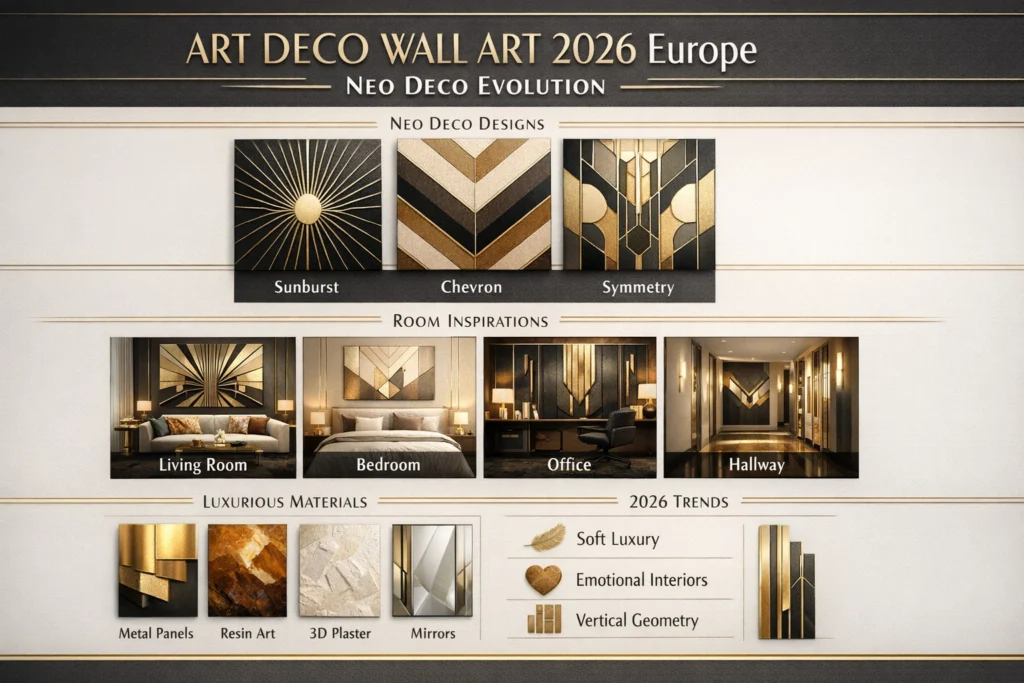
| Material Type | Visual Effect | Best Use | Design Impact |
| Metal Panels | Strong reflective luxury | Living rooms | High-end word |
| Canvas Prints | Soft artistic elegance | Bedrooms | Calm aesthetic |
| Resin Art | Bottom+ fluid feeling | Offices | Modern creativity |
| Mirror Installations | Spatial expansion | Hallways | Luxury illusion |
| 3D Plaster Walls | Architectural bottom | Feature walls | Ultra premium feel |
Art Deco Wall Art Ideas for Every Room
Living Room: Luxury Statement Core
The living room acts as the emotional center of Neo Deco design.
Best Applications:
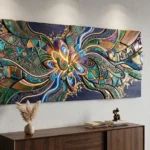
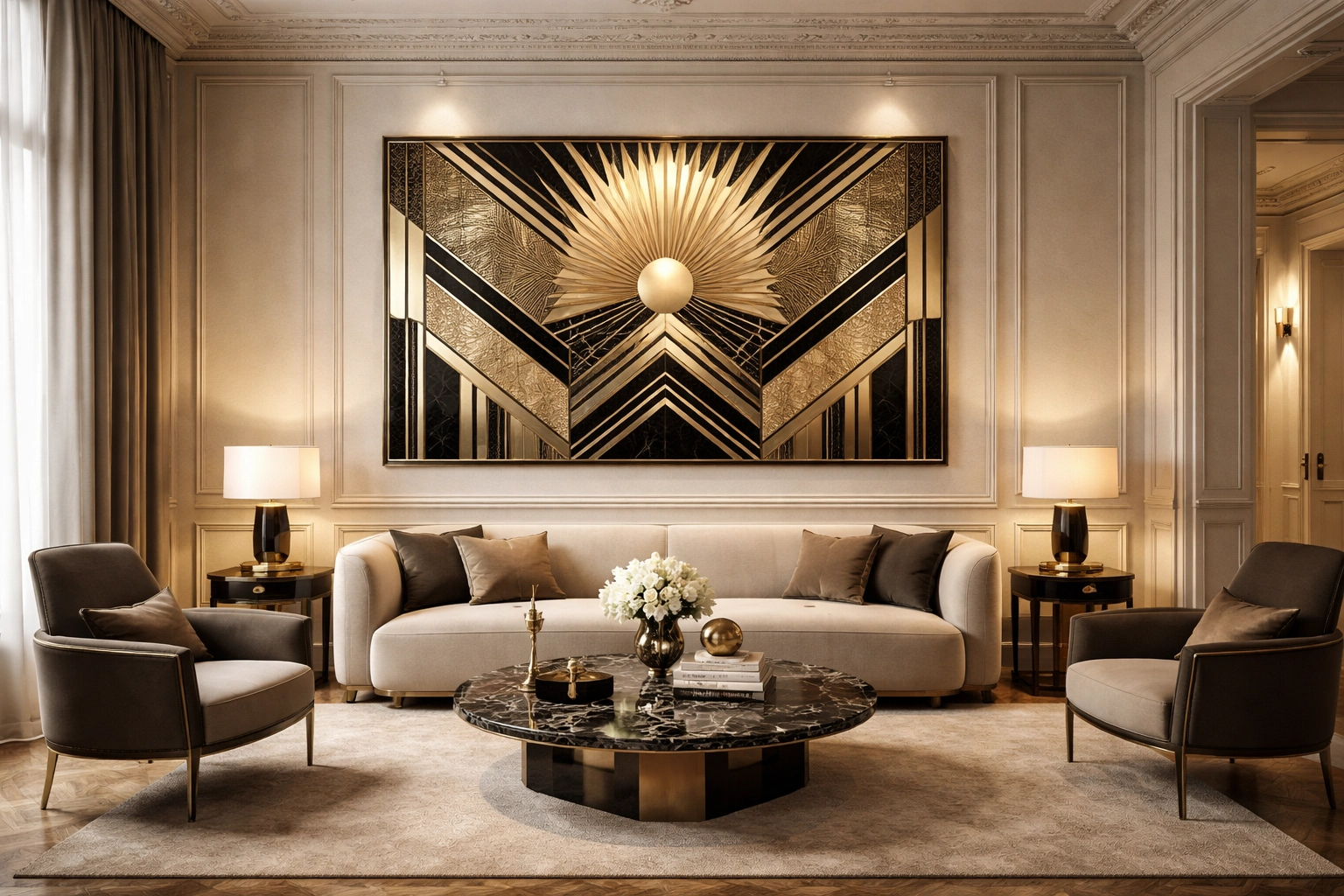
- Large geometric centerpiece artwork
- Sunburst metallic installations
- Symmetrical gold-framed compositions
Objective: Create instant optical dominance and luxury identity.
Bedroom: Emotional Calm Neo Deco
Bedrooms require softness and psychological relaxation.
Best Applications:
- Warm neutral geometrical art
- Soft metallic gradients
- Minimal symmetry layouts
Objective: Balance luxury with emotional comfort.
Office: Productivity Through Structure
Workspaces need clarity and mental discipline.
Best Applications:
- Linear geometric alignment
- Black-gold contrast panels
- Minimal wall distraction design
Objective: Improve focus through structured opticals.
Hallway: Transitional Visual Expansion
Hallways define first impressions and spatial flow.
Best Applications:
- Vertical geometrical mirrors
- Slim metallic patterns
- Repetitive structure rhythm
Objective: Expand perceived zone.
Psychology of Art Deco Wall Art
Art Deco Wall Art is not only optical —it is psychological.
Symmetry Creates Cognitive Stability
The human brain associates symmetry with safety, order, and control.
Gold Triggers Luxury Perception
Gold jewels activate subconscious associations with wealth and exclusivity.
Geometry Reduces Mental Chaos
Structured patterns help reduce optical stress.
Reflection Expands Perceived Space
Mirrors create optical depth, making interiors feel larger.
Art Deco vs Minimalist Wall Art
| Feature | Art Deco Wall Art | Minimalist Art |
| Style | Bold luxury geometry | Soft simplicity |
| Emotion | Power + richness | Calm + silence |
| Materials | Metal, glass, gold | Paper, canvas |
| Impact | Strong focal identity | Background support |
| Best Use | Feature walls | Clean interiors |
Budget vs Luxury Art Deco Wall Decor
Budget-Friendly Options:
- Printed geometrical posters
- Digital framed art
- DIY symmetry layouts
Luxury Options:
- Handcrafted metal wall sculptures
- 3D architectural panels
- Custom Neo Deco installations
Important insight: Even budget designs can appear luxurious when lighting and symmetry are applied correctly.
Common Mistakes in Art Deco Interiors
Avoid these design errors:
- Overusing metallic gold everywhere
- Mixing unrelated geometrical patterns
- Ignoring proportional wall scaling
- Poor lighting direction
- Overdecorating a single wall
Rule of thumb: “Controlled luxury always outperforms optical overload.”
European Influence on Neo Deco Design
Europe plays a central role in shaping modern Neo Deco identity.
France
- Paris luxury heritage
- Elegant symmetry culture
Germany
- Precision-based geometry
- Structural minimalism influence
Italy
- Artistic craftsmanship
- Decorative bottom integration
Scandinavia
- Soft minimal luxury
- Light-jewels balance systems
Combined result: Neo Deco is a hybrid European design identity.
2026 Trends in Art Deco Wall Art
Soft Matte Metallic Finishes
Glossy luxury is replaced by soft elegance.
3D Architectural Panels
Depth-based walls dominate over flat prints.
Mixed Material Fusion
Wood + metal + resin combinations rise.
Vertical Geometry Dominance
Tall structures suit compact European flats.
Emotional Luxury Design
Art now focuses on mood creation, not just appearance.
How to Choose the Right
- Match artwork size with wall dimensions
- Maintain 2–3 dominant color tones
- Define a single focal point per room
- Use lighting strategically to enhance geometry
- Avoid optical clutter and maintain spacing
Pros & Cons
Advantages:
- Strong luxury identity
- Timeless optical appeal
- Works in modern interiors
- High optical impact
Limitations:
- Can feel heavy if overused
- Requires design balance
- Not ideal for ultra-minimal zones
FAQs
Yes, Neo Deco is one of the strongest interior trends in Europe.
Yes, vertical and minimal designs work best.
Gold, black, white, beige, bronze, and champagne tones.
Not anymore—Neo Deco makes it balanced and modern.
Conclusion
Art Deco Wall Art in 2026 is no longer a historical decorative style—it has become a modern interior intelligence system called Neo Deco.
It integrates:
- Geometry
- Luxury materials
- Emotional psychology
- Minimal spatial balance
This transformation makes it one of the most powerful interior design languages in Europe today.
When applied correctly, Neo Deco turns ordinary interiors into structured luxury experiences.