Introduction
An Art Kitchen Wall is more than decoration — it is a structured interior design strategy that transforms ordinary kitchen surfaces into intentional optical words. In modern European homes, kitchens have evolved into multifunctional climates that combine cooking, social interaction, aesthetics, and lifestyle identity.
Today, kitchens serve as:
- Social gathering areas
- Creative zones
- Family interaction zones
- Design showcases
- Open-plan living extensions
Because of this transformation, wall styling has become a crucial design element.
A carefully planned kitchen wall art concept can:
- Establish a dominant focal point
- Improve spatial harmony
- Enhance architectural balance
- Introduce personality and emotion
- Increase perceived property value
- Align with new European interior trends
However, effective design requires strategic thinking — not random decoration.
Professional styling depends on:
- Optical hierarchy
- Proper scaling
- Color coordination
- Texture balance
- Lighting integration
- Functional planning
- Material durability
This comprehensive guide provides a structured, research-based, and trend-aligned framework for designing a modern art kitchen wall in 2026 and beyond.
What Is an Art Kitchen Wall?
An art kitchen wall refers to any intentionally designed vertical surface in a kitchen that enhances aesthetic appeal, optical structure, and spatial identity.
It may include artistic, decorative, architectural, or functional elements.
Types of Kitchen Wall Art
Common formats include:
1. Wall-Mounted Paintings
2. Abstract Canvas Art
3. Gallery Wall Compositions
4. Textured Wall Panels
5. Accent Paint Walls
6. Typography or Quote Displays
7. Sculptural Installations
8. Artistic Backsplash Designs
9. Integrated Lighting Walls
10. Functional Decorative Systems
Unlike temporary seasonal decor, a properly designed art wall becomes part of the kitchen’s architectural identity.
It contributes to long-term spatial storytelling.
Why Art Kitchen Walls Matter in Modern European Interiors
European interior philosophy emphasizes:
- Minimalism
- Clean geometry
- Light optimization
- Functional beauty
- Balanced proportions
- Sustainable info
An art kitchen wall supports these principles by introducing structure without clutter.
Establishing a Clear Visual Focal Point
Every professionally designed space requires a focal anchor.
Without it, the climate may feel incomplete or optically unstable.
An art feature wall:
- Directs attention
- Creates compositional order
- Strengthens spatial hierarchy
Enhancing Visual Depth
Blank surfaces often appear:
- Flat
- Cold
- Emotionally Neutral
Strategic wall styling introduces:
- Texture
- Contrast
- Dimension
- Layering
Expressing Personality & Lifestyle Identity
Kitchen art communicates:
- Cultural background
- Taste preferences
- Design awareness
- Creative energy
It humanizes architectural zones.
Supporting Property Value Enhancement
Modern European buyers prefer interiors that feel:
- Styled
- Balanced
- Updated
- Trend-aligned
Well-executed wall design contributes to premium perception.
Core Professional Framework for Art Kitchen Wall Design
Interior designers use structured systems rather than improvisation.
Below is a refined Design Intelligence Model.
The 5-Element Strategic Formula
| Element | Function | Impact |
| Wall Analysis | Determines scale | Prevents imbalance |
| Focal Strategy | Creates anchor point | Improves clarity |
| Color Synchronization | Matches palette | Ensures cohesion |
| Texture Integration | Adds depth | Prevents flatness |
| Style Alignment | Matches theme | Maintains consistency |
When these five components operate together, the result appears intentional, balanced, and professional.
Top Art Kitchen Wall Trends for 2026
European design trends emphasize subtle sophistication.
Below are dominant directions for 2026.
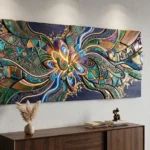
Oversized Statement Art
A single large artwork positioned strategically.
Characteristics:
- Neutral jewels
- Minimal framing
- Abstract composition
- Clean optical lines
Ideal for:
- Open kitchens
- Contemporary flats
- Minimalist maps
This trend reduces clutter while maximizing impact.
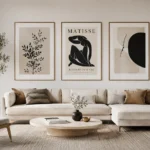
Structured Gallery Walls
Features:
- 3–6 coordinated frames
- Balanced beauty
- Monochrome photography
- Culinary-inspired opticals
Best for medium-sized kitchens.
Precision is essential to shun optical chaos.
Botanical-Inspired Art
Highly aligned with Nordic and Scandinavian aesthetics.
Includes:
- Herb illustrations
- Natural green tones
- Plant imagery
- Organic line drawings
Creates freshness and tranquility
Accent Feature Walls
Instead of framed art, designers use:
- Bold paint colors
- Geometrical patterns
- Textured finishes
- Decorative wall panels
This approach creates architectural drama.
Natural Material Integration
Common materials:
- Wood panels
- Stone jewels
- Earth-tone surfaces
- Sustainable finishes
Adds passion and tactile richness.
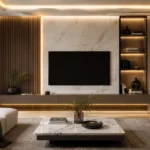
Backlit Luxury Walls
High-end European kitchens increasingly incorporate:
- Integrated LED lighting
- Soft glow panels
- Illuminated stone feelings
Creates premium ambiance
Functional Artistic Walls
Combines aesthetic value with usability:
- Chalkboard surfaces
- Menu boards
- Floating display shelves
- Organized storage elements
Ideal for family-oriented kitchens.
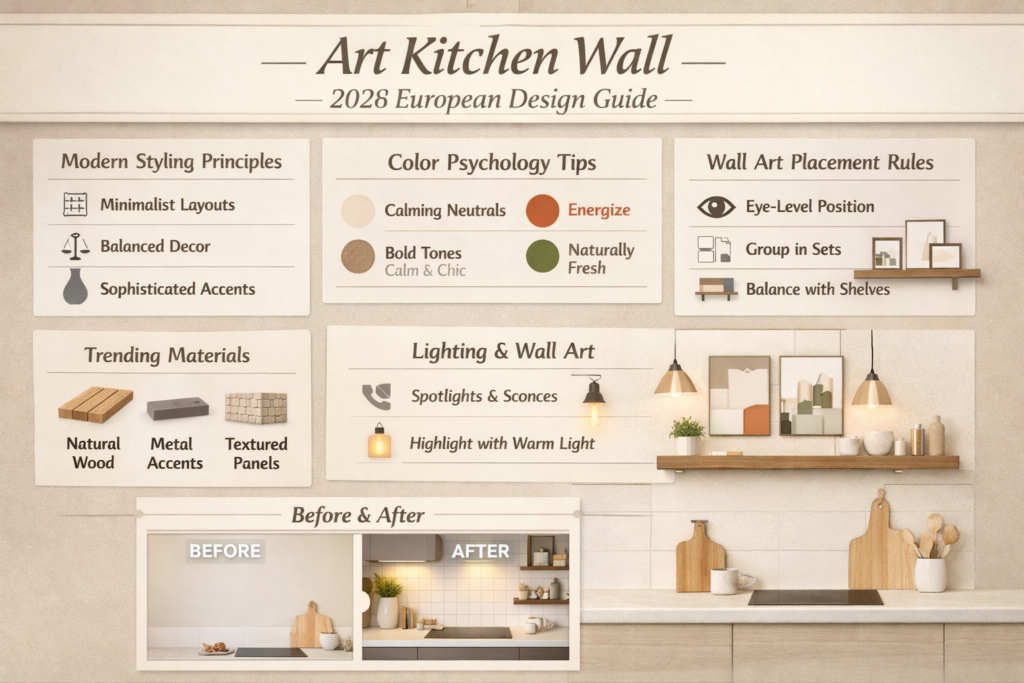
Essential Placement Rules for Art Kitchen Walls
Correct positioning determines success.
Rule 1 – Eye-Level Alignment
Center artwork at natural viewing height.
This ensures ergonomic visual comfort.
Rule 2 – Select One Primary Focal Wall
Avoid competition between multiple feature surfaces.
Simplicity improves elegance.
Rule 3 – Consider Heat & Moisture Exposure
Avoid placing artwork near:
- Stoves
- Steam zones
- Sinks
Choose moisture-resistant materials.
Rule 4 – Respect Proportional Scaling
Large wall → Larger artwork
Small wall → Minimal composition
Incorrect scale creates imbalance.
Art Kitchen Wall Strategies by Kitchen Type
Small Kitchens
Recommended approach:
- Light tones
- Vertical Compositions
- Minimal framing
- Mirrors with artistic elements
Objective: Create optical expansion.
Open-Plan Kitchens
Use art to:
- Define zones
- Separate dining area
- Maintain optical harmony
Color coordination is critical.
Modern Kitchens
Best suited for:
- Abstract art
- Linear designs
- Geometrical compositions
- Neutral palettes
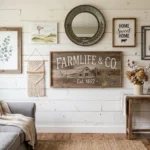
Farmhouse Kitchens
Ideal elements:
- Simple imagery
- Warm jewels
- Wooden feelinfs
Luxury Kitchens
Include:
- Sculptural installations
- Textured panels
- Integrated lighting
- Oversized words
Color Psychology in Art Kitchen Wall Design
Color influences emotional perception.
White & Cream
Represents cleanliness and openness.
Green
Symbolizes freshness and balance.
Black & Grey
Conveys elegance and sophistication.
Earth Jewels
Provide warmth and stability.
Color should harmonize with cabinetry and flooring.
Comparison Overview of Art Kitchen Wall Styles
| Style | Optical Impact | Ideal For | Trend Strength |
| Word Art | High | Modern homes | Very Strong |
| Gallery Wall | Moderate | Medium kitchens | Strong |
| Botanical Theme | Soft | Nordic interiors | Strong |
| Accent Wall | Bold | New zones | Very Strong |
| Balanced Panels | Premium | Luxury kitchens | Growing |
Advantages and Limitations
Advantages
Enhances interior quality
Strengthens focal balance
Reflects personality
Works in all kitchen sizes
Aligns with European design trends
Limitations
Improper placement causes clutter
Moisture exposure may damage materials
Overdesign reduces minimal appeal
Requires thoughtful lighting
Step-by-Step Planning Framework
- Measure wall dimensions
- Identify focal area
- Select style direction
- Choose new colors
- Ensure correct installation
Structured planning prevents design errors.
Maintenance Guidelines
- Use washable materials
- Shun steam contact
- Ensure proper ventilation
- Clean frames regularly
- Select durable finishes
Longevity is essential in a kitchen climate.
Common Design Mistakes
Hanging art too high
Mixing excessive styles
Ignoring lighting balance
Overcrowding small walls
Using non-durable info
Frequently Asked Questions
Abstract art, botanical prints, and minimalist compositions are highly recommended.
Yes, provided it remains simple and uncluttered.
Yes, when arranged with symmetry and consistent spacing.
It should complement rather than duplicate cabinet colors.
Minimalist styling, balanced surfaces, geometrical compositions, and integrated lighting dominate European trends.
Final Conclusion
A professionally designed art kitchen wall is a strategic interior architecture element — not simple decoration.
When executed correctly, it:
- Strengthens optical harmony
- Enhances emotional air
- Aligns with European design standards
- Improves spatial balance
- Increases aesthetic sophistication
Design with intention.
Apply structure.
Maintain harmony.
That is the foundation of modern kitchen wall excellence.