Introduction
In contemporary architectural design, exterior metal wall art has evolved far beyond simple decoration. It is now regarded as a structural aesthetic language—a visual system that communicates identity, lifestyle, and architectural intention.
Across modern European housing styles—ranging from Scandinavian minimal villas to Mediterranean coastal residences and contemporary German urban buildings—metal wall art is increasingly used as a design signature element.
It serves multiple functional and emotional roles:
- Enhances exterior visual harmony
- Introduces artistic depth to flat surfaces
- Improves perceived property value
- Creates architectural focal points
- Reflects modern design intelligence
However, despite its popularity, a major issue persists among homeowners:
Poor selection of material, design imbalance, and incorrect installation lead to rust, distortion, fading, and structural failure.
This guide eliminates those risks completely.
You will learn:
- Advanced material science behind outdoor metal decor
- Climate-based selection logic for Europe
- Architectural design psychology principles
- Professional installation frameworks
- Pricing segmentation from budget to luxury
- Future design evolution trends (2026 and beyond)
- Expert-level purchasing strategy
This is not inspiration content.
It is a comprehensive decision-making system.
Definition of Exterior Metal Wall Art
Exterior metal wall art refers to engineered decorative metallic compositions designed for external architectural surfaces, including residential façades, gardens, patios, fences, commercial exteriors, and hospitality environments.
Unlike indoor art, these structures are designed with:
- Environmental resistance modeling
- UV exposure durability
- Moisture and humidity protection
- Wind load structural stability
- Long-term oxidation control
Core Functional Attributes
- Corrosion-resistant surface treatment
- Weather-adaptive structural composition
- Load-bearing mounting system
- Long-life material integrity
- UV-stabilized finish technology
Application Zones
- Residential exterior façades
- Garden feature walls
- Balcony partitions
- Villa entrance statements
- Hotel outdoor aesthetics
- Restaurant terrace branding elements
In modern architecture, it is no longer considered decoration—it is a spatial identity marker.
Architectural Importance of Exterior Metal Wall Art
Modern architecture trends toward minimalism, flat geometry, and neutral surfaces. While visually clean, this often creates a psychological issue:
Excessive visual emptiness reduces emotional engagement.
Exterior metal wall art solves this by introducing:
Architectural Identity Formation
Plain walls are transformed into expressive visual narratives that define the property’s personality.
Property Value Perception Enhancement
Luxury exterior detailing significantly increases perceived real estate value due to psychological premium association.
Material Longevity Advantage
Compared to wood, plastic, or painted decor, metal offers superior durability and resistance stability.
Maintenance Optimization
Modern alloys like aluminum and stainless steel require minimal upkeep cycles.
Style Compatibility
Exterior metal installations integrate with:
- Contemporary Architecture
- Industrial design language
- Scandinavian minimalism
- Rustic Mediterranean aesthetics
- Modern luxury villas
Classification of Exterior Metal Wall Art Styles
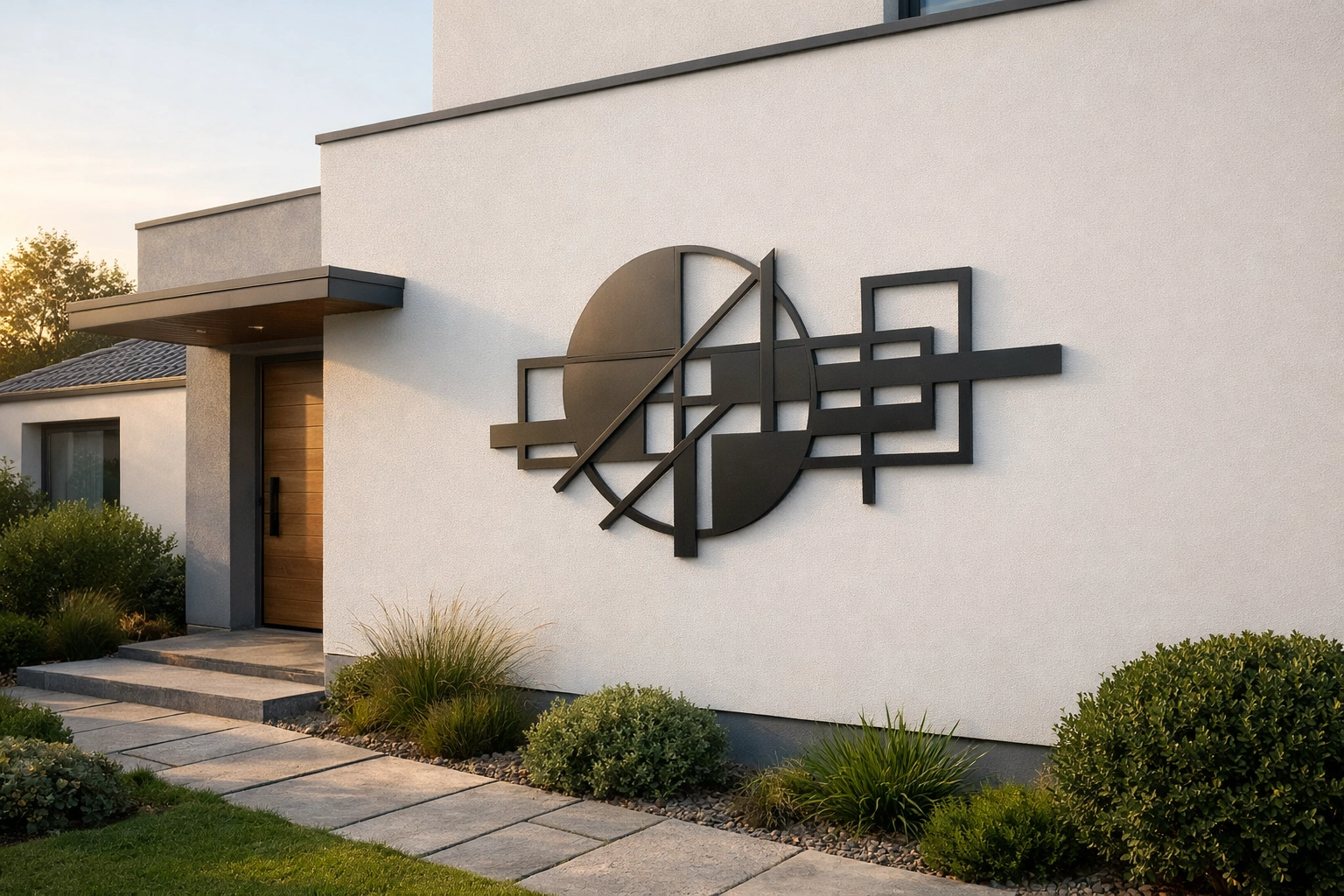
Abstract Geometric Metal Installations
These include:
- Linear compositions
- Polygonal formations
- Minimalist symmetry systems
Ideal for modern European architecture emphasizing clarity and order.
Nature-Inspired Organic Metal Designs
Includes:
- Floral structures
- Botanical silhouettes
- Animal-inspired outlines
These designs introduce biophilic design principles, enhancing emotional comfort.
Architectural Metal Panel Systems
Large-scale installations integrated into façades:
- Laser-cut façade systems
- Modular decorative cladding
- Custom architectural skins
Common in luxury hotels and premium villas.
Industrial Raw Metal Art
Characterized by:
- Matte black finishes
- Exposed steel feelings
- Urban loft aesthetics
Used in metropolitan architecture and commercial zones.
Material Science of Exterior Metal Wall Art
Material selection determines:
- Lifespan performance
- Environmental resistance
- Visual aging behavior
- Maintenance frequency
- Structural stability
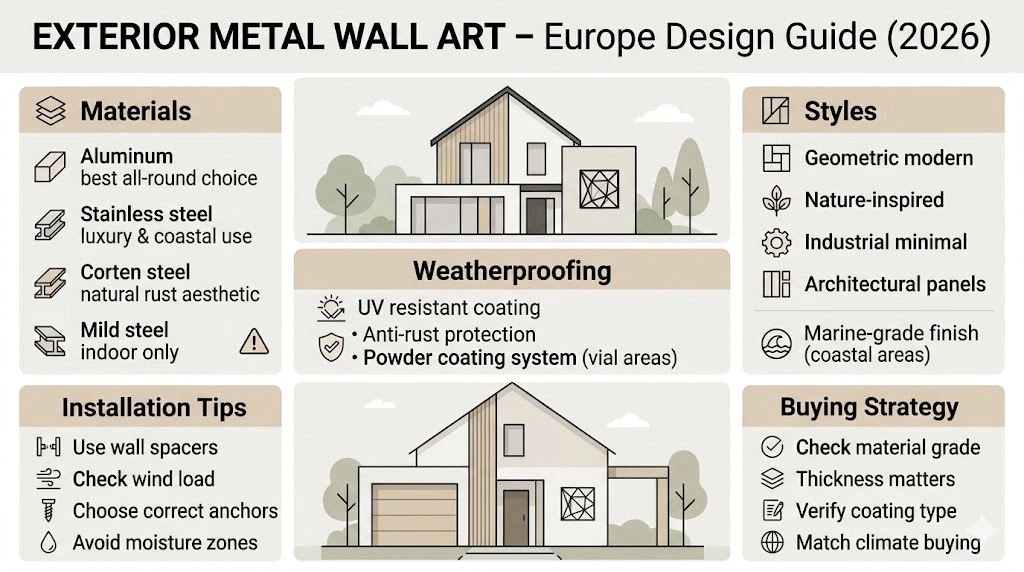
Comparative Material Analysis
| Material | Durability | Weather Resistance | Maintenance | Application |
| Aluminum | Very High | Excellent | Minimal | Universal use |
| Stainless Steel | Very High | Excellent | Minimal | Coastal/luxury |
| Corten Steel | High | Self-protecting | Low | Artistic rust effect |
| Mild Steel | Low | Poor | High | Indoor use only |
Aluminum
Aluminum is widely considered the most balanced material due to:
- Non-corrosive behavior
- Lightweight structure
- High adaptability to climates
- Powder coating compatibility
It is ideal for modern minimal architectural environments.
Corten Steel
Corten steel develops a stabilized rust layer that acts as a protective barrier.
Advantages:
- Natural earthy appearance
- Self-sealing corrosion layer
- Strong landscape integration
It is widely used in artistic garden architecture.
Stainless Steel
Stainless steel provides:
- High reflectivity
- Extreme durability
- Luxury optical identity
It is commonly used in high-end architectural projects.
Climate-Based Selection Strategy
Material choice must align with environmental conditions.
High Rainfall Regions (UK, Netherlands, Belgium)
Recommended:
- Powder-coated aluminum
- Moisture-resistant mounting systems
Avoid:
- Untreated steel materials
Coastal Environments (Portugal, Spain, Greece)
Recommended:
- Marine-grade stainless steel
- Anti-salt protective coatings
Cold Climate Zones (Nordic regions)
Recommended:
- Flexible thermal coating systems
- Freeze-resistant structural mounts
High Sun Exposure Areas (Southern Europe)
Recommended:
- UV-resistant finishes
- Matte anti-glare surfaces
Design Psychology of Exterior Metal Wall Art
Effective design is not random—it follows structured perception rules.
Proportional Balance Rule
Optimal coverage range:
60%–75% of wall surface area
Visual Focus Hierarchy
Ideal placement height:
1.4m – 1.7m (human eye level alignment)
Contrast Optimization Principle
- Light walls → dark metal art
- Dark walls → reflective or brushed metal
Spatial Minimalism Rule
Avoid overcrowding; negative space enhances luxury perception.
Professional Installation Framework
Step-by-Step Process
- Precise wall measurement mapping
- Anchor system selection based on wall type
- Structural marking layout
- Controlled drilling execution
- Spacer installation for ventilation
- Secure mounting application
- Final alignment calibration
Common Structural Errors
- No ventilation gap (moisture accumulation)
- Incorrect anchor type selection
- Installation in water runoff zones
- Ignoring wind load pressure
Market Pricing Structure
| Segment | Price Range | Description |
| Budget | $50 – $150 | Small decorative panels |
| Mid-range | $150 – $600 | Laser-cut designs |
| Premium | $600 – $3000+ | Custom architectural systems |
2026 Trend Forecast: Exterior Metal Wall Art Evolution
Emerging trends include:
- Oversized botanical metal compositions
- Multi-layered 3D metal structures
- Smart LED-integrated panels
- Modular façade systems
- Hybrid metal-natural installations
Future direction = technology + minimalism + organic design fusion
Advantages and Limitations
Advantages
- Long-term durability
- High weather resistance
- Minimal maintenance requirement
- Strong aesthetic impact
Limitations
- High-quality versions can be costly
- Requires precise installation
- Low-grade materials may corrode
Expert Buying Strategy Framework
Before purchasing, evaluate:
- Material grade certification
- Coating technology type
- Metal thickness level
- Wind resistance capability
- Mounting system engineering
Design alone should never be the deciding factor.
Why Most Competitor Content Fails
Most existing guides fail due to:
- Lack of technical depth
- Absence of climate adaptation logic
- No installation engineering guidance
- Missing buyer decision frameworks
- Overfocus on optical instead of function
This guide integrates engineering + aesthetics + purchasing intelligence.
FAQs
Yes, if made with aluminum or stainless steel with proper coating.
Only untreated steel rusts. Corten steel rusts intentionally but stabilizes.
High-quality metal art lasts 10–25+ years outdoors.
Aluminum and stainless steel are the best choices.
Yes, but correct anchors must be used for each wall type.
Conclusion
Exterior metal wall art represents a long-term architectural enhancement system rather than simple decoration.
When correctly implemented, it delivers:
- Elevated optical architecture
- Increased property valuation perception
- Long-term environmental durability
- Strong aesthetic identity formation
Final Principle:
Right material + correct climate alignment + precise installation = architectural excellence.