Farmhouse Wall Art Decor 2026 Guide – European Styling System for Timeless Interiors
Farmhouse wall art decor in 2026 has evolved far beyond simple rustic decoration. It has transformed into a structured interior design language, deeply rooted in European aesthetics, environmental psychology, and spatial harmony principles.
Across Europe—from compact urban apartments in Berlin to rustic countryside homes in France and minimalist Scandinavian interiors in Sweden—homeowners and designers now treat wall art as a functional design system, not just decoration.
This comprehensive guide breaks down the complete European farmhouse wall art decor methodology, including psychological foundations, structured styling systems, placement logic, room-specific strategies, modern trends, and professional design rules used by interior experts.
By the end, you will understand how high-end designers create emotionally balanced, visually premium farmhouse interiors using simple but powerful design logic.
Introduction – Why Farmhouse Wall Art Decor Matters in 2026
In modern interior design, especially in 2026, homes are no longer judged only by aesthetics. They are evaluated based on emotional resonance, psychological comfort, and spatial intelligence.
This is the reason farmhouse wall art decor is experiencing a powerful revival—but in a more refined, minimalist, and European-aligned direction.
Traditional farmhouse interiors often included:
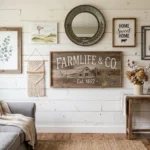
- Heavy wooden signage
- Overloaded rustic textures
- Repetitive quote frames
- Excessive decorative layering
However, contemporary European design rejects visual overload and moves toward:
- Clean spatial composition
- Neutral tonal balance
- Emotional subtlety
- Intentional visual hierarchy
- Minimal but meaningful decoration
Core Design Insight:
Modern farmhouse wall art decor is not ornamentation—it is applied visual psychology combined with structured spatial design logic.
What Is Farmhouse Wall Art Decor?
Farmhouse wall art decor is a holistic interior design approach that integrates natural materials, emotional visual storytelling, and structured composition techniques to create calm, grounded, and aesthetically balanced living environments.
Instead of random wall decoration, it follows intentional principles:
Core Structural Elements
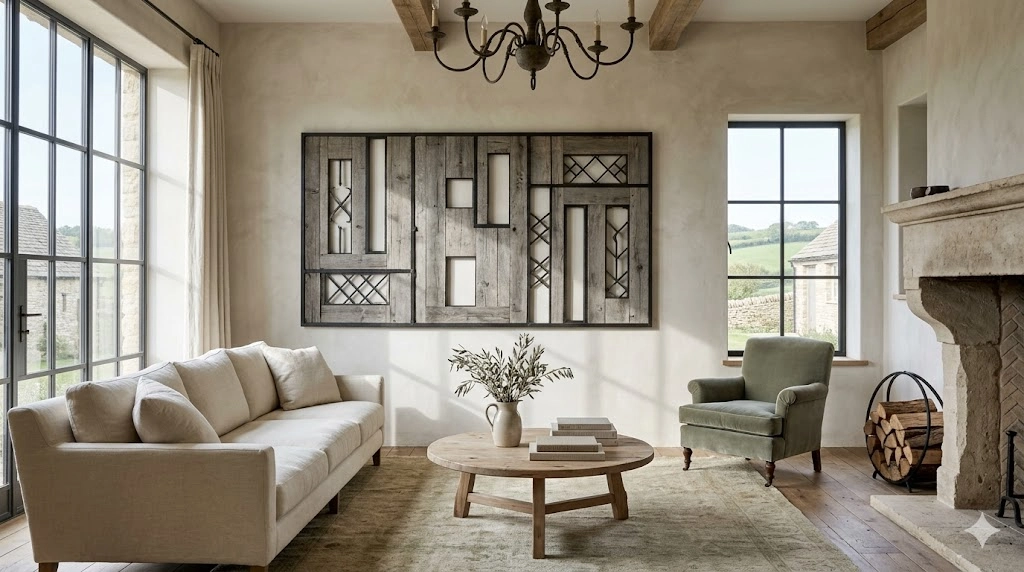
- Natural wood textures (oak, pine, reclaimed timber)
- Neutral canvas artwork
- Matte black or soft metal frames
- Earth-based color palettes
- Nature-inspired imagery (landscapes, botanicals, abstract organic forms)
European Evolution in 2026
Modern European farmhouse design has shifted significantly:
Traditional Approach (Outdated):
- Rustic overload
- Decorative clutter
- Literal farm signage
- Overly vintage styling
Modern European Approach:
- Minimal farmhouse fusion
- Abstract visual storytelling
- Controlled asymmetry
- Soft luxury aesthetics
- Reduced decorative density
The result is a premium, editorial-quality interior feel rather than rustic overload
Psychology Behind Farmhouse Wall Art Decor
Interior design in 2026 heavily relies on environmental psychology and cognitive perception theory.
Warmth Perception Principle
Neutral tones such as beige, ivory, sand, and soft brown generate:
- Emotional safety signals
- Reduced cognitive stress
- Increased comfort perception
- Relaxed neurological response
Memory Activation Effect
Subtle vintage-inspired visuals trigger:
- Nostalgic association
- Emotional grounding
- Personal storytelling connection
- Psychological familiarity
Texture Integration Theory
Combining multiple surface types enhances visual richness:
- Wood = organic stability
- Canvas = soft emotional base
- Metal = structural contrast
- Fabric = tactile softness
Visual Stability Principle
Balanced layouts contribute to:
- Lower mental fatigue
- Improved spatial clarity
- Enhanced order perception
- Increased aesthetic satisfaction
This explains why farmhouse wall art decor feels naturally calming to the human brain.
The Farmhouse Wall Art Decor System
Professional designers do not decorate randomly. They follow a structured wall composition system.
1: Identify the Focal Wall
Every interior space must have a dominant visual anchor:
- Living room sofa wall
- Bedroom headboard wall
- Dining feature wall
- Entry corridor wall
Only one primary focal wall should dominate each space.
2: Establish Art Hierarchy
A structured composition includes:
- 1 primary statement artwork
- 2–4 supporting visual elements
- Optional micro-accent pieces
3: Layer Material Depth
Depth is created by combining materials:
- Canvas → emotional softness
- Wood → natural grounding
- Metal → modern contrast
- Fabric → tactile balance
4: Composition Balance
Two main structural approaches exist:
- Symmetry → luxury, order, refinement
- Asymmetry → modern, organic, editorial feel
System Overview Table
| Step | Purpose | Action |
| Focal Wall | Visual anchor | Select one dominant wall |
| Art Hierarchy | Avoid clutter | Use layered structure |
| Texture Layering | Add depth | Mix materials |
| Balance Design | Harmony | Apply spacing logic |
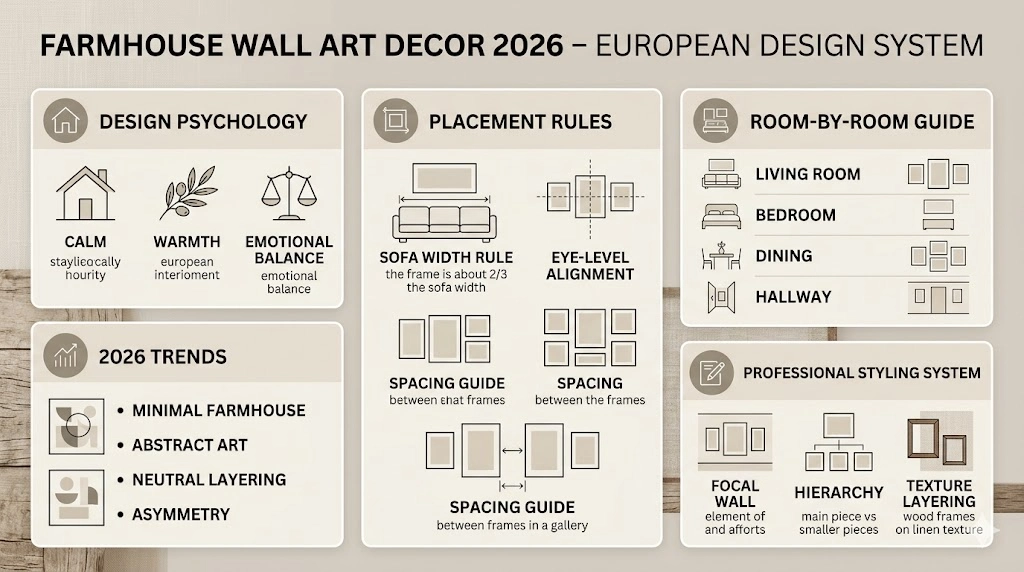
Room-by-Room Farmhouse Wall Art Decor Guide
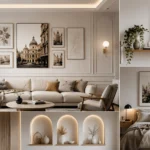
Living Room Wall Art Decor
The living room represents the emotional center of the home.
Recommended styles:
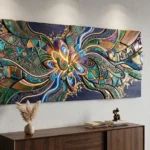
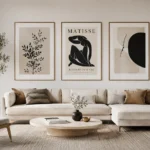
- Large neutral abstract canvas
- Soft landscape visuals
- Minimal gallery arrangements
Rule: Artwork should cover 50–70% of sofa width
Goal:
- Emotional warmth
- Visual equilibrium
- Comfort-driven design
Bedroom Wall Art Decor
Bedrooms require psychological rest and sensory calmness.
Recommended styles:
- Botanical illustrations
- Soft tonal landscapes
- Minimal linear artwork
Avoid:
- High contrast visuals
- Busy compositions
- Aggressive typography
Goal:
- Restorative environment
- Emotional decompression
Dining Room Wall Art Decor
Dining spaces focus on social interaction and warmth.
Recommended styles:
- Earth-tone abstract art
- Soft rustic compositions
- Warm neutral palettes
Goal:
- Enhanced social comfort
- Elevated dining atmosphere
Hallway & Entry Wall Decor
Entry zones define first impressions.
Recommended styles:
- Vertical art alignment
- Mirror + frame combinations
- Compact gallery clusters
Goal:
- Welcoming perception
- Strong visual identity
Modern European Farmhouse Trends 2026
Minimal Farmhouse Fusion
Reduced visual density with more breathing space.
Neutral Layering System
Core palette includes:
- Beige
- Cream
- Sand
- Soft grey
Art Over Typography
Text-based wall decor is declining.
Replaced by:
- Abstract visuals
- Photography
- Texture-based compositions
Controlled Asymmetry
Perfect symmetry is replaced with intentional imbalance for natural aesthetics
Common Mistakes in Farmhouse Wall Art Decor
- Overuse of decorative quotes
- Incorrect height placement
- Oversized gallery clutter
- Ignoring proportional scaling
- Blind imitation of social media trends
These reduce interior sophistication significantly.
Placement Rules
Core Rules
- Sofa rule: artwork width = 2/3 furniture width
- Eye level: center at ~145 cm
- Frame spacing: 5–8 cm
- Large walls: single dominant piece preferred
Placement Table
| Area | Rule | Result |
| Sofa Wall | 2/3 width | Balanced composition |
| Bedroom | Central softness | Calm perception |
| Hallway | Vertical flow | Height illusion |
| Large Wall | Single focus | Luxury impact |
Expert Design Insights
- ???????? Scandinavian interiors → minimalism + light tones
- ???????? French interiors → rustic elegance
- ???????? German interiors → structured precision
- ???????? Mediterranean interiors → warm texture richness
Step-by-Step Design Process
- Select focal wall
- Define primary artwork
- Add supporting visuals
- Introduce texture layers
- Apply placement logic
- Adjust spacing balance
- Evaluate visual harmony
Buying Guide – Choosing Farmhouse Wall Art Decor
When selecting wall art:
Material Quality
- Canvas density
- Frame durability
- Print resolution
Design Alignment
- Matches interior palette
- Fits proportional scale
- Supports emotional intent
European principle: less quantity, higher quality
FAQs
It is a design style using natural materials, soft colors, and emotional visuals.
Yes, but now it is more minimal and European-inspired.
Beige, cream, white, soft grey, and muted green.
Yes, modern versions use abstract and minimalist art.
Overdecorating without structure or balance.
Conclusion
Farmhouse wall art decor in 2026 represents a shift from decorative styling to intentional design intelligence. It integrates psychology, European minimalism, and structured spatial planning.
When applied correctly, even simple walls transform into:
- Balanced environments
- Emotionally calming spaces
- Visually premium interiors
- Architecturally refined compositions
The core principle remains timeless: remove clutter, apply intention, and design with purpose.