Ultimate Guide to Kids’ Wall Art in 2026: Best Styles, Themes & Room-Specific Ideas
When it comes to Designing your child’s room, wall art is no longer just a decorative choice—it plays a crucial role in shaping their emotional and cognitive development. In 2026, the role of wall art has evolved, becoming a tool that not only beautifies a room but also influences your child’s growth. From stimulating creativity to fostering focus and calmness, the right wall art can enhance learning, emotional health, and even personal development.
This guide is designed to help you select wall art that aligns with your child’s age, personality, and room’s atmosphere. Whether you are designing a nursery or a teen’s bedroom, choosing the perfect art pieces is about creating a space where they can thrive emotionally, mentally, and creatively.
The Transformative Power of Wall Art in Kids’ Spaces
The Emotional & Cognitive Impact of Wall Art
Wall art does more than enhance a room’s appearance—it can have a profound impact on a child’s emotional and cognitive development. Research shows that colors, shapes, and designs in the art can evoke different moods, promoting emotional well-being and creativity.
- Soothing blues and greens help create a calm and peaceful environment, ideal for nurseries and bedrooms.
- Bright reds and yellows stimulate energy, making them perfect for play areas and creative spaces.
The right wall art also supports your child’s cognitive development by introducing key learning concepts, such as numbers, letters, animals, and nature, all while nurturing their emotional health.
How Wall Art Shapes Kids’ Development
Art in kids’ rooms is not just for decoration—it can introduce critical early learning concepts. As children grow, art can evolve alongside them, providing age-appropriate learning experiences and fostering creativity. Here are a few ways art supports developmental milestones:
- For babies and toddlers, simple themes like animals or shapes help with recognition and focus.
- For older kids, more complex themes such as space, science, or music support intellectual growth and self-expression.
Selecting the Perfect Wall Art for Kids by Age Group
Wall Art for Babies: Creating a Serene Space
For your newborn, simplicity is key. Soft, pastel tones and calming designs help to create an environment conducive to sleep and comfort. Consider nature-inspired designs or minimalistic artwork featuring shapes and animals to keep the space gentle and tranquil.
Top picks for baby wall art:
- Soft pastel nature prints
- Gentle animals like elephants, bears, and deer
- Basic geometric shapes or stars in muted tones
Avoid overstimulating artwork with busy patterns or bright, bold colors that may disrupt their sleep patterns.
Toddler Wall Art: Encouraging Exploration and Curiosity
Toddlers are at a stage of active discovery. Wall art should fuel their curiosity while being fun and Educational. Bright, engaging colors and interactive elements, like chalkboards or magnetic boards, can enhance their exploration and creativity.
Toddler-friendly art ideas:
- Animal-themed posters (ABC, numbers, and animals)
- Interactive art (chalkboard walls, magnetic boards)
- Geometric shapes and vibrant primary colors
These kinds of designs help your child learn while keeping the environment exciting and playful.
Wall Art for School-Age Kids: Fostering Focus and Learning
As children grow older, their preferences and personalities begin to shape their room’s décor. Wall art for school-age children should support their learning and passions while still being fun. Educational posters, inspirational quotes, or themed art based on their hobbies can make their space both conducive to learning and enjoyable.
Perfect wall art for school-age kids:
- Motivational quotes and affirmations
- Educational posters (math, geography, or history)
- Themed art based on their interests (sports, animals, favorite TV shows)
These designs help balance study time with creative play and contribute to a positive learning environment.
Teenagers: Empowering and Reflective Art Choices
Teenagers are at a stage where they are carving out their personal identity. Wall art becomes an extension of their personality and interests. Abstract art, music posters, or motivational quotes help create a space where teens can feel empowered and reflect on their journey.
Teen-focused art suggestions:
- Abstract or modern art pieces
- Motivational quotes or empowering messages
- Music-related posters or art reflecting their passions
These artworks inspire self-expression and encourage introspection, making the room a sanctuary for growth and development.
The Psychology of Colors & Themes in Kids’ Wall Art
Color’s Influence on Children’s Emotional Development
Colors are a powerful tool that can influence mood and behavior. Each color has a Psychological effect, making it essential to choose the right hues to align with your child’s developmental needs.
- Blue promotes calm and tranquility, making it ideal for bedrooms or study spaces.
- Yellow stimulates creativity and energy, perfect for playrooms and creative zones.
- Green brings balance and relaxation, making it great for sleep spaces.
- Red is stimulating and works well in high-energy areas like playrooms.
Understanding how colors impact emotions allows you to create an environment that fosters the right mood for your child’s needs.
Timeless Themes for Kids’ Wall Art
Themes are just as crucial as colors. They help create a particular atmosphere and can play a significant role in shaping a child’s emotional and cognitive development. Some popular themes include:
- Nature: Forests, animals, oceans—perfect for younger children
- Fantasy: Fairytales, mythical creatures, and outer space—ideal for sparking imagination
- Animals: Jungle animals or marine life—helping connect your child to the natural world
- Abstract Art: Perfect for teens, as it reflects individuality and creativity
Each theme provides a unique learning experience and can be tailored to your child’s interests and developmental needs.
Room-Specific Wall Art Suggestions for Every Space
Nursery Art: Soft and Gentle Designs
The nursery is all about peace and comfort. Choose art that reflects a calm and nurturing environment. Soft, pastel prints of animals, clouds, or nature-inspired themes will help create a peaceful atmosphere ideal for your baby’s rest.
Great nursery art options:
- Cloud, moon, or star designs
- Soft animal illustrations
- Subtle nature motifs
These gentle designs promote relaxation and create a soothing environment for your baby.
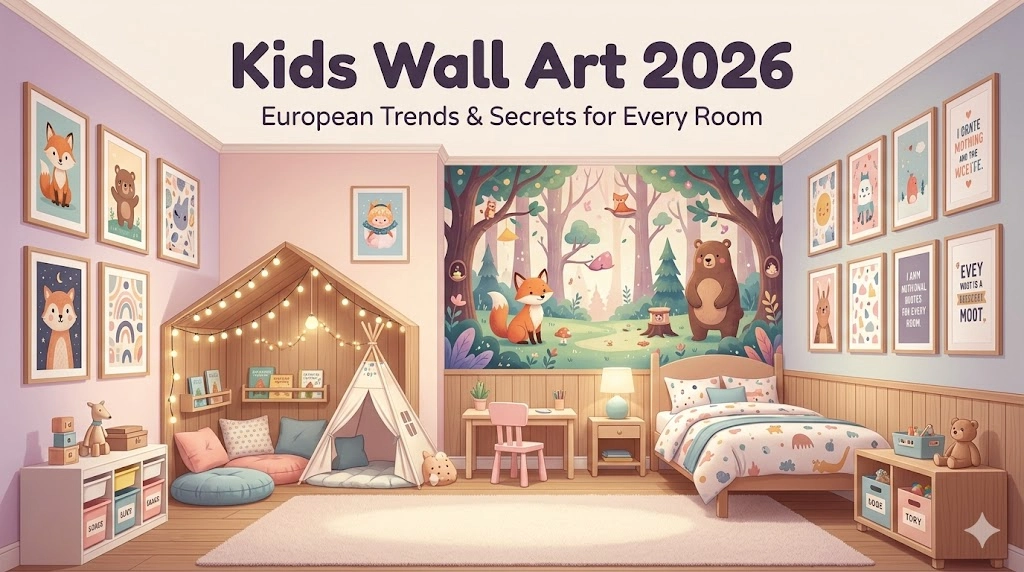
Playroom Wall Art: Bright and Interactive Pieces
The playroom should be a space full of energy and imagination. Bright colors, playful designs, and interactive elements will keep your child engaged. Consider a chalkboard wall or magnetic boards for an interactive learning experience.
Recommended playroom art:
- Bold, vibrant colors
- Interactive elements (chalkboard, magnetic surfaces)
- Educational posters (ABC, numbers, animals)
These engaging designs stimulate creativity and enhance your child’s cognitive development.
Bedroom Wall Art: A Perfect Blend of Fun and Calm
Bedrooms are spaces for rest and relaxation but should also have a sense of personality and fun. Choose art that strikes a balance between serenity and playful energy, such as calming landscapes or Personalized prints.
Bedroom art ideas:
- Calming landscapes or abstract designs
- Personalized name art or pieces that reflect your child’s personality
This balance ensures the room is both peaceful and exciting, perfect for unwinding or inspiring creativity.
Integrating Wall Art with Overall Room Décor
Harmonizing Art with Furniture, Lighting, and Accessories
When choosing wall art, consider how it will fit into the overall room design. It should complement the color scheme, furniture, and accessories to create a cohesive look. Consider how lighting can highlight the artwork and add to the room’s ambiance.
Framing and placement tips:
- Match frames with the room’s style (sleek metallic frames for modern rooms, rustic wood for vintage looks)
- Larger art pieces as focal points, smaller ones grouped together
- Hang art at eye level so children can engage with it easily
Personalizing Kids’ Wall Art
Custom and Personalized Art: Making the Room Truly Their Own
Personalized wall art adds a unique and emotional touch to any child’s room. Whether it’s their name, favorite characters, or themes they love, custom art deepens the emotional connection to the space and fosters a sense of Ownership.
How to choose meaningful, personalized art:
- Focus on their interests (space, animals, sports)
- Include personal touches like their name or favorite hobbies
Personalized art transforms a space from just a room into a meaningful sanctuary for your child.
Educational Wall Art: Boosting Early Learning and Imagination
Wall art can also serve as an interactive learning tool. Educational art featuring numbers, letters, animals, or cultural symbols can help improve literacy and numeracy while fostering creative thinking.
Incorporating imagination into wall art:
- Art that tells a story can spark your child’s creativity
- Themes like forests, underwater worlds, or outer space encourage imaginative play and learning
Art can be a gateway to learning, helping your child expand their knowledge in an engaging way.
FAQs
For babies, go for calming, simple designs. Toddlers enjoy bright, educational themes. For school-age kids, choose art related to their interests, and for teens, focus on personal, motivational pieces.
Nature, fantasy, animals, and abstract art are great choices, depending on age. These themes inspire learning, creativity, and self-expression.
Colors like blue and green are calming, yellow stimulates creativity, red energizes, and green promotes balance and relaxation.
Yes! Wall art can teach early concepts like letters and animals, and inspire learning through themes like space, history, or geography.
Personalized art featuring their name, favorite characters, or hobbies makes their space unique and special to them.
Conclusion
Choosing the right wall art for your child’s room is more than just a matter of aesthetic preference—it’s an opportunity to support their emotional growth, cognitive development, and self-expression. Whether you are decorating a peaceful nursery or designing a vibrant teen bedroom, the right art can help create a space that nurtures your child’s creativity, learning, and individuality.
By understanding the psychological effects of color, the developmental benefits of different themes, and how to integrate art into the overall décor of the room, you can transform any space into a place where your child can thrive emotionally, intellectually, and creatively.
Remember that wall art is not just a decoration; it’s a tool for personal growth, learning, and emotional well-being. Make thoughtful decisions that will not only enhance your child’s environment but also foster a lasting impact on their development. With the right wall art, you can help create a room that your child will love and that supports their evolving needs as they grow.