Large Outdoor Metal Wall Art 2026
In contemporary architectural discourse, large outdoor metal wall art has evolved far beyond decorative enhancement. It is now recognized as a core spatial identity system in modern exterior architecture, especially across European design landscapes.
In 2026, architecture is no longer defined solely by structural form, but by emotional resonance, visual storytelling, and material intelligence. Walls are no longer passive boundaries—they are expressive surfaces that communicate identity, cultural alignment, and aesthetic philosophy.
Across Europe, from the minimalist Scandinavian design language to the expressive Mediterranean villa traditions and the precision-driven German architectural systems, metal wall art is now used as a semantic architectural layer—meaning it adds interpretive depth to built environments.
Core Concept Shift:
A wall is no longer just a structural element.
It is now a visual narrative interface between space, light, and human perception.
Large outdoor metal wall art introduces:
- Spatial depth perception enhancement
- Environmental integration with natural light cycles
- Material-driven emotional response
- Architectural identity reinforcement
- Visual hierarchy control on façades
Simply put:
It transforms static architecture into living visual language.
This guide provides a complete, structured breakdown of:
materials science, spatial psychology, European design systems, placement logic, lighting dynamics, durability engineering, and aesthetic optimization principles.
What Is Large Outdoor Metal Wall Art?
Large outdoor metal wall art refers to architectural-scale decorative metal installations designed for exterior environments.
These installations are commonly applied on:
- Residential façades
- Garden boundary walls
- Villa exteriors
- Hotel architectural skins
- Commercial building façades
- Courtyard and patio surfaces
Unlike indoor art, outdoor metal installations must function under environmental stress conditions, including:
- UV radiation exposure
- Rain and moisture cycles
- Wind pressure dynamics
- Temperature fluctuations
- Seasonal weather transitions
Architectural Definition:
Outdoor metal wall art is a hybrid system of sculpture + façade enhancement + environmental adaptation design.
It functions simultaneously as:
- Aesthetic object
- Structural accessory
- Light interaction surface
- Spatial identity marker
In modern European architecture, it is often treated as a façade augmentation layer rather than a decorative add-on.
Why Europe Dominates Outdoor Metal Wall Art Innovation
Europe leads global exterior design innovation due to its deeply embedded architectural philosophy systems.
Minimalist Spatial Language
European architecture emphasizes:
- Reduction of visual noise
- Clean geometry
- Balanced proportion systems
- Controlled asymmetry
This creates ideal negative space conditions where metal wall art becomes a primary visual anchor point.
Biophilic Integration Philosophy
European design strongly follows biophilic spatial cognition principles, meaning architecture integrates natural elements rather than opposing them.
Examples include:
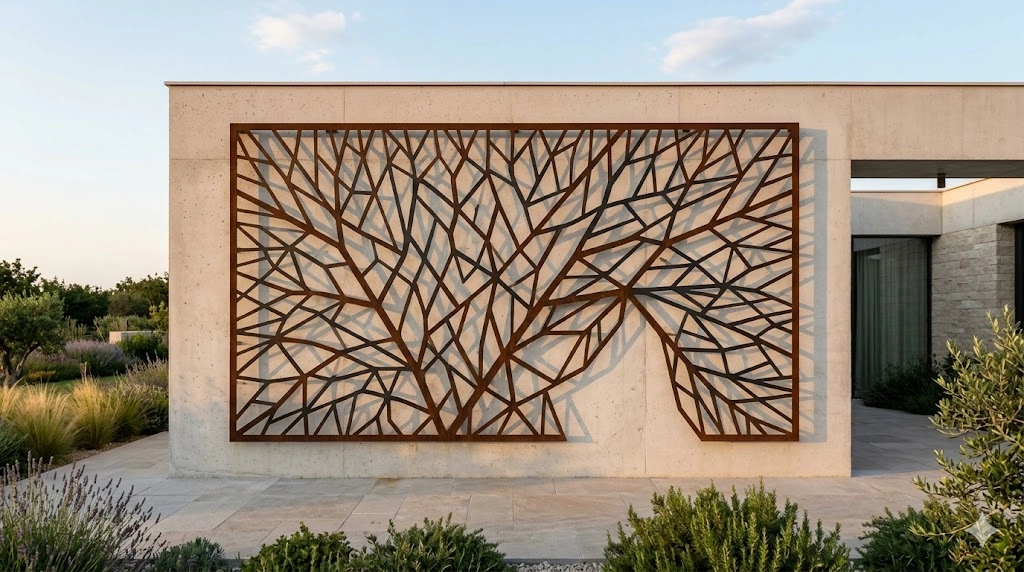
- Leaf-inspired cut-out metal patterns
- Tree silhouette compositions
- Organic fractal geometry
- Weather-reactive materials like corten steel
Result: Art becomes part of the ecosystem, not separate from it.
Material Longevity Engineering
European design prioritizes:
- Lifecycle durability
- Sustainable oxidation processes
- Low-maintenance materials
- Natural aging aesthetics (patina formation)
This is why metal wall art aligns perfectly with European exterior systems—it evolves over time rather than degrading.
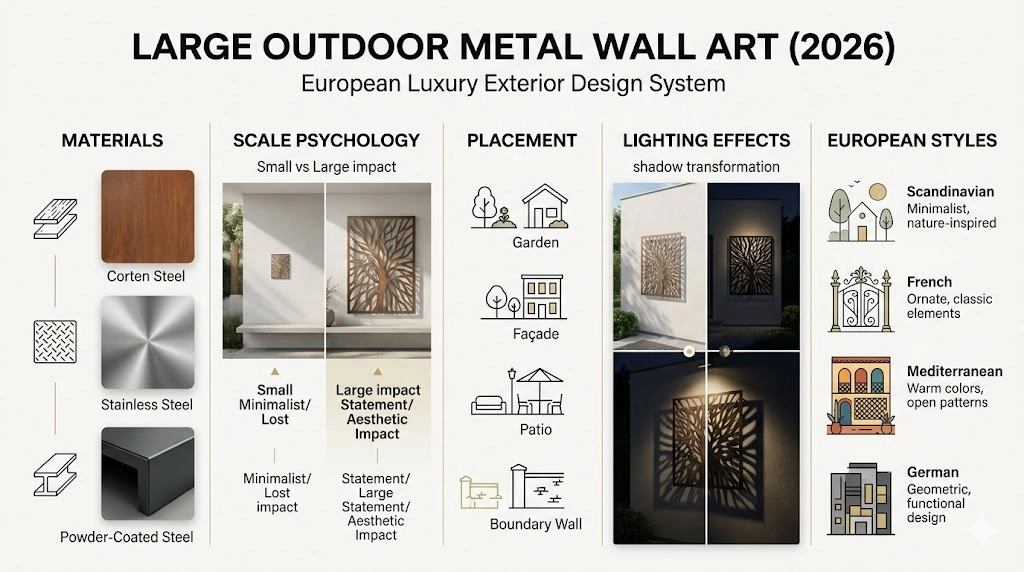
Typology of Large Outdoor Metal Wall Art Styles
Different stylistic categories influence emotional perception, architectural identity, and spatial behavior.
Minimalist Geometric Systems
These designs are based on:
- Pure geometric abstraction
- Repetitive symmetry
- Controlled spacing ratios
- Linear visual hierarchy
Psychological effect:
Creates cognitive calmness and spatial clarity.
Best suited for:
modern villas, luxury apartments, corporate buildings.
Nature-Inspired Organic Systems
These include:
- Leaf structures
- Floral abstractions
- Animal silhouettes
- Flowing organic curves
Psychological effect:
Enhances emotional comfort and environmental connection.
Best for:
gardens, countryside homes, eco-villas.
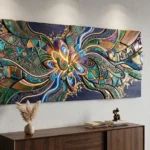
Abstract Luxury Panel Systems
Characteristics:
- Multi-layered metal depth
- Shadow-casting geometry
- Complex visual textures
- 3D spatial illusions
Effect:
Creates perceived luxury through visual complexity.
Used in:
high-end hotels, luxury estates, modern art architecture.
Industrial European Structural Style
Features:
- Raw metal finishes
- Mechanical geometry
- Industrial symmetry
- Functional aesthetic exposure
Effect:
Communicates strength, precision, and urban identity.
Materials Science: Outdoor Metal Wall Art Engineering
Material selection determines not only aesthetics but also lifespan, corrosion resistance, and environmental adaptability.
Performance Comparison
| Material | Durability | Visual Style | Maintenance Level | Application Context |
| Powder-Coated Steel | Very High | Clean modern | Low | Residential + commercial |
| Corten Steel | Extremely High | Natural rust patina | Very Low | Landscape + villas |
| Stainless Steel | High | Reflective modern | Low | Coastal environments |
| Aluminum | Medium-High | Lightweight minimal | Low | Large façade systems |
Material Intelligence Insight
Corten steel is highly dominant in European architecture due to its controlled oxidation process.
Instead of deteriorating, it develops a protective patina layer that:
- Prevents deep corrosion
- Enhances visual warmth
- Evolves aesthetically over time
This creates a “living material effect.”
Scale Psychology in Architectural Wall Art
Scale is one of the most critical yet misunderstood aspects of exterior design.
Cognitive Perception Theory
Human perception evaluates architectural objects based on:
- Relative proportion
- Viewing distance
- Environmental context
- Visual dominance hierarchy
Incorrect Scaling Effects
If artwork is too small:
- It loses visual authority
- It becomes cognitively invisible
- It breaks architectural proportion balance
Correct Scaling Effects
Properly scaled artwork:
- Establishes focal dominance
- Enhances façade identity
- Increases perceived property value
- Improves spatial coherence
Optimal Scaling Framework
- 60–75% wall coverage ratio
- Minimum visibility threshold: 120 cm
- Large façades: 150–300+ cm installations
- Must remain legible from 10–20 meter distance
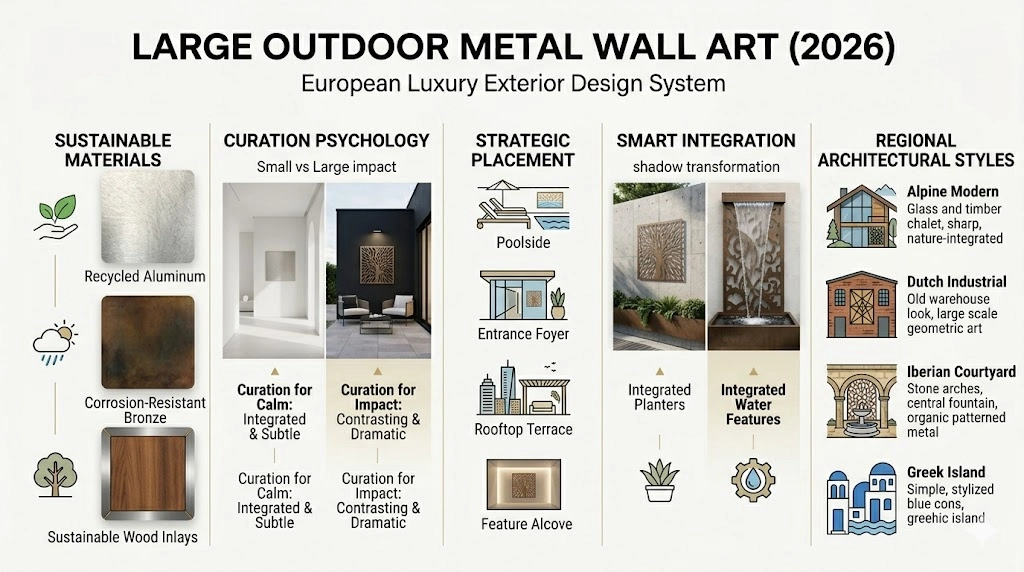
Durability Engineering & Environmental Resistance
Outdoor installations must function as environmental adaptive systems.
Essential Engineering Features:
- Anti-corrosion surface treatment
- UV-resistant coating layers
- Structural load distribution design
- Wind resistance anchoring systems
- Thermal expansion tolerance
Failure Patterns in Low-Quality Products
- Premature rust degradation
- Structural bending under wind load
- Color fading due to UV exposure
- Mounting instability over time
Lighting Design: The Emotional Amplifier
Lighting is a perceptual transformation mechanism in architectural aesthetics.
Interaction Systems
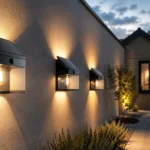
- Directional LED wall washers
- Ground-based uplighting systems
- Side-angle sunlight interaction
- Ambient diffusion lighting layers
Temporal Light Variation Effect
| Time | Visual Result |
| Morning | Soft shadow diffusion |
| Afternoon | High contrast geometry |
| Evening | Dramatic silhouette emphasis |
Same artwork produces different emotional outputs across time cycles.
European Architectural Style Integration Systems
Scandinavian System
- White or neutral façades
- Minimal geometric patterns
- Natural integration priority
Result: cognitive clarity and emotional calmness
French Luxury System
- Elegant symmetry
- Soft abstraction
- Warm metallic tones
Result: romantic luxury perception
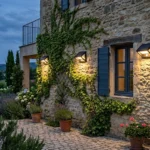
Mediterranean System
- Stone textures
- Warm sunlight optimization
- Organic blending with landscape
Result: emotional warmth and tactile richness
German Precision System
- Structural geometry
- Industrial alignment
- Functional aesthetic clarity
Result: authority, precision, architectural discipline
Placement Strategy Optimization
Placement determines whether art becomes dominant or irrelevant.
Strategic Placement Zones
- Garden focal walls → nature integration point
- Patio walls → social atmosphere enhancement
- House façades → identity formation
- Boundary walls → external perception upgrade
Common Design Errors
- Incorrect proportional scaling
- Ignoring environmental durability
- Overcrowded visual composition
- Weak installation systems
- Material-context mismatch
Pros & Cons
Advantages
- High structural durability
- Strong aesthetic impact
- Low maintenance requirements
- Weather adaptability
- Property value enhancement
Limitations
- High-quality pieces require investment
- Installation requires expertise
- Poor design reduces architectural value
- Low-grade materials degrade quickly
Maintenance Framework
- Biannual surface cleaning
- Non-abrasive material use only
- Annual structural inspection
- Allow natural patina development (corten steel)
- Dust and residue removal cycles
Frequently Asked Questions
Yes, when manufactured using corten steel, stainless steel, or powder-coated steel, it performs effectively across diverse climate conditions including rain, snow, and high UV exposure.
Corten steel and powder-coated steel dominate European markets due to their durability, controlled aging process, and low maintenance requirements.
High-quality outdoor metal wall art can last between 10 to 25+ years depending on environmental exposure and material grade.
Yes, it can be installed on brick, concrete, stone, and reinforced exterior surfaces, provided correct mounting systems are used.
Yes. Lighting significantly enhances visual perception, increasing aesthetic impact by up to three times through shadow dynamics and contrast enhancement.
Conclusion
Large outdoor metal wall art represents a convergence of architecture, psychology, material science, and visual storytelling.
It is no longer a decorative element—it is a multi-layered spatial communication system that defines identity, emotion, and environmental interaction.
In modern European architecture, it functions as:
- A structural identity marker
- A cognitive visual anchor
- A material-based emotional trigger
- A long-term aesthetic investment
As architectural design continues evolving toward expressive minimalism and sustainable aesthetics, outdoor metal wall art will remain a dominant force in shaping luxury exterior environments worldwide.
In essence:
It transforms walls into living architecture.