Introduction
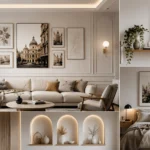
In 2026, home goods wall art has evolved far beyond simple decoration. Across modern European interiors, walls are now viewed as immersive visual environments that influence mood, comfort, productivity, and emotional harmony. Instead of treating walls as empty background surfaces, homeowners now transform them into carefully curated architectural focal points that shape the entire atmosphere of a living space.
From Scandinavian apartments in Copenhagen to Parisian residences and Mediterranean villas along the southern coast, wall décor has become a sophisticated interior language that communicates identity, lifestyle, elegance, and emotional warmth. Modern interior design no longer focuses only on furniture placement. Instead, walls themselves are becoming central design features that define spatial rhythm and visual storytelling.
Today’s luxury interiors prioritize:
- Emotional balance
- Spatial harmony
- Architectural simplicity
- Texture layering
- Intentional focal points
- Curated visual flow
- Minimalist European styling
- Wellness-centered design
Unlike outdated decorating guides that simply recommend random artwork combinations, this advanced European luxury design guide explains how elite modern interiors strategically use wall art to improve atmosphere, sophistication, and functionality.
Inside this complete pillar guide, you will discover:
- The biggest home goods wall art trends in 2026
- Luxury European wall styling systems
- Wall art placement psychology
- Room-by-room interior design frameworks
- Gallery wall spacing methods
- Modern color coordination strategies
- Premium texture and framing systems
- Common wall décor mistakes to avoid
- Future wall design innovations through 2030
Whether you prefer Scandinavian minimalism, Japandi serenity, contemporary luxury interiors, Mediterranean warmth, or modern farmhouse sophistication, this guide will help you design walls that feel timeless, calming, refined, and emotionally intelligent.
Why Home Goods Wall Art Matters More Than Ever in 2026
Modern interiors are becoming increasingly experience-driven. Homeowners no longer decorate merely for appearance. Instead, they design homes that support emotional well-being, concentration, comfort, and personal identity.
Because of this transformation, home goods wall art has become one of the fastest-growing categories in luxury interior styling.
The Psychology of Wall Décor
Wall décor strongly influences how individuals emotionally perceive a room. Interior designers now understand that artwork affects psychological comfort in the same way lighting, textures, and architecture do.
For example:
| Wall Art Style | Emotional Influence |
| Scandinavian neutral prints | Calmness and clarity |
| Abstract modern compositions | Energy and creativity |
| Nature-inspired landscapes | Stress reduction |
| Symmetrical gallery systems | Stability and order |
| Warm textured artwork | Comfort and luxury |
Luxury designers strategically use wall art to:
- Create emotional warmth
- Improve visual balance
- Enhance spatial rhythm
- Increase luxury perception
- Reduce visual fatigue
- Establish architectural depth
This explains why modern European interiors feel more relaxing, elegant, and visually harmonious compared to cluttered trend-based spaces.
How Wall Art Influences Productivity and Mood
Research in environmental psychology demonstrates that visual surroundings significantly impact:
- Mental clarity
- Creativity
- Focus
- Relaxation
- Emotional wellness
This is especially important for:
- Home offices
- Bedrooms
- Living rooms
- Reading spaces
- Creative studios
For instance, warm neutral artwork often produces emotional softness, while oversized abstract canvases introduce sophistication, movement, and artistic energy.
The Rise of Personality-Driven Interiors
In previous years, interiors often followed generic design trends. In 2026, personalization will dominate luxury styling.
Homeowners increasingly use home goods wall art to express:
- Cultural identity
- Travel experiences
- Lifestyle aesthetics
- Creative taste
- Emotional values
- Personal storytelling
As a result, curated gallery walls and handcrafted European artwork are replacing mass-produced decorative pieces.
The Biggest Home Goods Wall Art Trends in 2026
The future of wall décor focuses on emotional warmth, natural materials, visual simplicity, and intentional styling systems.
Warm Minimalism
Warm minimalism remains one of Europe’s most influential interior trends.
This design philosophy combines:
- Clean architectural layouts
- Soft organic textures
- Neutral palettes
- Spacious wall arrangements
- Subtle layering
Popular elements include:
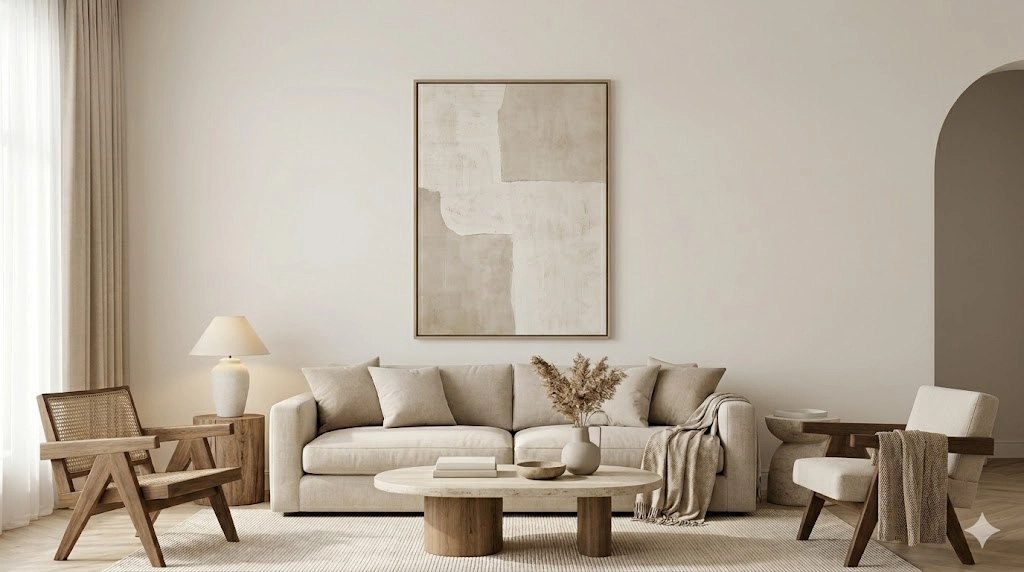
- Beige abstract artwork
- Cream-colored canvas prints
- Linen textures
- Soft black framing
- Organic minimalist compositions
This aesthetic is especially dominant in Scandinavian and Northern European homes.
Japandi Wall Aesthetics
Japandi interiors combine Japanese restraint with Nordic coziness.
Popular wall décor includes:
- Ink-inspired artwork
- Earth-tone compositions
- Handmade textured panels
- Organic wall arrangements
- Nature-inspired imagery
Japandi styling emphasizes emotional calmness and visual silence rather than overstimulation.
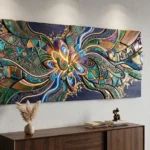
Oversized Statement Artwork
Large-scale wall art continues dominating luxury interiors because it creates stronger visual anchors.
Oversized artwork works beautifully in:
- Open-plan living rooms
- Luxury apartments
- Minimalist homes
- Double-height interiors
- Modern penthouses
Large statement pieces also reduce visual clutter compared to numerous smaller decorations.
Textured Mixed-Media Wall Décor
Luxury interiors are moving beyond completely flat walls.
Modern textured wall art includes:
- Plaster artwork
- Fabric-mounted installations
- Sculptural compositions
- Layered canvas systems
- Organic material panels
Texture introduces dimensionality, architectural richness, shadow variation, and visual depth.
Biophilic Nature-Inspired Art
Biophilic design continues shaping modern European interiors.
Popular biophilic elements include:
- Botanical prints
- Forest-inspired imagery
- Earth-tone murals
- Organic curves
- Nature photography
- Stone-textured compositions
These styles help interiors feel calming, restorative, and emotionally grounding.
European Luxury Interior Design Principles for Wall Art
European interiors are admired globally because they combine sophistication with emotional warmth.
Scandinavian Simplicity
Scandinavian interiors focus on:
- Natural illumination
- Soft color palettes
- Minimal clutter
- Functional beauty
- Organic materials
Popular Scandinavian wall décor includes:
- Minimal line art
- Neutral landscapes
- Black-and-white photography
- Botanical illustrations
Negative space plays a major role in Scandinavian styling because it creates openness and tranquility.
Italian Modern Elegance
Italian interiors prioritize sculptural sophistication and emotional richness.
Common wall art styles include:
- Large abstract canvases
- Architectural compositions
- Stone-inspired textures
- Layered luxury installations
Italian styling feels luxurious without becoming visually overwhelming.
Parisian Artistic Layering
Parisian interiors combine historical charm with effortless refinement.
Popular wall décor elements include:
- Vintage-inspired frames
- Artistic asymmetry
- Gold detailing
- Mixed artwork scales
- Curated gallery arrangements
The objective is refined imperfection rather than rigid symmetry.
Mediterranean Organic Warmth
Mediterranean interiors emphasize:
- Sunlight
- Earthy tones
- Texture layering
- Artisan craftsmanship
Popular wall décor includes:
- Terracotta-inspired art
- Coastal photography
- Handmade European artwork
- Organic material textures
Room-by-Room Home Goods Wall Art Styling System
Every room requires different emotional and visual strategies.
Living Room Wall Art
The living room acts as the emotional center of the home.
Focal-Point Theory
Every luxury living room should include one dominant visual anchor.
Examples include:
- Oversized abstract artwork
- Structured gallery walls
- Sculptural installations
- Textured mixed-media pieces
Without a focal point, rooms often feel disconnected and visually fragmented.
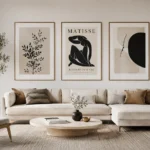
Sofa-to-Art Sizing Ratio
Professional designers commonly follow this rule:
| Furniture Element | Recommended Art Width |
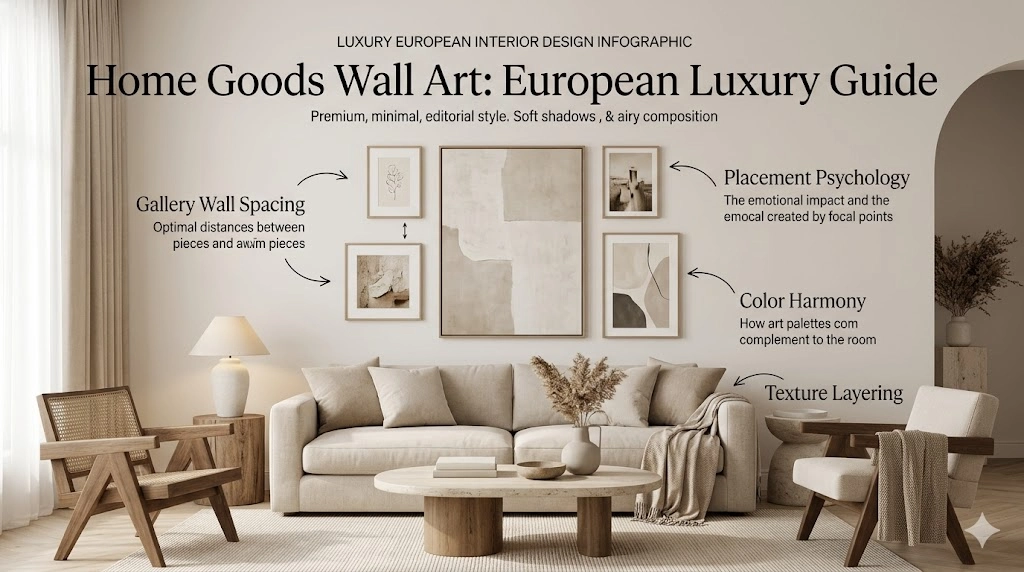
| Sofa | 60–75% of sofa width |
| Console table | 65–80% width |
| Bed headboard | 50–70% width |
Proper scale dramatically improves perceived luxury.
Gallery Wall Balance
Modern gallery walls require:
- Consistent spacing
- Unified frame tones
- Balanced visual weight
- Controlled asymmetry
- Cohesive color palettes
Random arrangements often create visual chaos instead of elegance.
Bedroom Wall Art
Bedrooms should feel peaceful, restorative, and emotionally soft.
Best Bedroom Color Palettes
Popular bedroom wall art colors include:
- Warm beige
- Muted olive
- Dusty blue
- Soft taupe
- Warm white
These tones encourage emotional relaxation and mental calmness.
Symmetrical Luxury Placement
European luxury bedrooms frequently use symmetry to create emotional stability.
Examples include:
- Matching framed artwork
- Centered oversized canvases
- Balanced neutral compositions
Dining Room Wall Art
Dining spaces can support stronger visual drama than bedrooms.
Popular choices include:
- Vertical statement artwork
- Artistic photography
- Textured abstract pieces
- Contemporary installations
Hallway and Entryway Art
Entryways shape first impressions instantly.
First-Impression Psychology
Guests emotionally evaluate a home within seconds.
Well-designed entryway artwork creates:
- Warmth
- Sophistication
- Spaciousness
- Visual direction
Narrow Wall Optimization
Hallways benefit from:
- Vertical artwork
- Linear gallery systems
- Reflective surfaces
- Repetitive framing patterns
These methods visually widen compact spaces.
Home Office Wall Art
Modern home offices should support productivity and concentration.
Best wall art colors for focus include:
- Soft green
- Warm neutrals
- Muted charcoal
- Natural wood tones
Avoid chaotic or overly aggressive artwork that disrupts concentration.
How to Choose the Perfect Home Goods Wall Art
Selecting wall décor requires balancing:
- Scale
- Color
- Texture
- Emotion
- Placement
- Materiality
Scale and Proportion
Small artwork on oversized walls often appears disconnected and inexpensive.
Luxury interiors prioritize proportion because proper scale creates visual authority and architectural harmony.
Frame Materials
Different frames create distinct emotional effects.
| Frame Material | Interior Effect |
| Natural wood | Warm and organic |
| Black metal | Contemporary sophistication |
| Gold accents | Elegant luxury |
| White frames | Scandinavian softness |
Canvas vs Metal vs Wood
| Material | Best For | Visual Character |
| Canvas | Minimalist homes | Soft and artistic |
| Metal | Industrial interiors | Sleek and modern |
| Wood | Rustic spaces | Warm and natural |
| Acrylic | Contemporary luxury | Premium and polished |
Color Coordination
Wall art should complement a room rather than perfectly match it.
The best interiors use controlled contrast.
Examples:
- Beige interiors → muted charcoal artwork
- Neutral rooms → earthy green accents
- White spaces → warm wood textures
Lighting Interaction
Lighting dramatically influences how artwork appears.
Luxury interiors frequently use:
- Picture lighting
- Directional spotlights
- Wall washers
- Warm ambient illumination
Good lighting enhances texture depth and sophistication.
Wall Art Placement Psychology
This section offers one of the strongest opportunities to outperform competitors because most décor websites completely ignore placement psychology.
Visual Weight Balancing
Every object carries visual weight.
Dark, oversized, or textured artwork feels visually heavier.
Balance can be achieved through:
- Symmetry
- Furniture alignment
- Strategic spacing
- Color repetition
Eye-Level Hanging System
Professional designers generally hang artwork so the center sits approximately:
145 cm to 155 cm from floor145\text{ cm} \text{ to } 155\text{ cm from floor}145 cm to 155 cm from floor
This positioning creates natural visual comfort.
Museum-Style Spacing
Luxury gallery walls typically use:
5 cm to 8 cm between frames5\text{ cm} \text{ to } 8\text{ cm between frames}5 cm to 8 cm between frames
Consistent spacing establishes professional visual rhythm.
Ceiling-Height Illusion Techniques
Vertical artwork visually increases ceiling height.
Horizontal artwork visually widens narrow rooms.
This technique is especially common in compact European apartments.
Creating Luxury Through Negative Space
One of the most overlooked principles in interior styling is negative space.
Luxury interiors intentionally leave portions of walls empty because this:
- Reduces visual stress
- Creates elegance
- Highlights artwork
- Improves architectural clarity
Best Home Goods Wall Art Styles for Different Interior Themes
Minimalist Homes
Best options include:
- Neutral abstract art
- Minimal line drawings
- Soft texture panels
- Monochrome compositions
Scandinavian Homes
Ideal wall décor includes:
- Botanical artwork
- Neutral landscapes
- Soft photography
- Thin black frames
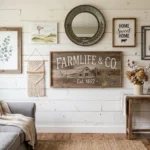
Modern Farmhouse Interiors
Popular wall décor styles include:
- Rustic wood installations
- Nature-inspired prints
- Vintage typography
- Warm neutral artwork
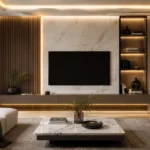
Luxury Contemporary Interiors
Best suited for:
- Oversized abstract canvases
- Sculptural wall installations
- Metallic accents
- High-contrast compositions
Industrial Lofts
Industrial interiors favor:
- Concrete-inspired artwork
- Black-and-white photography
- Urban compositions
- Matte black framing
Color Psychology in Home Goods Wall Art
Color strongly shapes the emotional atmosphere inside modern interiors.
Earth Tones
Popular earthy shades include:
- Clay
- Sand
- Olive
- Terracotta
These tones create grounding and warmth.
Warm Neutrals
Warm neutrals dominate European interiors because they feel timeless, elegant, and emotionally calming.
Black-and-White Sophistication
Monochrome artwork creates refined contrast while maintaining minimalism.
Green Biophilic Palettes
Green tones support wellness-focused interiors and strengthen the connection between homes and nature.
Deep Moody Luxury Colors
Dark navy, espresso, charcoal, and deep olive create dramatic sophistication when balanced carefully.
Common Wall Art Mistakes That Destroy Interior Luxury
Avoiding mistakes is just as important as choosing the right artwork.
Artwork That Is Too Small
Tiny artwork on large walls weakens visual impact immediately.
Cluttered Gallery Walls
Too many unrelated frames create confusion instead of elegance.
Poor Lighting
Even premium artwork loses sophistication without proper illumination.
Wrong Frame Colors
Frames should support the interior palette rather than compete with it.
Inconsistent Themes
Mixing unrelated styles damages visual harmony and spatial consistency.
Future of Home Goods Wall Art 2026–2030
The future of wall décor will combine sustainability, personalization, and intelligent technology.
AI-Assisted Personalization
AI-driven systems will help homeowners generate custom wall arrangements based on:
- Room dimensions
- Emotional preferences
- Furniture positioning
- Lighting conditions
Sustainable Wall Materials
Eco-conscious interiors increasingly prioritize:
- Recycled materials
- Sustainable wood
- Natural fibers
- Low-impact production systems
Smart Frame Technology
Digital smart frames are becoming more elegant and minimal.
Future systems may automatically adjust artwork according to:
- Mood
- Lighting
- Time of day
- Seasonal aesthetics
Immersive Mural Systems
Large immersive wall environments are expected to become mainstream in luxury interiors.
Handcrafted Artisan Revival
Despite technological advancement, handcrafted European wall décor is becoming increasingly valuable because homeowners seek authenticity and uniqueness.
How to Create a Luxury Gallery Wall Step-by-Step
Creating a premium gallery wall requires intentional strategy.
1: Choose an Anchor Piece
Begin with one dominant artwork that becomes the primary focal point.
2: Build Around It
Add supporting pieces with complementary tones and themes.
3: Maintain Consistent Spacing
Consistent spacing creates professional structure and rhythm.
4: Mix Textures Carefully
Combine:
- Canvas
- Photography
- Textured artwork
- Minimal sculptural elements
Avoid excessive variation.
5: Balance Symmetry and Creativity
Luxury gallery walls should feel curated rather than random.
Best Materials for Premium Home Goods Wall Art
| Material | Advantages | Best Interior Style |
| Canvas | Soft artistic appearance | Scandinavian |
| Acrylic | Modern luxury finish | Contemporary |
| Metal | Industrial elegance | Loft interiors |
| Wood | Organic warmth | Rustic & farmhouse |
| Textured plaster | Sculptural depth | Luxury minimalist |
| Linen-mounted art | Premium softness | European classic |
Sustainable & Eco-Friendly Wall Art Trends
Sustainability is deeply connected to modern European interior culture.
Recycled Materials
Modern artists increasingly use:
- Reclaimed wood
- Recycled paper
- Eco-conscious composites
Eco-Friendly Framing
Sustainable framing systems reduce environmental impact while maintaining sophistication.
Natural Dyes
Organic pigments and natural color systems are becoming increasingly desirable.
Artisan Craftsmanship
Handmade wall décor supports local European craftsmanship traditions.
Slow Interior Design Movement
The slow living movement encourages intentional decorating using timeless pieces rather than temporary trend-based consumption.
Pros & Cons of Modern Home Goods Wall Art Trends
| Pros | Cons |
| Enhances emotional atmosphere | Oversized artwork may overwhelm small rooms |
| Improves luxury perception | Premium artwork can be expensive |
| Creates strong identity | Poor placement reduces impact |
| Supports visual balance | Trend overload creates clutter |
| Adds architectural depth | Cheap prints reduce sophistication |
FAQs
Minimalist Scandinavian, Japandi, and warm contemporary aesthetics are currently the most influential styles across Europe.
Artwork should generally cover 60–75% of the sofa width for balanced visual proportions.
Yes, but modern gallery walls are now more curated, minimalist, intentional, and structured than earlier trends.
Warm neutrals, earthy greens, terracotta, muted charcoal, dusty beige, and soft organic palettes dominate current trends.
Choosing artwork that is too small for the wall remains one of the most common interior design mistakes.
Final Conclusion
Walls are no longer passive background elements. In 2026, they function as emotional architecture that shapes comfort, identity, mood, wellness, and luxury perception.
The future of home goods wall art is not about filling walls with random decoration. Instead, it is about intentional visual storytelling rooted in:
- Psychology
- Spatial balance
- Texture layering
- Emotional atmosphere
- Architectural harmony
- Curated minimalism
European interior design continues leading global wall décor trends because it understands one powerful principle:
True luxury comes from harmony, not excess.
Whether you admire Scandinavian serenity, Italian sophistication, Parisian creativity, Mediterranean warmth, or contemporary minimalism, thoughtful wall styling can completely transform how a home feels.
By prioritizing:
- Proper proportions
- Emotional comfort
- Premium materials
- Curated placement systems
- Sophisticated textures
- Intentional composition
you can create interiors that feel timeless, elegant, emotionally balanced, and deeply personal.
For modern homes in 2026 and beyond, wall art is no longer optional — it is one of the most powerful design tools shaping the future of interior living.