Introduction
In 2026, golf wall art has evolved far beyond traditional sports decoration or simple framed prints. It has transformed into a structured European luxury interior design system, widely used in high-end residences, executive offices, boutique hotels, private villas, and curated commercial environments.
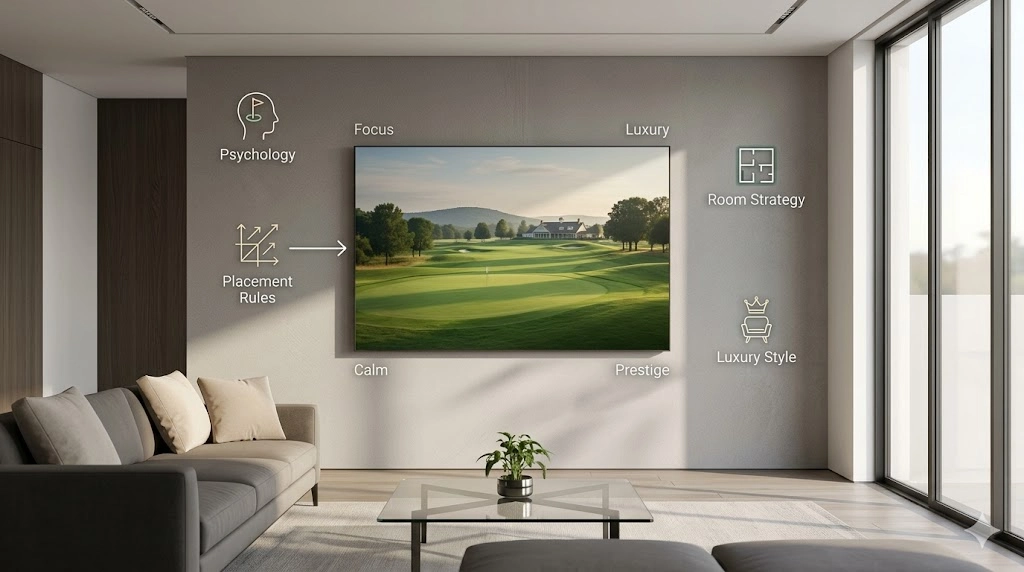
Instead of being treated as casual décor, golf-inspired visual art is now considered a psychological and architectural design instrument. Designers and architects utilize it to shape emotional atmosphere, spatial identity, and lifestyle perception within interiors.
Golf imagery carries symbolic meaning—discipline, silence, precision, patience, and nature-aligned balance. These attributes naturally align with contemporary European interior philosophies that emphasize minimalism, emotional clarity, and refined visual hierarchy.
Unlike loud or overstimulating sports visuals, golf wall art introduces a controlled aesthetic presence. It delivers subtle authority without visual aggression, making it ideal for modern environments seeking sophistication without clutter.
Across Scandinavian minimal apartments, German corporate offices, French artistic interiors, British executive rooms, and Mediterranean villas, golf wall art is emerging as a defining visual identity system.
It supports a growing global interior trend: “Quiet luxury expressed through sport-inspired visual narratives.”
This expanded guide presents a complete system covering psychology, design classification, European stylistic variations, placement architecture, room-based strategies, and emerging 2026 trends.
Psychological Framework of Golf Wall Art in Interior Environments
Golf wall art functions as a cognitive design element rather than simple decoration. Its impact lies in emotional conditioning, spatial perception, and behavioral influence.
Golf as a sport embodies controlled movement, mental endurance, silence, and calculated precision. These qualities translate into interior psychology, shaping how occupants feel and behave within a space.
Core Psychological Interpretations
Golf-inspired artwork communicates multiple subconscious signals:
- Concentration and mental discipline
- Emotional stability and calmness
- Elite social positioning and prestige signaling
- Connection with natural landscapes
- Slow-paced intentional thinking
- Controlled performance mindset
Why It Aligns With Modern Living Spaces
Contemporary lifestyles are saturated with digital stimuli, constant notifications, and visual overload. As a result, interior design is shifting toward cognitive relief environments.
Golf wall art supports this shift by:
- Reducing visual complexity
- Encouraging mental decompression
- Supporting productivity and cognitive clarity
- Reinforcing emotional grounding
- Creating slow-luxury environments
Design Psychology Insight
From a neuro-design perspective, golf imagery activates associations linked to openness, greenery, horizon depth, and spatial calmness. These visual cues reduce cognitive stress and improve environmental comfort.
It is especially effective in:
- Executive offices requiring focus enhancement
- Luxury living rooms requiring emotional balance
- Private lounges requiring relaxation energy
- Study rooms requiring cognitive stability
In essence, golf wall art functions as environmental psychology encoded into visual form.
Global Golf Landscapes as Artistic Inspiration Sources
Most premium golf wall art compositions are derived from real-world championship-level golf courses. These landscapes are not only sporting venues but also carefully engineered visual ecosystems.
Iconic Golf Course Inspirations
- Augusta National Golf Club (USA)
- St Andrews Links (Scotland)
- Royal Melbourne Golf Club (Australia)
These locations represent:
- Historical legacy
- Competitive excellence
- Cultural prestige
- International recognition
Why Designers Prefer Golf Landscapes
Golf courses naturally embody principles of visual harmony:
- Balanced geometry in green field layouts
- Controlled natural lighting environments
- Open spatial depth and perspective flow
- Horizon-based compositional structure
These characteristics align with architectural visualization principles, making them ideal for interior wall integration.
European Golf Wall Art Style System
European interior culture has a major influence on golf wall art interpretation. Each regional design philosophy introduces distinct emotional and visual identities.
British Heritage Club Style
Characteristics:
- Deep wood textures
- Vintage golf illustration prints
- Leather and brass accents
- Traditional framing systems
Emotional tone: Prestige, tradition, masculine elegance
Ideal spaces:
- Executive offices
- Private libraries
- Luxury lounges
German Minimal Precision Style
Characteristics:
- Monochrome photography
- Structured grid alignment
- High negative space usage
- Architectural framing discipline
Emotional tone: Order, clarity, efficiency
Ideal spaces:
- Corporate environments
- Modern apartments
- Productivity-focused offices
French Gallery Elegance Style
Characteristics:
- Soft beige and neutral tones
- Subtle gold detailing
- Museum-inspired spacing
- Artistic abstraction layers
Emotional tone: Sophisticated, cultured luxury
Ideal spaces:
- Living rooms
- Creative studios
- Boutique interiors
Mediterranean Golf Villa Style
Characteristics:
- Sun-washed color palettes
- Natural wood framing
- Earth-tone greens and sands
- Relaxed spatial composition
Emotional tone: Warmth, lifestyle luxury, openness
Ideal spaces:
- Villas
- Resorts
- Open-plan homes
Style Comparison Matrix
| Style | Color Logic | Emotional Output | Ideal Usage |
| British | Dark, rich tones | Prestige | Offices |
| German | Monochrome | Precision | Workspaces |
| French | Beige & gold | Luxury elegance | Living rooms |
| Mediterranean | Warm natural tones | Relaxation | Villas |
Classification System of Golf Wall Art Types
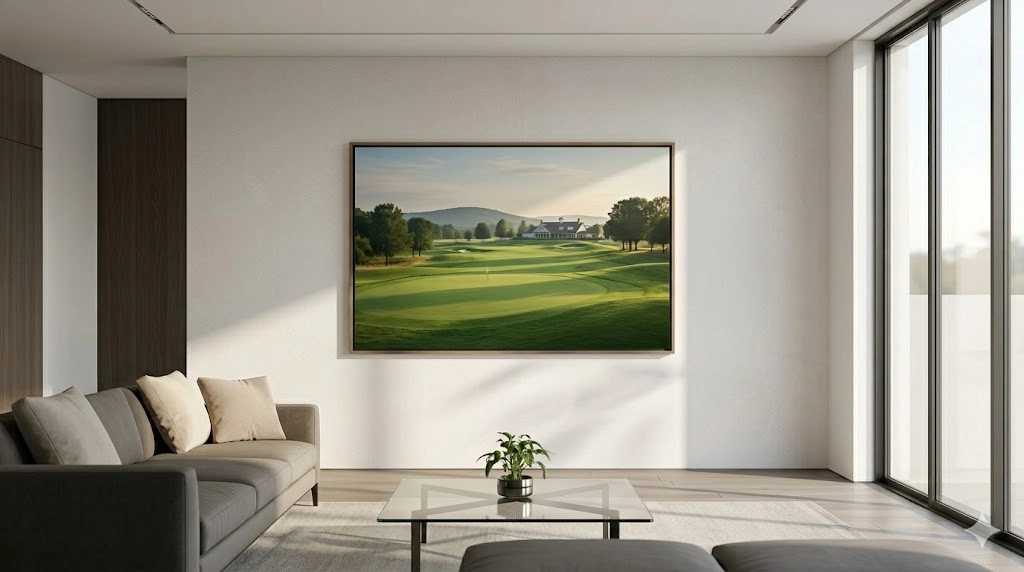
Golf Landscape Photography
Includes:
- Wide aerial golf course views
- Sunrise and sunset compositions
- Natural terrain expansion visuals
Best suited for: Living rooms and lounges
Golf Swing Motion Visual Art
Includes:
- Dynamic movement photography
- Silhouette action frames
- High-contrast kinetic visuals
Best suited for: Offices and performance spaces
Vintage Golf Poster Systems
Includes:
- Retro typography layouts
- Historical tournament graphics
- Classic sports advertisement aesthetics
Best suited for: Clubhouse-inspired interiors
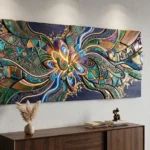
Abstract Golf Interpretations
Includes:
- Brushstroke motion art
- Symbolic minimal compositions
- Conceptual visual abstraction
Best suited for: Contemporary luxury interiors
Placement Engineering Rules for Golf Wall Art
Proper placement determines whether wall art feels luxurious or random.
1: Eye-Level Alignment Standard
- Recommended height: 145–155 cm
- Aligns with natural human visual axis
2: Proportional Sofa Balance Rule
Artwork width should equal: 60–75% of sofa width
Ensures visual harmony and spatial balance
3: Single Dominant Artwork Principle
- Prefer one large statement piece
- Avoid visual fragmentation
4: Focus Wall Strategy
Best positioning zones:
- Behind work desk
- Opposite seating area
- Primary living room wall
Room-Based Golf Wall Art Implementation Strategy
Home Office
- Monochrome golf photography
- Minimal frame structure
- Clean spatial composition
Purpose: Cognitive focus and productivity enhancement
Living Room
- Large landscape artwork
- Natural scenic representation
- Central wall positioning
Purpose: Luxury identity and calm atmosphere
Lounge Area
- Vintage golf posters
- Warm lighting integration
- Heritage styling cues
Purpose: Relaxed sophistication
Sports Room
- Motion-based golf visuals
- Action-oriented compositions
Purpose: Energy stimulation and motivation
2026 European Golf Wall Art Trends
Key emerging trends include:
- Oversized single-panel artworks
- Matte black luxury framing systems
- Gold-accent detailing layers
- Textured canvas printing technology
- Editorial-style photography aesthetics
Design Philosophy Shift
Interior design is evolving toward: Identity-driven minimalism rather than decorative overload
Golf wall art now functions as:
- Lifestyle representation
- Personality expression system
- Spatial identity marker
Impact Evaluation Matrix
| Type | Visual Strength | Emotional Depth | Luxury Level |
| Landscape | High | Calm | High |
| Swing Art | Medium | Focus | Medium |
| Vintage | Medium | Nostalgia | Medium |
| Abstract | Very High | Modern luxury | Very High |
Advantages and Limitations
Advantages
- Enhances luxury perception
- Improves cognitive focus
- Compatible with multiple interior styles
- Strong emotional storytelling capability
- Timeless aesthetic value
Limitations
- Requires precise placement
- Overuse reduces exclusivity
- Needs framing consistency
- Not suitable for chaotic visual environments
Frequently Asked Questions
Yes, minimalist golf photography adapts well to compact European apartments.
Home offices and living rooms provide the highest visual impact.
No, emotional tone alignment is more important than exact color matching.
Large-scale statement pieces provide stronger luxury perception.
Conclusion
Golf wall art in 2026 has evolved into more than just decorative imagery—it is now a refined European luxury interior system that shapes mood, identity, and spatial experience. By combining psychology, minimalist design principles, and lifestyle storytelling, it transforms ordinary walls into expressions of focus, prestige, and calm sophistication. When used with proper placement and stylistic balance, golf wall art becomes a timeless design element that enhances both modern homes and professional interiors with quiet luxury and emotional depth.