Introduction
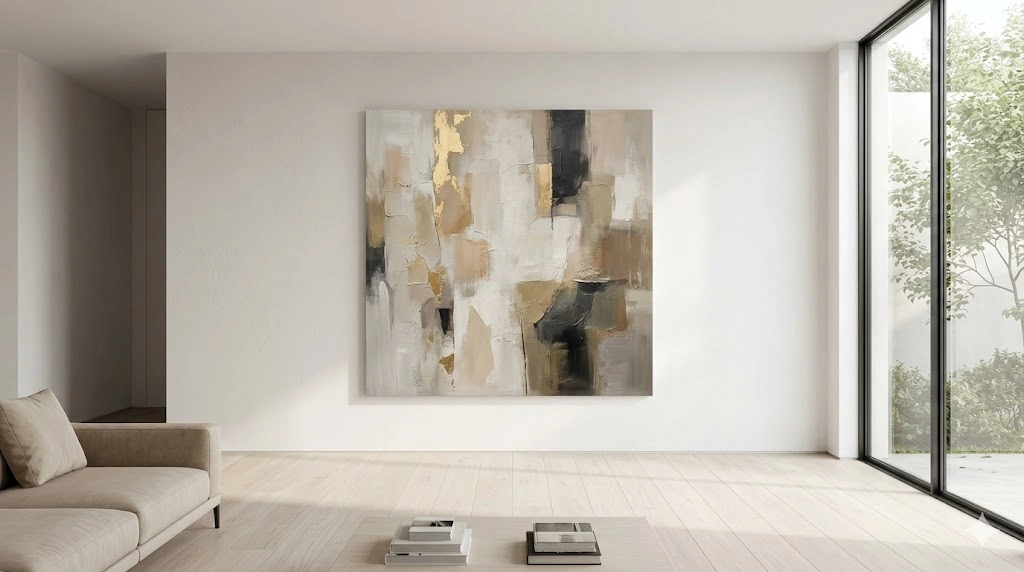
In 2026, abstract wall decor has evolved far beyond simple wall decoration. It is no longer treated as an accessory placed at the end of interior design decisions. Instead, it has become a structured visual language, deeply integrated into European luxury interior architecture.
Across Europe—from the serene, minimalist homes of Scandinavia to the ornate yet modern apartments of Paris, and from Milan’s luxury residences to Berlin’s functional Bauhaus-inspired spaces—abstract wall decor now functions as a design system, not just visual filler.
What makes it so powerful is its psychological and spatial impact:
- It creates emotional atmosphere without literal imagery
- It defines spatial boundaries without physical construction
- It controls mood without altering furniture layout
- It enhances architectural identity without structural changes
Design professionals increasingly describe it as “visual architecture through abstraction.”
This guide from TheWallsArt.com breaks down a complete European-level design framework, including:
- Interior philosophy behind abstraction
- Professional placement systems
- Emotional color psychology
- Room-specific styling strategies
- Advanced proportional rules
- Common design failures
- Luxury trends defining 2026
This is not inspirational content. It is a structured interior design methodology used in high-end European environments.
European Design Philosophy Behind Abstract Wall Decor
European interior design is grounded in a refined set of principles that prioritize clarity, emotional depth, and functional beauty. Abstract wall decor fits naturally into this philosophy because it removes unnecessary visual noise while amplifying emotional resonance.
The foundation rests on three core principles:
- Minimal visual interruption
- Emotional spatial equilibrium
- Functional aesthetic harmony
Abstract art aligns perfectly because it communicates feeling rather than literal storytelling.
Scandinavian Minimalism
Scandinavian interiors emphasize serenity, light, and restraint. The design philosophy is rooted in reducing clutter and maximizing calmness.
Key characteristics include:
- Soft tonal abstraction
- Muted palettes such as ivory, beige, fog grey
- Heavy reliance on natural lighting
- Emotional neutrality and calm expression
In this context, abstract wall decor is used to soften spatial energy, not dominate it. It becomes a whisper in the room rather than a visual shout.
French Contemporary Luxury
French interiors balance artistic expression with refined elegance. There is a strong museum-like quality to wall styling.
Core features include:
- Painterly abstraction with brush movement
- Subtle contrast layering
- Gallery-inspired wall composition
- Emotional richness and sophistication
Here, abstract art behaves like a curated exhibition piece, transforming residential spaces into private art galleries.
Italian Modern Elegance
Italian design embraces boldness, confidence, and luxurious expression. It merges classical richness with modern geometry.
Key design elements:
- Strong geometric abstraction
- High contrast compositions
- Marble, brass, and gold integration
- Architectural dominance of wall pieces
In Italy-inspired interiors, abstract art becomes a statement of identity and prestige.
German Bauhaus Influence
German-inspired interiors focus heavily on structure, logic, and function. Visual clarity is essential.
Main traits include:
- Grid-based abstraction systems
- Mathematical proportioning
- Clean symmetrical balance
- Reduction of unnecessary detail
Here, abstract wall decor is treated almost like architectural coding—precise and functional.
Core Insight: Across Europe, abstraction is no longer decoration. It has become spatial engineering.
Types of Abstract Wall Decor Styles
Understanding classification of styles is essential for applying a correct interior system.
Minimalist Abstract Wall Decor
This style prioritizes simplicity and emotional softness.
Features:
- Light brush strokes
- Neutral tonal palette
- High negative space usage
Best for bedrooms and compact living spaces where calmness is essential.
Geometric Abstract Wall Decor
This style focuses on structure, order, and balance.
Features:
- Shapes, grids, and linear precision
- Strong symmetry and alignment
- Controlled visual rhythm
Ideal for offices and modern apartments requiring mental clarity.
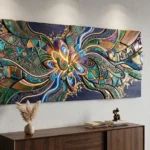
Textured Abstract Wall Decor
This is a tactile, dimensional approach to abstraction.
Features:
- Layered paint applications
- 3D surface depth
- Sculptural visual texture
Often used in luxury villas to enhance material richness.
Color Field Abstract Wall Decor
This approach emphasizes large emotional color blocks.
Features:
- Broad uninterrupted color zones
- Minimal detailing
- Immersive emotional experience
Best suited for living rooms and social environments.
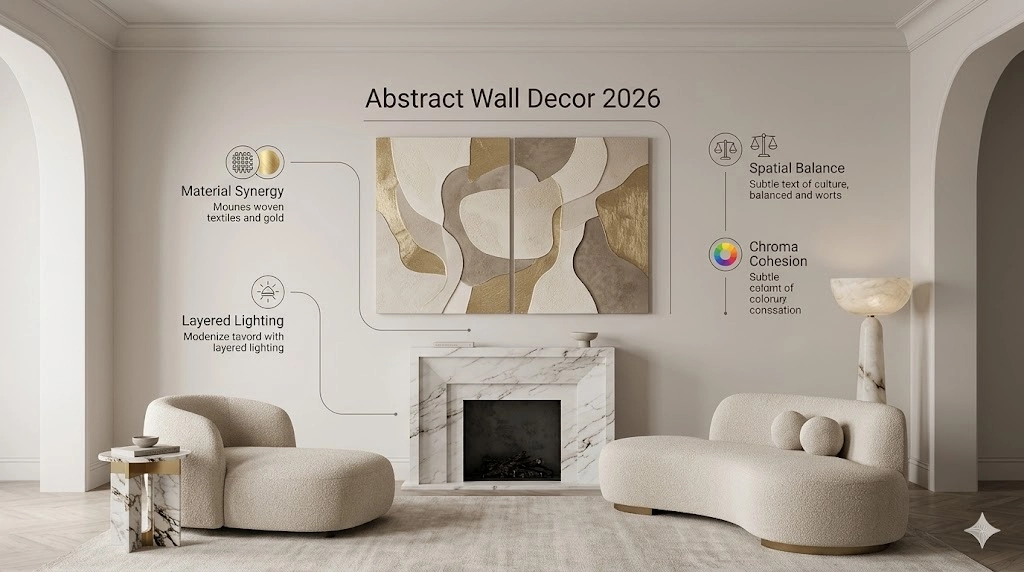
Expressive Brush Abstract Art
This is a highly emotional and dynamic abstraction.
Features:
- Energetic brush movement
- Emotional spontaneity
- Visual intensity and rhythm
Often used in French-style interiors with artistic personality.
Abstract Wall Decor Placement System
Professional interior designers never place artwork randomly. Every placement follows structured spatial logic.
The 60–30–10 Wall Balance System
60%+30%+10%=100%60\% + 30\% + 10\% = 100\%60%+30%+10%=100%
This system distributes visual weight across the room:
- 60% neutral base (walls)
- 30% supporting furniture and decor
- 10% abstract focal artwork
This ensures balanced visual hierarchy and prevents overcrowding.
HIdeal Artwork Height Rule
The correct placement height is:
- Eye-level alignment (approx. 145–155 cm center point)
- Avoid excessive elevation above furniture
This ensures natural visual flow and comfort.
Sofa Proportion Rule
Artwork width should be:
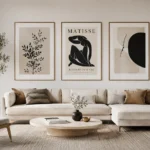
- 70% to 90% of sofa width
This prevents imbalance and stabilizes wall composition.
Strategic Placement Zones
- Above sofas (living rooms)
- Above beds (bedrooms)
- Hallway transition walls
- Office focal backgrounds
Each zone has different emotional intent.
Abstract Wall Decor for Each Room
Living Room — Social Identity Zone
This is the most expressive space in a home.
Design strategy:
- Large-scale abstract pieces
- Strong focal positioning
- Balanced contrast composition
Purpose: Social identity + visual impact
Bedroom — Emotional Calm Zone
Bedrooms require softness and emotional stability.
Design strategy:
- Gentle abstraction
- Pastel-based palette
- Fluid organic shapes
Purpose: Relaxation + psychological comfort
Office — Productivity Zone
Offices require clarity and mental discipline.
Design strategy:
- Geometric abstraction
- Cool tones (blue, green, grey)
- Structured visual rhythm
Purpose: Focus + productivity enhancement
Hallways — Transition Flow Zone
Hallways guide movement and continuity.
Design strategy:
- Vertical artwork alignment
- Repetitive rhythm patterns
- Linear composition flow
Purpose: Spatial transition guidance
Color Psychology in Abstract Wall Decor
Color is not aesthetic only—it is emotional engineering.
- Blue → Calmness, clarity, focus
- Beige → Warm stability and comfort
- Black → Depth, luxury, contrast strength
- Gold → Premium European luxury identity
- Green → Balance and natural harmony
selection directly influences emotional behavior inside spaces.
Abstract Wall Decor Styling Mistakes
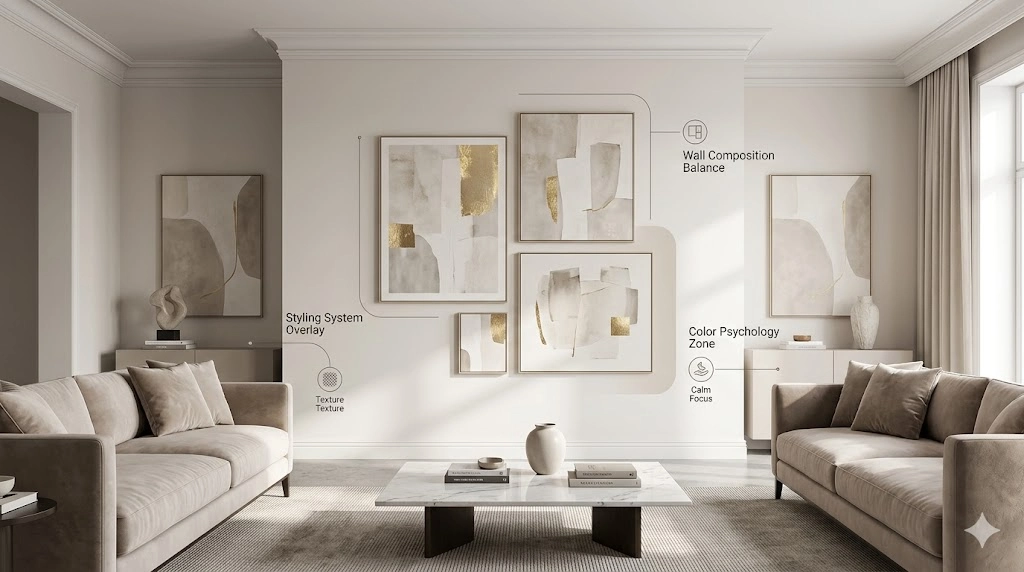
Common mistakes that weaken interior impact:
- Overloading one wall with multiple abstract pieces
- Ignoring scale-to-furniture proportion
- Mixing conflicting color systems
- Incorrect height alignment
- Lack of visual hierarchy
Rule: One wall = one emotional focus point
European Luxury Trend 2026 — “Quiet Abstraction”
The dominant European trend for 2026 is:
Quiet Luxury Abstraction
Characteristics:
- Muted neutral tones
- Minimal compositional density
- Texture-driven expression
- Emotional silence and depth
This trend is especially prominent in:
- Scandinavian interiors
- Swiss minimalist homes
- German architectural apartments
- French luxury villas
The philosophy is simple: less visual noise, more emotional meaning.
Pros and Cons
Advantages
- Enhances modern aesthetic identity
- Works across multiple European styles
- Controls emotional atmosphere
- Timeless visual relevance
Limitations
- Improper placement reduces effectiveness
- Low-quality artwork appears random
- Requires design understanding
- Sensitive to color imbalance
How to Build a Perfect Abstract Wall Decor System
Step-by-step design method:
- Define room function (relaxation, work, social)
- Select abstraction style (minimal, geometric, textured)
- Choose emotional color direction
- Apply proportional placement rules
- Maintain a single focal hierarchy
This system ensures architectural consistency.
Expert Design Insights
Professional designers treat abstract wall decor as:
- Spatial anchoring element
- Emotional regulation tool
- Light reflection enhancer
- Architectural composition layer
It is not treated as decoration—it is treated as structure.
FAQs
Abstract wall decor refers to artistic compositions that use shapes, textures, and colors instead of realistic imagery to express emotion and enhance interior spaces.
Yes. Minimal abstract compositions expand visual perception, making small rooms appear larger and more open.
Neutral palettes such as beige, grey, soft blue, and muted tones work best for European-inspired interiors.
Ideal placement includes above sofas, beds, and main focal walls at eye-level height.
The leading trend is Quiet Luxury Abstraction, focusing on minimalism, texture, and emotional depth rather than visual complexity.
Conclusion
Abstract wall decor in 2026 is no longer just a visual accessory—it has become a core part of European luxury interior design systems. When applied with correct placement, proportion, and color psychology, it transforms spaces into emotionally balanced, modern environments. From Scandinavian calm to French elegance and Italian luxury, abstract art acts as a universal design language that defines mood, structure, and identity. The key to success is simplicity, intention, and system-based styling rather than random decoration.