Introduction
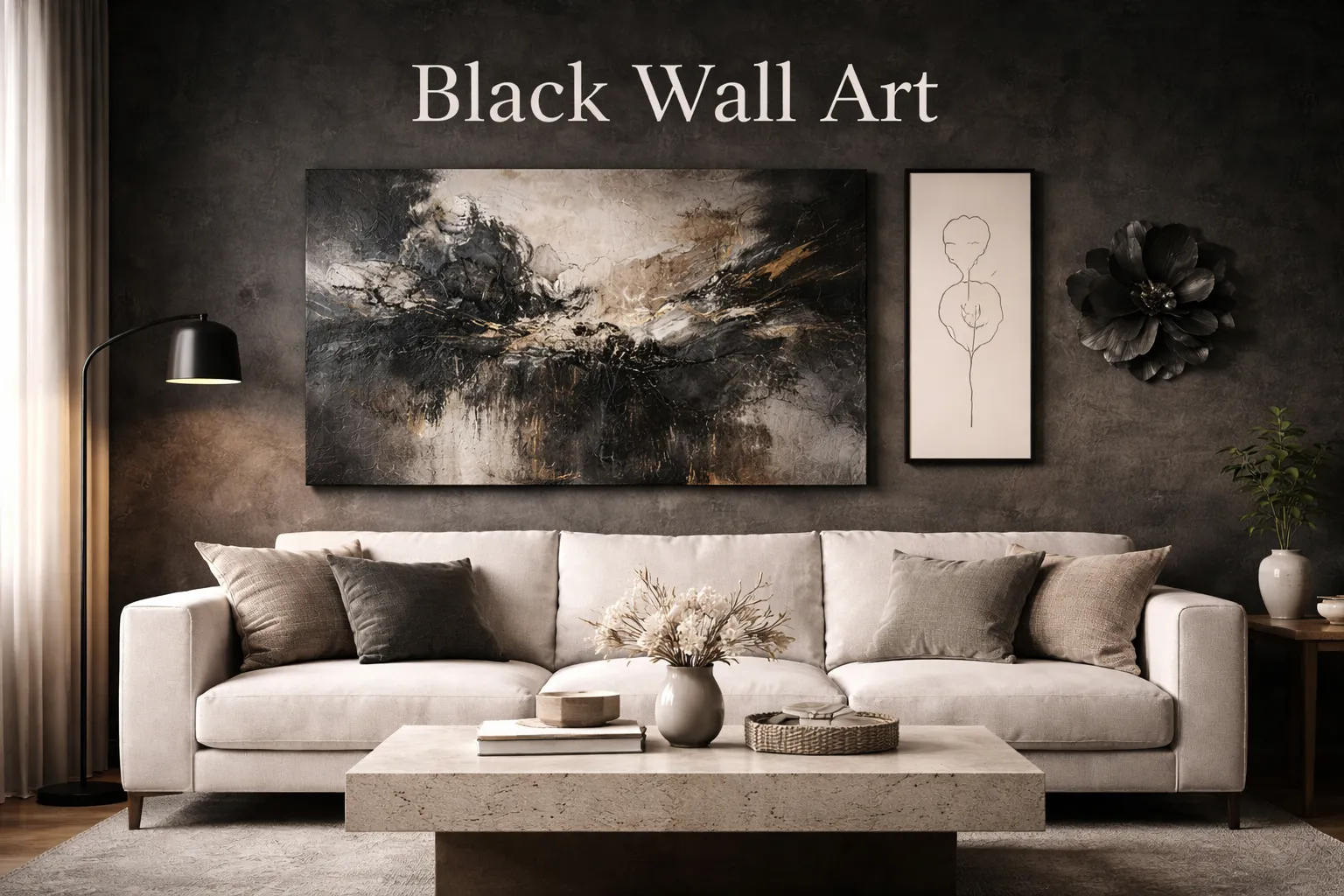
Dark Artwork on walls stands out as one of the boldest choices for home decor. While it feels simple, it brings weight – almost like an anchor – to any room’s look. Instead of fading into the background, it holds attention without shouting. Black Wall Art different styles – clean lines, raw textures, bold patterns – all find balance through its presence.
Dark tones on walls often hold attention longer than bright patterns might. Instead of fading into the background like pale shades sometimes do, they anchor a room with quiet strength. A single piece in deep contrast pulls sightlines without demanding noise or clutter around it. Furniture edges sharpen against them, small textures gain notice, objects seem more defined. They stir something under the surface – mood shifts happen quietly, almost unnoticed. Balance emerges, even when emotions run slightly darker than usual.
Black wall art holds a quiet power in shaping space. Its presence often shifts how light moves through a room. Some styles pull focus softly, others demand attention without noise. Choosing one depends less on rules more on feel. Black Wall Art frames can either blend into the background or stand apart like separate statements. In bedrooms they may calm, in hallways spark thought. Materials range from matte paper to textured metal, each aging differently over time. Trends shift slowly toward bolder shapes by 2026 yet simplicity stays strong. You might find pieces at local markets just as easily as online studios.
What Is Black Wall Art?
A single shade sets the mood when darkness takes center stage on a wall. Paintings might soak up light, while printed images hold still in deep tones. Photos lean into contrast, sometimes edged with silver or charcoal. Sculptures rise from surfaces like quiet shadows given form. Mixed pieces layer texture without needing color to speak. Words appear carved in bold strokes, stark against blank zones. Not every piece stays pure black – some breathe alongside gray, others flicker with hints of bronze or stone.
A dark canvas can pull everything together, cutting through clutter with sharp definition. Instead of bright tones, it builds a quiet backbone that guides how you see. Strong lines emerge where light meets shadow. This isn’t decoration – it shapes space without noise.
Examples of black wall art include:
- Bold black geometric shapes on a white canvas
- Monochromatic photography capturing urban skylines, nature, or human expression
- Three-dimensional black metal sculptures
- Large typography prints in black with motivational or artistic text
Why Black Wall Art Works
Understanding why black wall art is psychologically compelling helps you apply it effectively in your interiors.
Visual Anchoring
Dark tones tend to stand out without trying.A room lacking such a point can seem scattered, like thoughts mid-drift. That deep hue brings order – sharp edges in soft environments, a silent organizer of chaos.
Contrast & Depth
Contrast is the interplay between light and dark elements. Placing black art against lighter backgrounds accentuates walls, adds visual dimension, and makes rooms feel larger and more dynamic.
| Wall Color | Effect With Black Art |
| White | Maximum contrast & dramatic presence |
| Beige | Warm, sophisticated contrast |
| Grey | Balanced, refined elegance |
| Bold Colors | Strong visual harmony with modern flair |
Emotional Resonance
Black evokes emotional qualities such as:
- Strength and confidence
- Elegance and sophistication
- Calm focus and mindfulness
Universal Compatibility
Unlike fleeting trends, black pairs with virtually all color palettes and materials — from warm woods, natural fibers, and terracotta to sleek white, glass, and metallic surfaces. This adaptability makes it ideal for long-term design investment.
Types & Styles of Black Wall Art
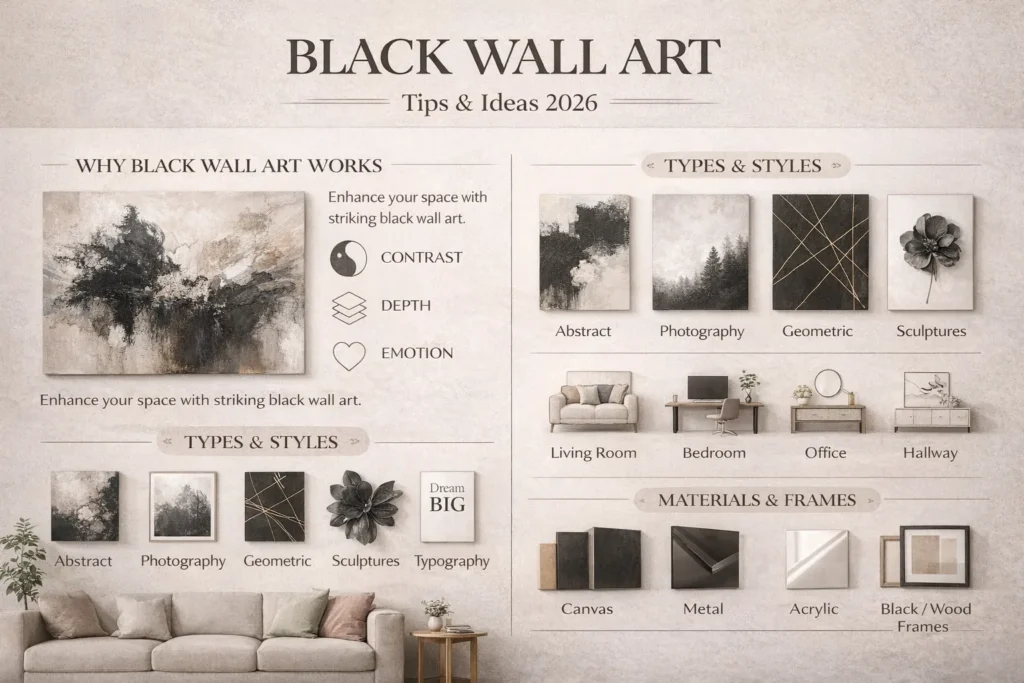
There is no single approach to black wall art. Here are the principal styles that dominate contemporary interiors:
Abstract & Contemporary Black Art
Abstract black pieces emphasize form, motion, and composition. They can convey serenity or energetic vibrancy depending on brushstroke, symmetry, or pattern.
Best for: Living rooms, creative spaces, modern interiors
Example ideas:
- Large black brush strokes on a white canvas
- Asymmetrical black splashes with minimalist undertones
Black & White Photography
Black & white photos capture real-life moments in timeless contrast. Architectural lines, dramatic portraits, and nature landscapes are common motifs.
Best for: Bedrooms, offices
Examples:
- City skylines in monochrome
- Close-up portraits emphasizing light and shadow
Minimalist Black Geometric Art
Simple forms, lines, and shapes create understated sophistication. Perfect for quiet or modern interiors.
Best for: Scandinavian rooms, entryways, study areas
Black Metal Wall Sculptures
Three-Dimensional metallic pieces introduce texture, shadow, and dynamic reflection, evolving with room lighting.
Best for: Industrial lofts, accent walls, high-ceiling spaces
Examples: Layered iron mesh or panel shapes
Typography & Text Art
Black letters can become art themselves. Typography offers personalization and motivation, adding character to spaces.
Best for: Home offices, reading nooks
Examples: “Create Every Day” in bold black font
How to Choose the Perfect Black Wall Art
Selecting black wall art requires intention.
Scale & Proportion
Ensure art complements room dimensions.
| Room Size | Art Recommendation |
| Small | One medium piece |
| Large | Large artwork or gallery wall |
| Tall walls | Vertical or stacked pieces |
Rule of thumb: Art should occupy roughly 60–75% of the wall above furniture.
Match Style to Room Vibe
Align art with the room’s personality:
| Room Style | Best Black Art |
| Modern | Abstract or geometric |
| Classic | Black & white photography |
| Industrial | Metal sculptures |
| Minimalist | Simple shapes |
Contrast With Walls
Black stands out against neutral or lighter backgrounds. On dark walls, incorporate light elements or frames to maintain clarity.
Frame & Material Selection
Frames:
- Black → seamless, contemporary
- Wood → warm contrast
- Metal → sleek, industrial
- No frame → minimalist statement
Styling Black Wall Art Room-by-Room
Living Room
- Place a large black abstract above a sofa
- Pair black & white photography in symmetry
- Use small black sculptures on shelves
Tip: Hang at ~150–160 cm from the floor, balanced with textiles.
Bedroom
- Minimalist black art above headboards
- Use small typographic prints on nightstand walls
- Soft lighting enhances mood
Hallway & Entryway
- Create gallery walls combining photos and shapes
- Use vertical narrow pieces in tight hallways
- Accent with wall-mounted lights
Home Office
- Motivational black typography
- Geometric black prints near work zones
- Keep small objects cohesive with main color
Kitchen & Dining
- Black and white food photography
- Simple line sketches
- Metal shapes that withstand kitchen humidity
Material Guide & Framing Choices
| Material | Texture & Feel | Best For |
| Canvas | Matte & soft | Living rooms, bedrooms |
| Paper Prints | Crisp, precise | Photography |
| Metal | Dimensional, reflective | Industrial accents |
| Acrylic | Glossy, modern | Contemporary contrast |
Frame types influence visual emphasis:
- Black → sleek modernity
- Wood → warmth and contrast
- Metal → minimal industrial touch
- Frameless → bold statement
Decor Trends & Design Pairings
Monochrome Modern
- Black, white, grey palettes remain timeless
- Soft grey walls with black frames
- White or neutral sofas for visual balance
Black + Natural Elements
- Light oak, linen, and terracotta complement black art
- Adds warmth and organic softness
Minimalist vs Maximalist
- Minimal → focus on simplicity and negative space
- Maximal → layer black art with other vibrant pieces to ground the wall
Mixed Media Walls
- Combine black art with wood cladding, textured wallpapers, and painted panels for depth
Where to Buy Quality Black Wall Art
Online Marketplaces – Wide variety, sizes, themes, and filters.
Local Art Shows & Galleries – Unique works, direct artist interaction.
Museum Shops – High-quality curated prints.
Artist Platforms – Support independent creators and discover original pieces.
Avoid: Low-quality mass-produced prints prone to fading.
Black Wall Art Mistakes to Avoid
- Hanging art too high
- Mixing incompatible styles
- Ignoring scale and proportion
- Neglecting lighting
- Dark artwork on dark walls without contrast
Pros & Cons
Pros:
- Timeless feature
- Harmonizes with most color palettes
- Adds contrast and depth
- Elegant and dramatic
Cons:
- Can feel stark without warmth
- Needs proper lighting
- Requires deliberate pairing
Frequently Asked Questions
A: Not if you maintain contrast with walls and balance with light décor.
A: White, beige, soft pastels, warm wood tones, and metallic accents.
A: Approximately 150–160 cm from the floor, particularly above furniture.
A: No — it complements classic, industrial, minimalist, and eclectic interiors.
A: Group smaller pieces as a gallery cluster; one statement piece works best in larger areas.
Conclusion
Dark artwork on walls stands out with bold simplicity, fitting well in sleeping areas, lounging spaces, work spots, even hallways near doors. When picked thoughtfully – size matters, texture counts, light plays a role – a single piece draws eyes without shouting. Careful positioning changes how rooms feel, turning blank surfaces into quiet highlights. Matching it to surroundings makes the difference subtle but clear. The look lasts, never seeming outdated, always grounded. Distance from furniture alters perception just enough. A shift in angle catches different moods through the day. What lies beside it holds influence too. Light at night shapes its presence differently than daylight does. Even air movement nearby might affect hanging stability over time. Mood shifts happen slowly, not all at once. Space above and below guides comfort level. Reflections from glass or matte finish play their part silently. Overall impact grows with consistency across settings.