Introduction
A quiet presence changes the feel of a room, slowly. Not loud, never flashy – just steady lines and soft tones settling into place. Because of this, it fits where light moves easily across walls and floors. Over time, what looks simple at first begins revealing something else entirely. Mood shifts happen without announcement, stories unfold through stillness. Centuries pass inside each image, rooted in trees, silence, open zone. This kind of art stays present by stepping back.
Starting off gently, this look suits newcomers since it feels approachable and fits naturally into daily zones- also handy for those who design campaigns, build apps, or arrange personal corners at home. Beauty meets calm purpose in Japanese Wall pieces, making areas seem clear-minded but warm. Jumping right in, you’ll find background, roots, key forms, along with down-to-earth advice on picking and placing these works within Western homes, complete with truthful notes and setups that actually function outside of theory.
What Is Japanese Wall Art?
Art on walls from Japan grows out of old ideas about beauty, life, and thought. Woodcuts sometimes appear alongside brush drawings, paper rolls that hang down, written characters made with ink, newer works echoing earlier ways of seeing. Stillness lives inside motion through how things line up, balance. A quiet rhythm links them, more than geography ever could. Shapes speak where words stop, guided by centuries of careful looking.
Stillness speaks loud in that tradition. Between shapes, silence grows meaning. A shape stands – then nothing follows, yet it says enough. Nature leans into every line, never forced. What misses the brush holds weight like what appears. Zone lets the gaze wander slowly. Calm slips in where clutter might have been. The breathing room becomes part of the picture. Peace comes not despite the lack – but because of it.
Core principles of Japanese wall art
| Principle | Essence | Illustrative example |
| Simplicity & balance | Minimalism and uncluttered composition | Zen-inspired ink paintings with delicate brushwork |
| Nature & symbolism | Motifs drawn from seasons, landscapes, and living forms | Ukiyo-e prints of Mount Fuji or cherry blossoms |
| Cultural & philosophical expression | Ideas, stories, and traditions carried through the image | Calligraphy scrolls with poetry or wisdom |
Most folks think Japanese wall art needs to cover every inch. Yet its power shows up in the empty zone. A spare map lets each piece breathe. Silence around the image makes the eye settle. Less fuss means the room speaks clearer. Roominess becomes part of the design. Open walls aren’t bare – they’re balanced.
When it comes to European living zones, Japanese wall art just seems to belong. Zones shaped by simplicity, touched by Nordic design, or built around soft modern jewels give these artworks room to stand out – never awkward, always at ease.
A Brief History of Japanese Wall Art
Looking at Japanese wall art becomes clearer when you know its journey through time. Centuries poured into shaping what eyes now find striking – faith, city living, skilled hands, alongside shifts in what people liked played their parts.
Ukiyo-e: the floating world
Woodblock prints rose to fame under Japan’s Edo era, spanning 1603 to 1868. Bright hues marked these images, crafted with sharp precision. Scenes unfolded across countryside views, theater stars, ordinary routines, alongside tales pulled from trending stories. More than art alone, they carried narratives shaped by the pulse of everyday existence back then.
A kind of liveliness keeps Uki8o-e fresh. Energy pulses through each scene. Movement flows, zone breathes, stories unfold – without needing words. Famous names like Hokusai, then Hiroshige, shaped its peak. Their prints live on walls, in books, across creative fields, far beyond old Japan.
Sumi-e: ink wash painting
Quietness lives in sumi-e, where meditation shapes each stroke. Black ink flows through brush onto paper, guided by steady practice instead of loud detail. What appears simple – a branch here, a mountain there – holds a deeper feeling beneath its lines. Even one bamboo stem might speak volumes without words.
Imagination gets room to breathe here, instead of strict outlines. Suggestion takes the lead, quietly shaping what you see. Bedrooms, libraries, study nooks – these spaces thrive on that quiet pull.
Kakejiku: hanging scrolls
Hanging high on the wall, kakejiku show inked words or quiet scenes of nature. Not stuck in one place, they live inside the tokonoma – a small space meant for pause. When spring comes, a new scroll might take its turn. This shift follows time passing, like breath. Each change feels slow, noticed only when you stop looking fast.
What caught me off guard at the start was its sharp, current vibe, even though rooted in old ways. Hanging just one scroll in an empty zone often seems clearer in purpose than filling walls with many ornaments.
Timeline & key styles
| Style | Period | Distinguishing features | Renowned artists |
| Ukiyo-e | Edo (1603–1868) | Woodblock prints, vivid color, storytelling | Hokusai, Hiroshige |
| Sumi-e | Heian to modern era | Monochrome ink, minimalist brushwork, emotional essence | Sesshū Tōyō |
| Kakejiku | Edo to modern era | Hanging scrolls, seasonal motifs, calligraphy | Various masters |
Older styles shape European rooms in ways that feel chosen, not just placed. Above a couch, say, a Hokusai image brings character along with optical weight.
Top Styles of Japanese Wall Art
Picture types from Japan fill spaces in many ways, yet every kind sets its own vibe. A few look loud, full of movement. Still others come across calm, almost whispering. What works best ties back to how you wish the area to behave.
Traditional Ukiyo-e prints
Most folks around the world have likely seen these famous Japanese artworks. Bright tones fill each piece, along with careful details and balanced layouts. Scenes of nature appear frequently, together with figures going about their days. Seasons unfold across the images, while moments from common routines come alive on paper.
Take The Great Wave off Kanagawa – familiar to many. What grabs attention isn’t just force, rather how tension stays contained. Motion surges forward, yet nothing spills out of place.
Best placement: living rooms, dining spaces, feature walls, hallways.
Sumi-e ink art
Quiet moments find shape in sumi-e. This art leans into black ink, nothing more. Lines move like breath across paper. Instead of shouting color, it whispers stillness. A pause lives inside each stroke. Not made to impress – meant to settle the mind.
Out near the window, a print of bamboo might just calm the whole zone down. Though quiet in design, it holds its ground beside furniture and walls alike.
Best placement: bedrooms, meditation corners, study areas.
Kakejiku hanging scrolls
Scrolls have a special kind of elegance. Because they are vertical and usually narrow, they fit beautifully into spaces that framed art sometimes struggles to fill. Their soft, textile-like presentation also gives them a more traditional and ceremonial feel.
Best placement: entryways, alcoves, hallways, quiet corners.
Modern Japanese wall art
This category includes new work inspired by Japanese themes, but adapted for modern tastes. That could mean abstract compositions, simplified landscapes, minimal line art, or new interpretations of old motifs.
This style is often the easiest match for urban European flats, especially when the decor already leans clean and modern.
Best placement: offices, flats, creative workspaces, modern living rooms.
Minimalist Japanese wall art
Minimalist Japanese Wall Art uses negative space carefully. It often feels sparse, but that is part of the point. The emptiness gives the composition dignity.
This kind of art fits very naturally into Scandinavian, Nordic, and other minimalist interiors where less visual interruption is the goal.
Best placement: minimalist homes, quiet bedrooms, workspaces, hallways.
What Makes Japanese Wall Art Unique
Japanese wall art stands out because it combines beauty with meaning. It is not only about what is shown, but also about how it is shown and why.
A cherry blossom branch can suggest the beauty of a short season. A wave can represent movement, power, or impermanence. A crane can suggest longevity and grace. These symbolic layers make the artwork more interesting over time.
Why it feels different from other decor
- It carries a symbolic bottom.
- It uses simplicity as a strength.
- It often centers on nature.
- It favors timeless color combinations.
- It works in many kinds of interiors without looking out of place.
Most people overlook how things hold up over time. Still, while flashy styles fade fast, Japanese wall pieces keep their calm thanks to quiet peace instead of loud words. So even years later, they fit just right in zones meant to feel thoughtful, not tied to a single moment.
How to Choose the Right Japanese Wall Art
A single painting might stand out just fine on one wall, yet seem off somewhere else. Placement shapes how eyes move through a zone. Colors that clash with the surroundings pull attention away from comfort. Even striking images lose impact when they ignore the mood a room needs.
Start with subject matter
A quiet hush spreads through the mind when seeing a mountain scene. Not just space but sky, stretching beyond edges. When a brush meets paper, each stroke pulls attention inward, slow and precise. Instead of stillness, the carved wood image jumps with motion, telling stories without words.
| Subject | Meaning | Recommended use |
| Landscapes | Tranquility and natural beauty | Living rooms, hallways, entryways |
| Calligraphy | Wisdom, inspiration, reflection | Offices, study rooms, meditation spaces |
| Ukiyo-e prints | Storytelling and optical drama | Feature walls, central zones |
Pay attention to size and scale
Scale is often the deciding factor between a piece that feels “right” and one that feels slightly off.
Above the couch or around the hearth, big images catch attention best. Where walls tighten up, little ones fit more easily – especially if placed with care. Tall, upright formats slip neatly into tight spots, stretching space without spreading wide.
Choose the right material
| Material | Characteristics | Recommended placement in European homes |
| Canvas | Modern, durable, vibrant | Living rooms, offices, dining zones |
| Silk scroll | Traditional, elegant, soft optical feel | Minimalist bedrooms, meditation corners |
| Handmade paper | Textured, authentic, artisanal | Hallways, libraries, small galleries |
I noticed that material changes the emotional tone more than many buyers expect. The same image printed on canvas can feel crisp and new, while the same motif on paper or silk feels more intimate and traditional.
Match the room’s purpose
A workspace needs clarity. A bedroom needs calm. A living room usually needs a stronger focal point. The art should support that use, not fight against it.
For beginners, the safest approach is often to begin with one piece and build slowly. That keeps the room from feeling crowded and helps you understand what the style does in your zone.
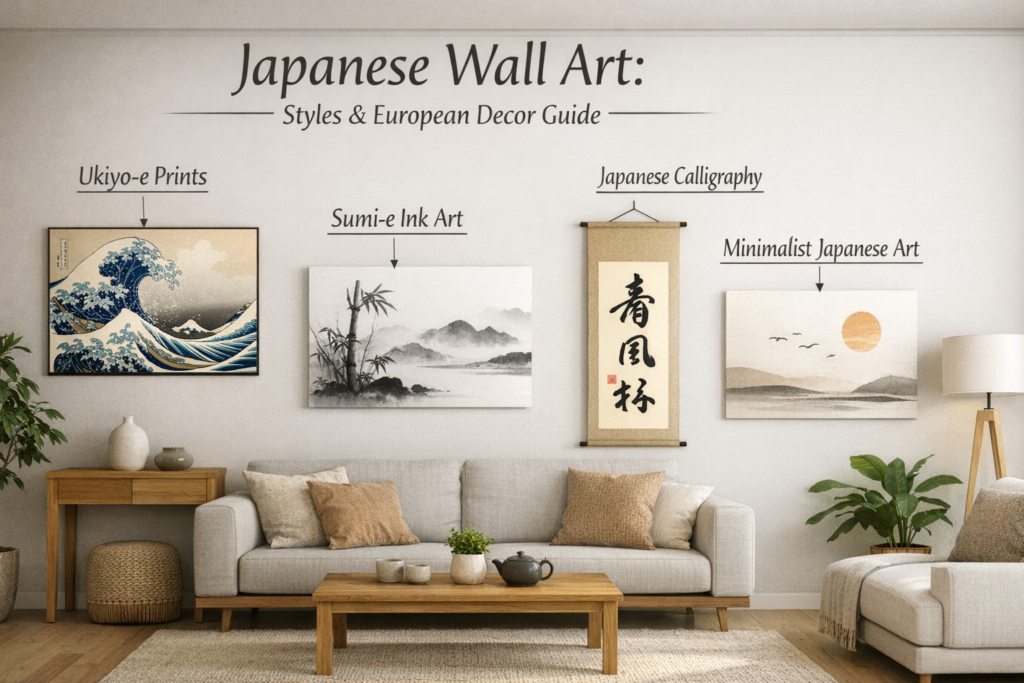
Where to Display Japanese Wall Art
Placement has a huge effect on how Japanese wall art feels. A piece can look elegant in one room and awkward in another if the scale, background, or lighting is off.
Living rooms
This is the most common place to use Japanese wall art. A large Ukiyo-e print or landscape can anchor the room and create a clear focal point.
Bedrooms
Bedrooms are a natural home for Sumi-e or quiet, minimal compositions. These pieces help create a softer, more restful air.
Offices and study areas
Calligraphy and minimal landscapes work well in workspaces because they support focus without distracting the eye.
Hallways and corridors
These are excellent places for vertical scrolls or smaller framed prints. Transitional zones often become more memorable when they carry a subtle optical accent.
Entryways
This is a strong place for a piece that introduces the mood of the home. A scroll or landscape at the entrance can set the tone immediately.
Example layout
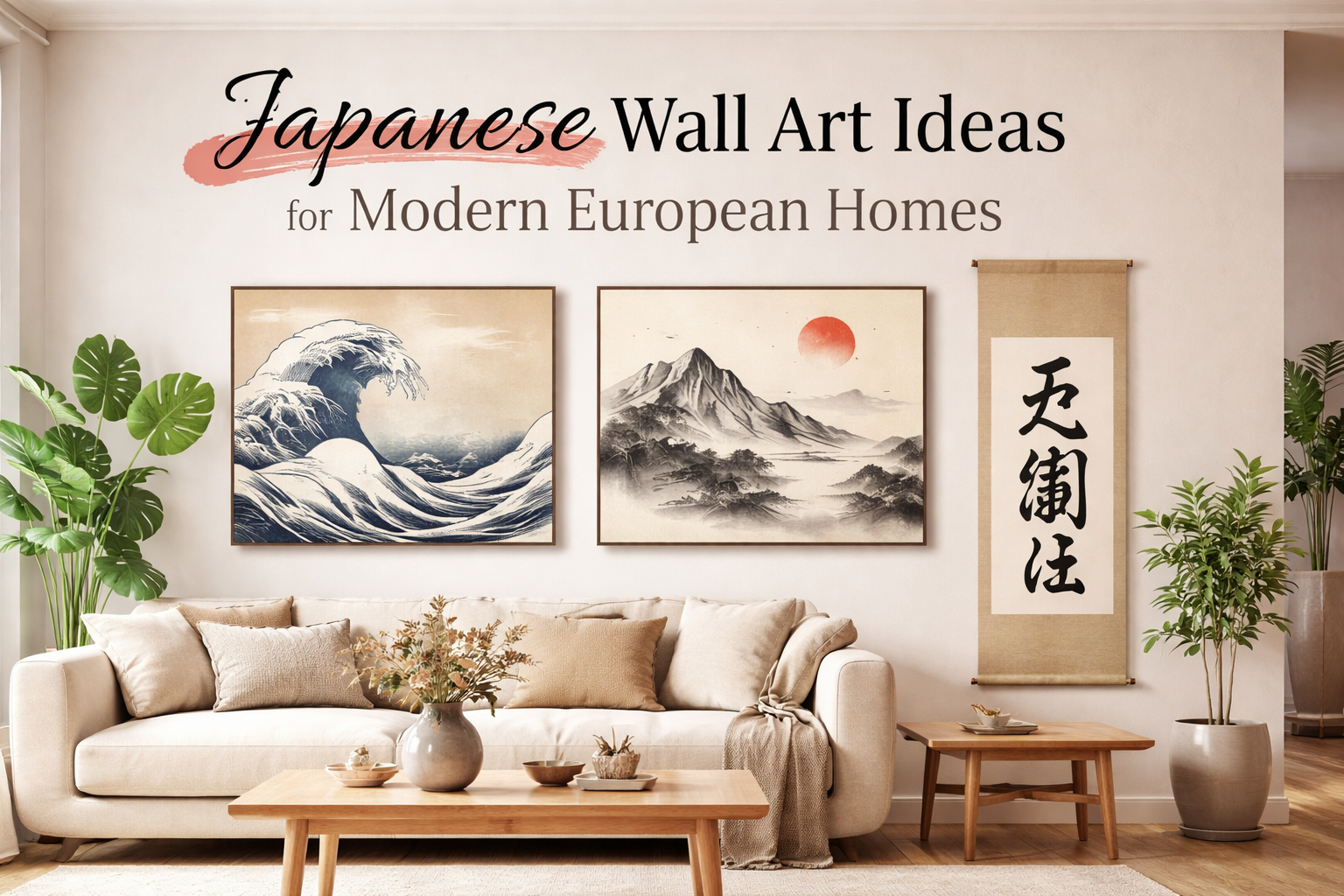
- Over sofa: one bold Ukiyo-e print
- Side wall: two or three Sumi-e pieces in light wood frames
- Entryway: one hanging scroll to create a welcoming first impression
That arrangement feels balanced and easy to live with. It does not overcomplicate the room, but it still gives it personality.
Styling Tips: Japanese Wall Art Ideas
A lot of people admire Japanese wall art but are not sure how to make it work in an actual home. The good news is that it usually becomes easier once you stop treating it like “theme decor” and start treating it like part of the room’s optical rhythm.
Minimalist gallery wall
A gallery wall can work beautifully if you keep it restrained. Use a small number of related Sumi-e prints, and keep the frames simple. Light wood usually works very well.
Add one or two natural elements, such as a plant or a woven accessory, and the composition starts to feel organic rather than forced.
Statement piece over the sofa
This is one of the easiest and most effective ways to use Japanese wall art. A single strong print can become the room’s focal point without needing additional decoration around it.
The key is not to crowd it. Give the artwork room to breathe. Let the sofa and surrounding furniture stay optically calm.
Natural materials + art
Japanese aesthetics often feel strongest when paired with natural materials. Bamboo, linen, wood, rice paper, and stone all help support the mood.
That does not mean you need to recreate a traditional Japanese room. It simply means you should choose info that reinforce the artwork rather than compete with it.
Color strategy
Neutral walls are usually the easiest background for Japanese art. Warm white, soft beige, pale gray, and muted wood jewels all work well. If the room already has stronger color, choose art that either softens it or provides a deliberate contrast.
A practical design rule
If the artwork is expressive, keep the rest of the room quiet. If the room is already optically busy, choose quieter art. This keeps the zone balanced.
Common Mistakes When Choosing Japanese Wall Art
There are a few mistakes people make repeatedly when buying Japanese wall art. The good news is that all of them are avoidable.
Overcrowding the wall
Too many pieces create noise. Japanese aesthetics usually depend on openness, not density.
Ignoring scale
A print that is too small gets lost. A print that is too large for the room can dominate in an uncomfortable way.
Forgetting the meaning
Japanese motifs often carry symbolic value. Choosing a piece only because it looks nice is not necessarily wrong, but understanding the subject gives the artwork more bottom.
Mixing too many visual styles
If the room already has ornate furniture, heavy patterns, and several competing feelings, Japanese wall art may lose its effect. It works best when the rest of the room supports it.
Better approach
Choose one to three main pieces per room. Keep the story coherent. Let the space around the art matter just as much as the art itself.
One limitation worth mentioning honestly is that delicate paper works and scrolls need more care than many other wall decor options. Sunlight, humidity, and mounting methods all matter.
Pros & Cons of Japanese Wall Art
It is worth being straightforward here. Japanese wall art has many advantages, but it is not ideal in every setting.
| Pros | Cons |
| Adds cultural bottom and storytelling | May feel out of place in ornate interiors |
| Supports minimalist and modern design | Some pieces need careful handling |
| Feels timeless and elegant | Traditional scrolls may need special hanging hardware |
| Works well in many room styles | Prints can fade in direct sunlight |
For many owners, the biggest benefit is longevity. Good Japanese wall art does not feel tied to a passing trend. It keeps its presence over time because it is grounded in strong design principles.
Who This Style Is Best For, and Who Should Avoid It
Best for:
Starting fresh, this look suits those just beginning yet seeking beauty without fuss. A quiet space appeals strongly to creators and planners focused on clarity, not clutter. Often, folks drawn to light rooms or earthy feelings feel right at home straight away. Smooth surfaces paired with soft jewels make the setting inviting, never overwhelming. Choice matters less here than comfort found in simplicity done well.
Should avoid it if:
Should your taste run toward busy patterns and crowded walls, Japanese artwork might seem too bare. This kind of design leans on open zones instead of clutter, so it could disappoint anyone craving constant optical activity. Empty areas aren’t flaws here – they’re part of the point.
Real Experience / Takeaway
Most times, picking Japanese wall art works because of just one clear reason:
Apart from size, the breathing zone changes how we see things. It struck me that when an item has an open area around it, the whole look shifts – suddenly deliberate, almost luxurious, regardless of actual value.
What caught me off guard was the way a frame shifts everything. Instead of just showing art, light wood brings out a gentle warmth. In contrast, black turns the very same image into something bold, almost cutting. So the outcome depends less on the picture alone, more on what surrounds it.
One thing I’ve seen: folks pick artwork just because it looks busy, even if their space isn’t ready for it. For Japanese-style pieces, quiet wins every time. They don’t shout – they settle. Their strength shows only where peace already lives.
FAQ
A: The most traditional forms are Ukiyo-e (woodblock prints) and Sumi-e (monochrome ink wash paintings).
A: Blend minimalist motifs with neutral European palettes and natural textures such as wood, bamboo, or linen.
A: Minimalist Sumi-e, Ukiyo-e prints as statement pieces, and Kakejiku scrolls for subtle seasonal accents.
A: Shun direct sunlight, control indoor humidity, and frame delicate works under UV-protective glass.
A: Absolutely. Use small prints, vertical scrolls, or minimalist Sumi-e to enhance elegance without clutter.
Conclusion
The story lives inside Japanese wall pieces. Rooms gain stillness when these hang on bare surfaces. Because of peace, they fit easily within zones shaped by soft sunlight and minimal clutter. Balance arrives quietly – no noise, just presence. Calm spreads where eyes linger longer. Even quiet corners begin to speak.
Stillness lives in the best Japanese wall pieces. Not shouting for attention, they slip softly into corners. A glance lands there, finds peace. The zone gains shape without effort. Homes grow calm through subtle grace. Pick bold Ukiyo-e scenes, quiet Sumi-e strokes, or scrolls passed down old ways – each fills emptiness like breath settling.
Start simple if you are new – pick one bold artwork with a zone nearby. Marketers, developers might find it quietly shifts the energy of a room. A single calm choice on the wall changes how a house feels. Elegance shows up when sound fades.