Introduction
Big abstract paintings started shaping rooms across Europe in 2026. Whether inside sharp-edged zones in London or fresh creative spots in Berlin, these pieces took charge optically. Fancy living areas in Paris leaned into them just as much as bare Nordic apartments did. Instead of fading into the background, they pulled attention through bold forms and deep feelings. Size mattered less than presence – each piece turned walls into moments you could feel.
Forms dance across the canvas instead of clear shapes. Hues speak louder than details ever could. Feeling slips in quietly, unannounced. Motion hums beneath still surfaces. One person sees a storm, another sees calm. Minds lean in, wondering. Emotions shift without warning. Meaning never settles in one place. Each look brings a new reaction.
Picking a large abstract artwork isn’t just about grabbing what looks nice. Style matters – so does size, color mix, where it lives on your wall, even how quiet the space feels afterward. Step by step, this rundown covers it: decoding abstraction types, placing pieces with purpose, peeking at 2026’s shift in visuals, upkeep basics, plus savvy buying notes with Europe in mind.
By the end of this guide, you’ll have the knowledge and confidence to choose and display large abstract wall art that transforms your living zones with style, sophistication, and a personal touch.
What Is Large Abstract Wall Art?
Definition & Meaning
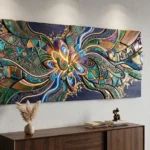
Big non-figurative murals skip lifelike images, instead spotlighting hue, geometry, structure, along with raw visual force. These pieces stir feeling, thought, individual insight – never aiming to mirror visible things.
From the start of the 1900s, non-representational painting began to matter more. Artists like Wassily Kandinsky and Piet Mondrian pushed it forward. Instead of copying what eyes see, they look inward. Their work cared less about shapes of things, more about feelings inside. Because of them, art changed direction. Now, people see paintings through mood, not meaning. What you feel becomes part of seeing.
Why Abstract Art Is Different
| Feature | Traditional Art | Abstract Art |
| Subject | Recognizable objects | Shapes, forms, colors |
| Meaning | Clear narrative or scene | Emotional resonance, personal interpretation |
| Style | Realistic, detailed | Expressive, conceptual |
| Purpose | Representation of reality | Evocation of feeling |
Abstract wall décor is dynamic and immersive, allowing owners to imbue their zones with energy, mood, and individuality. It transforms rooms by creating emotional connections, stimulating creativity, and fostering reflection.
The Emotional & Psychological Impact of Abstract Art
Art extends beyond mere decoration — it influences the ambiance of a room and can subtly affect human behavior and mood.
Emotional Power of Color
Colors have a profound impact on emotion and perception:
- Warm hues (reds, oranges, yellows) → Vitality, enthusiasm, passion
- Cool tones (blues, greens, teals) → Tranquility, relief, serenity
- Neutral shades (white, grey, black, beige) → Sophistication, calm, timelessness
Example: A large cerulean abstract canvas in a bedroom can cultivate serenity and relaxation, whereas a bold crimson piece above a living room sofa can energize and animate the climate.
Shapes & Forms
The forms and lines used in abstract art also influence perception:
- Organic curves → Induce fluidity, calmness, and natural movement
- Sharp geometric patterns → Convey order, precision, and boldness
- Textured, free-flowing brushstrokes → Suggest dynamism and spontaneity
Scale & Perception
Oversize artworks modify spatial perception:
- Large canvases make compact zones appear more expansive
- Statement pieces turn walls into focal points
- Balanced dimensions prevent optical chaos and maintain proportion
Why Large Abstract Wall Art Works in Modern Interiors
Works With Many Design Styles
No matter your interior aesthetic, abstract art blends seamlessly:
- Minimalist & Scandinavian: Introduces interest without clutter
- Industrial & Loft Spaces: Softens the harshness of raw info like concrete and steel
- Mid-Century Modern: Complements linear designs and wooden accents
- Bohemian: Enhances covered feelings and eclectic arrangements
Enhances Space & Mood
Oversize abstract pieces:
- Expand spatial perception
- Define the emotional jewel
- Harmonize with furniture and interior design
Benefits of Installing Large Abstract Art
| Benefit | Why It Matters |
| Creates a Focal Point | Captures attention and defines the zone |
| Enhances Spatial Perception | Makes rooms feel expansive or intimate |
| Supports Color Schemes | Bridges furniture, décor, and wall color |
| Encourages Emotional Engagement | Stimulates reflection, conversation, and personal connection |
Strategically positioning your artwork amplifies these benefits, transforming ordinary walls into engaging optical words.
Abstract Wall Art Styles & Types
Europe in 2026 embraces a variety of abstract styles, suited to diverse interiors:
Bold & Colorful Expression
Rich, vibrant jewels and balanced layers energize living rooms, offices, and creative zones.
Ideal for: London flats, Milan flats, modern studios.
Monochrome & Minimalist
Black, white, or muted palettes offer serene sophistication.
Best for: Scandinavian, minimalist, or Japanese-inspired interiors.
Textured & Mixed Media
Incorporates layers such as fabric, metal, or plaster for bottom and tactility.
Perfect for: Luxury flats and new homes.
Geometrical Abstraction
Clean lines and sharp symmetry pair well with industrial, mid-century modern, and loft interiors.
Organic & Flowing Forms
Inspired by nature, these pieces introduce calm, fluid lines ideal for bedrooms or meditation areas.
Multi-Panel / Triptych Pieces
Divided canvases that create movement across walls. Excellent for hallways, dining rooms, or large living zones.
Tip: Align panels for rhythm and balance.
How to Choose the Perfect Large Abstract Wall Art
Selecting artwork is an exciting process. Consider these aspects:
Size & Scale
- Measure walls and furniture accurately
- Rules of thumb:
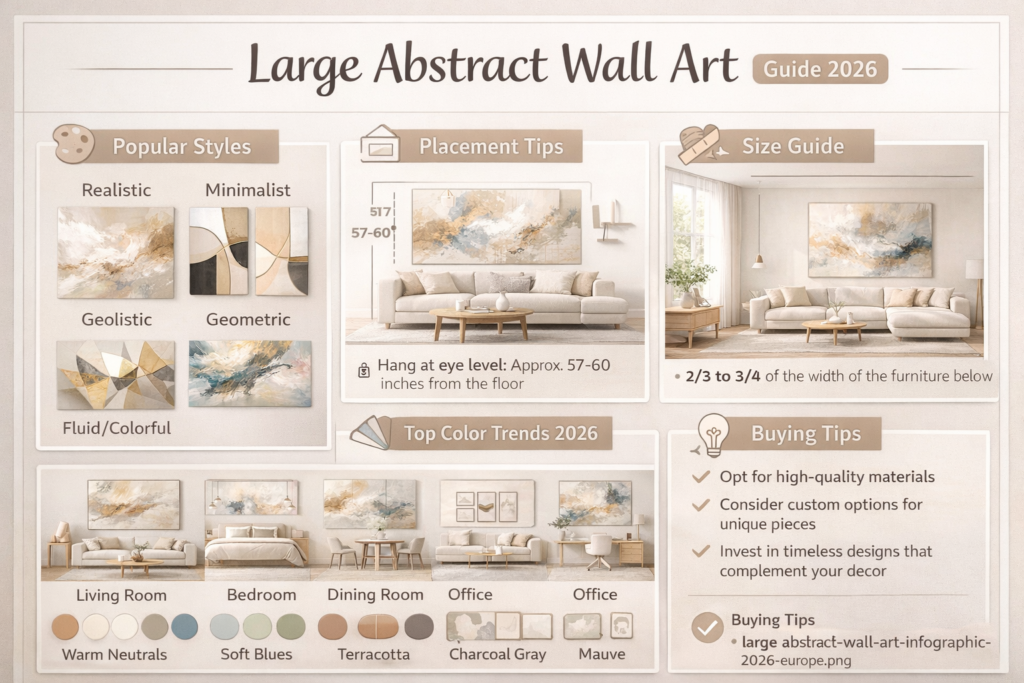
- Width: Artwork ≈ 2/3 width of furniture
- Space: Leave 40–60 cm around large pieces
- Ceiling: For high ceilings, opt for taller pieces
Color Harmony & Contrast
Apply the 60‑30‑10 rule:
- 60% dominant (walls)
- 30% secondary (furniture, rugs)
- 10% accent (artwork)
This ensures color balance and cohesion.
Texture & Medium
Choose according to style:
- Canvas: Soft, new feel
- Metal: Bold, reflective modern look
- Glass: Elegant, sleek
- Mixed media: Adds bottom and dimension
Style Compatibility
| Décor Style | Best Art Match |
| Scandinavian | Minimalist, monochrome |
| Industrial | Geometric, textured |
| Boho | Organic, expressive |
| Modern | Bold, colorful |
Emotional Resonance
Select pieces that evoke calm, joy, energy, or inspiration — the emotional connection is vital.
6.6 Budget Guide
| Type | Price Range | Pros | Cons | Best For |
| Prints | €50–€500 | Affordable, versatile | Less unique | Budget-conscious spaces |
| Originals | €500–€5,000+ | Authentic, one-of-a-kind | Higher cost | Living & feature walls |
| Commissions | €1,000–€10,000+ | Personalized, bespoke | Longer lead time | Luxury interiors |
Where to Hang Large Abstract Wall Art
Proper placement maximizes impact:
Living Room
- Above sofa or mantel
- Centered on main wall
- Complement with lighting
Bedroom
- Above headboard
- Use soothing colors
- Hang lower for intimacy
Dining Room
- Over buffet or table
- Conversation-friendly pieces
Office / Studio
- Behind desk
- Energetic or motivational designs
Hallways & Entryways
- Vertical or multi-panel arrangements
- Creates rhythm and continuity
| Room | Suggested Height | Focal Point | Lighting Tips |
| Living Room | Eye level | Center | Accent lighting |
| Bedroom | 15–25 cm above headboard | Symmetry | Warm ambient light |
| Dining Room | Centered over table | Main wall | Adjustable spotlights |
| Office | Eye level | Desk alignment | Avoid glare |
| Hallway | Center panels | Flow continuity | Directional lighting |
Installation & Hanging Tips
- Hang at eye level (~150–160 cm from floor)
- Locate wall studs for heavy artworks
- Use French cleats for secure hanging
- Leave breathing space around artwork
- Consider gallery rails for flexible displays
- Utilize levels, anchors, and pads to prevent damage
Caring for Your Abstract Wall Art
Proper maintenance ensures longevity:
Canvas & Paintings
- Dust gently with soft cloth
- Shun direct sunlight
Metal & Glass
- Microfiber cloths
- No harsh chemicals
Textured & Mixed Media
- Light dusting
- Rotate to prevent fading
Climate Control
- European homes benefit from humidity-controlled rooms for wood and mixed materials
Trends in Large Abstract Wall Art (2026)
Eco & Sustainable Materials
- Recycled canvases and natural pigments
Textured & 3D Elements
- Bottom and tactile features
Interactive / AR-Enhanced Art
- Smart apps, digital overlays, and home tech integration
Modern Color Psychology Trends
- Earth tones, muted neutrals, and bold accent contrasts
European Minimalist Statements
- Large monochrome canvases in open, airy zones
Where to Buy — Guides & Best Picks
Online Art Platforms
- European-friendly art marketplaces with prints and originals
Local European Galleries
- Visit galleries for curated, local collections
Commissioning Artists
- Custom pieces tailored to your zone and vision
Pros & Cons of Large Abstract Wall Art
Pros:
- Bold optical word
- Enhances mood and zone
- Investment value
Cons:
- Higher costs
- Requires strategic placement
- Maintenance required
FAQ
A: Approximately 2/3 the width of furniture or wall zone.
A: Yes — opt for lighter colors or multi-panel pieces.
A: Canvas feels modern; framed pieces are more formal.
A: Use the 60‑30‑10 rule for balance.
A: Yes — minimalist abstracts, monochrome geometric works, and muted-tone pieces are timeless.
Conclusion
Something big on the wall does more than just fill an empty zone. It shifts how a room feels, almost like light changing at different times of day. Style matters, yes – but so does size, where you hang it, even how it makes someone pause when they walk in. A choice made quietly today might echo every time eyes land there tomorrow.
Starting strong with a splash of color or keeping it calm with clean lines – either way, this guide helps you pick, place, and maintain abstract art without second-guessing. Big-scale abstracts still shape Europe’s interior look in 2026, turning spaces into personal expressions full of feeling, hue, and zone.