Introduction
Art Wall Text is no longer a quiet paragraph tucked into the corner of a museum gallery. In today’s optical and creative culture, it has become Art Wall Text a powerful artistic medium, shaping how people understand art,zone, identity, and ideas.
Across modern museums, contemporary galleries, European homes, cafés, creative studios, universities, and public spaces, wall text now performs a role far beyond explanation. It communicates concepts, provokes thought, and defines the atmosphere. In many cases, the words on the wall are the artwork.
Historically, walls were reserved for optical objects—paintings, framed photographs, sculptural reliefs, frescoes, and decorative planning . Language stayed in books, captions, or catalogs. Today, that separation has disappeared. Words themselves have moved onto walls, claiming space, authority, and aesthetic presence.
A single phrase can shift mood.
One sentence can challenge beliefs.
One word can transform an entire room.
In contemporary European culture especially, art wall text sits at the intersection of art, language, philosophy, education, and interior design. From minimalist Scandinavian flat to experimental galleries in Berlin, Paris, and Amsterdam, textual wall art is used to express rage, memory, ideology, politics, identity, and view.
Emerging 2026 Trends in Art Wall Text
As we move through 2026, art wall text is joining collective, digital, and sustainable trends. European galleries and new interiors more use expanded reality (AR) and projection mapping to make textual art dynamic, allowing viewers to engage with covered meanings through headset or interactive installations. Eco-friendly picture, including recycled inks and plant-based paints, are gaining popularity, ensuring that wall text is both visibly compelling and environmentally responsible. This fusion of technology, allure, and sustainability is reshaping how audiences experience text-based art, bridging the physical and digital worlds while keeping the core emphasis on meaning and pact.
In This Complete A-to-Z Pillar Guide, You Will Learn:
- What art wall text really means
- The difference between museum wall text and text as art
- The full historical evolution of text in art
- How words become visual and conceptual artworks
- Major styles, movements, and landmark artists
- Best practices for writing and designing wall text
- How European interiors and cultural spaces use wall text today
- Advantages,bar, FAQs, and expert viewpoint
This guide is written for beginners, designers, art students, curators, homeowners, educators, and wall art enthusiasts. Its purpose is to position TheWallsArt.com as a trusted, authoritative resource on wall-based art, design, and cultural interpretation.
What Is Art Wall Text?
Art wall text refers to intentional text placed on walls as part of an artistic,dependent, interpretive, or experiential design.
Unlike offhand decoration, motivational quotes, signage, or random typography, true art wall text always has purpose,format, and meaning. It is planned, contextual, and concept-driven.
In professional museum and contemporary art practice, art wall text is generally divided into two primary categories.
Wall Text as Interpretation
This form of wall text exists to support, explain, or contextualize artworks.
It is commonly found in:
- Museums
- Art galleries
- Cultural institutions
- Historical exhibitions
- Educational displays
Its core objectives are to provide:
- Context and background
- Artist intention and methodology
- Cultural or historical framing
- Visionary clarification
Informative wall text helps visitors understand what they are seeing, why it matters, and how to way it intellectually and lovingly. Without it, many artworks—notably visionary or abstract works—can feel remote.
Wall Text as Art
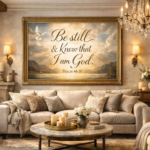
In this category, the text itself becomes the artwork.
There is:
- No painting to explain
- No sculpture to label
- No object beyond the words
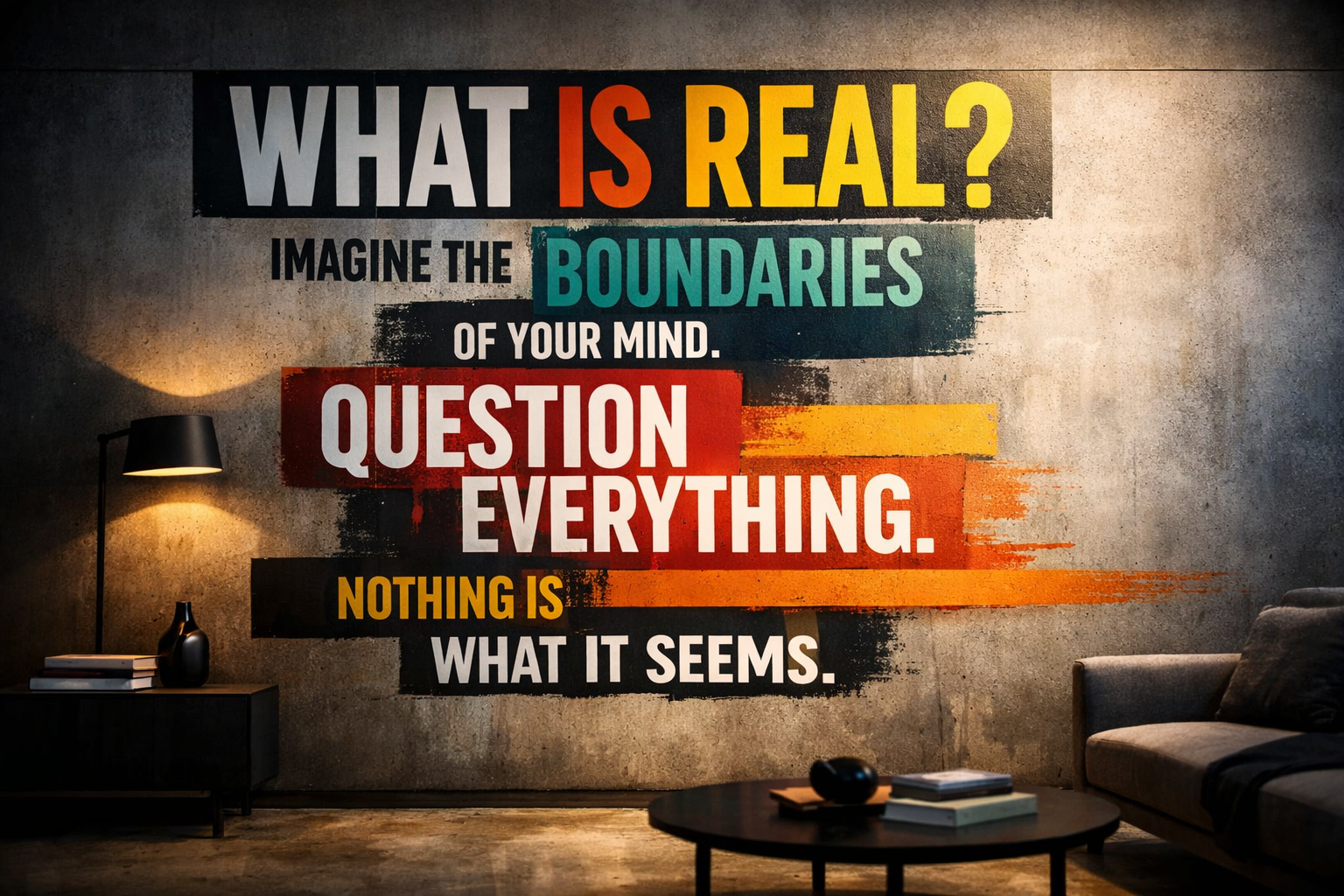
The language, typography, spacing, scale, placement, and visual rhythm are the art.
Common examples include:
- Conceptual text installations
- Typography wall art
- Statement-based artworks
- Minimalist textual compositions
Here, the wall acts as a canvas, and language becomes the medium. Meaning is created through reading, interpretation, and mental engagement.
In both forms, art wall text transforms walls into active communicators, not passive surfaces.
Wall Text Art Meaning in Contemporary Culture
The deeper significance of lies in its ability to replace imagery with language.
Instead of showing something, it states something.
of decoration, it delivers ideas.
Instead of visual storytelling, it creates conceptual dialogue.
This shift mirrors major changes in how modern society defines art.
Key Conceptual Roles
Art wall text often functions to:
- Express ideas rather than objects
- Challenge traditional definitions of visual art
- Encourage thinking instead of passive viewing
- Create direct dialogue between artist and audience
- Make art more accessible through language
Words allow artists to speak directly to the viewer, eliminating ambiguity created by purely visual symbolism.
Why Europe Embraced Wall Text Art Strongly
European cultural zones have long valued intellectual clarity, historical awareness, and philosophical bottom. Art wall text aligns naturally with these values.
Across Europe, wall text helps to:
- Bridge language and art history
- Address political, social, and philosophical themes
- Support education, inclusion, and accessibility
- Complement minimalist and intentional design traditions
European museums and interiors often prioritize meaning over ornamentation, making text-based art a natural and respected choice.
History & Evolution of Text in Art
To understand art wall text today, it is essential to understand how it evolved.
Early Museum Wall Labels
The earliest form of wall text appeared as museum labels.
These were typically:
- Small in size
- Neutral in tone
- Informational in nature
- Secondary to the artwork
They usually contained:
- Artist name
- Artwork title
- Creation date
- Materials used
- Brief descriptions
At this stage, text was not art. It functioned purely as guidance.
The 20th-Century Visionary Move
During the mid-20th century, artists began asking a profound question:
Does art need images at all?
This inquiry sparked the rise of conceptual art, where ideas became more important than physical form.
Artists began using:
- Language as material
- Text as primary medium
- Walls as active artistic space
New figures such as Ed Ruscha, Lawrence Weiner, and Joseph Kosuth demonstrated that words alone could function as complete artworks.
Street Text & Public Space Influence
Urban environments also played a major role.
doodles, protest saying, political posters, and public messages demonstrated that text in public space carries power.
European cities—where architecture, history, and civic life intersect—became the ideal climate for text-based expression.
Modern Digital & Interior Design Era
Today, art wall text appears in:
- Homes
- Offices
- Cafés
- Museums
- Cultural institutions
- Digital exhibitions
Its function has expanded from explanation to identity, branding, emotion, and atmosphere.
Why Art Wall Text Matters Today
Context Shapes Interpretation
In exhibitions, wall text strongly influences how viewers interpret art.
Well-crafted wall text can:
- Clarify complex concepts
- Build emotional connection
- Improve memory retention
- Enhance learning outcomes
Poorly written wall text can:
- Confuse audiences
- Overwhelm visitors
- Disrupt emotional flow
Text as Visual Art
Typography transforms language into visual form.
Key design elements include:
- Font selection
- Letter spacing
- Line height
- Alignment
- Scale and proportion
- Color contrast
- Spatial placement
In European interiors, wall text often features:
- Clean, modern fount
- Neutral or nonstop palettes
- Minimal layouts
- Intentional negative space
Accessibility & Inclusivity
Wall text plays a vital role in making art:
- More understandable
- More inclusive
- More educational
This aligns with European museum standards focused on public engagement and cultural access.
Major Styles of Art Wall Text
Typography Wall Art
Focuses on:
- Font aesthetics
- Layout harmony
- Visual rhythm
- Balance and proportion
Common in modern European homes, studios, and creative offices.
Conceptual Text Wall Art
Idea-driven and often challenging.
Features:
- Short statements
- Philosophical view
- Political remark
Meaning outweighs decoration.
Museum & Exhibition Wall Text
Typically:
- Structured
- Neutral
- Educational
- Hierarchically organized
Designed to support—not compete with—artworks.
Decorative & Minimalist Text Art
Includes:
- Single words
- Short phrases
- Atmospheric statements
Frequently used in interior spaces rather than galleries.
Famous Examples of Text Used in Wall Art
| Artist | Style | Contribution |
| Lawrence Weiner | Conceptual | Text as sculptural presence |
| Jenny Holzer | Political / Social | LED and projected wall texts |
| Ed Ruscha | Pop / Conceptual | Word-based visual language |
These artists proved that language alone can carry artistic weight.
Museum Wall Text vs Wall Text as Art
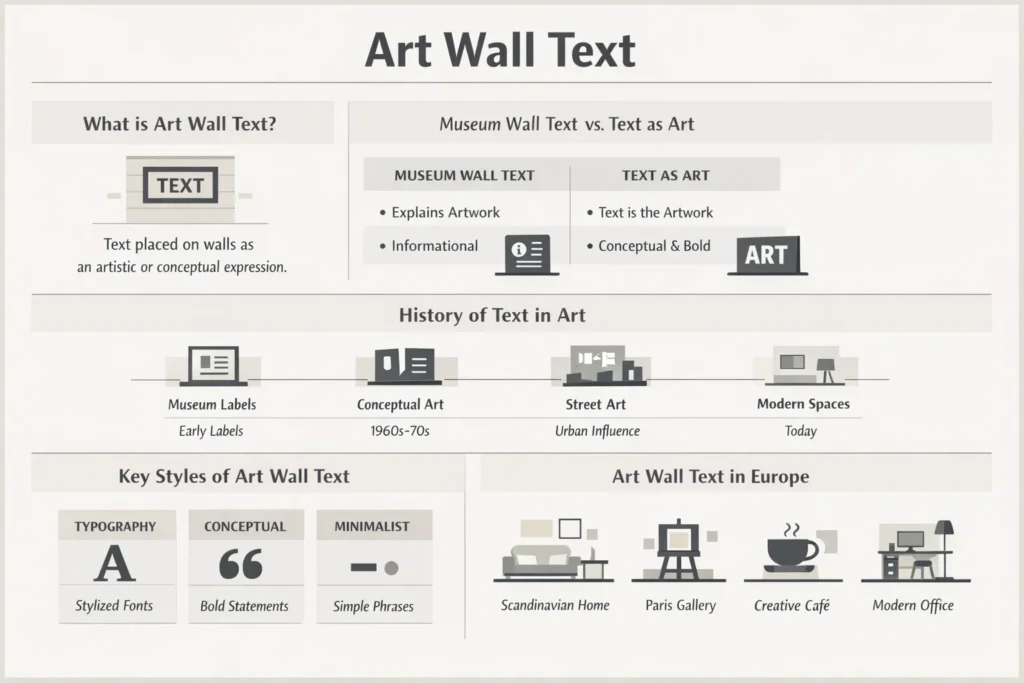
| Feature | Museum Wall Text | Wall Text as Art |
| Purpose | Explain artwork | Be the artwork |
| Role | Secondary | Primary |
| Tone | Informational | Expressive |
| Design | Subtle | Intentional |
| Function | Guide understanding | Create meaning |
How to Create Effective Art Wall Text
Best Practices
- Choose typography that matches emotional intent
- Prioritize readability
- Use contrast thoughtfully
- Respect wall scale and viewing distance
- Keep language pithy and meaningful
Common Mistakes to shun
- Overcrowding text
- Poor font choices
- Ignoring spatial context
- Treating text as decoration only
Art Wall Text in European Interiors
Popular regional approaches include:
- Scandinavian minimalist typography
- French conceptual elegance
- German functional clarity
- Italian expressive language
Common placement areas:
- Living rooms
- Home offices
- Hallways
- Cultural cafés
Pros & Cons of Art Wall Text
Pros
- Strong conceptual impact
- Modern and minimalist
- Educational and expressive
- Space-efficient
Cons
- Requires thoughtful execution
- Language barriers may exist
- Overuse can feel cold
FAQs
A1 Wall text refers to text used either to explain artworks or function as the artwork itself.
A2 Wall text art is intentional, curated, and conceptual, while doodles are often informal and wrongful.
A3 Yes. In contemporary and conceptual art, language and ideas are legitimate artistic materials.
Conclusion:
Art wall text is something that will be around for a time. It is a way that artists can express themselves that’s here to stay. Art wall text is a form of art that people will keep looking at and thinking about. This is not something that is popular, for a little while it is a lasting way that artists can communicate with people through art.
When you put words and letters with zone and what they mean it changes walls into surfaces that talk to people. These surfaces teach people things they make people think and they inspire people. The walls become surfaces that educate people that provoke people and that inspire people like the words and the space and the meaning all work together to make this happen to the walls.
Across Europe, where art, design, and history coincide daily, wall text continues to shape how people Experience zones. Whether in a museum, a modern flat, or a public gallery, words on walls prove that language can be just as powerful as images.