Introduction
In 2026, the concept of Decoration Wall Flowers has evolved far beyond simple interior embellishment. It is now recognized as a high-impact design language, blending aesthetics, psychology, architecture, and emotional well-being into one unified interior strategy.
Across Europe—especially in design-forward nations such as Germany, France, Sweden, Denmark, and Italy—floral wall installations are no longer treated as optional décor elements. Instead, they are considered core spatial design features that define air, mood, and brand identity.
Modern individuals no longer seek only visually pleasing interiors. Instead, they demand environments that deliver:
- Emotional calmness and mental balance
- Natural organic ambiance within indoor environments
- Stress reduction through optical peace
- Premium and luxury spatial aesthetics
- Human-centered design inspired by nature
This shift is strongly influenced by biophilic design principles, which emphasize the human need to connect with natural elements even within artificial environments.
Unlike traditional wall paint, wallpapers, or printed artwork, floral wall decoration systems introduce feeling, bottom, sensory richness, and emotional resonance into a zone.
In simple semantic terms:
Flower wall installations transform static surfaces into dynamic, emotionally responsive optical ecosystems.
What is the decoration of a wall with flowers?
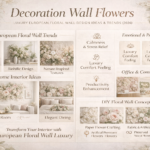
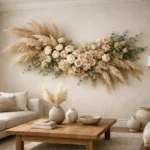
The term Decoration of Wall with Flowers refers to the intentional arrangement of floral elements—natural, artificial, preserved, or hybrid—to construct optically structured wall compositions that enhance spatial aesthetics.
These floral arrangements function as decorative architectural overlays, transforming empty vertical surfaces into artistic focal points.
Common Application Environments:
- Residential interiors (homes, apartments, villas)
- Corporate environments (offices, boardrooms, receptions)
- Hospitality sectors (hotels, resorts, lounges)
- Cafés, restaurants, and boutique retail stores
- Event staging and exhibition design
Primary Categories of Decoration Wall Flowers
Artificial Floral Wall Systems
Artificial flower walls are constructed using synthetic materials such as silk, polyester, or molded plastics.
Key characteristics:
- Long-lasting durability
- Minimal maintenance requirements
- Highly customizable color palettes
- Cost-efficient installation
Ideal for: Commercial interiors, office environments, retail branding zones
Preserved Floral Wall Installations
Preserved flowers are real botanical elements treated with eco-stabilization techniques to maintain their natural appearance.
Key characteristics:
- Authentic organic feeling
- Luxury aesthetic appeal
- Extended lifespan compared to fresh flowers
- Soft, elegant visual impression
Ideal for: Luxury hotels, premium residences, designer interiors
Living Green Floral Walls
These installations consist of living plants integrated into vertical garden systems.
Key characteristics:
- Requires irrigation systems
- Continuous biological growth
- High oxygen contribution
- Natural air purification benefits
Ideal for: Sustainable architecture, eco-buildings, wellness zones
DIY Floral Wall Systems
DIY floral walls are handcrafted installations using paper, fabric, or mixed craft materials.
Key characteristics:
- Highly customizable
- Budget-friendly
- Creative expression focused
- Easy to assemble and modify
Ideal for: Home décor enthusiasts, events, personal projects
Psychology Behind Decoration Wall Flowers
The increasing popularity of floral wall design is strongly linked to environmental psychology and biophilic cognitive response systems.
Human beings are neurologically programmed to respond positively to natural patterns, organic shapes, and botanical feelings.
Cognitive & Emotional Impacts:
Stress Reduction Mechanism
Exposure to floral visuals reduces cortisol levels, supporting emotional relaxation and psychological stability.
Attention Restoration Effect
Natural imagery improves cognitive recovery, enhancing focus and mental clarity.
Creative Activation Response
Color diversity and organic structures stimulate neural creativity pathways.
Emotional Elevation
Floral aesthetics increase dopamine response, improving mood and emotional well-being.
This explains why modern corporations across Europe integrate floral walls into workspace psychology frameworks.
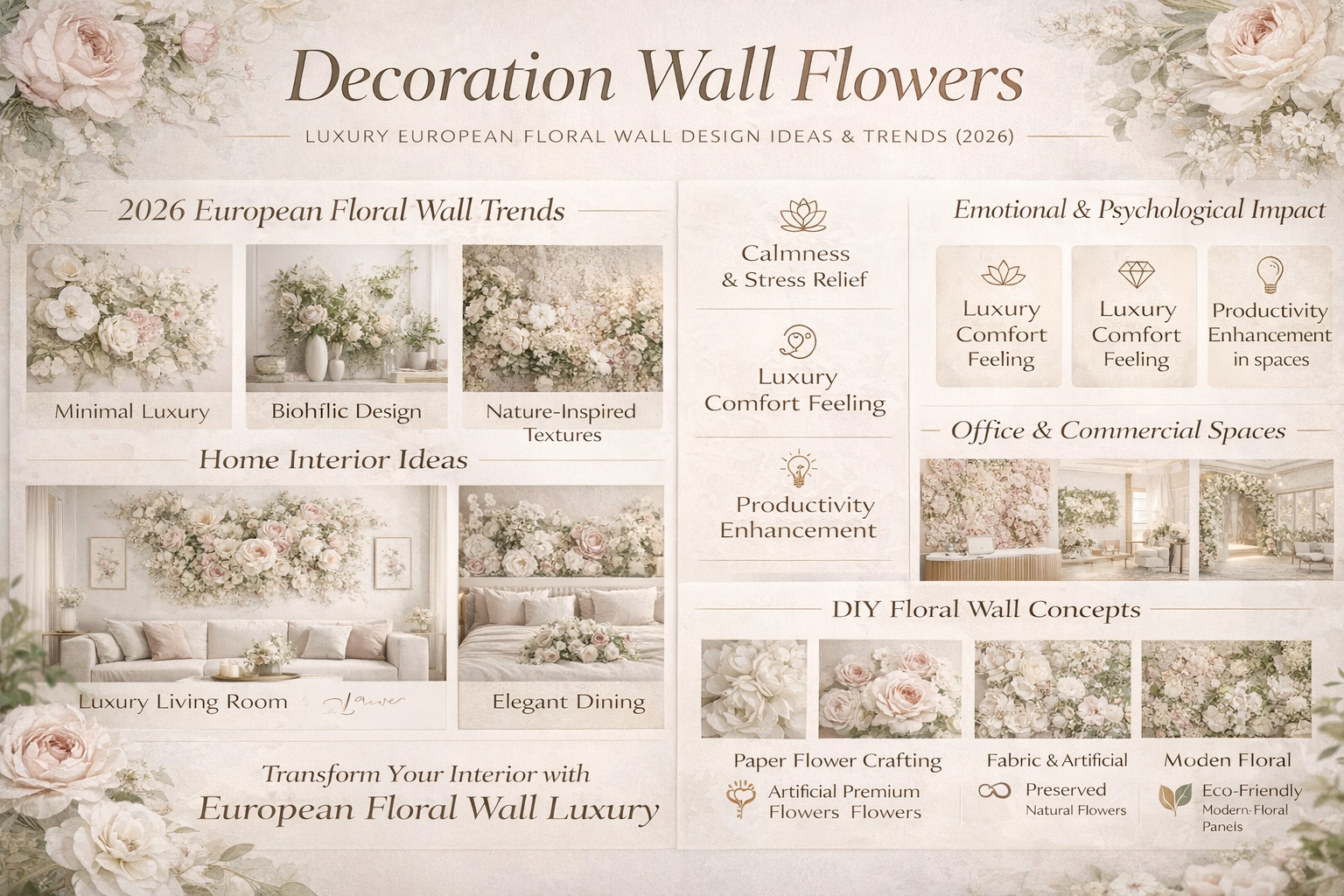
European Trends in Decoration Wall Flowers 2026
Europe is currently the global leader in advanced interior floral design innovation.
Germany – Structured Minimal Floral Systems
- Geometric floral alignment
- Neutral tonal palettes (beige, grey, white)
- Precision-based arrangement techniques
Emphasis: Efficiency, clarity, professionalism
France – Romantic Luxury Floral Design
- Soft pastel floral gradients
- Artistic asymmetrical composition
- Boutique hotel-inspired aesthetics
Emphasis: Elegance, romance, optical storytelling
Scandinavia – Natural Minimalist Floral Style
- Green-white organic blends
- Bright natural lighting integration
- Clean spatial composition
Emphasis: Simplicity, wellness, natural peace
Italy – Expressive Artistic Floral Design
- Bold chromatic floral combinations
- Classical art-inspired layouts
- Decorative richness and optical drama
Emphasis: Luxury, emotion, artistic bottom
Decoration Wall Flowers for Office Spaces
In modern European workplaces, floral wall installations are now a strategic interior design element, not just decoration.
Corporate Benefits of Floral Walls:
- Enhances employee emotional stability
- Reduces workplace stress levels
- Improves cognitive productivity
- Strengthens brand identity perception
- Creates welcoming client environments
Office Floral Wall Categories:
Minimal White Floral Systems
- Clean aesthetic design
- Suitable for meeting rooms
Biophilic Green Floral Walls
- Combination of plants and flowers
- Enhances creative environments
Reception Floral Statement Walls
- First-impression branding focus
- High optical impact installations
Corporate Identity Floral Walls
- Integrated logo + floral design
- Branding-driven architecture
Office Impact Analysis Table
| Feature | Psychological Effect | Workplace Outcome |
| Color Harmony | Reduces stress | Better concentration |
| Organic Feeling | Enhances mood | Higher satisfaction |
| Floral Branding | Identity reinforcement | Strong corporate image |
| Acoustic Softening | Noise reduction | Calm environment |
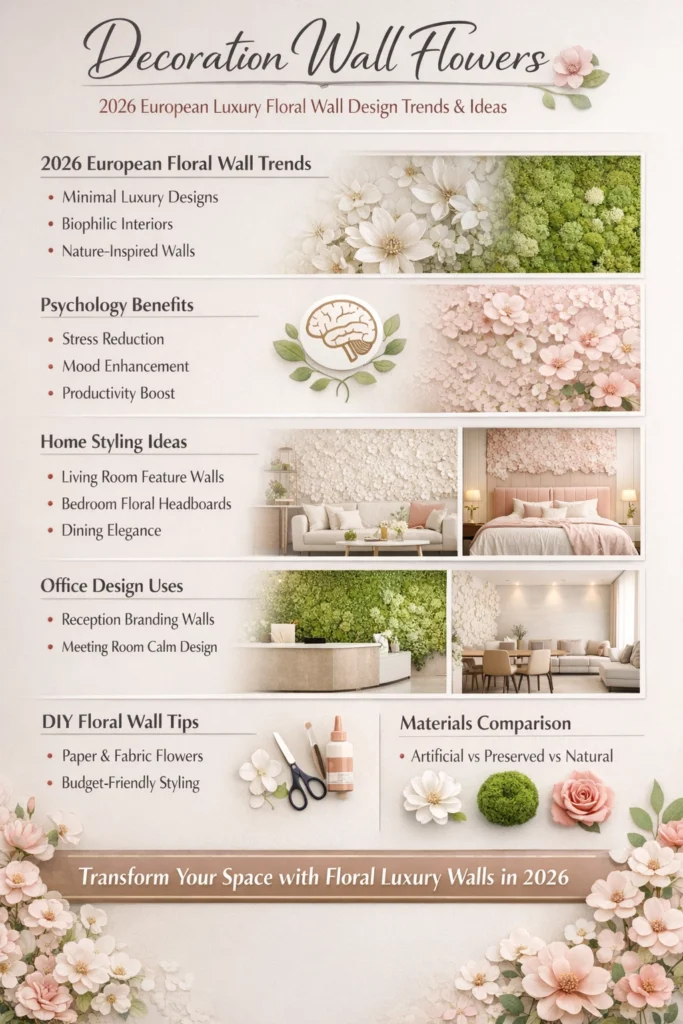
Decoration Wall Flowers for Home Interiors
Floral wall systems are increasingly integrated into modern European home design.
Living Room Applications
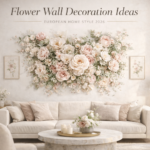
- Feature wall behind sofas or media units
- Neutral floral palettes for luxury aesthetics
- Large-scale botanical compositions
Result: Elegant hospitality-like ambiance
Bedroom Floral Design
- Headboard floral structures
- Soft calming jewels (white, blush, beige)
- Relaxation-oriented maps
Result: Improved sleep quality and emotional calm
Dining Area Floral Styling
- Warm floral compositions
- Artistic decorative accents
- Restaurant-inspired ambiance
Result: Enhanced dining experience perception
Modern Materials Used in Floral Walls 2026
Advanced Material Categories:
- Silk-based synthetic florals
- Fabric-engineered floral systems
- Preserved botanical info
- 3D foam architectural panels
- Moss + floral hybrid ecosystems
Material Performance Comparison
| Material | Durability | Cost | Maintenance |
| Silk Flowers | High | Medium | Low |
| Preserved Flowers | Medium | High | Very Low |
| Natural Flowers | Low | High | Very High |
| Fabric Flowers | High | Low | Low |
DIY Decoration Wall Flowers Ideas
DIY floral walls are widely popular due to affordability and creative freedom.
Methods:
Paper Floral Wall Design
- Craft paper flower shapes
- Wall grid installation
- Color pattern customization
Fabric Floral Panels
- Soft textile-based flowers
- Mounted on wooden panels
Hanging Floral Structures
- Suspended floral strings
- Minimal artistic installation
Optimization Tips:
- Use limited color palettes (2–3 tones)
- Maintain optical spacing balance
- Integrate soft LED lighting layers
- Shun optical overcrowding
Step-by-Step Installation Guide
- Select appropriate wall surface
- Define floral design type
- Prepare structural base (mesh or foam board)
- Attach floral components securely
- Integrate lighting elements
- Perform final spatial balancing
Common Mistakes to Avoid
- Overuse of contrasting colors
- Excessive floral layering
- Poor lighting integration
- Ignoring wall proportion balance
- Lack of design focal point0
Pros and Cons
Advantages:
- Strong optical impact
- Emotional enhancement
- Versatile design adaptability
- Works across multiple environments
- Aligns with modern European design trends
Disadvantages:
- Natural flower maintenance requirement
- High-end installation cost
- Dust accumulation in artificial systems
- Risk of optical overload if poorly designed
Expert Design Tips
- Match floral tone with interior palette
- Use lighting for bottom enhancement
- Maintain negative zone for balance
- Focus on single focal wall strategy
- Apply minimalist composition principles
Future of Decoration Wall Flowers
The evolution of floral wall systems is moving toward intelligent, adaptive, and hybridized design structures.
Future Innovations:
- AI-generated floral compositions
- Smart LED-responsive flower walls
- Eco-preserved regenerative systems
- Modular plug-and-play floral panels
- Digital + natural hybrid installations
Future architecture will integrate floral systems as permanent structural components, not temporary décor.
FAQs
It is used to improve interior beauty, mood, and create natural feeling zones.
Yes, they improve productivity, reduce stress, and support branding.
Minimal artificial and preserved flower walls are most popular.
Yes, paper and fabric flower walls are easy DIY options.
Artificial walls need low care, natural walls need high maintenance.
Final Conclusion
The rise of Decoration Wall Flowers represents a major transformation in global interior design philosophy.
They are no longer considered decorative accessories but rather:
- Emotional wellness tools
- Luxury architectural elements
- Psychological environment enhancers
- Modern lifestyle design systems
From minimalist Scandinavian homes to luxury French hospitality interiors, floral wall design is shaping the future of European interior aesthetics in 2026 and beyond.