Introduction
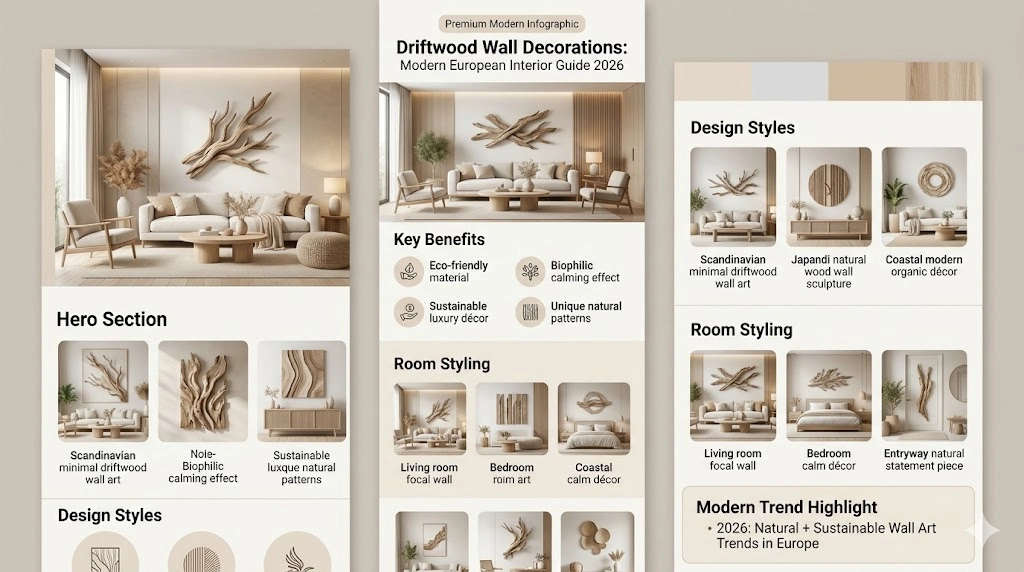
In modern interior design, people are no longer decorating homes just for beauty—they are designing for emotion, balance, and well-being. Among all natural décor elements rising in popularity, Driftwood Wall Decorations have emerged as one of the most powerful expressions of organic luxury.
Unlike mass-produced wall art, driftwood carries history. It is shaped by water, wind, and time, creating unique textures that cannot be replicated in factories. This authenticity is exactly why designers across Europe—from Scandinavian minimalists to Mediterranean coastal architects—are embracing driftwood as a key material in modern interiors.
In 2026, homes are becoming calmer, more natural, and emotionally grounded. Driftwood wall décor fits perfectly into this shift. It blends sustainability with artistic expression while adding warmth to minimalist spaces.
This guide explores everything you need to know—from design psychology and European styling trends to practical room-by-room applications—so you can understand why driftwood wall decorations are more than just décor; they are a design philosophy.
What Are Driftwood Wall Decorations?
Driftwood wall decorations are artistic interior pieces created from naturally weathered wood found along beaches, rivers, or lakes. Over time, natural forces smooth, shape, and bleach the wood, resulting in organic textures and tones.
These pieces are transformed into:
- Wall sculptures
- Framed natural compositions
- Hanging installations
- Abstract wooden arrangements
- Mixed-material art pieces
What makes driftwood unique is its non-replicable character. Every piece has its own shape, grain, and texture, meaning no two designs are ever identical.
In European interiors, driftwood is often used as a bridge between nature and architecture—bringing softness into structured, modern spaces.
The Psychology of Driftwood Wall Decorations
One of the strongest reasons behind the popularity of driftwood wall décor is not visual—it is psychological.
Driftwood aligns with biophilic design, a principle that explains how humans naturally respond positively to organic elements.
Emotional & Mental Benefits
- Reduces visual stress in modern interiors
- Creates a grounding, calming atmosphere
- Enhances focus and mental clarity
- Softens minimal or industrial spaces
- Encourages emotional relaxation
In fast-paced urban environments like Berlin, Paris, or Amsterdam, homeowners increasingly seek interiors that restore balance. Driftwood naturally achieves this by introducing imperfect, organic forms into structured environments.
Unlike synthetic décor, driftwood does not demand attention—it gently influences mood.
Why Driftwood Wall Decorations Are Trending in Europe 2026
Across Europe, interior design is shifting toward sustainable luxury and emotional minimalism. Driftwood fits directly into this transformation.
Biophilic Living Movement
Homes are becoming extensions of nature. Natural materials like wood, stone, and linen dominate modern interiors.
Sustainability First Design
Eco-conscious design is no longer optional. Driftwood is naturally recycled by the ocean, making it a zero-waste material.
Japandi Influence
Japandi (Japanese + Scandinavian design) emphasizes:
- Simplicity
- Natural materials
- Functional beauty
- Emotional calmness
Driftwood is a perfect visual expression of this philosophy.
Coastal Modern Luxury
Modern coastal interiors have evolved beyond seashell décor. Today, they focus on:
- Abstract natural forms
- Soft neutral palettes
- Textured wood compositions
Types of Driftwood Wall Decorations
Driftwood décor is not one-style-fits-all. It exists in multiple artistic interpretations.
Minimal Driftwood Panels
Simple geometric arrangements using evenly spaced driftwood pieces.
Best for:
- Scandinavian homes
- Modern apartments
- Clean minimalist interiors
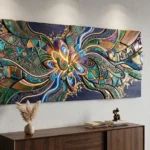
Abstract Driftwood Sculptures
Free-flowing, artistic forms resembling movement or nature.
Best for:
- Luxury interiors
- Gallery-style walls
- Statement spaces
Coastal Driftwood Art
Includes rope, shells, or sand-inspired textures (modern version is subtle).
Best for:
- Beach houses
- Mediterranean villas
- Relaxed interiors
Japandi Driftwood Installations
Balanced asymmetry with focus on negative space and simplicity.
Best for:
- Zen bedrooms
- Calm living spaces
- Meditation corners
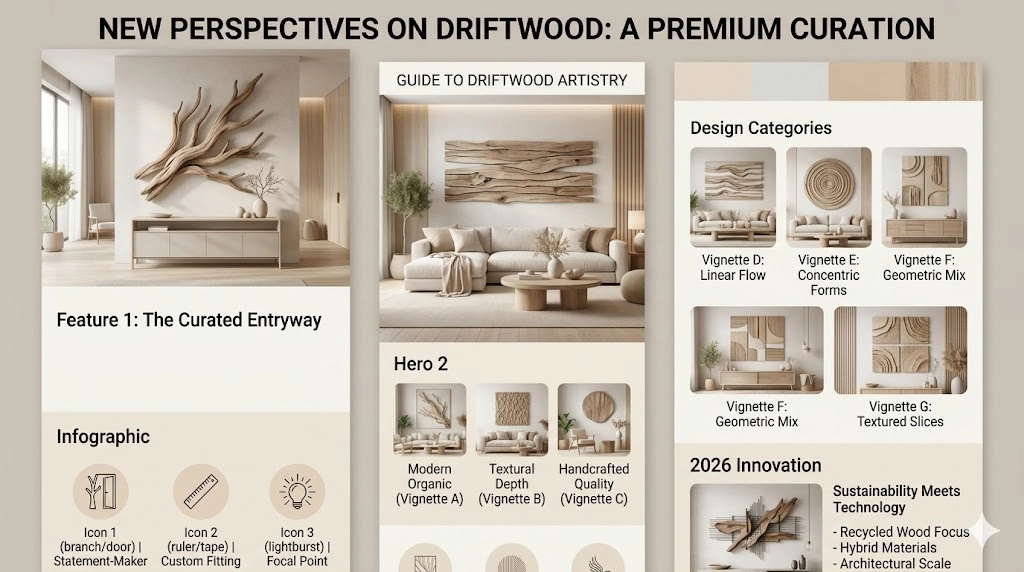
Driftwood Wall Styling Guide
Living Room
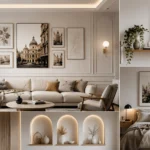
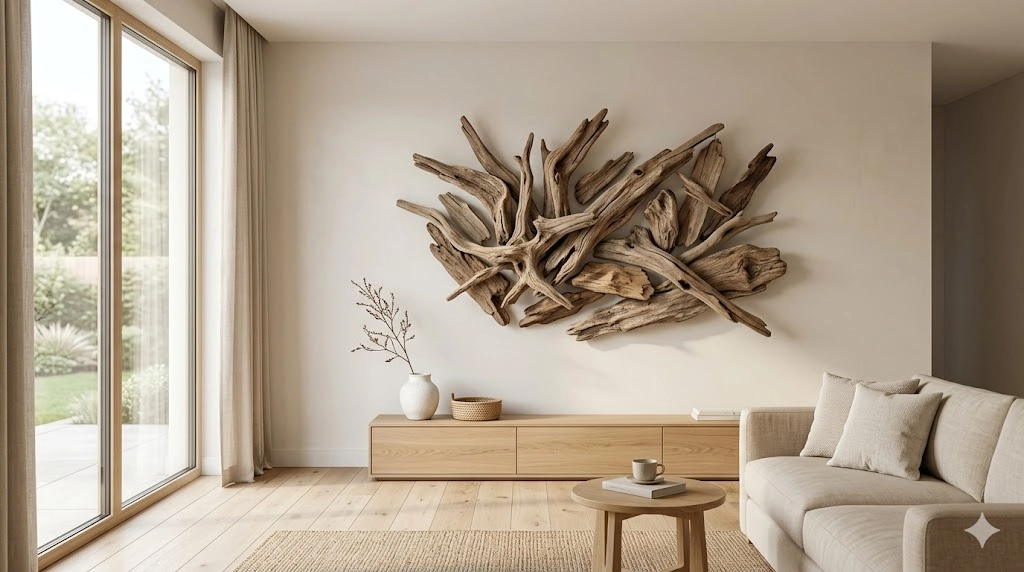
The living room is the best place for large driftwood installations.
Tips:
- Place above sofa as focal point
- Use neutral walls (white, beige, light grey)
- Combine with soft lighting
Bedroom
Bedrooms require softness and emotional calm.
- Choose minimal driftwood pieces
- Avoid heavy or chaotic compositions
- Use warm lighting (2700K recommended)
Dining Area
Driftwood enhances warmth and social comfort.
- Horizontal designs work best
- Pair with wooden furniture
- Keep surrounding walls minimal
Entryway
First impressions matter.
- Small sculptural pieces create identity
- Use simple, elegant arrangements
- Avoid overcrowding
Driftwood Decor: Modern vs Outdated Style
| Aspect | Outdated Style | Modern Style |
| Design Approach | Overdecorated coastal themes | Minimal artistic compositions |
| Materials | Shells, ropes, mixed souvenirs | Clean natural driftwood |
| Color Palette | Bright, tropical tones | Neutral earth tones |
| Purpose | Decoration overload | Artistic expression |
| Aesthetic | Rustic beach theme | Modern organic luxury |
Modern driftwood décor is no longer about “beach souvenirs”—it is about architectural wall art.
Wall Placement & Design Principles
Size & Proportion Rules
- Large walls → oversized driftwood sculptures
- Small rooms → vertical minimal pieces
- Wide walls → horizontal compositions
Wall Color Psychology
- White walls → highlight natural texture
- Beige tones → warm organic feel
- Grey walls → modern contrast effect
- Earth tones → natural harmony
Lighting Considerations
- Warm LED lighting enhances wood texture
- Avoid harsh white lighting
- Use directional spotlights for depth
European Design Influence
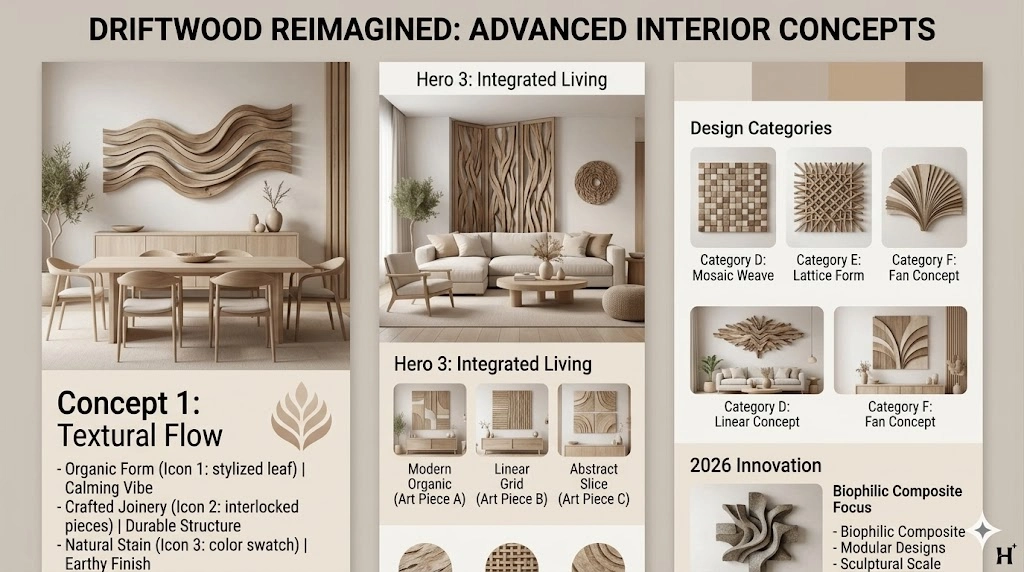
Driftwood Wall Decorations have become a pan-European design language.
- ???????? Germany → Minimal functional interiors
- ???????? Sweden → Calm Scandinavian aesthetics
- ???????? France → Artistic organic luxury
- ???????? Italy → Rustic-modern fusion villas
- ???????? Netherlands → Sustainable modern homes
- ???????? Spain → Warm Mediterranean textures
- ???????? Switzerland → Clean alpine minimalism
Across Europe, driftwood is not seen as decoration—it is seen as material storytelling.
Expert Styling Tips
- Pair driftwood with linen, wool, and stone
- Keep surrounding walls visually clean
- Use natural light whenever possible
- Avoid clutter around the artwork
- Let driftwood remain the focal point
- Combine with indoor plants for harmony
Future of Driftwood Wall Decorations 2026+
Driftwood is evolving beyond décor into architectural expression.
Future trends include:
- Mixed-material wall sculptures (wood + resin + metal)
- Digital-integrated natural art installations
- Large-scale architectural wall panels
- Smart lighting-enhanced driftwood designs
It is becoming part of functional interior architecture, not just decoration.
Pros & Cons
Pros
- 100% natural and eco-friendly
- Unique and non-replicable designs
- Strong emotional and psychological impact
- Works with multiple interior styles
- Long-lasting aesthetic value
Cons
- Limited availability of authentic driftwood
- Requires careful styling to avoid clutter
- Not suitable for ultra-glossy modern interiors
- Can be expensive in artistic forms
People Also Ask
Yes, driftwood is more relevant than ever. It aligns with biophilic design, sustainability trends, and Japandi interiors, making it a strong modern choice rather than a fading trend.
Keep surrounding walls minimal, use warm lighting, and pair driftwood with neutral materials like linen, stone, or beige textiles. Let it act as the focal point.
Yes, but scale matters. Small driftwood installations or vertical arrangements work best in compact European apartments to avoid visual clutter.
Yes. Natural textures reduce visual stress and create a calming effect, especially in urban environments. This is supported by biophilic design principles.
Conclusion
Driftwood wall decorations represent a powerful shift in modern interior design—moving away from artificial decoration toward natural, emotional, and meaningful living spaces. Across Europe, this material has become a symbol of balance between nature and architecture.
Whether used in a Scandinavian apartment, a Mediterranean villa, or a modern city loft, driftwood adapts effortlessly while maintaining its organic identity.
As interior design continues to evolve in 2026 and beyond, driftwood will remain a cornerstone of sustainable and emotionally intelligent décor.
For more inspiration on modern wall art and European interior aesthetics, explore more guides on TheWallsArt.com and discover how natural design can transform your living space into something truly timeless.