Introduction
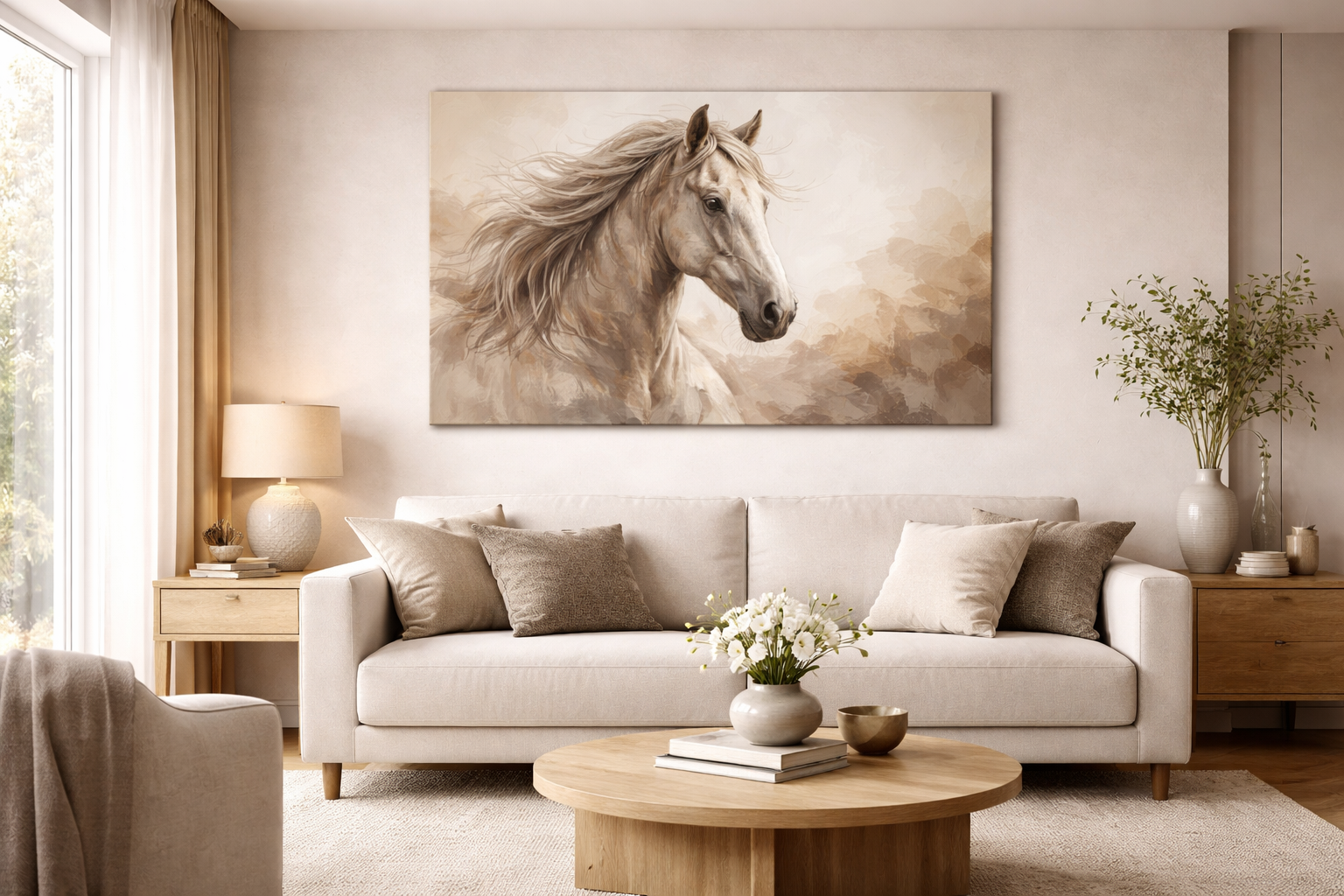
A single piece of horse wall art carries grace, power, a quiet kind of beauty. Centuries of painters and sculptors found something alive in those forms, something worth chasing. Hang one on your wall, you’re not just filling the zone- you’re letting feelings settle into the room.
Horse Wall Art shapes how a room feels, draws the eye, yet speaks quietly of who you are. A European farmhouse might hold it smoothly, while a sleek city space lets it stand bold; even small bedrooms find calm within its presence.
This guide will help you choose, style, and place horse wall art to create a balanced and visually appealing interior.
What Is Horse Wall Art? Meaning, Symbolism & Emotional Depth
Hanging on a wall, horse pictures come in forms like paint, pencil marks, printed pages, photo copies, shaped metal, or covered info. From true-to-life scenes to loose ideas, fresh paper works, steel figures, and combos of different stuff – they show horses in many ways.
Horses have historically symbolized:
- Freedom – Representing independence and unrestrained movement.
- Strength – Signifying physical power and resilience.
- Grace & Elegance – Exemplifying poise, balance, and fluid motion.
- Endurance – Reflecting stamina, perseverance, and unwavering spirit.
Horses in art bring deep meaning, filling spaces with feeling, energy, and quiet stories. Across Europe, rooms shaped by old styles or country life lean on horse imagery to whisper elegance, time-tested grace, or countryside ease.
A single glance at horse wall art does more than fill space – it speaks without sound, shaped by choice, hinting at who you are. Mood shifts quietly under its presence, pulled toward elegance that doesn’t shout but lingers.
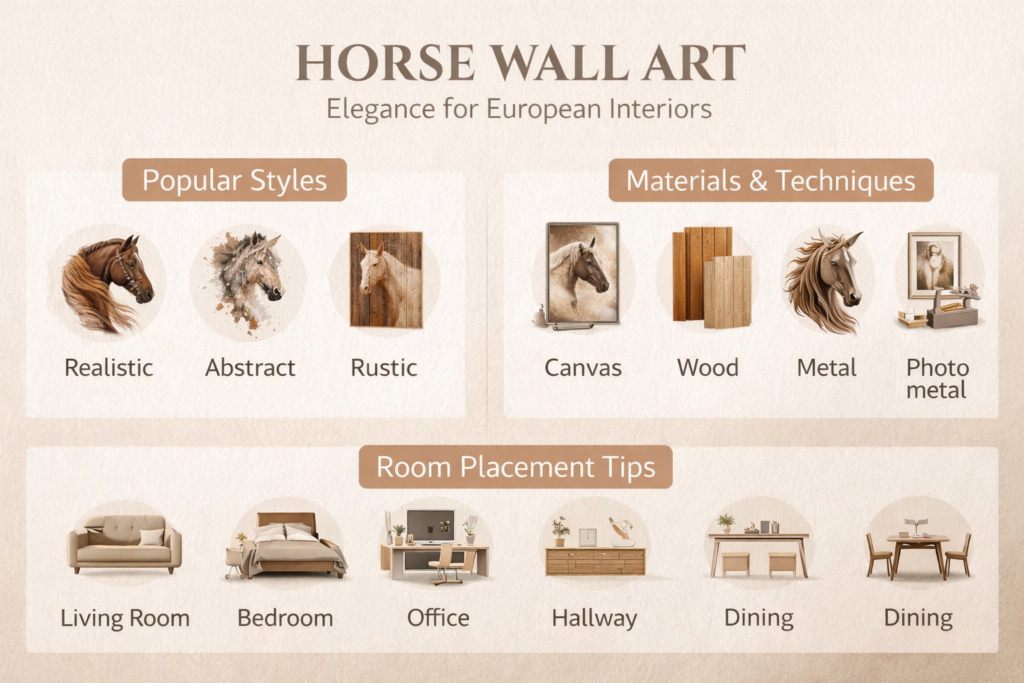
Popular Horse Wall Art Styles
Picture a wall where the artwork feels just right. That calm comes from picking the kind of horse drawing that fits your zone. Today, modern rooms lean toward certain looks more than others:
Realistic Horse Art
From hooves to whiskers, every detail sits exactly where it should. Horses emerge through careful attention to muscle flow and the way light settles across their coats.
Best for: Classical European homes, elegant living areas, and offices.
Advantages:
- Timeless and sophisticated
- Adds bottom, dimension, and richness
Considerations:
- May appear overwhelming in minimalist or compact zones
- Requires substantial wall zone for optical impact
Abstract Horse Art
Horse Figures twist into rhythm, bending more toward feeling than bone. Shapes stretch where movement lives, ignoring exact details. Color leaps in odd pairings, skipping realism. Forms blur, yet somehow still gallop. The idea runs wilder than the actual animal ever could.
Best for: Modern, Scandinavian, gallery-inspired, or urban loft interiors.
Advantages:
- Optically striking and innovative
- Complements new decor schemes
Considerations:
- Might clash with traditional or classic-themed interiors
- Can feel detached from literal interpretation
Simple & Western Equestrian Art
Out of raw textures comes a sense of history – weathered wood, worn surfaces, colors pulled straight from dirt and bark. These choices nod sideways to cowboy roots, not loud but clear in their quiet nods.
Best for: Farmhouse, country-style homes, and simple interiors.
Advantages:
- Invites warmth, charm, and character
- Evokes nostalgia and a connection with nature
Considerations:
- May not integrate seamlessly with sleek, modern settings
- Color palettes can be limited to earthy or muted shades
Metal & 3D Sculptural Pieces
Metal or sculptural horse art includes steel, brass, aluminum, or composite three-dimensional works. These pieces add tactile bottom and new appeal to interiors.
Best for: Modern lofts, industrial-style flats, and luxury zones.
Advantages:
- Durable, resilient, and optically striking
- Functions as a statement centerpiece
Considerations:
Materials & Techniques in Horse Wall Art
- May necessitate professional installation
- Limited color variations and finish options
The material and creation technique profoundly influence the style, aesthetic, and longevity of horse wall art. Below is a detailed guide:
| Material | Style | Best For | Maintenance Tips |
| Canvas | Paintings & prints | Living rooms, bedrooms | Shield from direct sunlight |
| Wood | Simple panels | Farmhouse interiors | Dust routinely, avoid moisture |
| Metal | Sculptural or abstract | Offices, lofts | Wipe clean, keep dry |
| Mixed Media | Textured compositions | Gallery walls | Handle gently, protect from impact |
| Photography | Realistic prints | Hallways, offices | Frame & UV-protect |
Pro Tip: Neutral jewels, natural feelings, and soft palettes harmonize effortlessly with European-inspired decor, creating subtle elegance and optical cohesion.
How to Choose Horse Wall Art for Every Room
The function and ambiance of a room dictate which type of equestrian art is suitable. Consider the purpose, scale, and palette for optimal effect.
Living Room
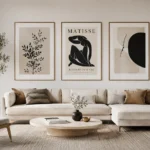
- Opt for large word pieces above sofas or fireplace mantels.
- Multi-panel prints or diptychs introduce optical flow and dynamic movement.
- Centralized artwork establishes a focal point, anchoring the zone.
Bedroom
- Favor soft, muted compositions to maintain a calming air.
- Pastel shades and gentle feelings encourage relief.
- Shun cluttered, high-contrast opticals in zones designed for rest.
Home Office & Studio
- Vibrant, energetic horse imagery can enhance focus and inspiration.
- Metal sculptures or racing-themed pieces may boost productivity.
- Maintain moderate sizing to prevent visual overwhelm near workspaces.
Hallways & Entryways
- Position one striking piece at eye level for maximum impact.
- Realistic photography elevates elegance and refinement.
- Incorporate strategic lighting to accentuate feelings and detail.
Where to Hang Horse Wall Art — Placement Guidelines
Effective placement transforms art from decorative to purposeful, ensuring your pieces enhance rather than clutter the zone.
General Placement Rules
- Hang at eye level (~145–155 cm from floor).
- Maintain adequate surrounding zone to prevent a crowded look.
- Align width of artwork with furniture dimensions (approximately 2/3 of furniture width).
Room‑by‑Room Placement Tips
| Room | Placement Recommendation | Suggested Style |
| Living Room | Above sofa/focal wall | Large canvas, abstract |
| Bedroom | Above headboard | Watercolour, soft tones |
| Office | Behind desk | Energetic prints |
| Hallway | Eye-level centre | Photography |
| Dining | Behind table | Simple, abstract |
Strategic positioning ensures that each piece is optically grounded and harmoniously integrated with furniture, color schemes, and room architecture.
Decorating Tips & Creative Ideas
To maximize the aesthetic impact of horse wall art, consider these professional recommendations:
Create a Gallery Wall
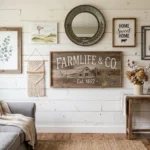
Combine horse art with new artwork — landscapes, abstracts, or typographic prints. Vary frame sizes and orientations to achieve a curated, covered effect that invites exploration.
Coordinate With Furniture & Colors
- Match artwork tones with furniture and décor accents.
- Neutral walls allow bold equestrian artwork to command attention.
- Earthy-toned horse art pairs seamlessly with warm wood furnishings.
Interior designers emphasize balance over clutter, ensuring peaceful integration of colors, feelings, and info.
Make a Statement With Scale
A single large painting can shift how a zone feels, particularly where walls soar or maps flow openly. When artwork matches the room’s size, it pulls eyes toward it, stretches the sense of area, then ties together colors and shapes nearby.
Prioritize Lighting
- Spotlights, LED picture lights, or side lighting enhance feelings and bottom.
- Shun harsh overhead illumination that can flatten details.
- Natural side light adds dynamic shadows and highlights nuances in the art.
Top Horse Wall Art Themes & Trends
Current trends reflect evolving tastes while blending tradition with innovation:
Minimalist Scandinavian
Soft neutrals, gentle forms, and clean lines encourage tranquility, calm, and understated elegance.
Modern Industrial
Metal Art, geometrical abstraction, and stark contrasts inject boldness and optical intrigue into new zones.
Classic European
Rich oil paintings, ornate frames, and warm palettes communicate timeless sophistication and historic charm.
Rustic Farmhouse
Wood panels, balanced surfaces, and earthy jewels evoke countryside passion and heritage character.
Luxury New
Oversize canvases, abstract compositions, and monochromatic schemes exude high-end modernity and exclusivity.
Pros & Cons of Horse Wall Art
Pros:
- Timeless, versatile, and emotionally resonant
- Integrates with various interior aesthetics
- Introduces movement, bottom, and narrative
Cons:
- Large pieces may dominate limited zones
- Some styles require careful color coordination
- Strongly themed collections may restrict future redecorating
Frequently Asked Questions
A: Minimalist abstracts and realistic canvases dominate trends, particularly in Scandinavian and French interiors.
A: Choose dimensions proportional to wall zone— large rooms accommodate word pieces; smaller walls benefit from medium canvases or series arrangements.
A: Absolutely — abstract, metal, and mixed-media designs complement new maps effectively.
A: Dust regularly and avoid exposure to sunlight or moisture to preserve feeling and color vibrancy.
A: Above the headboard or on a feature wall opposite the bed for a soothing, central focal point.
Conclusion
Hanging horse pictures ties together stories from long ago, deep feelings, and how a room looks. Picking what kind of image, info, or spot works best turns blank zones into spots that catch the eye. If you like real-looking paintings, bold color bursts, basic wooden boards, or fresh pieces made of steel, artwork with horses brings grace, motion, strength, character.
A wall finds its voice when filled with art shaped by your taste, sized right, fitting the room’s flow. Horses appear not just to be seen but to live among moments, turning the zone into something fluid, quietly bold. Their presence links brushstrokes to daily life, not decoration but bottom- motion held still, elegance without age.