Introduction
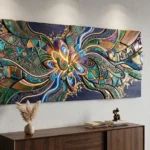
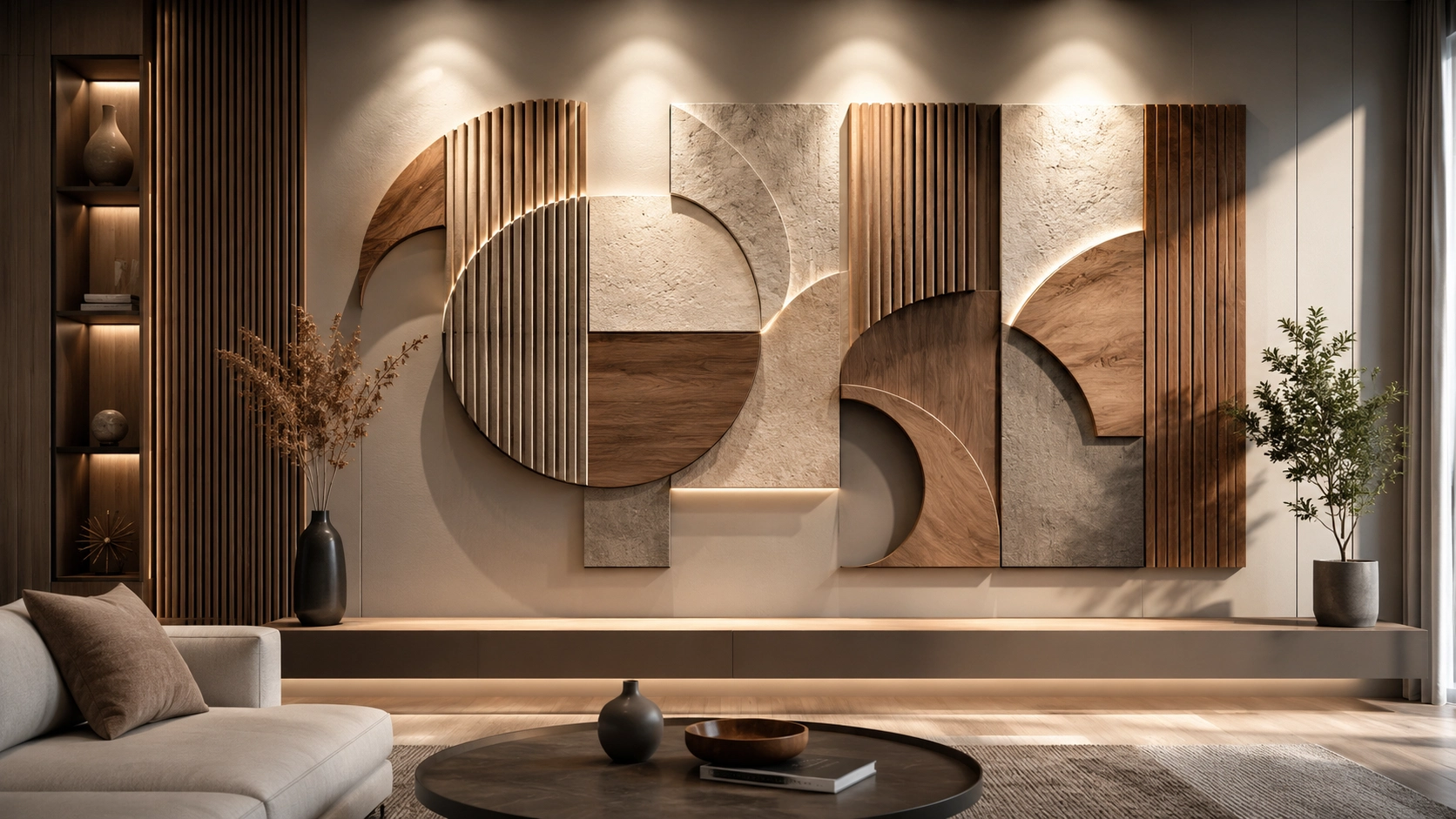
Three Dimensional Wall Art is no longer a decorative trend—it has become a defining language of modern interior design. Across Europe, from minimalist apartments in Germany to elegant luxury homes in France and Scandinavian nature-inspired spaces in Sweden, homeowners are transforming flat walls into sculptural experiences.
Unlike traditional paintings or prints, 3D wall art introduces depth, shadow, and texture that interact with natural and artificial light throughout the day. This dynamic quality makes interiors feel more alive, expressive, and architectural.
In 2026, the global shift toward “warm minimalism” has made three dimensional wall art a core element in interior styling. It blends aesthetics with function, turning empty walls into visual anchors of a room.
This guide explores everything you need to know—from materials and styles to European design psychology, room-by-room applications, and future trends shaping the world of 3D wall decor.
What Is Three Dimensional Wall Art?
Three dimensional wall art refers to any wall-mounted design that physically extends from the surface, creating depth and shadow interaction.
Unlike flat décor, it adds a sculptural layer to interiors.
Common Forms Include:
- Wooden wall panels with carved geometry
- Metal wall sculptures with abstract shapes
- Resin and acrylic layered artworks
- Plaster relief wall textures
- Modular geometric wall systems
The key difference is spatial interaction—these artworks change appearance based on lighting, angle, and room depth.
European Influence on 3D Wall Art Design
Europe has become a global leader in interior design innovation, especially in wall aesthetics.
German Minimalist Precision
German interiors focus on structure, function, and clean geometry.
3D wall art here is often:
- Grid-based
- Neutral-toned
- Architecturally aligned
French Luxury Expression
French interiors embrace elegance and artistic expression:
- Curved sculptural forms
- Gold and metallic accents
- Statement wall installations
Scandinavian Natural Warmth
Nordic homes emphasize:
- Wood textures
- Soft lighting
- Organic shapes
Italian Artistic Luxury
Italian design brings drama and craftsmanship:
- Bold sculptural walls
- Marble-inspired textures
- High-end artistic detailing
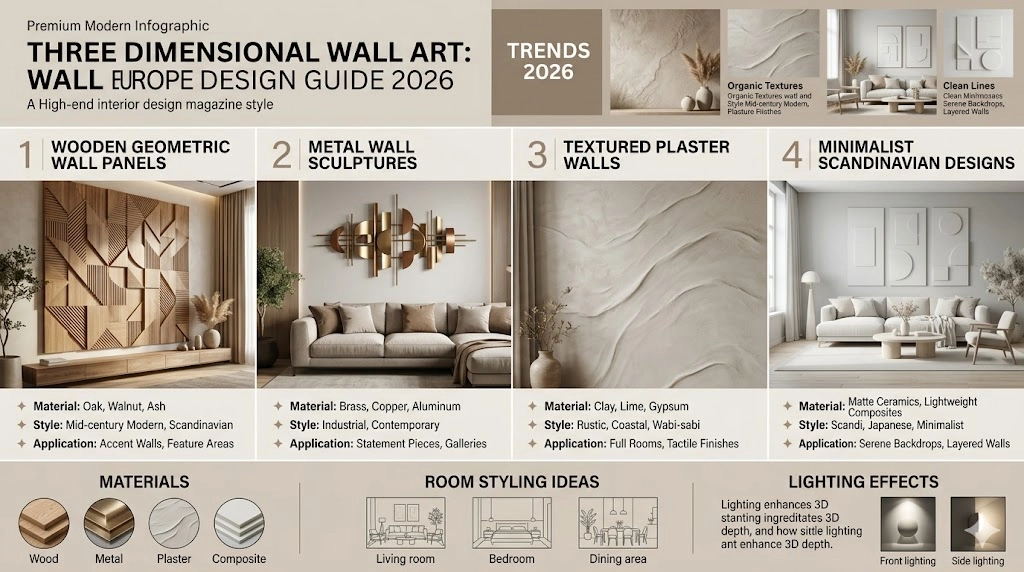
The Core European Trend 2026
Across all regions, one trend dominates:
“Warm minimalism with texture depth”
Types of Three Dimensional Wall Art
Wooden 3D Wall Panels
Wood is the most dominant material in European homes.
Why it works:
- Natural warmth and softness
- Perfect for Scandinavian interiors
- Sustainable and eco-friendly
Best rooms:
Living rooms, bedrooms, offices
Metal Wall Sculptures
Metal designs create a bold luxury statement.
Why it works:
- Reflects light dynamically
- Adds industrial-modern contrast
- Long-lasting durability
Best rooms:
Hallways, luxury apartments, offices
Resin & Acrylic Wall Art
A modern favorite for contemporary interiors.
Why it works:
- Glossy artistic finish
- Vibrant color depth
- Gallery-like aesthetic
Best rooms:
Kids rooms, studios, modern flats
Geometric Modular Panels
Highly popular in minimalist European apartments.
Why it works:
- Structured symmetry
- Clean architectural look
- Compatible with LED lighting
Best rooms:
Workspaces, modern living rooms
Comparison Table: 3D Wall Art Materials
| Material | Style | Durability | Maintenance | Best For |
| Wood | Natural, Scandinavian | High | Medium | Living rooms |
| Metal | Luxury, industrial | Very High | Low | Hallways |
| Resin | Modern, artistic | High | Low | Bedrooms |
| Plaster | Architectural | Medium | Medium | Feature walls |
Room-by-Room Guide to 3D Wall Art
Living Room
The living room is the heart of European homes.
Best choices:
- Large metal sculptures
- Wooden geometric panels
- Mixed-material feature walls
Expert tip:
Use warm lighting to enhance shadow depth and texture visibility.
Bedroom
Bedrooms require calm visual balance.
Best choices:
- Soft wood textures
- Organic curved designs
- Neutral-toned panels
Avoid:
Overly sharp or reflective materials
Dining Area
This space benefits from artistic expression.
Best choices:
- Abstract metal art
- Warm-toned wooden reliefs
Office Spaces
Modern European offices emphasize productivity and clarity.
Best choices:
- Geometric wall systems
- Minimalist modular panels
Kids Room
Creative and playful environments work best here.
Best choices:
- Colorful resin art
- Soft 3D shapes
Common Problems
Dust Accumulation
Deep textures collect dust over time.
Solution:
Choose smooth-coated or sealed materials.
Lighting Distortion
Poor lighting can flatten the 3D effect.
Solution:
Use angled LED lighting or natural side light.
Installation Weight Issues
Some metal or plaster pieces are heavy.
Solution:
Always use reinforced wall mounting.
Maintenance Difficulty
Complex textures can be hard to clean.
Solution:
Opt for low-maintenance resin or sealed wood.
How to Choose the Right Three Dimensional Wall Art
Small Spaces
- Vertical designs
- Light colors
- Slim geometric panels
Large Spaces
- Oversized sculptures
- Multi-panel installations
Minimalist Homes
- Neutral tones
- Clean symmetry
Luxury Interiors
- Metallic finishes
- Mixed-material designs
Wall Color Psychology with 3D Art
- White walls → enhance shadow contrast
- Beige tones → warm Scandinavian feel
- Dark walls → dramatic luxury effect
- Earth tones → natural organic harmony
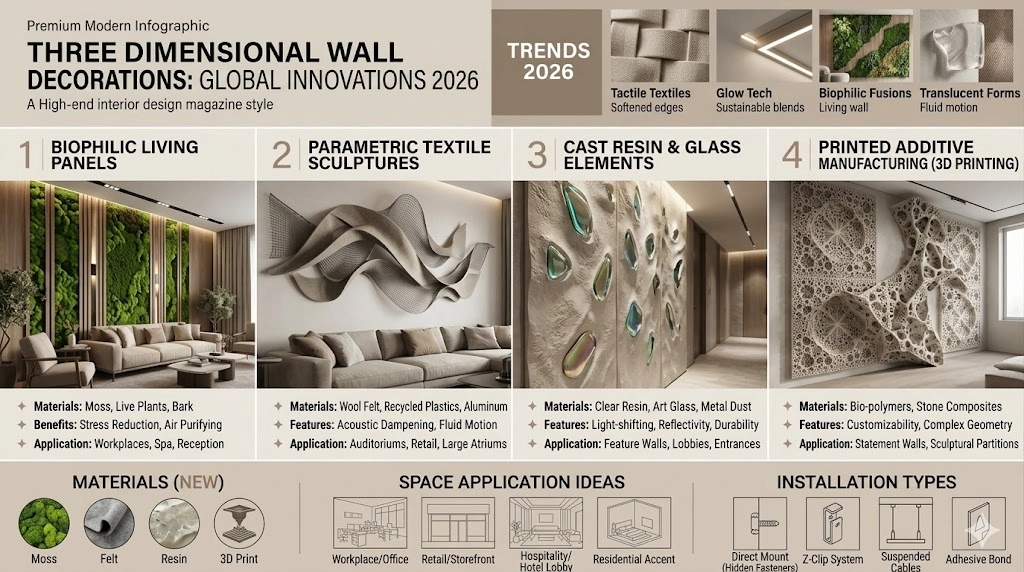
Future of Three Dimensional Wall Art 2026+
The future of wall design is deeply connected to technology and sustainability.
Emerging Trends:
- AI-generated wall sculptures
- Smart LED-integrated panels
- Recycled eco-material designs
- Modular customizable systems
- Biophilic nature-inspired textures
Across Europe, especially in the Netherlands and Switzerland, designers are integrating architecture with adaptive wall systems that respond to light and environment.
Pros & Cons
Pros:
- Adds depth and luxury
- Enhances lighting effects
- Works in all interior styles
- Increases visual interest
Cons:
- Can be expensive in premium designs
- Requires careful installation
- Maintenance needed for textured surfaces
Expert Interior Design Tips
- Always match wall art scale with room size
- Use lighting to create shadow layers
- Keep balance between furniture and wall depth
- Avoid overcrowding textured walls
- Choose one focal wall per room
People Also Ask
Yes, but choose slim vertical or light-colored designs. These create an illusion of height and space without overwhelming compact rooms.
Wood and resin are most popular due to their balance of durability, aesthetics, and sustainability, especially in Scandinavian interiors.
Use a soft microfiber cloth or vacuum with a brush attachment. Avoid harsh chemicals on textured surfaces.
Absolutely. Lighting defines depth and shadow, making the artwork look more dynamic and architectural.
Yes, it is growing rapidly with AI design, sustainable materials, and modular systems leading the next wave of interior innovation.
Conclusion
Three Dimensional Wall Art has transformed from a decorative trend into a fundamental part of modern interior architecture. Across Europe—from minimalist homes in Germany to artistic luxury spaces in Italy—it continues to redefine how walls are experienced.
By combining texture, light, and structure, 3D wall art turns ordinary interiors into expressive, emotional environments. Whether you prefer Scandinavian simplicity, French elegance, or modern industrial design, there is a 3D wall solution for every space.
For homeowners and designers, the key is balance—choosing the right material, scale, and lighting to create harmony.
At TheWallsArt.com, exploring evolving wall design trends helps you stay ahead of modern interior aesthetics and build spaces that feel timeless, personal, and inspiring.