Introduction
In 2026, abstract wall art paintings have evolved far beyond simple decorative visuals. They are now recognized as a fundamental pillar of contemporary European interior architecture, influencing mood perception, spatial identity, and emotional intelligence within living environments.
Across Europe—from the minimalistic Nordic apartments in Scandinavia to the refined luxury residences in Paris, Milan, Zurich, and Berlin—abstract wall art has become a core design language rather than an accessory element.
Modern interior designers no longer treat wall art as optional decoration. Instead, they consider it a psychological instrument of space transformation, capable of altering:
- Emotional atmosphere
- Spatial perception
- Luxury value perception
- Cognitive comfort levels
Unlike traditional figurative paintings that represent recognizable objects, abstract wall art paintings rely on non-representational visual language, including:
- Geometric or organic shapes instead of literal objects
- Color-driven storytelling instead of narrative scenes
- Motion-inspired brush dynamics instead of static realism
- Emotional abstraction instead of physical representation
This lack of literal interpretation is what makes abstract art so powerful—it activates human imagination, subconscious interpretation, and emotional projection.
In this comprehensive 2026 guide, you will explore:
- Definition and evolution of abstract wall art paintings
- Psychological impact on human perception
- European design influence and regional aesthetics
- Room-by-room placement system
- Color psychology and emotional mapping
- Buying strategies and design mistakes
- Emerging interior design trends for 2026
Let us now move into a structured deep understanding of abstract wall art paintings.
What Are Abstract Wall Art Paintings?
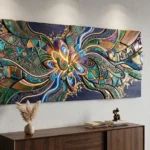
Abstract wall art paintings are visual compositions that intentionally avoid direct representation of physical reality. Instead of depicting identifiable objects such as landscapes, portraits, or still life arrangements, they communicate meaning through visual abstraction techniques.
These include:
- Line composition and directional flow
- Color psychology and saturation gradients
- Texture layering and brushstroke density
- Spatial imbalance and asymmetry
- Emotional color mapping
Core Definition
Abstract art can be defined as:
A non-representational visual expression system that communicates emotional, cognitive, or conceptual meaning without literal imagery.
Functional Role in 2026 Interior Design
In modern European homes, abstract wall art paintings serve multiple functional design roles:
- Emotional stabilization tools
- Focal point generators in minimalist interiors
- Luxury perception enhancers
- Spatial depth amplifiers
- Aesthetic identity markers
Interior psychologists often refer to abstract art as:
“Emotionally interpretive spatial design elements”
Why Abstract Wall Art Paintings Are Dominating Europe
The rising dominance of abstract wall art across Europe is not accidental. It is driven by psychological, cultural, and architectural shifts in modern living.
Psychological Impact on Human Cognition
Human perception naturally seeks meaning in abstract visuals. This cognitive process is called pareidolia and pattern interpretation behavior.
Abstract art:
- Activates imagination centers in the brain
- Encourages subjective interpretation
- Enhances emotional engagement
- Reduces visual fatigue compared to realistic imagery
This makes abstract paintings deeply personal, as each viewer constructs a unique emotional narrative.
Luxury Interior Design Integration
In high-end European interior design, abstraction is strongly associated with exclusivity.
Luxury designers prefer abstract wall art because:
- It avoids visual clichés
- It enhances minimalist sophistication
- It creates curated spatial silence
- It signals artistic refinement
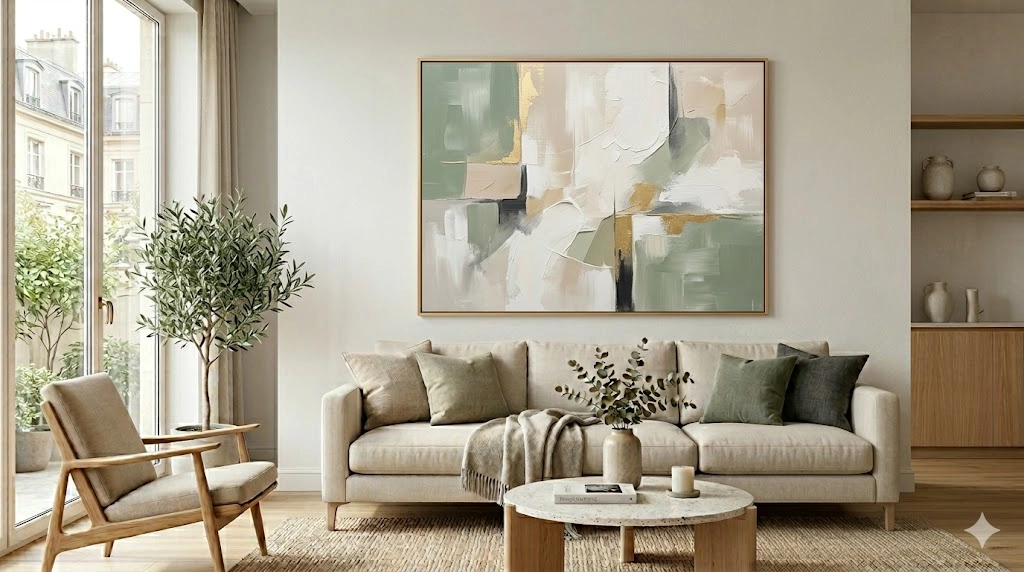
A single large abstract painting often replaces multiple decorative items, reinforcing premium spatial simplicity.
Adaptability Across Design Styles
Abstract wall art paintings are highly versatile and compatible with:
- Scandinavian minimalism
- German functional architecture
- French luxury interiors
- Italian expressive design
- Modern industrial loft spaces
This adaptability makes abstract art a universal design language in Europe.
European Design Influence on Abstract Wall Art Paintings
Europe has significantly shaped the evolution of abstract art in interior design contexts.
Scandinavian Minimalism
Characteristics:
- Soft neutral palettes
- Light-enhancing compositions
- Emotional calmness
- Spatial clarity
Best use: Bedrooms and minimal living spaces
German Functional Aesthetics
Characteristics:
- Geometric precision
- Structured abstraction
- Balanced symmetry
- Architectural alignment
Best use: Offices and corporate interiors
French Luxury Expression
Characteristics:
- Subtle gold infusion
- Artistic imperfection
- Elegant brush textures
- Emotional sophistication
Best use: Luxury apartments and salons
Italian Bold Expressionism
Characteristics:
- Strong chromatic intensity
- Emotional dynamism
- Large-scale compositions
- Dramatic visual presence
Best use: Hotels and grand living areas
Types of Abstract Wall Art Paintings 2026 Styles
1. Minimalist Abstract Art
- Soft gradients
- Clean spatial balance
- Reduced visual noise
Ideal for compact European apartments
2. Textured Abstract Paintings
- Multi-layer paint application
- Physical depth perception
- Shadow-based visual complexity
Ideal for luxury interiors
3. Oversized Statement Art
- Single dominant canvas
- High visual authority
- Strong focal anchoring
Ideal for living rooms
4. Color Field Abstraction
- Large color zones
- Emotional color psychology
- Smooth tonal transitions
Ideal for creative environments
5. Black & White Abstract Art
- Monochrome contrast system
- Architectural simplicity
- Timeless elegance
Ideal for modern interiors
Color Psychology in Abstract Wall Art Paintings
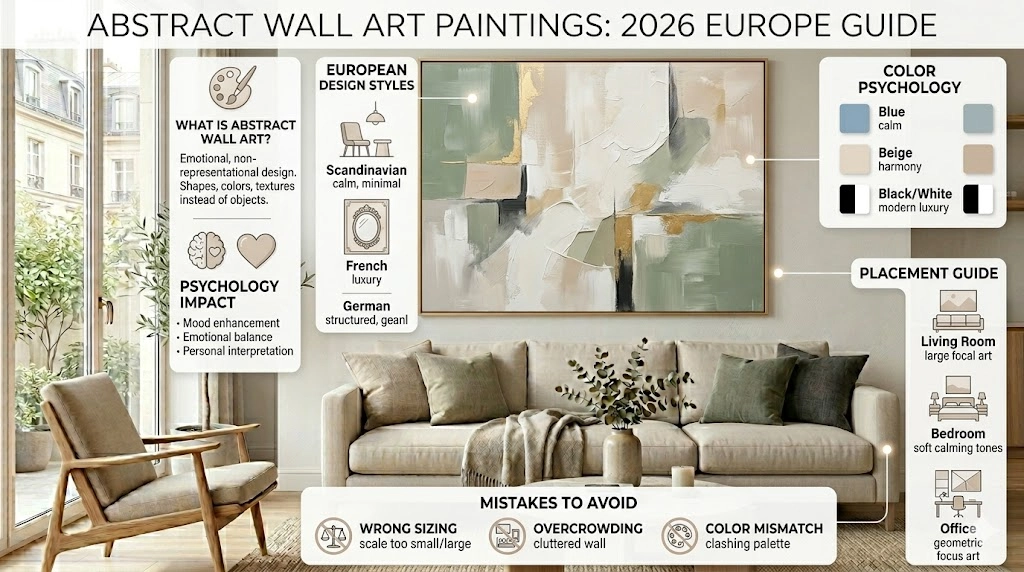
Color plays a crucial role in emotional interpretation.
Earth-Based Tones
- Emotional grounding
- Stability perception
- Organic comfort
Blue Spectrum
- Calm neurological response
- Focus enhancement
- Stress reduction
Monochrome Systems
- Strong modern identity
- Minimalist luxury
- Visual clarity
Neutral Beige Palette
- Soft European aesthetic
- Warm environmental harmony
- Light reflection optimization
Room-by-Room Placement Strategy
Living Room
- Large-scale abstract art
- Central sofa alignment
- Strong focal hierarchy
Bedroom
- Soft tonal abstraction
- Above-bed placement
- Low visual aggression
Office
- Structured geometric abstraction
- Neutral or blue tones
- Productivity enhancement
Dining Room
- Warm chromatic balance
- Medium-sized compositions
- Hospitality reinforcement
Common Placement Mistakes
Avoid:
- Overcrowding with multiple frames
- Incorrect proportional scaling
- Color mismatch with interiors
- Excessively saturated visuals in small rooms
- Poor lighting integration
2026 European Interior Trends
Oversized Minimalism
One dominant artwork replaces multiple decorative elements.
Textural Depth Expansion
Physical paint layering becomes more valued than digital prints.
Earth Tone Dominance
Sustainability-driven natural palettes rise in popularity.
Organic Imperfection Trend
Human brush authenticity replaces digital perfection aesthetics.
How to Choose Abstract Wall Art Paintings
Spatial Ratio Principle
Small rooms require minimal abstraction; large rooms require expansive compositions.
Color Harmony Framework
Maintain:
- 60% room base tone
- 40% artistic contrast
Lighting Optimization
Natural light reveals texture depth; warm lighting enhances emotional tone.
Furniture Coordination Rule
Artwork must complement—not dominate—furniture arrangement.
Buying Guide
| Factor | Recommendation | Best Choice |
| Material | Canvas texture | Hand-textured canvas |
| Style | Minimal vs bold | Based on room function |
| Size | Wall proportion | 2/3 furniture width |
| Finish | Matte preferred | Matte surface |
Pros and Cons
Advantages
- Enhances emotional interior design
- Works across multiple styles
- Elevates luxury perception
- Highly adaptable
Limitations
- Subjective interpretation
- Poor selection can disrupt harmony
- Oversizing can overwhelm space
Style Comparison Table
| Style | Emotional Tone | Best Use |
| Minimalist | Calm | Bedrooms |
| Textured | Luxury | Living rooms |
| Color Field | Creative | Offices |
| Black & White | Modern | Universal |
| Bold Abstract | Dramatic | Hotels |
FAQs
Because they align with modern European minimalist, luxury, and emotionally driven interior design principles.
Ideal locations include living rooms, bedrooms, and office environments for maximum emotional and visual impact.
Yes, but it is recommended to use lighter tones and minimalistic compositions to maintain spatial balance.
The ideal proportion is approximately 60–75% of the furniture width beneath it.
Yes, it enhances perceived luxury, aesthetic quality, and overall interior design valuation.
Conclusion
Abstract wall art paintings have transformed into a core architectural and psychological design element in modern European interiors.
They are no longer simple decorative objects—they are:
- Emotional regulators
- Luxury indicators
- Spatial identity creators
- Cognitive design tools
In 2026, interior design philosophy has shifted from decoration to emotional architecture, and abstract wall art stands at the center of this transformation.
The future of European interiors is not about filling empty walls—it is about designing emotional experiences through visual abstraction.