Introduction
Art Deco wall sconces in 2026 are no longer treated as simple lighting accessories or decorative wall fixtures. Instead, they have evolved into architectural lighting elements, deeply integrated into modern interior composition systems across Europe and beyond.
From Parisian luxury apartments to Milanese designer villas, and from Scandinavian minimal homes to London’s refined townhouses, Art Deco sconces now serve as:
- Spatial mood engineers
- Wall composition enhancers
- Luxury identity markers
- Architectural illumination systems
- Emotional ambiance creators
In contemporary interior design philosophy, lighting is no longer secondary. It is central. And within this transformation, Art Deco wall sconces represent the perfect fusion of geometric heritage, material luxury, and atmospheric lighting intelligence.
This complete guide will help you master everything:
- What Art Deco wall sconces truly are
- Why they dominate luxury interiors in 2026
- How professional designers place them
- Room-by-room styling systems
- Material selection science
- Common design mistakes
- Advanced European lighting strategies
Let’s explore this deeply structured lighting world.
What Are Art Deco Wall Sconces?
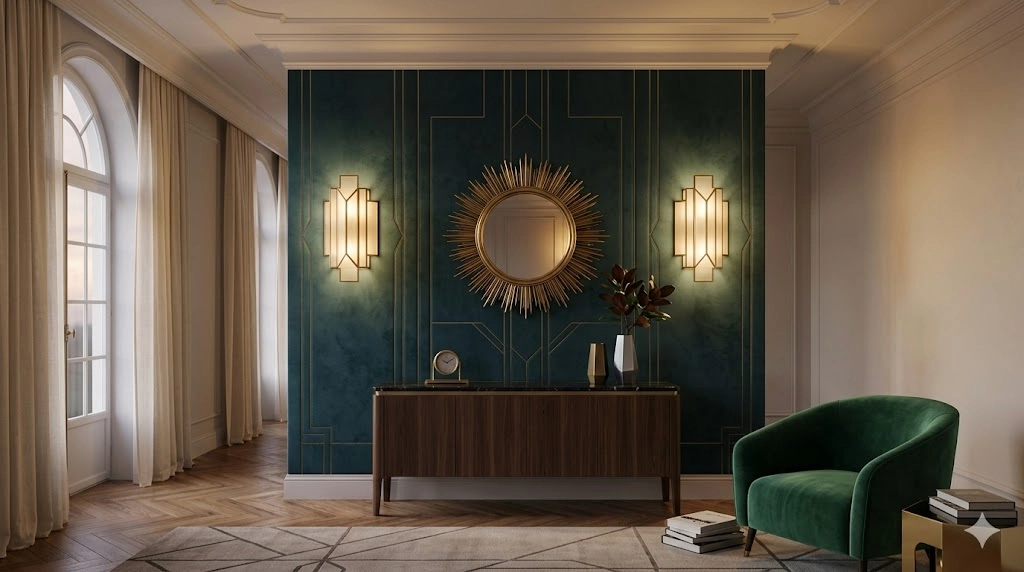
Art Deco wall sconces are wall-mounted lighting installations inspired by the iconic Art Deco movement originating in the 1920s and 1930s. This design movement is known for its emphasis on luxury geometry, symmetry, and decorative elegance blended with functional purpose.
In modern 2026 interior design vocabulary, these sconces are defined as:
“Architectural lighting units that combine ornamental geometry with ambient illumination to enhance spatial identity.”
Core Design Characteristics:
- Strong geometric composition (lines, zigzags, curves, symmetry)
- Premium reflective materials (brass, chrome, bronze, glass)
- Soft diffused illumination rather than harsh lighting
- Balanced structural symmetry
- Decorative artistry combined with functional lighting
Unlike ordinary wall lamps, Art Deco sconces remain visually compelling even when switched off, functioning as wall sculpture elements.
Why Art Deco Style Still Remains Relevant Today
Art Deco has survived nearly a century because it represents a rare balance between:
- Luxury aesthetics
- Architectural order
- Artistic creativity
- Minimal complexity with visual richness
In 2026, global interior design is strongly shifting toward “quiet luxury”, where spaces emphasize subtle richness rather than excessive decoration.
Art Deco wall sconces perfectly align with this evolution because they offer:
- Controlled visual elegance
- Structured decorative form
- Timeless material appeal
- Soft emotional lighting output
This is why designers across Europe continue to integrate them into modern residences, hospitality spaces, and boutique interiors.
Why Art Deco Wall Sconces Matter in 2026 Interior Design
Interior design in 2026 is no longer furniture-centric. It is light-centric spatial storytelling.
Art Deco wall sconces have become essential due to their multi-functional role.
Emotional Atmosphere Creation
Lighting defines psychological comfort. Warm sconces generate relaxation, intimacy, and emotional warmth.
Wall Space Structuring
Walls are no longer empty surfaces. They become compositional design canvases.
Replacement of Ceiling Dependency
Modern luxury homes reduce reliance on overhead lighting, preferring layered wall illumination.
Hospitality-Level Luxury Feel
Hotels have long used sconces to create premium ambiance. Now homes replicate this effect.
Alignment with European Minimal Luxury Trend
Clean interiors require subtle richness, not visual clutter.
2026 European Art Deco Lighting Trends
Across Europe, Art Deco lighting is undergoing a transformation into softer, more adaptive, and emotionally intelligent design language.
Major Trends:
Warm Metallic Evolution
Brass, champagne gold, and brushed bronze are replacing cold chrome finishes.
Frosted Light Diffusion
Soft-glow diffusion dominates over sharp directional lighting.
Vertical Design Emphasis
Tall sconces visually elongate walls and increase ceiling perception.
Minimal Art Deco Fusion
A hybrid of Scandinavian simplicity and Art Deco geometry is emerging.
Wall Lighting as Architectural Language
Walls are now treated as lighting landscapes, not static structures.
Regional European Interpretations
| Country | Design Interpretation |
| France | Elegant symmetry, luxury hotel aesthetics |
| Italy | Bold sculptural Art Deco expressions |
| Scandinavia | Minimal soft-glow fusion lighting |
| United Kingdom | Heritage revival with modern geometry |
Materials That Define Art Deco Wall Sconces
Material selection is the foundation of lighting psychology. It determines warmth, reflection, and emotional tone.
Core Materials:
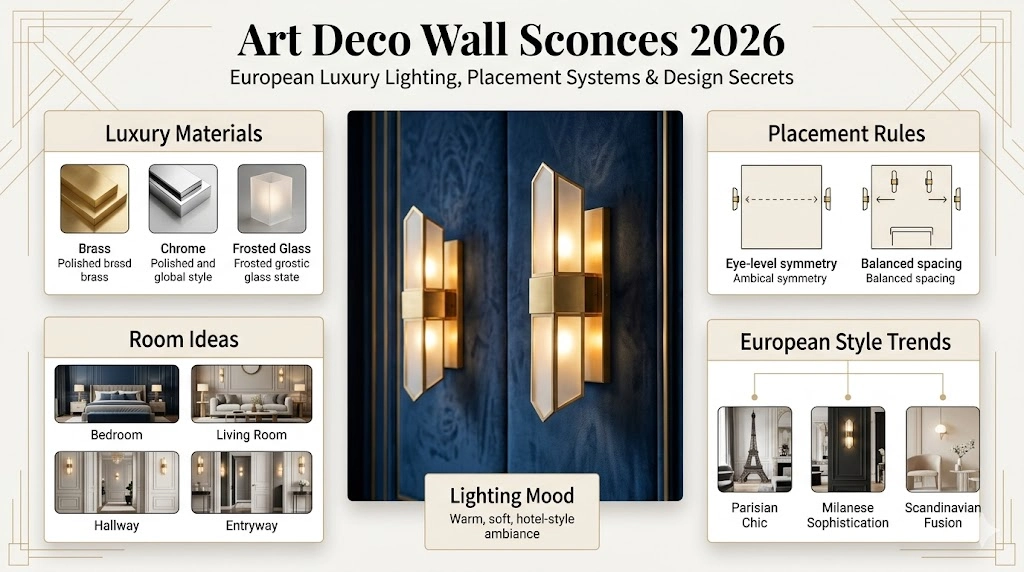
Brass
Creates warm golden reflections and timeless luxury atmosphere.
Chrome
Provides mirror-like modern shine and high visual contrast.
Frosted Glass
Softens light diffusion for calming ambiance.
Black Metal
Delivers bold contrast for contemporary fusion interiors.
Bronze
Offers vintage depth and historical richness.
Material Fusion Strategy
Modern European designers often combine materials to create depth:
- Brass + frosted glass = soft luxury glow
- Black metal + gold accents = modern contrast elegance
- Bronze + textured glass = antique refinement
This layering creates multidimensional lighting aesthetics.
Placement Architecture for Art Deco Wall Sconces
Placement is the most critical factor determining success or failure in lighting design.
Professional Placement System
Eye Level Precision Rule
Ideal installation height is 60–66 inches (152–167 cm) for balanced visual alignment.
Symmetry-Based Positioning
Sconces should generally be installed in balanced pairs for visual harmony.
Structural Alignment Rule
Align sconces with:
- Mirrors
- Art frames
- Furniture edges
- Door architecture
Spacing Consistency Rule
Maintain equal spacing to avoid visual imbalance.
Room-Based Placement System
| Room | Placement Strategy | Purpose |
| Entryway | Mirror-side symmetry | First impression luxury |
| Living Room | Sofa framing | Ambient balance |
| Bedroom | Bedside pairing | Hotel comfort feel |
| Hallway | Repeated pattern rhythm | Gallery effect |
| Bathroom | Mirror alignment | Spa-like lighting |
Art Deco Wall Sconces by Room
Entryway Design
The entryway establishes first impressions. It must communicate elegance instantly.
Recommended setup:
- Brass vertical sconces
- Warm 2700K light temperature
- Symmetrical placement
Result: Luxury hotel-style arrival experience
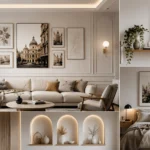
Living Room Design
Living rooms require emotional layering and visual structure.
Use sconces for:
- Highlighting artwork
- Framing feature walls
- Creating evening ambiance
Result: Sophisticated warm living environment
Bedroom Design
Bedrooms require softness and emotional relaxation.
Best configuration:
- Frosted glass sconces
- Warm low-intensity lighting
- Bedside symmetry
Result: Boutique hotel sleeping atmosphere
Hallway Design
Hallways become storytelling corridors in European homes.
Design strategy:
- Repeat sconces every 6–8 feet
- Maintain consistent height
- Use warm soft lighting
Result: Art gallery walking experience
Bathroom Design
Bathrooms require clarity combined with aesthetic softness.
Ideal configuration:
- Mirror-mounted sconces
- Balanced dual placement
- Frosted diffusion glass
Result: Spa-inspired luxury environment
Advanced Lighting Design Systems Used by Professionals
Interior designers never rely on guesswork. They follow structured lighting systems.
Symmetry Design System
Creates psychological calm through balance:
- Mirrors
- Beds
- Artwork
Layered Lighting System
- Ceiling lighting → functional brightness
- Wall sconces → emotional mood
- Accent lighting → decorative enhancement
Vertical Geometry System
Enhances spatial perception by:
- Increasing perceived ceiling height
- Improving visual elegance
- Directing eye movement
Common Mistakes in Art Deco Lighting Design
Even high-end interiors fail when fundamental principles are ignored.
Frequent Errors:
- Random asymmetrical placement
- Mixing too many metallic finishes
- Over-bright white lighting
- Incorrect mounting height
- Overcrowding wall surfaces
Art Deco design requires precision, restraint, and spatial discipline.
Comparison – Art Deco vs Modern Wall Sconces
| Feature | Art Deco | Modern Minimal |
| Style | Decorative geometry | Clean simplicity |
| Materials | Brass, glass, chrome | Matte black, aluminum |
| Impact | Strong visual identity | Subtle presence |
| Mood | Warm & expressive | Neutral & functional |
| Usage | Luxury interiors | Practical homes |
How to Choose the Right Art Deco Wall Sconces
Selection depends on spatial psychology and architectural harmony.
Key Evaluation Factors:
- Room dimensions
- Wall color tone
- Furniture composition
- Lighting purpose
- Ceiling height
Simple Decision Rule:
- Small rooms → minimal sconces
- Large rooms → bold sculptural sconces
FAQs
They combine geometric artistry, premium materials, and soft architectural illumination to create luxury spatial identity.
Yes, they remain highly popular, especially in European luxury and modern classic interiors.
Ideal locations include entryways, hallways, bedrooms, living rooms, and bathrooms.
Yes, when used in minimal designs with correct spacing and scale.
Warm white between 2700K–3000K is ideal for luxury ambiance.
Conclusion
Art Deco wall sconces in 2026 represent far more than decorative lighting—they are a refined blend of architecture, emotion, and European luxury design. With their geometric elegance, premium materials, and soft ambient glow, they transform ordinary walls into structured visual statements.
When placed correctly using symmetry, proper height, and layered lighting systems, they elevate any space into a hotel-like or gallery-inspired environment. Whether in entryways, bedrooms, or living rooms, their real power lies in creating atmosphere, not just illumination.
In modern interior design, Art Deco sconces remain timeless because they perfectly balance heritage aesthetics with contemporary minimal luxury—making them a lasting choice for sophisticated homes.