Introduction
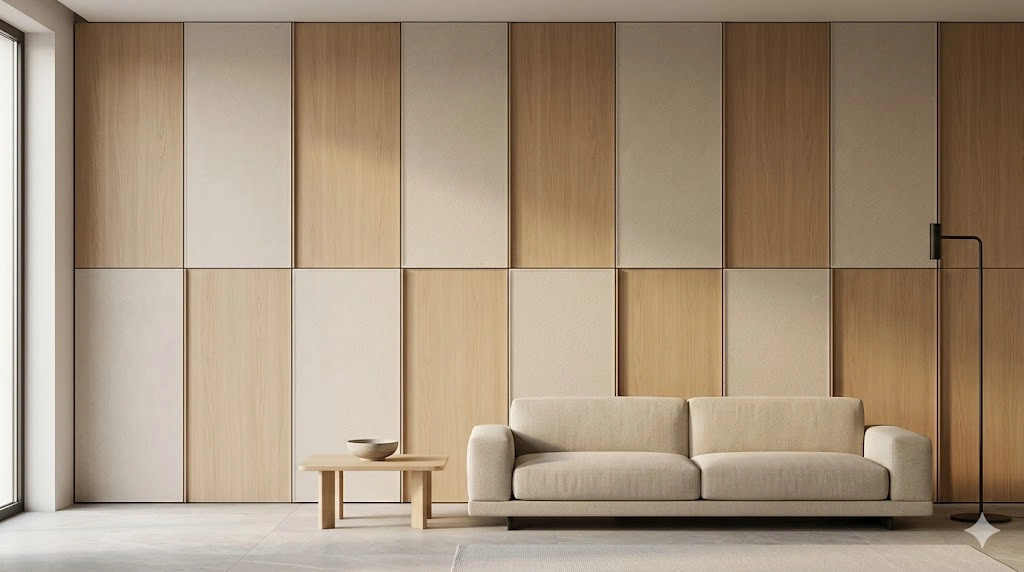
In 2026, 4×8 decorative wall panels have evolved far beyond traditional construction sheets or simple surface coverings. They are now recognized as a comprehensive architectural design framework, shaping not only walls but the entire spatial experience of modern interiors.
Across Europe—especially in design-forward regions such as Germany, Italy, the Netherlands, France, and Scandinavia—interior architects are increasingly moving away from fragmented decorative elements. Instead, they are embracing large-format wall systems that deliver seamless visual continuity, emotional depth, and spatial harmony.
Modern philosophy is no longer about decorating walls. It is about transforming walls into architectural identity surfaces.
These panels influence:
- Light diffusion and reflection behavior
- Spatial perception and room depth illusion
- Acoustic comfort and sound absorption quality
- Emotional ambiance and psychological comfort
- Luxury perception and material richness
This shift marks a major transformation in interior architecture, where walls are no longer passive boundaries but active sensory design elements.
This comprehensive guide explores everything about 4×8 decorative wall panels, including materials, European design principles, installation methodology, psychological impact, and future innovations.
4×8 Decorative Wall Panels as a Modern Design System
From Surface Decoration to Architectural Language
Traditionally, wall panels were used for basic functional purposes such as:
- Covering structural imperfections
- Providing inexpensive surface finishing
- Adding minimal texture or pattern
- Offering quick renovation solutions
However, in modern European interior philosophy, these panels have been redefined as part of a spatial engineering system.
They now function as:
- Visual structuring elements
- Light modulation surfaces
- Acoustic balancing layers
- Emotional environment creators
- Architectural storytelling mediums
This evolution marks a transition from decorative application → architectural integration.
Walls are no longer passive planes. They are dynamic, responsive, and expressive components of interior identity.
Why the 4×8 Format Is the Industry Standard
The 4×8 measurement (approximately 1220mm × 2440mm) is not arbitrary. It is an optimized architectural module widely adopted due to its functional and aesthetic advantages.
Key advantages include:
- Minimal joint visibility for seamless appearance
- Efficient wall coverage with reduced material waste
- Strong alignment with modular construction systems
- Enhanced visual continuity across large surfaces
- Compatibility with both compact and expansive interiors
This format supports the principles of European minimal luxury design, where simplicity, proportion, and continuity define elegance.
European Interior Design Philosophy Behind Wall Panels
The Concept of “Walls as Emotional Experience”
In European design thinking, walls are not structural boundaries alone—they are emotional interfaces that influence human perception.
A well-designed wall system can:
- Expand or compress perceived spatial volume
- Modify mood and psychological comfort
- Influence lighting warmth and shadow behavior
- Define luxury perception and spatial hierarchy
Thus, walls become sensory architecture layers, shaping how occupants feel within a space.
Minimal Luxury Design Movement in Europe 2026 Trend
One of the dominant European interior design movements is Minimal Luxury, which emphasizes:
- Neutral chromatic palettes (beige, ivory, taupe, grey)
- Natural organic materials (wood, stone, textile finishes)
- Clean uninterrupted surface geometry
- Hidden joints and seamless transitions
- Soft ambient lighting integration
Within this context, 4×8 decorative wall panels replace traditional materials such as:
- Wallpaper systems
- Small ceramic tiles
- Mixed texture wall combinations
They provide a cohesive, premium, and architecturally unified appearance.
Materials Used in 4×8 Decorative Wall Panels
Material selection determines the emotional and functional identity of the space.
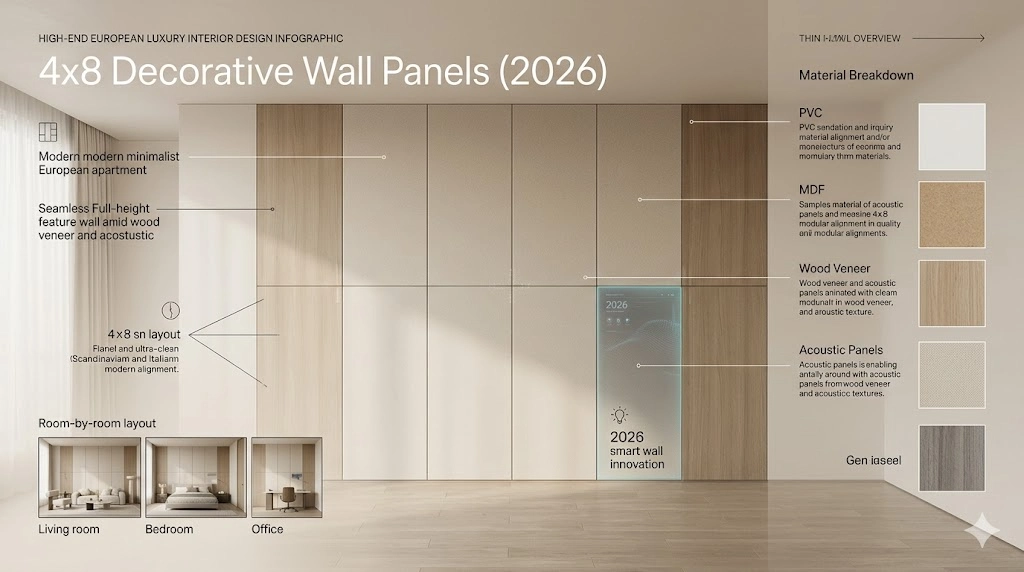
Comparative Material Overview
| Material | Aesthetic Character | Ideal Usage | Design Function |
| PVC Panels | Clean, modern, synthetic minimalism | Kitchens, bathrooms | Functional durability |
| MDF Panels | Versatile, customizable, adaptive | Living rooms, feature walls | Creative architectural expression |
| Wood Veneer | Organic, warm, premium | Bedrooms, luxury interiors | Emotional richness |
| Acoustic Panels | Soft, textured, functional | Offices, studios | Sound control + aesthetics |
PVC Panels: Functional Modern Efficiency
PVC panels represent a practical architectural solution characterized by:
- High moisture resistance
- Easy maintenance and cleaning
- Cost-efficient production
- Simple, smooth surface finish
They are widely used in:
- Kitchens
- Bathrooms
- Utility areas
Their design role focuses on functionality rather than luxury expression.
MDF Panels: Creative Design Flexibility
Medium Density Fiberboard (MDF) panels offer exceptional adaptability, allowing:
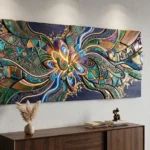
- Sculpted 3D surface patterns
- Geometric design compositions
- Painted or laminated finishes
- Customized architectural detailing
They are commonly used in urban apartments and modern feature walls where design individuality is prioritized.
Wood Veneer Panels: European Luxury Standard
Wood veneer represents the pinnacle of natural interior refinement.
Key characteristics:
- Organic texture authenticity
- Warm visual depth
- High-end aesthetic presence
- Timeless architectural appeal
It is widely used in:
- Scandinavian interiors
- Italian luxury residences
- High-end German apartments
This material embodies heritage, sophistication, and emotional warmth.
Acoustic Panels: Functional Luxury Integration
Acoustic panels merge performance with aesthetics by offering:
- Noise absorption and sound optimization
- Soft tactile surface finishes
- Contemporary interior styling
They are ideal for:
- Home offices
- Creative studios
- Living rooms
- Workspaces
They represent modern hybrid design thinking: functionality + luxury fusion.
Design Psychology of 4×8 Decorative Wall Panels
Spatial Expansion Illusion
Large-format panels generate a psychological effect known as perceptual expansion, where:
- Rooms appear larger
- Visual fragmentation decreases
- Spatial clarity increases
- Interior flow becomes continuous
Emotional Regulation Through Surface Texture
Natural textures such as wood grain and matte finishes promote:
- Psychological relaxation
- Reduced cognitive stress
- Improved emotional balance
- Enhanced spatial comfort
Light Behavior and Depth Creation
When light interacts with textured wall panels:
- Shadows form dynamically
- Surface depth increases visually
- Walls appear multi-dimensional
This creates architectural depth perception, replacing flat visual planes with layered experiences.
Room-by-Room Application Strategy
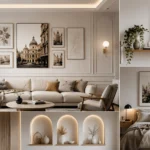
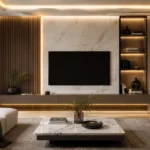
Living Room: Primary Visual Anchor
- Full feature wall behind television or seating area
- Vertical or horizontal panel alignment
- Matte or wood textures
Effect: Strong focal identity + luxury atmosphere
Bedroom: Emotional Rest Environment
- Wood veneer behind headboard
- Soft tonal variations
- Vertical symmetry patterns
Effect: Relaxation + emotional calmness
Kitchen: Functional Clean Design
- PVC moisture-resistant panels
- Light reflective surfaces
- Minimal seams
Effect: Hygiene + efficiency
Bathroom: Spa-Inspired Minimalism
- Waterproof panel systems
- Stone-texture finishes
- Seamless installation
Effect: Spa-like tranquility
Office: Productivity Enhancement Space
- Acoustic wall panels
- Neutral calming tones
Effect: Focus improvement + noise reduction
Dining Area: Atmospheric Warmth
- Dark wood textures
- Ambient lighting reflection
Effect: Social intimacy + comfort enhancement
Professional Installation System
Step-by-step architectural workflow:
- Surface preparation and leveling
- Grid layout and alignment planning
- Precision panel positioning
- Seam sealing for continuity
- Integrated lighting installation
Core principles:
- Maintain full-wall coverage
- Avoid fragmented patchwork designs
- Align with architectural geometry
- Integrate indirect lighting systems
Common Design Mistakes
Avoid:
- Excessive material mixing
- Poor lighting planning
- Random panel placement
- Ignoring room proportions
- Over-texturing surfaces
These mistakes disrupt visual harmony and reduce luxury perception.
2026 Design Trends
Sustainable Material Innovation
- Recycled wood composites
- Low-emission manufacturing
- Eco-certified production systems
Acoustic Integration Growth
Sound-optimized walls becoming standard in modern homes
Seamless Full-Wall Coverage
Partial decoration is being replaced by full architectural wall systems
Biophilic Design Influence
Inspired by nature:
- Organic textures
- Earth-based tones
- Natural material simulation
Soft Luxury Minimalism
Combination of:
- Subtle elegance
- Material richness
- Minimal visual complexity
Future of 4×8 Decorative Wall Panels
Future wall systems will evolve into:
- Smart acoustic surfaces
- Integrated LED architectural walls
- Modular sustainable panel systems
- AI-optimized environmental surfaces
Walls will no longer be static structures—they will become interactive architectural ecosystems.
Cost Structure Overview
- PVC: Low budget tier
- MDF: Mid-range investment
- Wood Veneer: Premium luxury category
- Acoustic Panels: Mid to high-end functional systems
Wall Panels vs Wallpaper Comparison
| Feature | Wall Panels | Wallpaper |
| Durability | High | Medium |
| Luxury Effect | Strong | Limited |
| Depth | 3D Architectural | Flat Surface |
| Maintenance | Easy | Moderate |
| 2026 Trend Strength | Rising | Declining |
FAQs
Yes. They reduce visual fragmentation, making compact spaces appear larger and more open.
Wood veneer is considered the most premium and architecturally refined material.
Yes. Acoustic panel systems significantly reduce noise and improve sound clarity.
Yes. They provide dimensional depth, durability, and enhanced luxury aesthetics.
Yes, especially PVC-based waterproof systems designed for humid environments.
Conclusion
4×8 decorative wall panels represent a major transformation in modern interior architecture. They are no longer decorative accessories but structural design systems that define luxury, emotion, and spatial identity.
In 2026, the future of interiors is not about decoration—it is about architectural experience design, and these panels sit at the core of that evolution.