Introduction
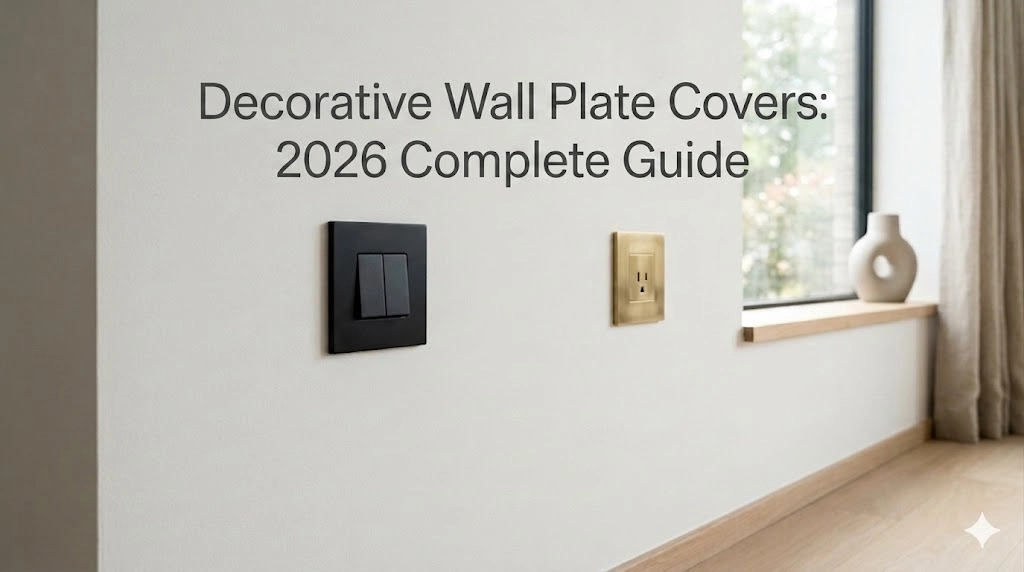
In modern interior design, beauty is no longer defined only by large furniture pieces or bold wall art. Today, the smallest details often create the strongest visual impact. One of these overlooked yet powerful elements is Decorative Wall Plate Covers.
These subtle design components—covering electrical switches and outlets—have evolved from purely functional plastic fixtures into refined interior accents that enhance luxury, minimalism, and architectural harmony. In contemporary European homes, designers now treat them as “micro design elements” that complete a room’s visual language.
Whether you are designing a sleek apartment in Germany, a classic home in France, or a minimalist Scandinavian-inspired interior in Sweden, wall plate covers quietly influence how polished and intentional your space feels.
This guide explores everything—from materials and design psychology to room-by-room styling systems and European aesthetics—so you can transform even the smallest wall detail into a design statement.
What Are Decorative Wall Plate Covers?
Decorative wall plate covers (also called switch plates or outlet covers) are protective panels installed over electrical switches, sockets, or outlets. Traditionally, they were designed purely for safety and functionality.
Today, however, they serve a dual purpose:
- Functional: Cover electrical components safely
- Aesthetic: Enhance wall harmony and interior design consistency
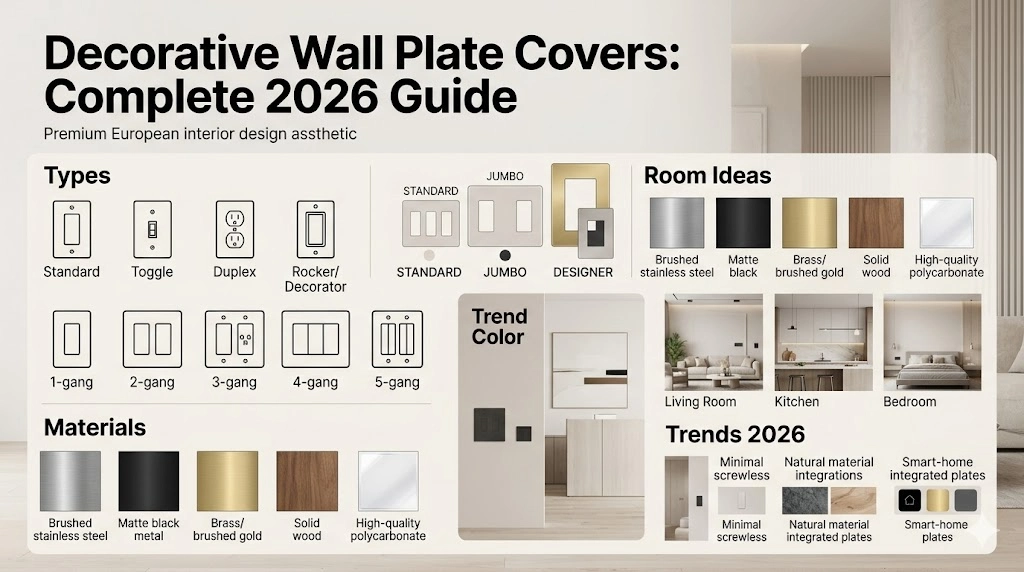
Types of Wall Plate Covers
- Standard single switch plates
- Double or multi-gang plates
- Jumbo oversized plates
- Modular designer plates
- Blank covers for unused outlets
Modern interior designers now consider them part of wall composition—not just hardware.
Why Decorative Wall Plate Covers Matter in Modern Interiors
Interior design in 2026 is increasingly focused on detail-driven aesthetics. Even small visual interruptions on a wall can affect the entire perception of a space.
Key Reasons They Matter:
- They break or enhance wall continuity
- They influence perceived luxury level
- They contribute to color harmony
- They complete minimalist interior compositions
- They support architectural consistency
In premium homes across Italy and Switzerland, designers carefully match wall plates with door handles, lighting fixtures, and furniture accents to maintain visual unity.
European Interior Design Influence on Wall Plate Styling
European interior design has redefined how micro-details like wall plates are used.
German Minimalism
- Clean geometry
- Matte finishes
- Functional-first design
- Neutral tones (white, black, grey)
Scandinavian Simplicity
- Light walls and soft contrasts
- White or wood-textured plates
- Focus on natural harmony
- Minimal visual interruption
French Classic Interiors
- Decorative detailing
- Soft cream and beige tones
- Subtle ornamentation
- Elegant symmetry
Italian Luxury Design
- Brass and gold finishes
- Textured wall integration
- Bold but refined statement pieces
These styles show how wall plate covers are no longer hidden—they are curated.
Types of Decorative Wall Plate Covers
Standard Wall Plates
Simple, functional, and widely used.
Best for:
- Rental apartments
- Budget renovations
- Neutral interiors
Metal Wall Plates
Premium and durable.
- Stainless steel
- Brushed nickel
- Matte black
- Brass finishes
Best for: modern luxury interiors
Jumbo Wall Plate Covers
These oversized plates are becoming a major 2026 trend.
Advantages:
- Hide wall imperfections
- Create architectural presence
- Enhance symmetry
Designer & Patterned Plates
- Ceramic textures
- Marble patterns
- Artistic engravings
Best for: luxury or artistic interiors
Wooden Wall Plates
- Warm natural aesthetics
- Ideal for Scandinavian or rustic homes
Wall Plate Materials & Design Psychology
| Material | Visual Effect | Emotional Impact | Best Use |
| Plastic | Neutral, basic | Practical, budget-friendly | Rental homes |
| Metal | Sleek, modern | Confidence, structure | Luxury interiors |
| Wood | Warm, natural | Comfort, calmness | Scandinavian homes |
| Ceramic | Artistic, detailed | Elegance, culture | European classic interiors |
| Glass | Minimal reflective | Clean, futuristic | High-end modern spaces |
Room-by-Room Styling Guide
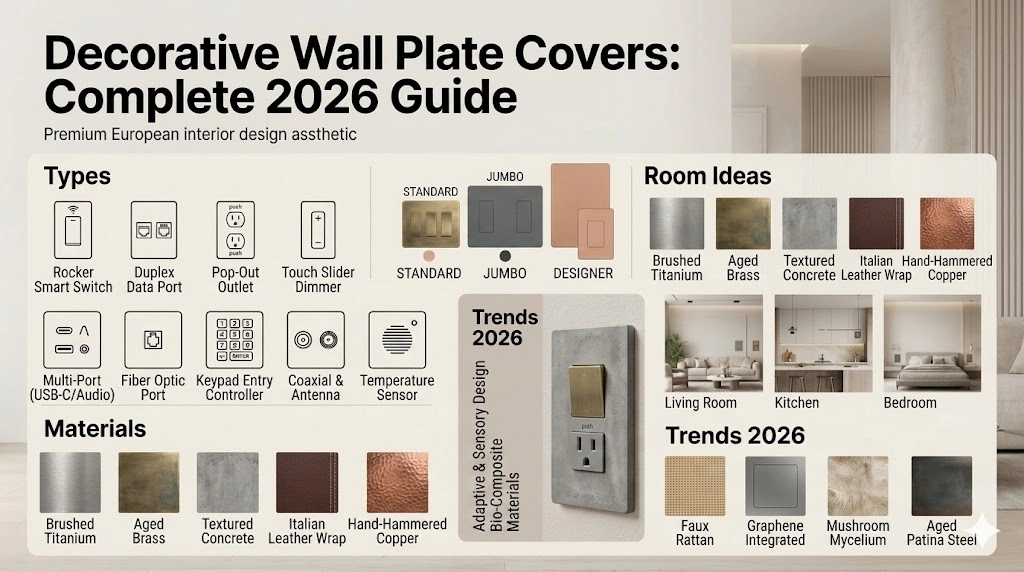
Living Room
- Use matte black or brass plates
- Match with lighting fixtures
- Keep symmetry aligned with furniture
Kitchen
- Stainless steel covers for hygiene
- Heat-resistant materials
- Blend with appliances
Bedroom
- Soft tones (white, beige)
- Minimal contrast
- Calming visual presence
Bathroom
- Moisture-resistant metal or polymer
- Anti-corrosion finishes
Hallway
- Oversized plates for durability
- High-traffic resistant designs
Common Mistakes to Avoid
- Mixing too many finishes in one space
- Ignoring wall color harmony
- Using cheap plastic in luxury interiors
- Wrong plate size selection
- Overdecorating already minimal walls
Even small errors here can disrupt the entire interior flow.
How to Upgrade Your Home Using Wall Plate Covers
A step-by-step design system:
1: Analyze your wall layout
Identify visible switches and sockets.
2: Match interior style
Modern, Scandinavian, luxury, or rustic.
3: Choose finish consistency
Align with door handles and lighting fixtures.
4: Upgrade high-visibility zones first
The living room and hallway always come first.
5: Introduce oversized plates if needed
Especially for older or uneven walls.
Wall Plate Design vs Interior Style
| Style | Best Plate Type | Color Palette | Design Goal |
| Minimalist | Metal matte | White, grey, black | Clean visual flow |
| Scandinavian | Wood/white | Soft neutrals | Natural harmony |
| French Classic | Decorative ceramic | Cream, gold | Elegance |
| Industrial | Black metal | Dark tones | Raw urban aesthetic |
| Luxury Modern | Brass/steel | Monochrome + gold | Premium identity |
Future Trends in Wall Plate Design 2026+
Interior innovation is reshaping even small components.
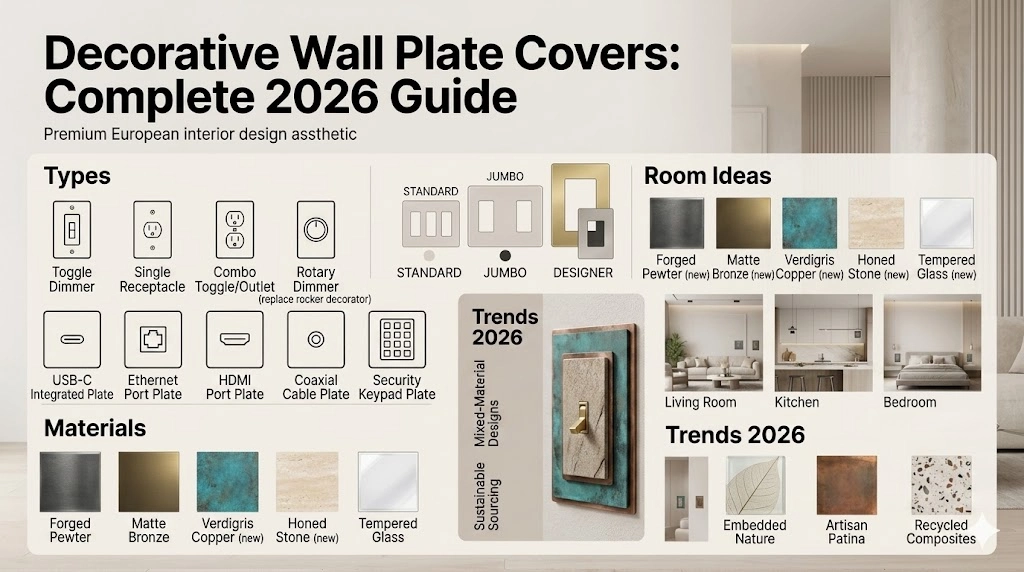
Emerging Trends:
- Smart USB-integrated wall plates
- Touch-sensitive switch covers
- Hidden charging panels
- Magnetic modular plates
- Seamless wall integration systems
Homes in cities like Berlin, Paris, and Milan are already adopting these upgrades.
Maintenance & Durability Tips
- Clean metal plates with microfiber cloth
- Avoid harsh chemicals on ceramic surfaces
- Check screw alignment every 6–12 months
- Replace faded plastic plates regularly
- Match replacements across the entire room for consistency
Expert Design Insights
- Wall plates should never compete with wall art
- Use them as “silent design enhancers”
- Always coordinate with lighting temperature
- Prioritize consistency over complexity
- Think of them as architectural punctuation marks
People Also Ask
Yes, they significantly improve visual consistency. Even small upgrades create a more premium and intentional interior feel without major renovation costs.
Matte white, black, or soft grey works best. These tones blend into walls and maintain a clean, distraction-free environment.
Absolutely. Poorly matched plates can break visual flow, while well-designed ones enhance harmony and elevate perceived luxury.
Metal plates, especially stainless steel or brass, offer the best durability and resistance to wear over time.
Coordinate them with door handles, lighting fixtures, and furniture accents to maintain a unified design language.
Conclusion
Decorative wall plate covers may seem like a minor detail, but in modern interior design, they play a surprisingly powerful role. From Scandinavian simplicity in Norway to luxury apartments in France and minimalist homes in Germany, these small elements define how polished a space feels.
By choosing the right materials, finishes, and design logic, you can transform ordinary walls into cohesive architectural compositions. The key is consistency, subtlety, and alignment with your overall interior theme.
At TheWallsArt.com, the goal is to help you see design differently—not just as decoration, but as intentional storytelling through every surface of your home. Explore more wall design insights to elevate your interiors with confidence and clarity.