Introduction
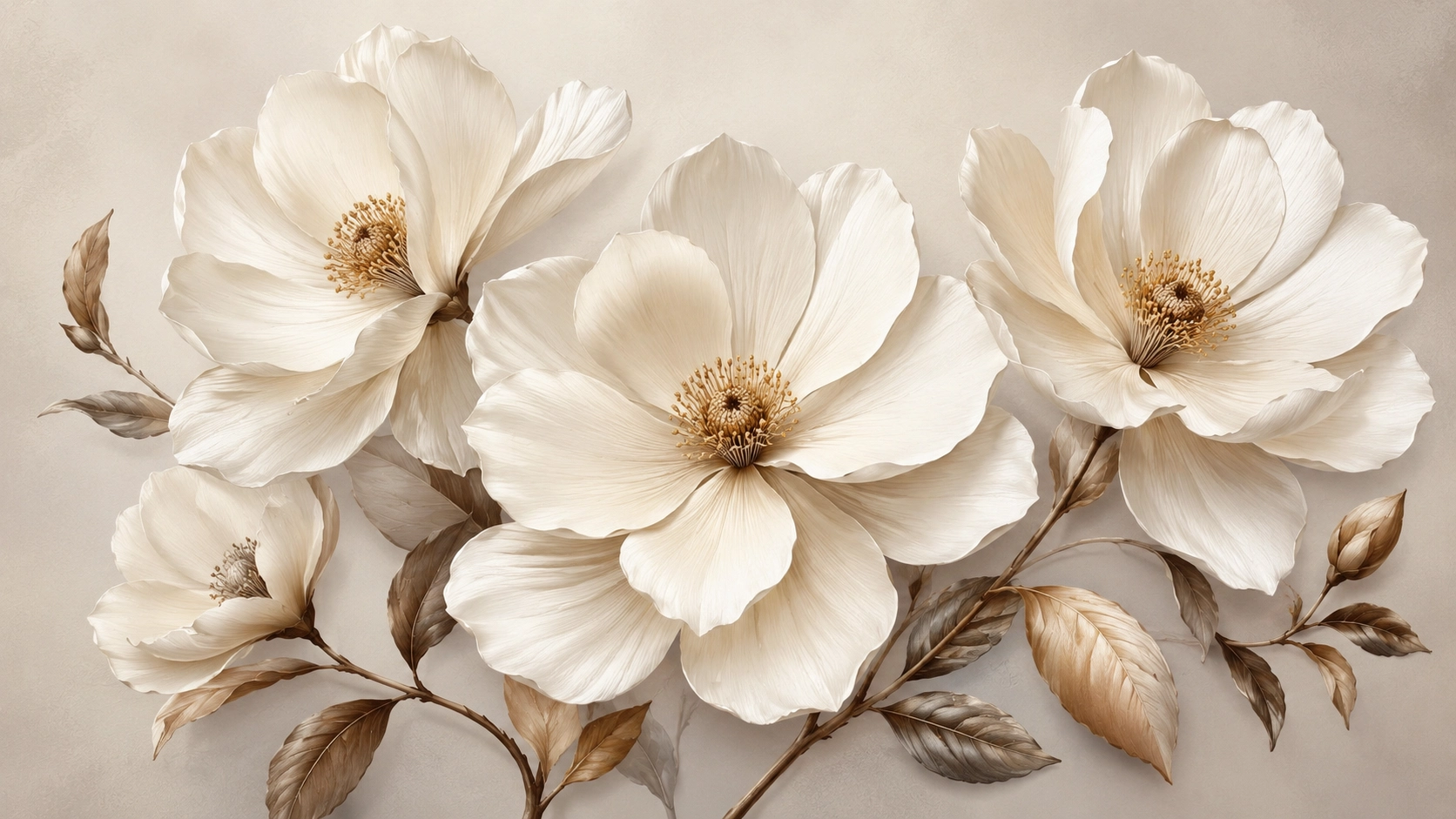
In modern interior design, Wall Art Flowers have become one of the most timeless and emotionally powerful ways to transform a space. Flowers symbolize calmness, renewal, beauty, and harmony — all essential elements in today’s fast-paced lifestyle. Whether you live in a minimalist Scandinavian apartment in Sweden or a classic townhouse in France, floral wall art can instantly soften your interiors and create a more welcoming atmosphere.
Across Europe, designers are increasingly using floral themes not just as decoration but as a design language of emotional balance. From abstract floral prints in German modern homes to romantic botanical illustrations in Italian villas, flower-inspired wall decor adapts beautifully to every style.
This guide explores everything you need to know about wall art flowers — including styles, placement strategies, European design trends, color psychology, and expert tips to help you create a truly elevated interior space in 2026.
What Are Wall Art Flowers?
Wall art flowers refer to artistic representations of floral elements used as wall decoration. These can include:
- Canvas paintings
- Digital floral prints
- Botanical illustrations
- Abstract flower compositions
- 3D floral wall installations
Unlike traditional decoration, floral wall art is not just visual — it carries emotional and psychological influence. It can make a room feel calmer, brighter, more natural, or even more luxurious depending on the design style.
In European interiors, floral wall art is widely used to soften minimalist architecture and bring warmth into neutral-toned spaces.
Why Wall Art Flowers Are Trending in 2026
Floral wall art is not new, but its modern revival in 2026 interior design trends is driven by lifestyle changes and design philosophy shifts.
Key Reasons Behind the Trend:
- Increased focus on mental wellness and calming interiors
- Rise of minimalist Scandinavian and Nordic aesthetics
- Demand for nature-inspired luxury interiors
- Growth of eco-conscious design culture in Europe
- Preference for soft, emotional, human-centered spaces
European designers now use floral art as a bridge between nature and architecture, especially in cities like Amsterdam, Copenhagen, Paris, and Milan.
Types of Wall Art Flowers
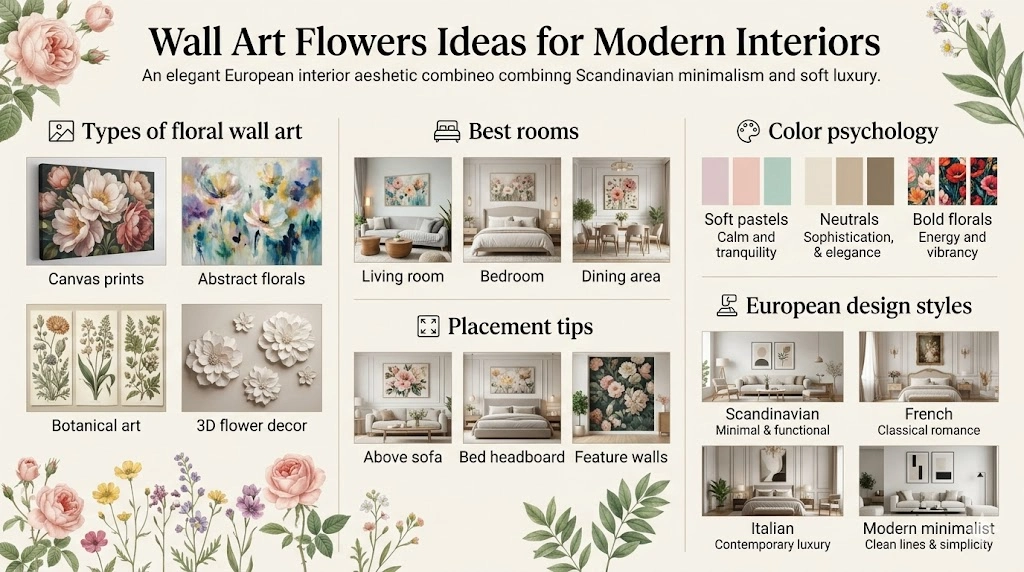
Canvas Floral Prints
Canvas floral prints are the most popular form of flower wall art. They feature high-quality printed or hand-painted floral designs on textured canvas.
Best for:
- Living rooms
- Bedrooms
- Hallways
Style impact: Soft, elegant, and timeless
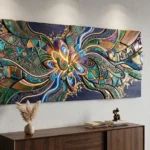
Abstract Flower Wall Art
Abstract floral art focuses on shapes, colors, and movement rather than realistic flowers. It fits perfectly in modern European apartments.
Best for:
- Modern luxury interiors
- Minimalist spaces
- Office walls
Style impact: Artistic, bold, contemporary
Botanical Illustration Art
Inspired by scientific plant studies, botanical prints are highly detailed and structured.
Best for:
- Vintage interiors
- Library rooms
- Classic European homes
Style impact: Intellectual, elegant, traditional
3D Flower Wall Decor
This includes sculpted or layered floral designs that create depth on walls.
Best for:
- Feature walls
- Luxury interiors
- Boutique hotels
Style impact: Dramatic, immersive, high-end
Best Rooms for Wall Art Flowers
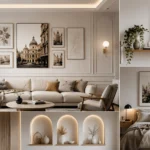
Living Room Floral Wall Art Ideas
The living room is the heart of European homes. Floral wall art here should act as a focal point.
Expert Tips:
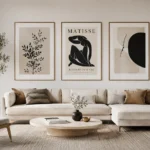
- Use large floral canvas above the sofa
- Choose soft neutrals or pastel tones
- Match with linen or wooden textures
Bedroom Flower Wall Decor
Bedrooms require calm and emotional balance.
Best choices:
- Lavender floral prints
- Soft rose compositions
- Minimal botanical sketches
Psychology insight:
Soft floral tones help reduce stress and improve sleep quality.
Dining Area Botanical Art
In European dining spaces, floral art enhances warmth and appetite stimulation.
- Bright floral tones = energetic dining experience
- Earthy botanical prints = elegant dinner ambiance
How to Choose the Perfect Floral Wall Art
Color Psychology Guide
| Color Type | Emotional Effect | Best Room |
| Soft Pastels | Calm & relaxing | Bedroom |
| Bold Florals | Energy & creativity | Living room |
| Green Botanicals | Natural balance | Dining room |
| Monochrome Floral | Modern luxury | Office |
Size & Proportion Rules
- Large walls → Oversized floral canvases
- Small rooms → Minimal framed prints
- Narrow spaces → Vertical floral compositions
Rule of thumb: Artwork should cover 60–75% of the furniture width beneath it.
Interior Style Matching
- Scandinavian: Light, minimal floral designs
- French interiors: Romantic, soft floral tones
- Italian luxury: Rich, artistic floral compositions
- German modern: Clean abstract floral patterns
- Mediterranean: Warm, colorful botanical art
Modern European Trends in Wall Art Flowers
European interior design in 2026 emphasizes emotional simplicity and natural harmony.
Key Trends:
- Minimalist floral compositions on white walls
- Oversized botanical artwork in living rooms
- Neutral-toned floral abstract designs
- Nature-inspired luxury apartments in cities
- Mixed-material walls (wood + floral canvas)
Countries like Sweden, Denmark, and the Netherlands lead the minimal floral movement, while Italy and France focus on romantic luxury floral interiors.
Common Mistakes in Floral Wall Decor
- Overcrowding walls with multiple floral styles
- Using overly saturated colors in small rooms
- Hanging artwork too high above furniture
- Ignoring room lighting conditions
- Mixing realistic and abstract florals without balance
A well-designed floral wall should feel intentional, not decorative clutter.
Budget vs Luxury Floral Wall Art
Budget Options:
- Printed floral posters
- Digital downloads
- Lightweight canvas prints
Luxury Options:
- Hand-painted floral artwork
- Textured 3D floral installations
- Custom European designer pieces
Key Difference:
Luxury floral art focuses on texture, depth, and originality, while budget options focus on accessibility and simplicity.
Pros & Cons
Pros:
- Enhances emotional atmosphere
- Works with multiple interior styles
- Adds natural beauty indoors
- Easy to customize and replace
- Suitable for all room types
Cons:
- Poor design choices can look outdated
- Color mismatch can disrupt interiors
- Low-quality prints reduce visual impact
Expert Interior Designer Tips
- Always match floral tones with wall paint undertones
- Use natural lighting to enhance floral depth
- Combine floral art with wood or linen textures
- Keep at least one wall “visually calm” in each room
- Use symmetry in modern European interiors
Wall Placement Rules
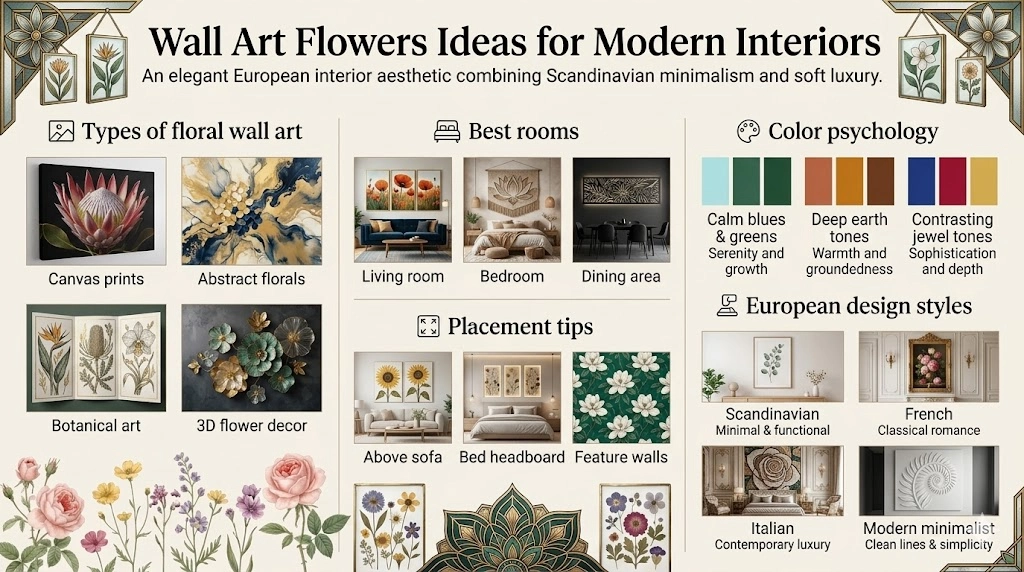
- Center artwork at eye level (145–155 cm from floor)
- Maintain 15–25 cm gap above furniture
- Avoid placing art on cluttered walls
- Use one focal floral piece per main wall
Wall Color Psychology in Floral Design
- White walls → highlight floral vibrancy
- Beige tones → soft European elegance
- Dark walls → dramatic luxury floral contrast
- Green accents → natural botanical harmony
People Also Ask
Minimalist floral and abstract flower art work best for modern homes because they blend simplicity with elegance. They don’t overwhelm the space and match most European interiors.
The living room and bedroom are ideal placements. These areas benefit most from emotional and calming visuals like floral designs.
Yes, floral wall art is highly trending in 2026, especially in Scandinavian and European minimalist interiors focused on nature-inspired aesthetics.
Soft pastels, earthy greens, beige tones, and muted pinks are most effective for creating balanced and elegant interiors.
Conclusion
Wall Art Flowers remain one of the most powerful and versatile design elements in modern interior styling. From Scandinavian simplicity to Italian luxury aesthetics, floral wall decor adapts beautifully across cultures, spaces, and personal styles.
As European interior trends move toward emotional minimalism and nature-inspired living, floral artwork continues to play a central role in shaping peaceful and elegant homes.
Whether you are designing a compact apartment or a spacious villa, the right floral wall art can completely redefine your environment — bringing balance, beauty, and personality into your space.
For more expert insights on wall design, explore in-depth interior guides on TheWallsArt.com and discover how to elevate every wall in your home with timeless style.