Introduction
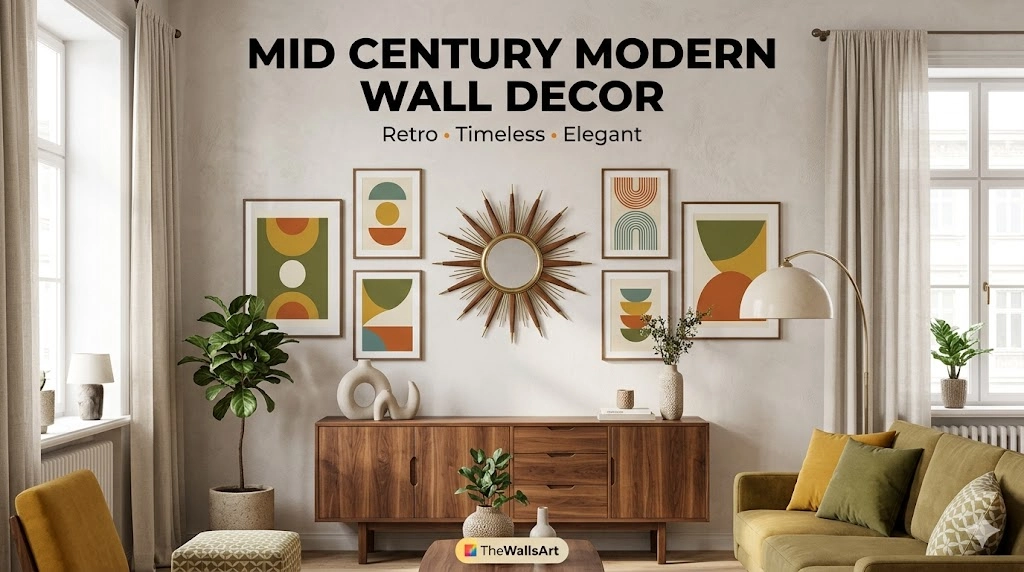
Mid Century Modern Wall Decor continues to dominate interior design trends because it combines simplicity, warmth, artistry, and functionality in a way that feels both nostalgic and contemporary. From Scandinavian-inspired minimalism in Sweden to elegant apartment styling in Paris and warm walnut interiors in Italy, this timeless aesthetic has become a favorite across Europe and beyond.
Unlike temporary decor trends that fade quickly, mid century modern interiors create balance and personality through clean lines, geometric forms, organic textures, and carefully selected artwork. The walls play a particularly important role in defining this design language. Whether through abstract canvas prints, vintage-inspired posters, sculptural wall accents, or minimalist gallery arrangements, the right wall decor transforms an ordinary room into a curated living space.
Today’s homeowners and apartment dwellers are also blending classic mid-century influences with modern European aesthetics such as Japandi, Nordic minimalism, and organic contemporary design. This creates interiors that feel elegant, relaxed, and deeply personal.
In this complete guide, you will discover everything you need to know about mid century modern wall decor — including its history, essential design principles, room-by-room styling ideas, color psychology, expert placement rules, and the latest trends shaping interiors in 2026.
What Is Mid Century Modern Wall Decor?
Mid century modern wall decor refers to artistic and decorative wall elements inspired by the design movement that emerged between the 1940s and 1960s. This era emphasized functional beauty, organic simplicity, and modern craftsmanship.
The aesthetic grew from a combination of:
- Bauhaus design principles
- Scandinavian functionality
- Post-war optimism
- Atomic-age creativity
- Organic modernism
The result was a design philosophy focused on clean lines, geometric harmony, natural materials, and artistic expression without clutter.
History of Mid Century Design
The roots of mid century modern design can be traced back to Europe, particularly Germany’s Bauhaus movement and Scandinavian interior traditions. Designers sought to create homes that were practical yet visually refined.
After World War II, designers embraced:
- Open living spaces
- Minimal ornamentation
- Functional furniture
- Organic curves
- Nature-inspired materials
In countries like Denmark and Sweden, interiors became brighter and simpler. In the United States, atomic-age motifs and futuristic shapes became popular. These influences eventually shaped the iconic mid century wall decor styles we recognize today.
Abstract art, geometric patterns, and starburst-inspired forms became central visual elements because they reflected optimism, innovation, and artistic freedom.
Essential Elements of Mid Century Modern Wall Decor
Creating an authentic mid-century inspired wall requires more than hanging retro artwork. The overall composition, materials, textures, and proportions matter equally.
Geometric Shapes
Geometric forms are central to mid century modern aesthetics. Common motifs include:
- Circles
- Arches
- Diamonds
- Starbursts
- Abstract asymmetrical patterns
These shapes create movement and visual rhythm without overwhelming the space.
Geometric wall art works especially well in:
- Living rooms
- Hallways
- Home offices
- Dining spaces
Organic Forms
While geometry provides structure, organic forms add softness.
Popular examples include:
- Curved line art
- Botanical silhouettes
- Fluid abstract paintings
- Sculptural wood wall pieces
This combination prevents interiors from feeling too rigid.
Warm Wood Tones
Walnut, teak, and oak are iconic mid-century materials. Warm woods add depth and visual comfort.
European interiors often pair walnut frames with:
- Olive green walls
- Cream plaster textures
- Beige linen furniture
- Soft terracotta accents
This creates a cozy yet refined atmosphere.
Minimalist Layouts
Mid century interiors prioritize breathing space.
Instead of overcrowding walls:
- Use fewer statement pieces
- Maintain balanced spacing
- Let artwork become focal points
German and Scandinavian interiors particularly emphasize visual simplicity.
Abstract Artwork
Abstract modern wall art is one of the strongest elements of this style.
Popular choices include:
- Color-block compositions
- Organic brush strokes
- Minimalist line art
- Retro geometric prints
- Textured canvas artwork
Large-scale abstract art often works better than multiple small pieces in minimalist interiors.
Earthy Color Palettes
Mid century modern palettes combine natural warmth with retro vibrancy.
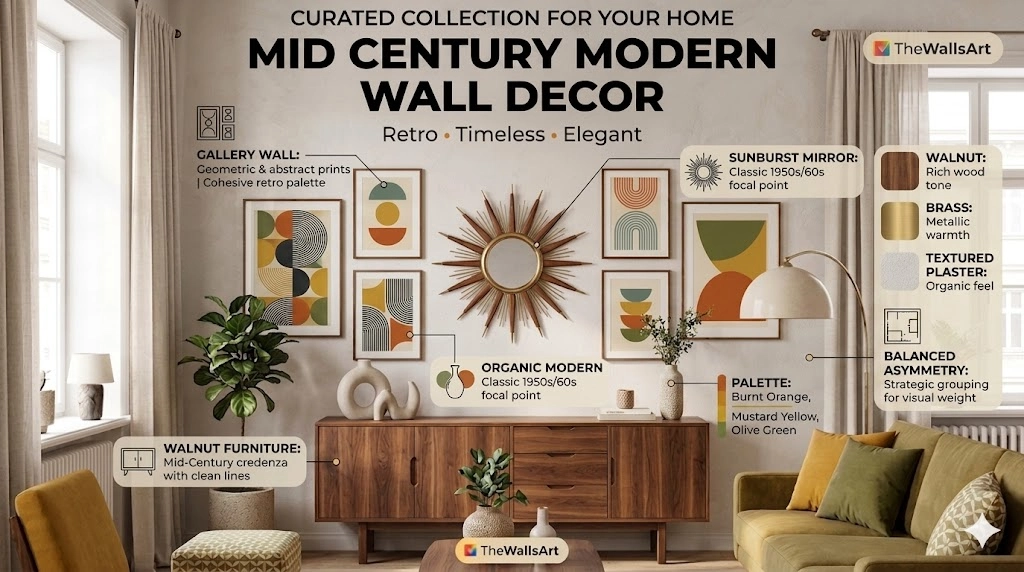
Popular shades include:
- Mustard yellow
- Burnt orange
- Olive green
- Walnut brown
- Dusty teal
- Warm cream
- Rust red
These colors create emotional warmth while maintaining sophistication.
Best Types of Mid Century Modern Wall Decor
Choosing the right decor pieces is essential for creating authenticity.
Abstract Canvas Art
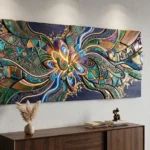
Large abstract canvases are among the most versatile options.
They work beautifully in:
- Scandinavian living rooms
- Modern apartments
- Open dining spaces
- Minimalist bedrooms
Look for:
- Earth-tone palettes
- Organic movement
- Layered textures
- Geometric balance
Oversized artwork is particularly popular in contemporary European homes.
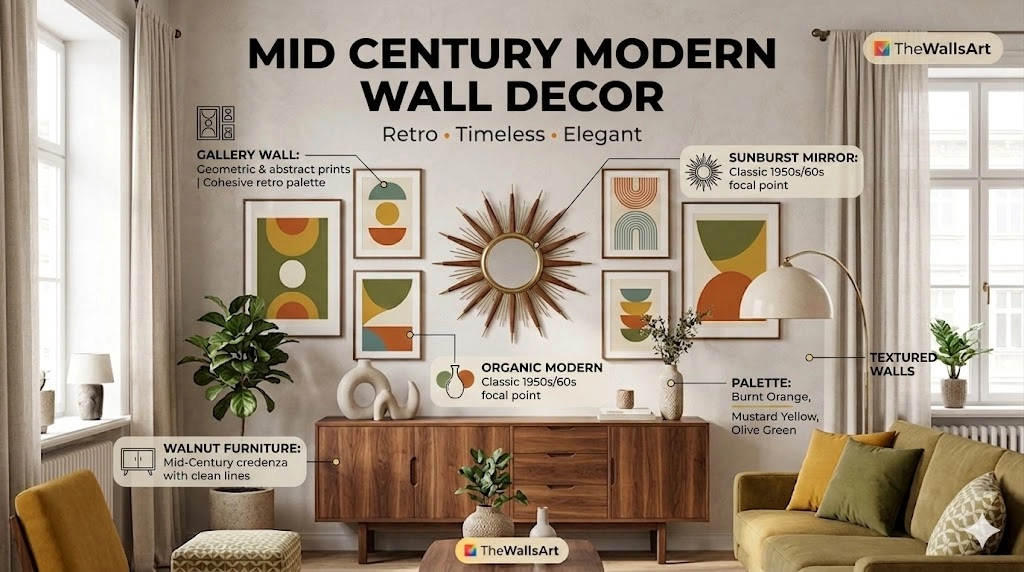
Sunburst Mirrors
Sunburst mirrors became iconic during the atomic age.
They add:
- Vintage personality
- Reflective light
- Sculptural depth
- Retro sophistication
Gold and walnut versions remain timeless choices.
Vintage-Inspired Posters
Vintage posters add character and nostalgia.
Popular themes include:
- Bauhaus typography
- Travel posters
- Abstract architecture
- Retro advertising art
- Italian modernist prints
Black frames or walnut frames enhance authenticity.
Wooden Wall Sculptures
Wood wall decor introduces texture and craftsmanship.
Popular materials:
- Walnut
- Teak
- Oak
- Bamboo
Wood sculptures work exceptionally well in Nordic-inspired interiors.
Metal Wall Accents
Metal accents create contrast against softer materials.
Examples include:
- Brass geometric sculptures
- Black metal grids
- Minimalist line installations
- Atomic-inspired wall pieces
Italian luxury interiors often combine brass accents with warm woods for a premium aesthetic.
Floating Shelves
Floating shelves allow layered styling.
Decor combinations may include:
- Ceramic vases
- Small abstract prints
- Retro books
- Sculptural objects
- Plants
This approach feels curated rather than overly staged.
Textile Wall Hangings
Textile wall decor softens modern interiors.
Popular choices:
- Woven neutral tapestries
- Linen wall panels
- Organic fiber art
- Handmade Scandinavian textiles
These are ideal for bedrooms and cozy apartment spaces.
Minimalist Line Art
Minimalist line drawings complement Scandinavian and Danish interiors beautifully.
They provide:
- Simplicity
- Elegance
- Artistic subtlety
Black-on-cream prints are especially timeless.
Retro Clocks
Starburst and minimalist retro clocks remain iconic mid-century accessories.
They work best:
- Above fireplaces
- In dining areas
- In entryways
- In home offices
Mid Century Modern Wall Decor Ideas by Room
Living Room
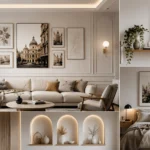
The living room is the ideal place to showcase statement wall art.
Best ideas include:
- Large abstract canvas pieces
- Oversized geometric prints
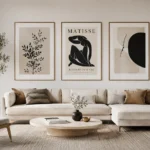
- Walnut-framed gallery walls
- Sculptural mirrors
Expert Tip
In smaller European apartments, one oversized artwork often creates more visual impact than several small pieces.
Bedroom
Bedroom wall decor should feel calming and balanced.
Recommended styles:
- Soft abstract line art
- Neutral earth-tone canvases
- Minimal Scandinavian prints
- Textured fabric panels
Avoid overly bright neon colors that disrupt relaxation.
Dining Room
Dining spaces benefit from visual warmth.
Consider:
- Vintage poster collections
- Organic abstract paintings
- Brass wall accents
- Wood sculptures
Mediterranean-inspired interiors often combine terracotta walls with walnut decor for added depth.
Home Office
Mid century modern offices should encourage focus and creativity.
Ideal wall decor includes:
- Geometric artwork
- Minimal typography prints
- Monochromatic abstract art
- Floating shelf styling
German minimalist interiors often favor structured symmetry in office spaces.
Hallway
Hallways provide opportunities for narrow vertical compositions.
Best options:
- Slim framed prints
- Black-and-white line art
- Small gallery walls
- Repeating geometric themes
Consistent framing creates visual flow.
Entryway
The entryway sets the tone for the home.
Popular combinations:
- Round mirrors
- Minimal benches
- Retro clocks
- Statement artwork
A balanced entryway instantly creates sophistication.
Kitchen
Mid century kitchens benefit from playful retro elements.
Try:
- Vintage food posters
- Colorful geometric prints
- Small floating shelves
- Ceramic wall accents
Warm wood and muted greens work beautifully in European kitchens.
Apartment Spaces
Small apartments require strategic wall styling.
Best practices:
- Use vertical art arrangements
- Incorporate mirrors
- Avoid overcrowding
- Choose multifunctional decor
Nordic apartment design excels at maximizing small spaces without sacrificing style.
How to Create a Mid Century Modern Gallery Wall
Gallery walls are highly effective when thoughtfully arranged.
Layout Planning
Begin by mapping your arrangement on the floor first.
Common layouts:
- Symmetrical grid
- Organic asymmetry
- Linear arrangement
- Central focal piece
Mid-century interiors usually favor balanced asymmetry.
Mixing Frames
The best frame combinations include:
- Walnut wood
- Black matte metal
- Thin oak frames
- Brass accents
Avoid ornate traditional frames.
Spacing Tips
Ideal spacing between frames:
- 2–4 inches for smaller pieces
- 4–6 inches for larger arrangements
Consistent spacing creates cohesion.
Color Coordination
Choose one dominant color palette.
Good combinations include:
- Olive + cream + walnut
- Burnt orange + beige + black
- Teal + brass + oak
Too many competing colors create visual chaos.
Choosing Statement Pieces
Every gallery wall should contain:
- One dominant anchor piece
- Supporting smaller artwork
- Variation in scale
- Visual breathing space
Best Colors for Mid Century Modern Walls
Color psychology plays a major role in retro-inspired interiors.
Olive Green
Olive creates warmth, sophistication, and natural balance.
Perfect for:
- Living rooms
- Offices
- Dining areas
Mustard Yellow
Mustard adds retro energy without overwhelming the room.
Use it in:
- Accent art
- Small decorative pieces
- Vintage-inspired prints
Burnt Orange
Burnt orange evokes warmth and nostalgia.
It pairs beautifully with:
- Walnut wood
- Cream walls
- Brass accents
Walnut Brown
Walnut tones ground the space and add timeless richness.
Teal Blue
Muted teal introduces cool contrast while maintaining retro authenticity.
Cream and Beige
Neutral tones keep interiors bright and spacious, especially in smaller European apartments.
How to Choose the Right Mid Century Modern Wall Art
Wall Size Guide
| Wall Size | Recommended Artwork |
| Small Wall | One medium print |
| Medium Wall | Two to three coordinated pieces |
| Large Wall | Oversized canvas or gallery wall |
| Narrow Wall | Vertical artwork |
| Above Sofa | Artwork covering two-thirds sofa width |
Vertical vs Horizontal Art
Vertical pieces:
- Add height
- Work well in hallways
- Suit narrow walls
Horizontal artwork:
- Expands visual width
- Complements sofas and beds
- Feels more relaxed
Canvas vs Framed Prints
Pros
- Modern appearance
- Minimalist feel
- Lightweight
- Texture visibility
Cons
- Less formal
- Vulnerable to humidity
Framed Print Pros
- Elegant presentation
- Better protection
- More versatile styling
Framed Print Cons
- Heavier
- Can feel visually busy if overused
Texture Considerations
Texture adds dimension and warmth.
Popular textures include:
- Linen canvas
- Wood grain
- Plaster-style finishes
- Woven textiles
- Matte paper
Organic texture is especially important in Scandinavian-inspired interiors.
Lighting Tips
Lighting dramatically affects wall art appearance.
Best practices:
- Use warm lighting
- Avoid direct glare
- Highlight texture with angled lighting
- Use wall sconces for dramatic effect
Soft lighting enhances earthy retro palettes beautifully.
Mid Century Modern Decor Trends for 2026
The style continues evolving while maintaining its classic roots.
Japandi Fusion
Japandi combines:
- Japanese minimalism
- Scandinavian warmth
- Organic simplicity
This trend is dominating European interiors in 2026.
Organic Modern Design
Organic modern interiors emphasize:
- Natural textures
- Curved furniture
- Earth-tone palettes
- Minimal visual clutter
Mid century decor integrates naturally into this movement.
Curved Minimalism
Sharp geometry is increasingly balanced with softer curves.
Expect to see:
- Arched mirrors
- Rounded abstract forms
- Curved wall sculptures
Sustainable Materials
Eco-conscious design is becoming essential.
Popular sustainable choices:
- Reclaimed wood
- Handmade ceramics
- Organic textiles
- Natural pigments
Oversized Retro Art
Large-scale statement art is replacing overly crowded gallery walls.
This trend works especially well in:
- Open apartments
- Minimalist homes
- Luxury interiors
Common Mid Century Modern Decorating Mistakes
Even beautiful decor can fail if styling principles are ignored.
Overcrowding Walls
Too much artwork removes the calm elegance central to mid-century design.
Mixing Too Many Wood Tones
Limit yourself to:
- One dominant wood tone
- One complementary accent tone
This creates harmony.
Using Ultra-Modern Neon Colors
Neon shades often clash with organic retro aesthetics.
Instead, focus on muted earthy tones.
Hanging Art Too High
Artwork should generally sit:
- 57–60 inches from the floor center
- Slightly lower above sofas and beds
Poor Scale Balance
Tiny artwork on large walls feels disconnected.
Always match scale to the room size.
Affordable Mid Century Modern Wall Decor Ideas
Creating stylish interiors does not require luxury budgets.
DIY Abstract Art
Simple DIY ideas include:
- Color-block paintings
- Geometric canvas designs
- Minimal line art
- Textured plaster art
Thrift Finds
European flea markets and vintage stores often contain:
- Retro frames
- Vintage posters
- Ceramic decor
- Mid-century mirrors
Printable Art
High-quality printable artwork offers affordable flexibility.
Choose:
- Neutral palettes
- Timeless designs
- Minimal typography
Budget Styling Tricks
Affordable upgrades include:
- Swapping frames
- Repainting walls
- Using lighting creatively
- Rearranging gallery layouts
Thoughtful styling often matters more than expensive purchases.
European Styling Inspiration for Mid Century Modern Interiors
European homes approach mid-century styling differently across regions.
Scandinavian Interiors
Nordic interiors prioritize:
- Light wood
- White walls
- Functional simplicity
- Soft textures
Wall decor remains minimal yet artistic.
French Apartments
French interiors often mix:
- Vintage elegance
- Mid-century furniture
- Contemporary abstract art
This creates refined contrast.
Italian Luxury Spaces
Italian styling leans toward:
- Sculptural decor
- Brass accents
- Rich walnut finishes
- Bold statement artwork
UK Apartment Trends
Urban UK apartments increasingly blend:
- Mid-century silhouettes
- Industrial textures
- Minimal gallery walls
Mediterranean Influence
Spanish and Greek interiors incorporate:
- Warm terracotta
- Organic textures
- Natural light
- Handmade ceramics
These pair beautifully with retro modern wall art.
Maintenance and Durability Tips
Proper maintenance protects wall decor investment.
Protect Artwork From Sunlight
Direct sunlight may fade:
- Prints
- Textiles
- Vintage posters
Use UV-protective glass when possible.
Control Humidity
Bathrooms and kitchens require:
- Moisture-resistant materials
- Proper ventilation
Dust Regularly
Soft microfiber cloths prevent surface damage.
Rotate Artwork Occasionally
Rotating artwork refreshes interiors without major redesigns.
People Also Ask
Mid century modern wall decor combines clean lines, organic forms, geometric patterns, warm wood tones, and minimalist styling inspired by the 1940s–1960s design movement.
Earthy tones such as olive green, mustard yellow, burnt orange, walnut brown, teal, and cream create the most authentic retro-modern atmosphere.
Yes. The style remains highly relevant because it blends beautifully with contemporary trends like Japandi, organic modernism, and Scandinavian minimalism.
Absolutely. Boho textures such as woven textiles and natural fibers pair exceptionally well with mid-century furniture and abstract wall art.
Conclusion
Mid century modern wall decor remains one of the most timeless and versatile interior design styles because it balances simplicity, warmth, artistry, and functionality. Whether you live in a compact Scandinavian apartment, a modern London flat, or a spacious Mediterranean-inspired home, this aesthetic adapts beautifully to contemporary lifestyles.
The key to successful mid-century styling lies in thoughtful composition rather than excessive decoration. Warm woods, geometric artwork, earthy palettes, balanced spacing, and meaningful textures work together to create interiors that feel calm, elegant, and deeply personal.
As modern European design continues embracing organic materials, sustainable craftsmanship, and minimalist living, mid century modern wall decor will remain a defining influence for years to come.