Introduction
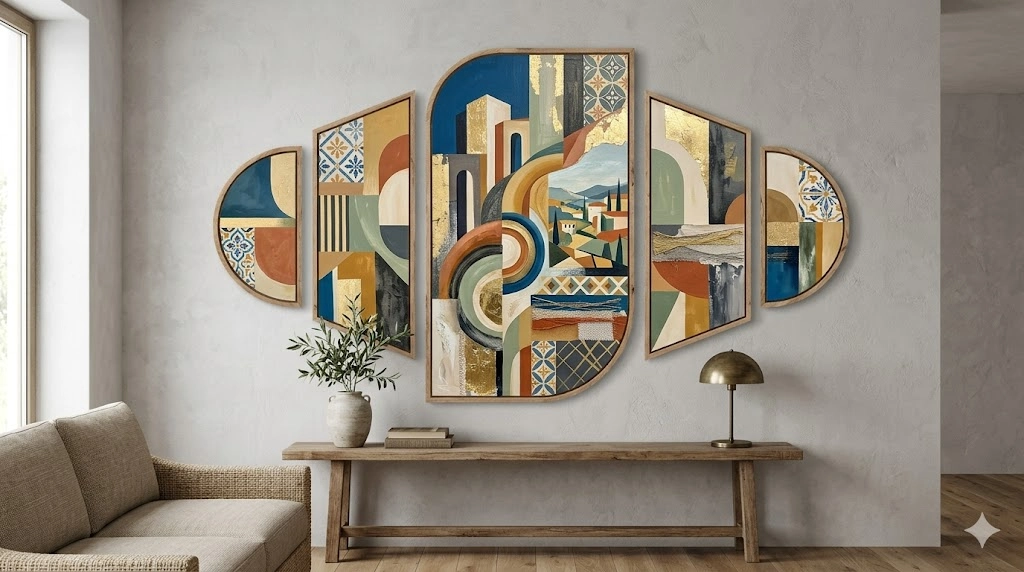
Modern Wall Art Decor is no longer just a finishing touch in interior design—it has become the emotional and visual foundation of a home. In 2026, European interiors are evolving toward meaningful simplicity, where every artwork tells a story, shapes atmosphere, and reflects personal identity.
Across cities like Paris, Copenhagen, Milan, Berlin, and Amsterdam, homeowners are embracing a refined design philosophy: fewer objects, stronger impact. Wall art plays a central role in this transformation, balancing minimalism with emotional depth.
Whether it’s a Scandinavian-inspired calm living room, a luxurious Italian apartment, or a compact UK studio flat, modern wall art decor defines how a space feels—calm, energetic, elegant, or creative.
This guide will help you understand modern wall art from a professional interior design perspective. You’ll learn how to choose the right artwork, place it correctly, match it with room aesthetics, and avoid common mistakes. By the end, you’ll be able to design walls like a European interior stylist.
What is Modern Wall Art Decor?
Modern wall art decor refers to contemporary visual elements used to enhance interior walls through artistic expression and design balance. Unlike traditional decorative art, modern wall art focuses on emotional clarity, simplicity, and spatial harmony.
It includes:
- Abstract compositions
- Minimalist line art
- Geometric patterns
- Typography-based designs
- Nature-inspired visuals
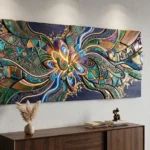
- Oversized statement canvases
The goal is not decoration alone—it is visual storytelling and spatial psychology.
Modern European homes treat wall art as an extension of architecture, not just decoration. That’s why placement, scale, and color harmony are as important as the artwork itself.
Why Modern Wall Art Matters in 2026
In 2026, interior design trends across Europe are driven by three major ideas:
Emotional Living Spaces
People want homes that reduce stress and improve mental clarity.
Minimal but Meaningful Design
Less decoration, more intentional art pieces.
Sustainable Aesthetic Choices
Eco-conscious materials and long-lasting visual value.
Countries like Sweden and Denmark lead with calm, neutral palettes, while France and Italy focus on artistic luxury and emotional expression.
Modern wall art decor fits perfectly into this shift because it:
- Defines mood instantly
- Requires minimal physical space
- Enhances architecture naturally
- Works in both luxury and small apartments
Key Modern Wall Art Styles in 2026
Abstract Expressionism
Abstract art is the heart of modern interiors. It uses shapes, brush textures, and emotional color combinations to create depth.
Best for:
- Living rooms
- Creative studios
- Luxury apartments
Minimalist Line Art
Clean, simple, and elegant. Often black line drawings on white or neutral backgrounds.
Best for:
- Bedrooms
- Scandinavian interiors
- Small spaces
Scandinavian Wall Art Decor
A major European influence characterized by:
- Soft tones
- Natural themes
- Light wood framing
- Calm compositions
Luxury Modern Wall Art
Seen in Italian and French interiors:
- Gold accents
- Large canvas artworks
- Textured materials
- Bold focal points
Black & White Photography Art
Timeless and architectural. Often used in German and UK modern apartments.
Modern Wall Art Decor by Room
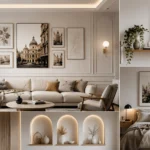
Living Room Styling
Living rooms require strong visual anchors.
Best options:
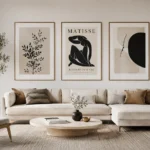
- Large abstract canvas above sofa
- Triptych (3-panel) art sets
- Oversized minimalist artwork
Design Tip:
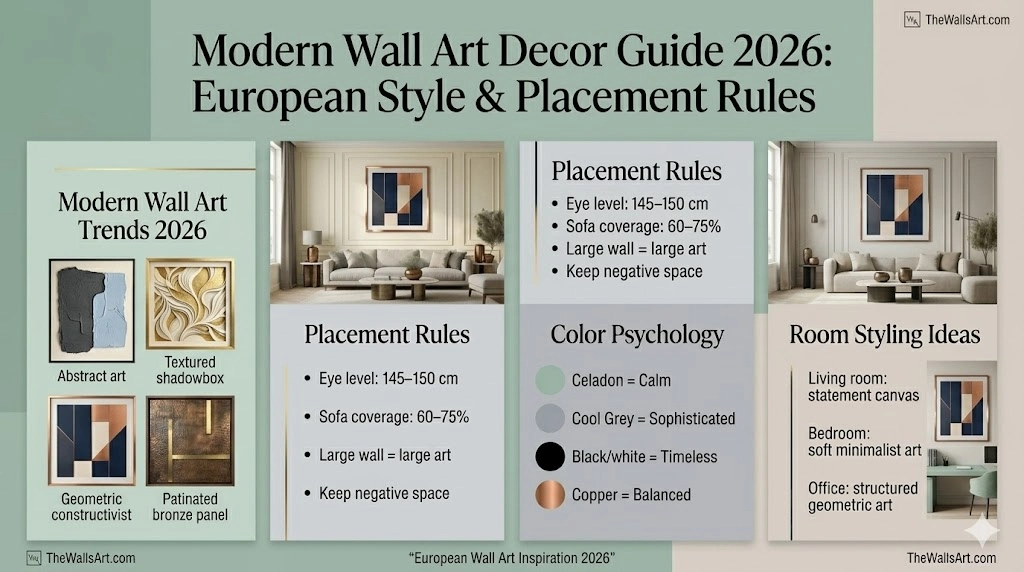
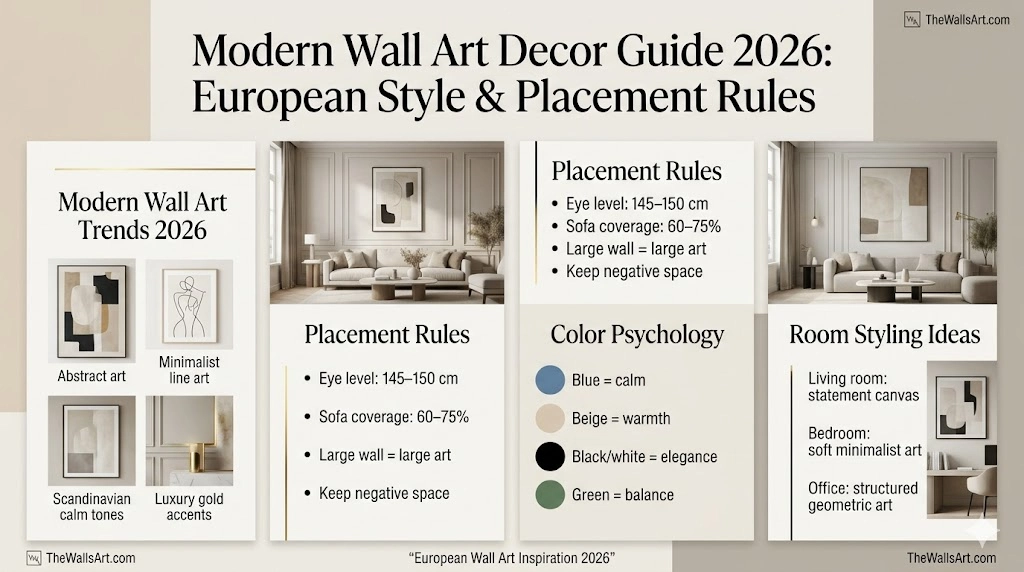
The artwork should cover 60–75% of sofa width for visual balance.
Bedroom Styling
Bedrooms require calm and emotional softness.
Recommended styles:
- Pastel abstract art
- Nature-inspired visuals
- Symmetrical dual frames
Avoid overly bright or aggressive visuals.
Dining Room Styling
Dining spaces benefit from warm, social energy.
Best choices:
- Wine-themed abstract art
- Warm-toned geometric pieces
- Luxury modern sets
Home Office Styling
Focus on productivity and clarity:
- Motivational typography
- Monochrome photography
- Structured geometric art
Wall Art Placement Rules
Proper placement is more important than artwork itself.
Golden Rules:
- Eye level height: 145–150 cm
- Above furniture gap: 15–25 cm
- Large walls → large art pieces
- Small walls → grouped arrangements
- Maintain negative space (~60%)
Psychological Effect:
Correct placement improves visual flow and reduces cognitive stress.
Wall Size & Proportion Guide
| Wall Type | Recommended Art Size | Best Style |
| Large living room wall | Oversized (120–200 cm) | Abstract / Statement art |
| Sofa wall | 60–75% sofa width | Triptych / Canvas |
| Bedroom wall | Medium (80–120 cm) | Minimal / Soft art |
| Small apartment wall | Small sets | Gallery wall |
Wall Art Color Psychology
Colors directly influence emotional atmosphere:
- Blue tones: calm, focus, clarity
- Green tones: balance, nature connection
- Beige & neutral tones: warmth, stability
- Black & white: elegance, structure
- Gold accents: luxury, richness
European designers often use muted palettes to create timeless interiors.
Materials & Textures in Modern Wall Art
Modern wall art is not limited to prints. Materials play a major role:
- Canvas (most popular in Europe)
- Metal wall sculptures (industrial style)
- Wood panels (Scandinavian influence)
- Acrylic glass art (modern luxury)
- Textile wall hangings (bohemian interiors)
Texture adds depth and realism to minimalist spaces.
Common Interior Design Mistakes
Avoid these mistakes:
- Choosing art too small for large walls
- Mixing too many styles in one room
- Hanging artwork too high
- Ignoring lighting conditions
- Overcrowding wall space
Even expensive art looks bad with poor placement.
Budget vs Luxury Wall Art Styling
| Factor | Budget Styling | Luxury Styling |
| Materials | Prints, posters | Canvas, metal, textured art |
| Frame | Basic wood/plastic | Premium oak, metal frames |
| Impact | Visual simplicity | Statement & emotional depth |
| Placement | DIY gallery walls | Designer-curated focal points |
European Interior Design Influence
Modern wall art decor is heavily shaped by European aesthetics:
- Scandinavian: minimal, light, natural
- French: artistic, elegant, emotional
- Italian: bold luxury, expressive
- German: structured, functional balance
- UK: modern compact apartment styling
- Dutch: creative minimalism
Each culture brings a unique interpretation of wall aesthetics.
Step-by-Step Wall Styling System
- Identify room function (calm, energy, focus)
- Choose dominant color palette
- Select art style (minimal, abstract, luxury)
- Decide size based on wall proportion
- Place at correct eye level
- Add lighting to highlight artwork
- Maintain negative space balance
This system ensures professional-level interior results.
Advantages & Limitations
Advantages:
- Enhances emotional atmosphere
- Easy to update and change
- Works in all room sizes
- Strong aesthetic impact
Limitations:
- Requires correct placement knowledge
- Poor selection can disrupt harmony
- Oversized art can overwhelm small spaces
Maintenance & Durability Tips
- Avoid direct sunlight exposure
- Clean frames gently with microfiber cloth
- Use anti-moisture protection in humid areas
- Rotate artworks seasonally for freshness
Proper care extends visual lifespan significantly.
People Also Ask
Minimalist and light-colored artwork works best for small spaces. It creates openness and avoids visual clutter while maintaining elegance.
Start with sofa size and color palette. Choose artwork that covers 60–75% of sofa width and matches your room’s mood and lighting.
Yes, abstract art is one of the strongest modern choices because it adds emotion without visual overload. It works in both luxury and minimalist homes.
Neutral tones like beige, grey, white, and muted blues are most popular in European interiors. They create calm and timeless aesthetics.
The ideal height is around 145–150 cm from the floor to the center of the artwork. This ensures natural eye-level alignment.
Conclusion
Modern Wall Art Decor has evolved into a core element of interior design, especially across European homes where simplicity meets emotional storytelling. It is no longer just about filling empty walls—it is about creating identity, mood, and spatial harmony.
By understanding placement rules, color psychology, material choices, and European design principles, anyone can transform a basic room into a visually balanced and inspiring space.
Whether you prefer Scandinavian minimalism, French elegance, or Italian luxury, the right wall art can redefine your entire home experience.
For more expert interior inspiration and curated design guides, explore TheWallsArt.com and continue building spaces that reflect true modern aesthetics.