Introduction
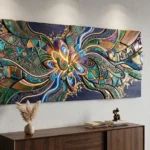
Tapestry wall art has evolved into one of the most influential interior design elements of 2026. Once associated mainly with historical castles and traditional textile craftsmanship, it has now transformed into a new design language used in luxury flats, minimalist homes, boutique hotels, and creative European interiors.
Today’s design world no longer treats tapestry as old-fashioned decoration. Instead, it is considered a textile-based optical identity tool that enhances emotional ambiance, spatial peace, and architectural softness.
Across Europe—from Parisian chic flats to Scandinavian minimalist homes—tapestry wall art is becoming a central decorative feature that introduces passion, bottom, and personality to modern interiors.
In this comprehensive expert-level guide, you will explore:
- Modern definition of tapestry wall art
- European design influence and 2026 trends
- Materials, feelings, and fabric psychology
- Room-by-room styling strategies
- Professional design mistakes to avoid
- DIY creative concepts
- Purchasing and selection guide
- Future predictions for textile wall art
This is your complete pillar-level SEO guide to mastering tapestry wall art in 2026.
What is Tapestry Wall Art?
Tapestry wall art refers to a fabric-based decorative artwork designed specifically for wall display. It can be woven, printed, embroidered, stitched, or digitally produced, depending on its manufacturing method and artistic purpose.
Unlike traditional framed art such as paintings or posters, tapestry introduces a soft architectural layer into interior zones.
Core Definition :
Tapestry wall art = a flexible textile composition used for wall aesthetics, spatial enhancement, and interior emotional design.
Semantic Characteristics:
- Textile-based visual object
- Non-rigid decorative structure
- Emotion-driven interior element
- Lightweight spatial enhancer
Modern Applications :
Today, tapestry wall art is widely used in:
- Luxury residential interiors
- Minimalist flats
- Scandinavian-moved homes
- Hotel lobby design
- Boutique café interiors
- Creative studio environments
Instead of simply decorating walls, tapestry now functions as a mood-setting interior layer that influences perception, comfort, and spatial balance.
Why Tapestry Wall Art is Trending in 2026
The growing popularity of tapestry wall art is driven by multiple global interior design shifts.
Emotional Minimalism Movement
Modern design is shifting from cold minimalism to emotional minimalism, where simplicity is combined with passion and feeling.
Instead of empty white walls, owners now prefer:
- Soft textile layers
- Neutral organic jewels
- Fabric-based optical passion
- Gentle spatial feelings
Tapestry fits perfectly into this philosophy by adding softness without optical overload.
Decline of Multi-Frame Gallery Walls
Previously, gallery walls filled with multiple frames were extremely popular. However, 2026 design trends show a clear transition toward:
- Single statement pieces
- Clean wall compositions
- Reduced optical fragmentation
- Centralized focal design
A large tapestry can replace multiple frames while maintaining stronger emotional presence and cohesion.
Rise of Cozy Luxury Interiors
A dominant 2026 trend is “cozy luxury,” a hybrid aesthetic combining comfort with elegance.
This includes:
- Soft lighting systems
- Natural fabrics
- Warm neutral palettes
- Covered feelings
Tapestry wall art contributes by offering optical softness + luxury textile appeal simultaneously.
Sustainability-Driven Design Choices
Eco-conscious living is influencing interior decisions. Tapestry supports sustainability through:
- Natural fibers (linen, cotton, wool)
- Reusable textile decor
- Long lifecycle materials
- Low-energy production options
European Influence on Tapestry Wall Art
Europe plays a foundational role in shaping global tapestry aesthetics. Each region contributes unique stylistic DNA.
French Interior Elegance
French interiors emphasize:
- Neutral sophistication
- Artistic restraint
- Soft luxury air
Tapestry usage in France includes:
- Beige and ivory fabric jewels
- Minimal abstract textile art
- Subtle decorative layering
Parisian design avoids optical clutter, making tapestry ideal for elegant simplicity.
German Functional Minimalism
German interiors focus on structured efficiency:
- Clean architectural lines
- Functional aesthetics
- Purpose-driven design
Tapestry is used to:
- Add passion to minimal zones
- Soften geometrical interiors
- Introduce textile contrast
Italian Emotional Luxury
Italian design is deeply emotional and expressive.
Key characteristics:
- Warm earthy jewels
- Artistic storytelling
- Rich interior layering
Tapestry wall art enhances:
- Visual storytelling
- Traditional elegance
- Emotional richness
Scandinavian Simplicity
Nordic design prioritizes:
- Natural lighting
- White and grey jewels
- Functional minimalism
Tapestry helps by:
- Softening stark walls
- Adding cozy feeling
- Improving optical passion
Types of Tapestry Wall Art
Woven Tapestry
Traditional production method using interlaced threads.
- High durability
- Rich feeling bottom
- Classical appearance
Best for: heritage and luxury interiors
Printed Tapestry
Modern digital textile printing.
- Affordable
- Highly customizable
- Wide design range
Best for: modern flats
Embroidered Tapestry
Hand-stitched artistic fabric.
- Premium craftsmanship
- Detailed patterns
- Artistic exclusivity
Best for: luxury interiors
Macramé Wall Art
Knot-based textile structure.
- Boho aesthetic
- Handmade appeal
- Organic feeling
Best for: creative and bohemian homes
Vintage European Tapestry
Historical textile reproductions.
- Classical motifs
- Heritage patterns
- Castle-moved opticals
Best for: traditional European interiors
Best Materials for Tapestry Wall Art
Material selection directly affects aesthetics, durability, and emotional tone.
| Material | Design Effect | Ideal Usage |
| Wool | Warm, traditional | Classic interiors |
| Cotton | Soft, flexible | Modern homes |
| Linen | Natural elegance | Minimalist zones |
| Jacquard | Luxury feeling | High-end interiors |
Expert Insight:
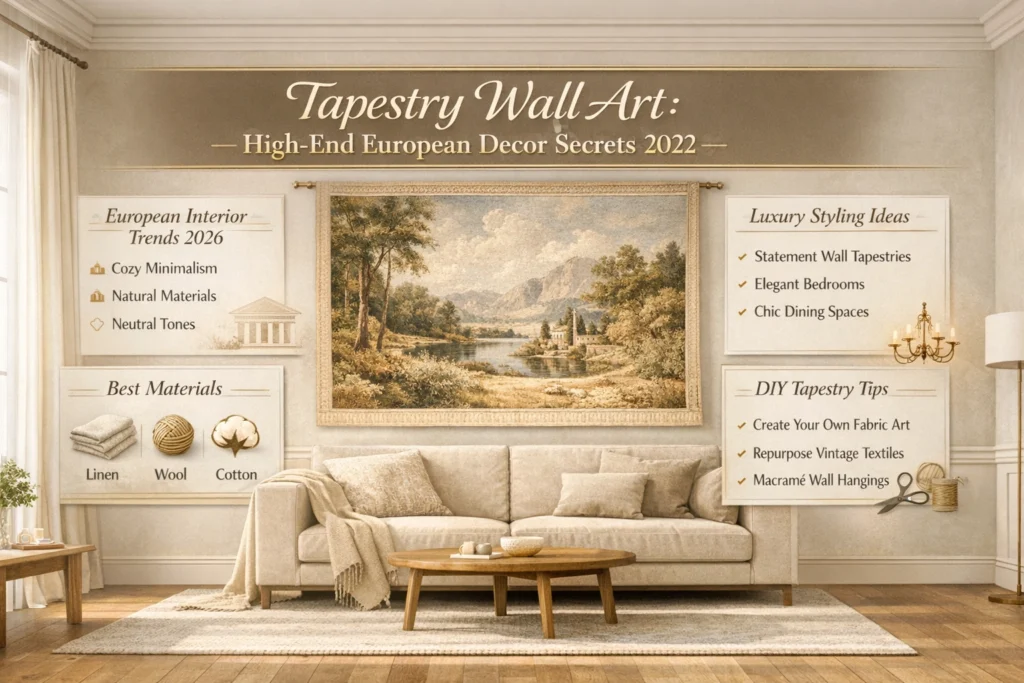
For a premium European aesthetic, prioritize:
- Neutral jewels
- Matte feelings
- Natural fibers
Tapestry Wall Art Ideas by Room
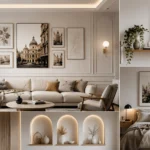
Living Room Styling
Living rooms require a strong focal identity.
Recommended designs:
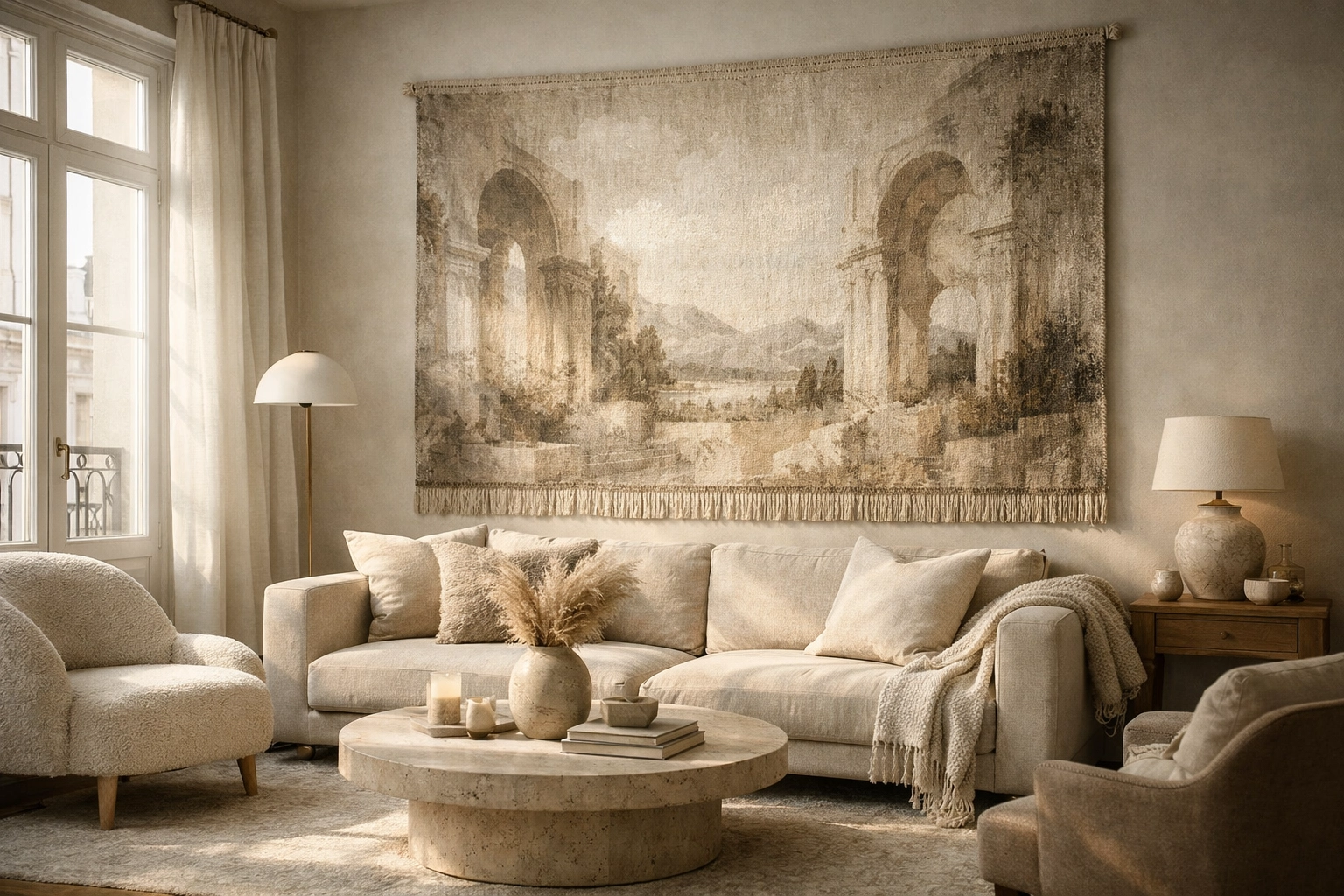
- Oversize tapestry behind sofa
- Neutral abstract textile art
- Beige and grey compositions
Effect: Creates optical anchoring and sophistication
Bedroom Styling
Bedrooms require calm psychological environments.
Use:
- Soft pastel textiles
- Above-bed tapestry placement
- Light organic fabrics
Effect: Enhances relaxation and sleep quality
Dining Room Styling
Dining areas benefit from refined elegance.
Try:
- Symmetrical wall alignment
- Warm earthy tones
- Minimal textile artwork
Effect: Improves dining air
Home Office Styling
Focus on cognitive clarity.
Use:
- Soft neutral tapestries
- Minimal abstract designs
- Low-saturation colors
Effect: Reduces mental fatigue
Hallway Styling
Hallways are transitional zones.
Recommended:
- Vertical narrow tapestries
- Light tonal designs
- Minimal patterns
Effect: Adds character to unused zone
European Interior Trends
Cozy Minimalism
Combines simplicity with passion:
- Clean zone
- Soft textiles
- Balanced composition
Natural Material Preference
Highly preferred materials:
- Linen
- Wool
- Cotton
Neutral Color Psychology
Popular jewels:
- Beige
- Sand
- Ivory
- Soft grey
Emotional Interior Design
Homes are now designed based on emotional impact:
- Calmness
- Comfort
- Psychological balance
How to Choose the Perfect Tapestry Size
| Wall Type | Recommended Size |
| Small wall | Medium tapestry |
| Large wall | Oversized piece |
| Above sofa | 2/3 sofa width |
| Bedroom wall | Bed-width alignment |
Design Principle:
Always maintain a negative zone around tapestry edges for optical balance.
Common Mistakes to Avoid
Wrong scaling selection
Excessive color mixing
Improper height placement
Overcrowded wall styling
Low-quality fabric selection
DIY Tapestry Wall Art Ideas
Creative low-budget options:
- Fabric stretched on wooden frames
- Recycled vintage cloth art
- Handmade macramé structures
- Textile collage compositions
Tapestry vs Canvas Wall Art
| Feature | Tapestry | Canvas |
| Texture | Soft | Hard |
| Emotion | Warm | Neutral |
| Weight | Light | Heavy |
| Flexibility | High | Low |
| Maintenance | Moderate | Easy |
Pros and Cons
Advantages:
- Easy installation
- Affordable options
- Strong aesthetic passion
- Lightweight structure
- Customizable designs
Disadvantages:
- Dust accumulation
- Sunlight fading risk
- Careful maintenance required
Buying Guide for 2026
Before purchasing, evaluate:
- Fabric authenticity
- Stitching quality
- Print durability
- Color harmony
- Room compatibility
Expert Recommendation:
Neutral tones provide long-term design flexibility.
Future
Future innovations include:
- AI-generated textile patterns
- Sustainable eco-fabrics
- Smart textile integration
- Digital weaving technologies
- Personalized fabric design systems
FAQs
Is tapestry still in style in 2026?
Yes, tapestry wall art remains highly relevant in 2026, especially in modern European interior design trends.
Can tapestry be used in modern homes?
Yes, it integrates seamlessly into modern, minimalist, and luxury home environments.
Where should I hang tapestry wall art?
Best locations include:
- Living room
- Bedroom
- Dining room
- Hallway
Is tapestry better than paintings?
Both serve different purposes. Tapestry creates warmth and softness, while paintings provide structure and optical sharpness.
Final Thoughts
Tapestry wall art represents a shift in global interior psychology. It is no longer just a decorative element—it is a sensory design component that influences mood, feeling perception, and spatial peace.
With the right info selection, European-moved styling approach, and thoughtful placement, tapestry can completely transform any interior into a warm, elegant, and timeless environment.