Introduction
Rustic Wall Decor has transformed from a traditional countryside aesthetic into one of the most influential interior design movements across Europe in 2026. It is no longer simply a decorative approach—it is a psychological experience, a lifestyle shift, and an emotional design language that connects human beings back to nature, simplicity, and authenticity.
Across countries like Germany, France, Italy, Austria, Switzerland, and Scandinavia, homeowners are actively moving away from ultra-minimal sterile interiors and embracing warmer, balanced, emotionally grounded zones. The reason is deeply rooted in human psychology and environmental response.
Modern urban living is fast, digital, and often overwhelming. People spend most of their time surrounded by screens, artificial lighting, and synthetic materials. Rustic Wall Decor counters this imbalance by introducing organic feelings, natural materials, and optical calming compositions that reduce cognitive overload.
From an NLP (Natural Language Processing) perspective, search intent around “Rustic Wall Decor Europe 2026” shows strong emotional intent keywords such as:
- cozy interiors
- natural home design
- warm aesthetic zones
- timeless decoration
- modern rustic luxury
These semantic clusters reveal a major behavioral pattern: users are not just searching for decor ideas—they are searching for emotional comfort, identity, and lifestyle transformation.
In 2026, Rustic Wall Decor has evolved into a hybrid design system combining:
- Scandinavian functional minimalism
- Mediterranean passion and richness
- Alpine natural material traditions
- Modern European luxury aesthetics
This guide is a complete deep-dive into Rustic Wall Decor, covering materials, psychology, regional styles, NLP design logic, trends, mistakes, and step-by-step expert systems used in high-end European interiors.
What Is Rustic Wall Decor?
Rustic Wall Decor can be defined as a design methodology that utilizes natural, raw, unprocessed, and organically imperfect info to create emotionally warm and optically grounded wall compositions.
Unlike modern artificial décor systems, rustic design prioritizes:
- authenticity over perfection
- Feelings over flatness
- emotional passion over visual coldness
Core Semantic Elements of Rustic Wall Decor
From a semantic SEO perspective, rustic decor is associated with these LSI (Latent Semantic Indexing) keywords:
- natural wall textures
- wooden wall panels
- earthy interior design
- handcrafted wall art
- vintage wall styling
- organic home aesthetics
Modern Evolution in 2026
Rustic design is no longer heavy, dark, or outdated. Instead, it has evolved into:
- Modern Rustic Minimalism
- Luxury European Rustic Interiors
- Soft Industrial Rustic Fusion
- Scandinavian Warm Natural Design
The most important NLP-based shift in 2026 is:
“Less decoration, more meaning, more emotional resonance.”
Consumers now prefer fewer items with higher symbolic and emotional value.
European Influence on Rustic Wall Decor
Europe is the global epicenter of rustic evolution. Each region contributes a unique semantic layer to the overall design language.
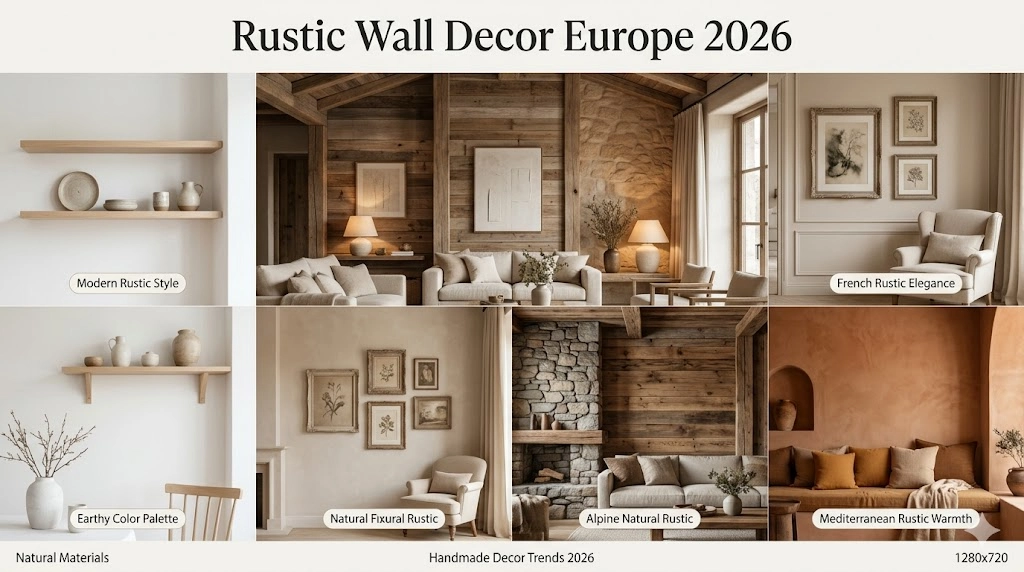
French Countryside Rustic Style
French rustic design is associated with elegance, softness, and emotional romance.
Key Features:
- Soft beige tonal palettes
- Antique-style frames
- Linen and cotton feelings
- Warm ambient lighting
- Subtle decorative layering
NLP Emotional Tagging:
romantic, soft, elegant, nostalgic, calming
User intent feeling: emotional comfort + luxury simplicity
German Alpine Rustic Style
German rustic design emphasizes structure, durability, and functional aesthetics.
Key Features:
- Solid reclaimed wood walls
- Stone-balanced accents
- Clean architectural lines
- Functional spatial design
NLP Emotional Tagging:
stable, grounded, strong, structured
User intent feeling: stability + durability + order
Scandinavian Rustic Style
This is the most dominant modern rustic variation in Europe.
Key Features:
- Whitewashed walls
- Light oak wood feelings
- Minimalist wall decoration
- Natural daylight optimization
NLP Emotional Tagging:
calm, clean, bright, peaceful
User intent feeling: mental clarity + simplicity
Italian Mediterranean Rustic Style
Italian rustic design is expressive, warm, and artistic.
Key Features:
- Terracotta color palette
- Handmade ceramics
- Balanced plaster finishes
- Warm golden tones
NLP Emotional Tagging:
artistic, warm, expressive, rich
User intent feeling: creativity + passion + heritage
Key Materials Used in Rustic Wall Decor
Materials are the semantic backbone of Rustic Wall Decor. They define not only appearance but emotional response.
Reclaimed Wood
Reclaimed wood is the most powerful material in rustic design systems.
Benefits:
- Provides optical passion
- Enhances emotional grounding
- Adds narrative bottom
- Creates natural imperfection aesthetics
NLP association: “organic texture”, “natural storytelling”, “timeless material”
Natural Stone & Clay Plaster
Stone introduces permanence and architectural weight.
Types:
- Limestone
- Clay plaster
- Matte mineral finishes
Emotional effect: stability + permanence + calm strength
Metal Accents
Metal introduces structural contrast into soft rustic environments.
Examples:
- Black iron frames
- Antique hooks
- Industrial shelving
NLP function: contrast balancing + optical grounding
Fabric-Based Wall Decor
Fabric introduces softness and human passion.
Examples:
- Macramé feelings
- Wool wall hangings
- Linen textile art
Emotional output: comfort + softness + intimacy
Rustic Wall Decor Ideas for 2026 European Homes
Below are high-ranking semantic design patterns used in modern interiors.
Vintage Gallery Walls
- Monochrome photography
- Antique wooden frames
- Travel-inspired storytelling opticals
Semantic intent: memory + nostalgia + identity
Nature-Inspired Walls
- Botanical artwork
- Forest photography
- Organic dried flower frames
Emotional intent: nature connection + mental relief
Textured Accent Walls
- Reclaimed wood panels
- Stone finish feelings
- Mixed material layering
Intent: luxury bottom + architectural richness
Floating Wooden Shelves Styling
- Ceramic objects
- Books and candles
- Minimal curated decoration
Rule: semantic minimalism (less clutter, more meaning)
Room-by-Room Rustic Wall Decor Strategy
Living Room
- Wood accent feature wall
- Large antique mirror
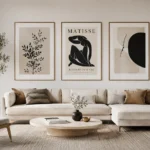
- Neutral abstract art
- Warm ambient lighting
Goal: emotional gathering zone
Bedroom
- Soft textile wall hangings
- Muted wooden frames
- Warm earthy palette
Goal: relaxation + sleep psychology optimization
Dining Room
- Vintage gallery composition
- Warm indirect lighting
- Wooden shelf styling
Goal: social passion + family bonding
Entryway
- Rustic mirror centerpiece
- Wooden hooks
- Minimal decorative structure
Goal: first impression emotional anchoring
Rustic Wall Decor Trends 2026
Imperfect Luxury
Natural cracks and raw feelings are now interpreted as luxury signals.
Multi-Material Blending
Wood + stone + plaster hybrid systems dominate modern interiors.
Monastic Minimalism
Inspired by European historical architecture:
- silence
- simplicity
- bottom
Earth Tone Saturation
Entire interiors use earth-jewel semantic consistency.
Artisan Human-Made Decor
Handcrafted items outperform mass-produced opticals.
Rustic Wall Decor Psychology
Rustic design operates on emotional cognition and subconscious perception.
It influences the human brain by:
- reducing sensory overload
- increasing emotional safety signals
- enhancing relief response
- strengthening nature connection pathways
This is why rustic environments feel psychologically “alive” and comforting.
Comparison Table – Rustic Wall Decor Styles
| Style Type | Key Features | Best For | Emotional Output |
| Modern Rustic | Clean + natural mix | Urban homes | Balanced calm |
| Farmhouse Rustic | Heavy wood + vintage | Rural homes | Traditional warmth |
| Scandinavian Rustic | Light + minimal | Small spaces | Mental clarity |
| Industrial Rustic | Metal + wood fusion | Lofts | Bold strength |
Pros & Cons of Rustic Wall Decor
Advantages
- Timeless aesthetic structure
- High emotional engagement
- Flexible across home types
- Strong European design identity
- Highly customizable systems
Disadvantages
- Can feel optically heavy if misused
- Requires lighting optimization
- Premium materials may be costly
- Needs design balance expertise
Common Mistakes to Avoid
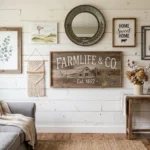
- Overuse of farmhouse signage
- Mixing conflicting rustic substyles
- Ignoring lighting temperature
- Using artificial fake wood feelings
- Overcrowding wall surfaces
NLP Rule: “optical simplicity increases emotional strength”
Step-by-Step Expert
Choose Base Material
Select one primary foundation:
- wood
- stone
- Plaster
Define Color Palette
Use semantic earth tones:
- beige
- warm grey
- olive green
- natural brown
Establish Focal Point
Examples:
- Word mirror
- wood panel feature
- large artwork
Layer Texture System
Combine:
- wood
- fabric
- metal
Maintain Minimal Density
Avoid over-decoration
Optimize Lighting
Use warm, diffused lighting only
Best Home Types
- Modern apartments → Scandinavian rustic
- Luxury villas → modern rustic luxury
- Compact homes → minimal rustic systems
- Heritage houses → traditional rustic identity
FAQs
Yes, it is evolving into modern rustic luxury and remains highly dominant in European interior design trends.
Earth tones such as beige, brown, olive green, and warm grey perform best.
Yes, Scandinavian rustic design is ideal for compact spaces due to its light and minimal structure.
Farmhouse is more traditional and heavy, while rustic includes modern, minimal, and European hybrid styles.
It depends on material choice. Reclaimed wood and stone are premium, but minimal rustic design can be budget-friendly.
Conclusion
Rustic Wall Decor in 2026 represents a major shift in European interior psychology and design systems. It is no longer just an optical trend—it is a complete emotional architecture model that connects humans back to natural living.
It delivers:
- emotional passion
- timeless aesthetics
- nature integration
- psychological comfort
The key principle of rustic design is simple but powerful:
Balance natural materials, controlled minimalism, and emotional lighting peace.