Introduction
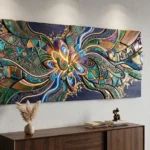
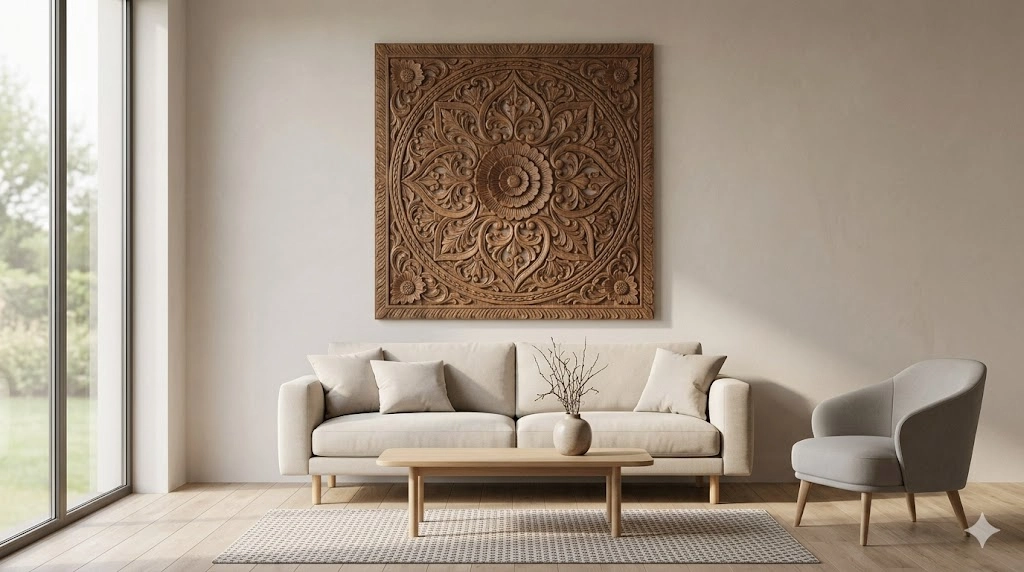
Carved wood wall art has evolved far beyond simple decoration—it now represents a structured design methodology. Across contemporary European interiors, walls are no longer treated as passive backgrounds. Instead, they function as active visual elements that shape atmosphere, influence perception, and define spatial identity.
From minimalist Scandinavian flats to opulent Italian estates, carved wooden artwork is transforming how interiors are conceptualized and experienced. It introduces:
- Tactile texture (as opposed to flat surfaces like prints or posters)
- Organic warmth (derived from natural materials)
- Dimensional depth (created through relief, layering, and shadow interaction)
Unlike printed canvas or synthetic décor, carved wood reacts dynamically to lighting conditions. Morning illumination produces soft highlights, while evening light casts dramatic shadows—creating a constantly evolving visual narrative.
In this comprehensive guide, you will explore:
- Various types of carved wood wall art
- European placement systems and proportional rules
- Wood materials, durability, and longevity
- Room-by-room styling frameworks
- Psychological and emotional impact
- Expert buying strategies and design insights
What is Carved Wood Wall Art?
Carved wood wall art refers to decorative or architectural pieces crafted by sculpting, engraving, or shaping wood into artistic compositions. These creations can range from traditional handcrafted designs to technologically produced panels.
They may include:
- Artisan hand-carved masterpieces
- Precision-cut CNC designs
- Multi-layered three-dimensional panels
Key Characteristics
Natural, authentic, and organic
Durable and long-lasting
Rich in texture and visual complexity
Embedded with cultural or symbolic meaning
Offers a refined, upscale aesthetic
In essence, carved wood wall art is not merely decoration—it acts as architectural enhancement for vertical surfaces.
Types of Carved Wood Wall Art
Understanding different categories helps you select the most suitable aesthetic for your interior environment.
Relief Carvings
Relief carvings consist of raised motifs sculpted from flat wooden panels. These designs are deeply rooted in classical European architecture.
Features:
- Inspired by historical buildings and ornamental traditions
- Includes floral, baroque, and decorative motifs
- Produces strong light-shadow contrast
Best For:
- French-inspired interiors
- Italian villas
- Vintage or heritage-style homes
If your goal is to achieve a regal, sophisticated, and timeless ambiance, relief carvings are ideal.
Nature-Inspired Carvings
These carvings replicate natural patterns and organic forms such as:
- Leaves and foliage
- Trees and branches
- Ocean waves and flowing shapes
Why it works:
- Promotes relaxation and tranquility
- Establishes a connection with nature
- Enhances emotional well-being
Best For:
- Scandinavian interiors
- Nordic minimalist homes
Perfect for bedrooms, meditation areas, and calming environments.
Cultural & Spiritual Designs
These artistic expressions carry symbolic and cultural significance, including:
- Islamic geometric patterns
- African tribal motifs
- Asian mandala compositions
Why it works:
- Adds depth of meaning
- Creates strong identity and storytelling
- Enhances artistic authenticity
Best For:
- Statement walls
- Creative or culturally rich interiors
Modern 3D Wood Panels
These designs emphasize geometry, symmetry, and parametric patterns.
Features:
- Clean lines and structured forms
- Minimalist yet luxurious appearance
- Strong architectural presence
Best For:
- Modern European apartments
- Contemporary living spaces
Wooden Wall Molding & Panel Art
This style merges decoration with architecture.
Features:
- Frame-like structural patterns
- Symmetrical arrangements
- Integrated into wall design
Best For:
- Parisian interiors
- London-style homes
- High-end apartments
The European Placement System
Most interior guides overlook this crucial aspect—but placement determines whether your design looks amateur or professional.
The 60–75% Rule
Artwork width should be 60–75% of the furniture width
Example:
- Sofa = 200 cm
- Artwork = 120–150 cm
Creates visual harmony
Prevents imbalance
Eye-Level Formula
Center of artwork = 145–155 cm from the floor
Aligns with natural viewing height
Used in galleries and exhibitions across Europe
Negative Space Rule
Leave 15–25% empty space around artwork
Avoids overcrowding
Improves visual clarity
Depth Lighting Strategy
Use directional illumination such as:
- Spotlights
- Wall washers
Enhances shadows and depth
Highlights carving details
Interior Psychology of Carved Wood Art
Interior design is deeply connected to human psychology. Carved wood art influences emotional and sensory perception.
| Element | Effect |
| Natural wood | Warmth and comfort |
| Texture | Visual richness |
| Organic shapes | Calmness |
| Handmade feel | Authenticity |
Why Europeans Love It
- Feels natural and genuine
- Adds timeless elegance
- Avoids artificial appearance
It creates a living environment rather than static decoration.
Best Wood Types
Selecting the right material is essential for durability and performance.
Oak
Strong and resilient
Attractive grain patterns
Long-lasting
Ideal for living rooms
Teak
Water-resistant
Highly durable
Best for bathrooms and kitchens
Mango Wood
Cost-effective
Eco-friendly
Suitable for bedrooms
Walnut
Dark, luxurious tone
Premium aesthetic
Perfect for upscale interiors
Engineered Wood
Lightweight
Budget-friendly
Limited durability
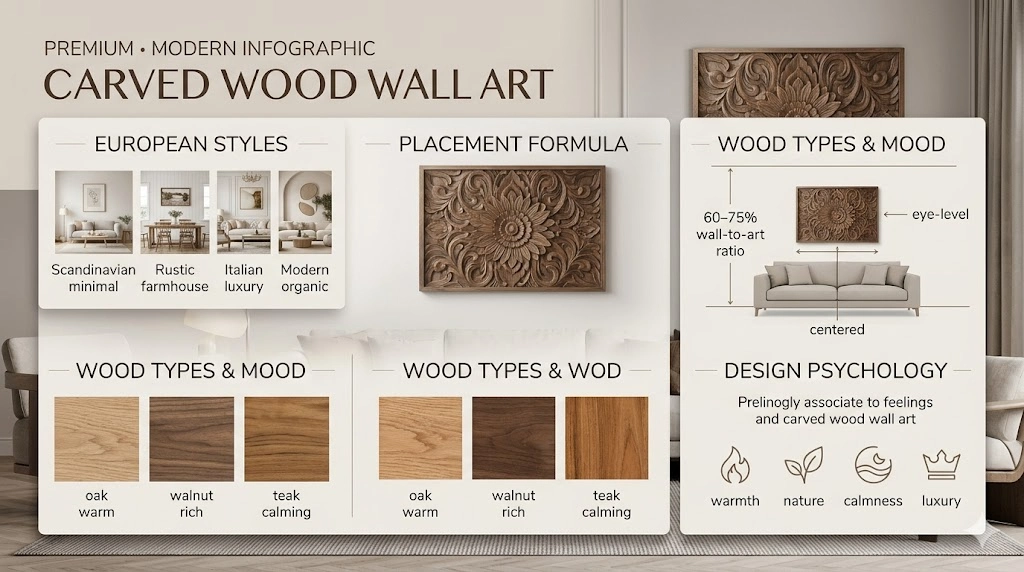
Wood Comparison Table
| Wood Type | Durability | Moisture Resistance | Cost Level | Best Use |
| Oak | Very High | Medium | High | Living room |
| Teak | High | Very High | High | Bathroom |
| Mango | Medium | Medium | Affordable | Bedroom |
| Walnut | High | Medium | Premium | Luxury |
| MDF | Low | Low | Cheap | Temporary |
Room-by-Room Styling Guide
Living Room
- Position above sofa
- Use large-scale panels
- Maintain symmetry
Acts as the central focal point
Bedroom
- Place above bed
- Choose soft, calming patterns
Creates a relaxing atmosphere
Dining Room
- Use narrative or storytelling designs
Enhances dining experience
Entryway
- Use bold statement pieces
Creates a strong first impression
Bathroom
- Use teak wood
- Avoid excessive moisture exposure
Carved Wood vs Other Wall Art
| Feature | Carved Wood | Canvas | Metal |
| Depth | High | Flat | Medium |
| Durability | Very High | Medium | High |
| Warmth | Natural | Low | Cold |
| Luxury Feel | Premium | Moderate | Modern |
Carved wood excels in warmth and dimensional richness.
How to Choose the Perfect Carved Wood Wall Art
Wall Size
Large wall → Large panel
Small wall → Minimal design
Room Style
Modern → Geometric
Classic → Ornamental
Lighting
Proper lighting enhances texture
Color Harmony
Coordinate wood tone with furniture
Handmade vs Machine vs DIY
Handmade
Unique
Artistic
Expensive
Machine-Carved
Affordable
Consistent
Less distinctive
DIY
Budget-friendly
Requires skill and effort
Styling Formula
The 3-Layer System
- Base: Neutral wall
- Middle: Carved wood art
- Top: Lighting
Creates hierarchy, depth, and balance
Sustainability & Eco Design
Carved wood wall art supports:
- Sustainable living
- Renewable materials
- Long-term usability
Always choose FSC-certified wood for responsible sourcing
Common Mistakes to Avoid
- Hanging artwork too high
- Choosing incorrect size
- Ignoring lighting
- Overcrowding walls
- Mixing too many styles
Pro Designer Tips
- Use directional lighting
- Combine wood with metal accents
- Use odd-number arrangements
- Keep designs minimal for modern interiors
Pros & Cons
Pros
- Highly durable
- Premium aesthetic
- Timeless appeal
- Eco-friendly
- Adds depth and dimension
Cons
- Can be expensive
- Heavy in weight
- Requires careful placement
FAQs
Oak and teak are the best due to durability and beauty.
It depends. Handmade is expensive, machine-made is affordable.
Yes, use smaller designs.
Use a dry cloth or soft brush.
Conclusion
Carved wood wall art is no longer just an accessory—it is a complete interior design framework.
When you apply:
- Proper placement principles
- Appropriate material selection
- Thoughtful styling techniques
It transforms into the soul and centerpiece of your interior space.
In 2026, European interiors are shifting toward:
- Natural materials
- Texture-rich environments
- Emotion-driven design
Carved wood wall art perfectly aligns with this evolution—bridging tradition, craftsmanship, and modern sophistication into a unified visual experience.