Introduction
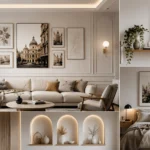
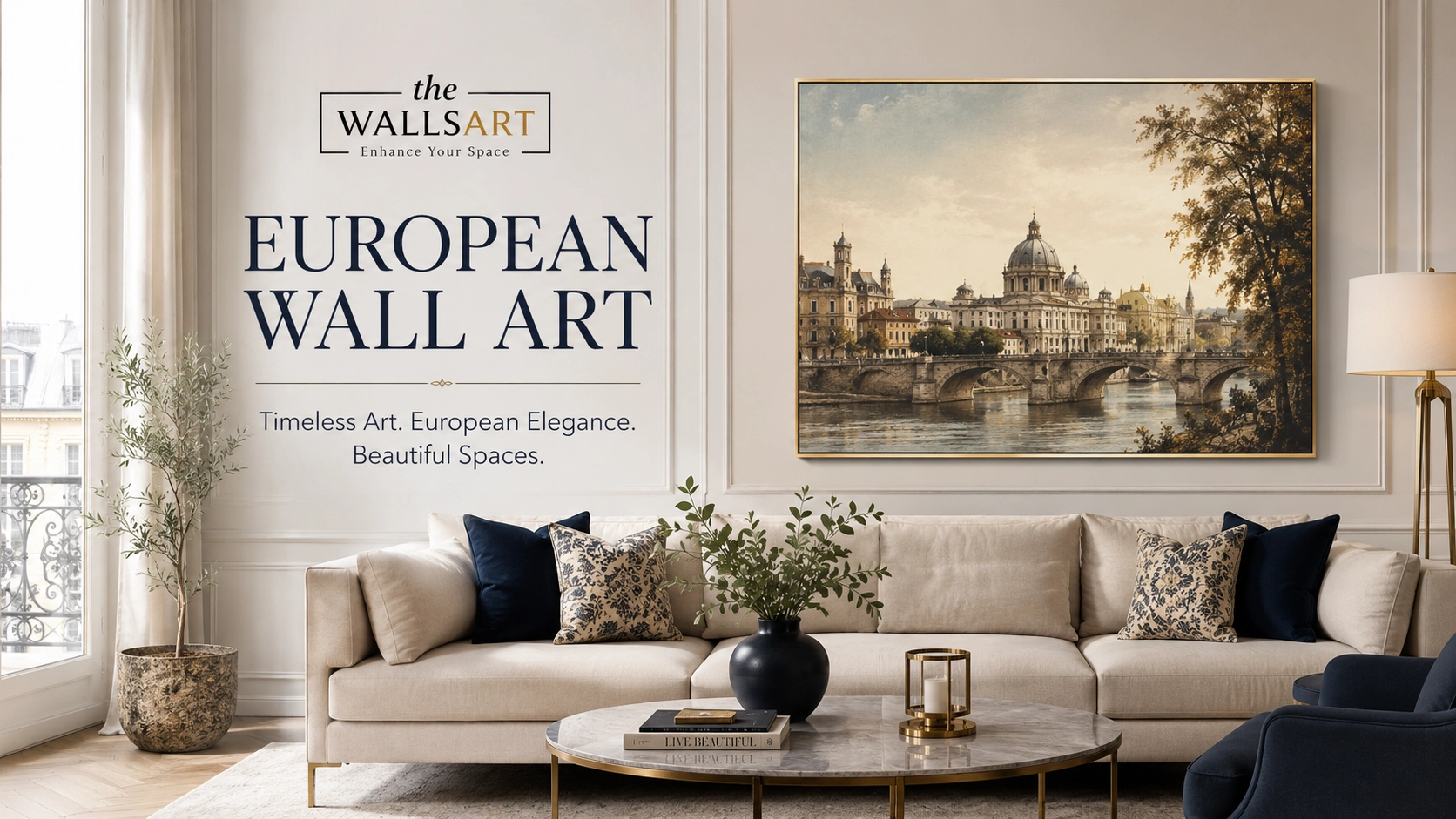
European Wall Art is more than a decorative element—it is a reflection of centuries of culture, architecture, emotion, and artistic evolution. From the soft minimalism of Scandinavia to the ornate elegance of French interiors, European design has shaped how the world understands beauty in living spaces.
Today, European wall art is one of the most influential interior design trends globally. Homeowners in Europe, the UK, and beyond are embracing its balance of simplicity, sophistication, and storytelling. Whether you live in a modern apartment in Berlin or a classic townhouse in Paris, wall art defines the emotional identity of your space.
What makes European wall art truly powerful is its versatility. It adapts effortlessly to modern minimal homes, vintage-inspired interiors, and even luxury designer spaces. It is not just about hanging pictures—it is about creating atmosphere, depth, and personality.
In this complete guide, you will explore European styles, room-by-room ideas, expert design principles, materials, color psychology, and practical tips to transform your walls into timeless works of art.
What is European Wall Art?
European wall art refers to visual décor inspired by the artistic traditions and interior styles of European regions. It blends history, culture, and modern design principles into curated wall aesthetics.
Key characteristics:
- Cultural storytelling through visuals
- Balanced use of color and negative space
- Influence of architecture and nature
- Mix of classical and modern styles
- Emphasis on harmony and proportion
European wall art is not limited to paintings—it includes:
- Canvas prints
- Framed photography
- Abstract compositions
- Sculptural wall décor
- Textured wall panels
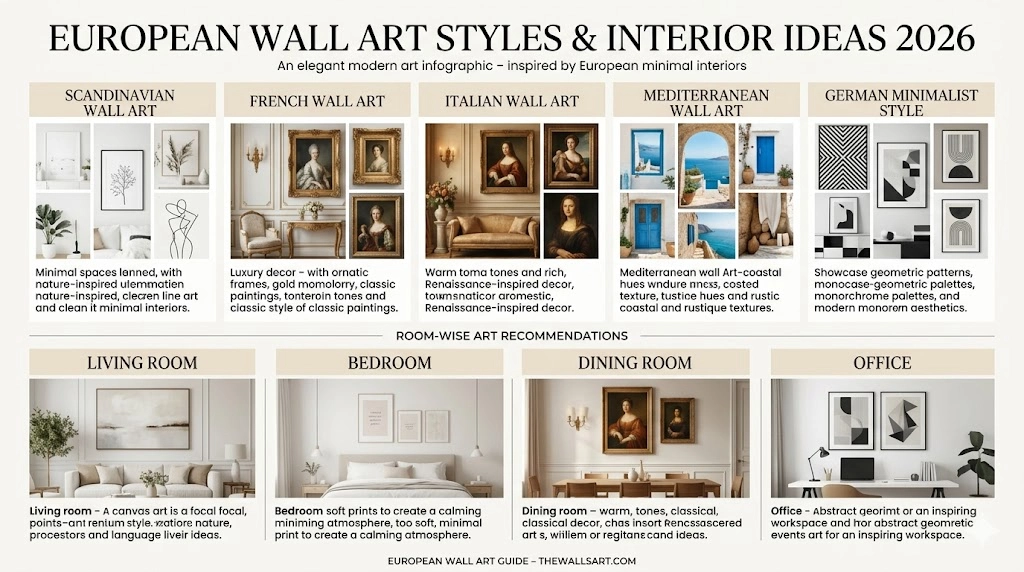
Major European Wall Art Styles Explained
Europe is diverse, and each region contributes a unique artistic identity. Understanding these styles helps you choose the right décor for your space.
French Interior Wall Art Style
French wall art is synonymous with elegance and romance.
Features:
- Ornate gold frames
- Classical portraits
- Paris-inspired sketches
- Soft pastel tones
Best for:
- Luxury living rooms
- Hallways
- Boutique-style interiors
French design focuses on sophistication and timeless beauty.
Scandinavian Wall Art Style
Scandinavian design dominates modern European interiors due to its simplicity.
Features:
- Black & white photography
- Nature-inspired visuals
- Minimalist compositions
- Neutral tones (white, grey, beige)
Best for:
- Small apartments
- Bedrooms
- Modern offices
It promotes calmness, clarity, and light-filled spaces.
Italian Wall Art Style
Italian aesthetics are rich, warm, and historically inspired.
Features:
- Renaissance art influence
- Architectural sketches
- Warm earth tones
- Classic landscapes
Best for:
- Dining rooms
- Traditional homes
- Elegant hall spaces
Italian wall art adds emotional warmth and depth.
Mediterranean Wall Art Style
Inspired by coastal living and sunlight.
Features:
- Ocean landscapes
- Rustic textures
- Blue and sandy tones
- Handcrafted visuals
Best for:
- Beach houses
- Open living areas
- Relaxed interiors
German Minimalist Wall Art Style
Germany is known for structured, functional design.
Features:
- Geometric abstraction
- Clean lines
- Monochrome palettes
- Industrial influence
Best for:
- Modern apartments
- Offices
- Urban interiors
How to Choose European Wall Art for Your Home
Selecting the right wall art requires understanding space, emotion, and proportion.
Match Art with Interior Theme
| Interior Style | Best Wall Art Type |
| Minimalist | Scandinavian prints |
| Luxury | French classical art |
| Modern urban | Abstract European art |
| Rustic | Mediterranean landscapes |
| Industrial | German geometric designs |
Size & Proportion Rules
- Small walls → Single frame or small duo sets
- Large walls → Oversized canvas or gallery walls
- Narrow spaces → Vertical art pieces
- Wide walls → Horizontal panoramic art
Color Psychology in European Wall Art
Color directly affects mood and atmosphere.
- Blue → calm, stability, focus
- White → clarity, simplicity, space
- Gold → luxury, richness, elegance
- Green → nature, balance, relaxation
- Earth tones → warmth, comfort
Materials Used in European Wall Art
European interior design emphasizes quality materials.
Common materials:
- Canvas: soft and artistic finish
- Wood: natural and warm texture
- Metal: modern industrial look
- Acrylic: glossy contemporary style
- Fabric prints: soft decorative feel
Each material creates a different emotional impact.
European Wall Art by Room Type
Living Room Ideas
The living room is the centerpiece of European homes.
Best choices:
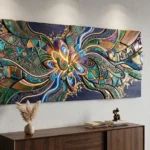
- Large abstract canvas art
- Triptych wall sets
- Statement modern pieces
Expert tip:
Keep one focal wall to avoid visual clutter.
Bedroom Wall Art
Bedrooms require calm and emotional balance.
Ideal styles:
- Soft Scandinavian art
- Nature photography
- Minimal abstract designs
Tip:
Use soft tones for better sleep ambiance.
Dining Room Wall Art
Dining spaces in Europe often reflect cultural richness.
Recommended:
- Italian vintage paintings
- Warm-toned landscapes
- Classical architecture prints
Office Wall Art
Workspaces need focus and creativity.
Best options:
- Monochrome abstract art
- Geometric designs
- Minimal Nordic visuals
Modern Trends in European Wall Art 2026
European interiors are evolving rapidly.
Trending now:
- Oversized statement art
- AI-generated abstract European designs
- Sustainable wooden frames
- Neutral tone dominance
- Mixed-material wall décor
Expert Design Principles for European Walls
Balance & Symmetry
European design values visual harmony.
Negative Space
Empty space is as important as filled space.
Layering
Combine textures, frames, and depth.
Lighting Integration
Soft lighting enhances wall art impact.
Budget vs Luxury Wall Art Comparison
| Category | Budget Option | Luxury Option |
| Materials | Paper prints | Handcrafted canvas |
| Frames | Basic wood/plastic | Premium hardwood/gold finish |
| Design | Digital art | Artist originals |
| Durability | Moderate | Long-lasting premium |
Common Interior Mistakes
- Overcrowding walls
- Ignoring color harmony
- Wrong scale selection
- Mixing conflicting styles
- Poor lighting placement
Avoiding these mistakes instantly improves interior quality.
Pros & Cons
| Style | Pros | Cons |
| Scandinavian | Clean, calming | May feel too simple |
| French | Elegant, luxurious | Can feel heavy |
| Italian | Warm, rich | Not always minimal |
| German Minimalist | Modern, structured | Less emotional warmth |
| Mediterranean | Relaxed, natural | Not suitable for formal spaces |
Maintenance & Longevity Tips
- Avoid direct sunlight exposure
- Use anti-dust frames
- Clean canvas gently with dry cloth
- Maintain humidity balance indoors
- Rotate artwork seasonally for freshness
People Also Ask
European wall art is unique because it blends culture, history, and modern design. Each region adds its own identity, from Scandinavian minimalism to French luxury aesthetics.
Scandinavian wall art is ideal for small spaces due to its light colors, minimal design, and ability to create an open and airy feeling.
Yes, European wall art adapts perfectly to modern homes. Abstract, minimalist, and neutral designs blend seamlessly with contemporary interiors.
Choose size based on wall proportion. Large walls need oversized art, while small rooms benefit from compact or vertical pieces.
It depends on materials and craftsmanship. Digital prints are affordable, while handcrafted or original artwork can be more premium.
Conclusion
European wall art represents a perfect fusion of tradition, culture, and modern interior design innovation. Whether you prefer the calm simplicity of Scandinavian aesthetics or the refined elegance of French interiors, European styles offer something for every personality and space.
By understanding design principles such as color psychology, proportion, material selection, and room-specific styling, you can transform any wall into a meaningful visual experience.
As interior trends continue evolving in 2026, European wall art remains timeless—bridging the gap between art and lifestyle. For more inspiration, explore curated décor ideas and guides on TheWallsArt.com, where design meets creativity.